
Recent Markers of the Week
Current Marker of the Week
Newgate Bastion Derry-Londonderry, Northern Ireland, United Kingdom.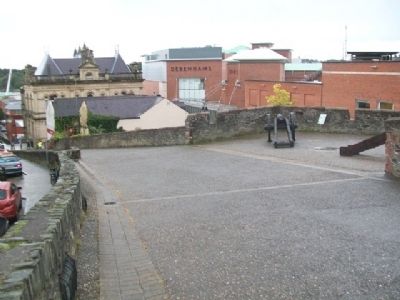 This Marker of the Week celebrates the Eurovision Song Contest! Dana, the winner of the 1970 Eurovision Song Contest, made her stage debut at St Columb's Hall in Derry-Londonderry at the age of six, adding a memorable chapter to the venue's history. Amidst the city's vibrant culture, from bustling markets to the emergence of modern entertainment like the Millenium Forum, Dana's early performance highlights the enduring influence of Eurovision on local arts and culture. Contributing Editor William Fischer, Jr. of Scranton, Pennsylvania filed this entry in 2014.
April 28–May 4, 2024
The Gray's Lake Story Des Moines, Iowa.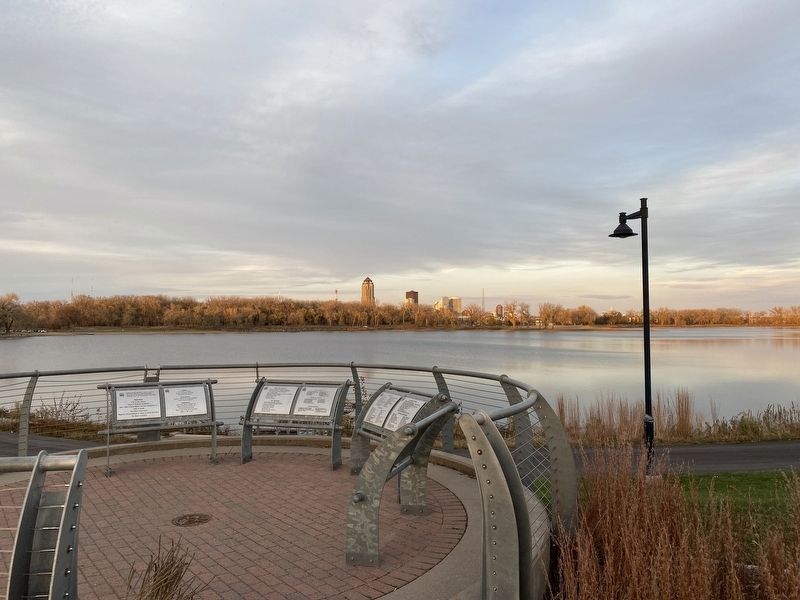 This week in 1970, Gray's Lake and the land surrounding it became a city park in Des Moines, Iowa. It had grown throughout the twentieth century as industry. It was even the source of the natural resources used to develop the runway at Des Moines International Airport. After floods, destruction, and restoration, it was redeveloped once again as the park that it is known as today. This entry was filed anonymously in late 2023.
April 21–27, 2024
Nuclear Accident at Three Mile Island Middletown, Pennsylvania.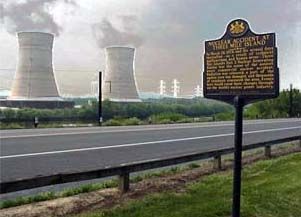 In commemoration of Earth Week, this marker reminds us of the events at Three Mile Island near Middletown, Pennsylvania. In 1979, it was the scene of the United States' "worst commercial nuclear accident" with released radiation, a damaged nuclear core and evacuations of thousands of people from the area. It's a cautionary tale that has forever affected the nuclear industry. Contributor Steve Fernie of Arlington, Virginia filed this entry in 2007.
April 14–20, 2024
Little Bethel Baptist Church Ladonia, Texas.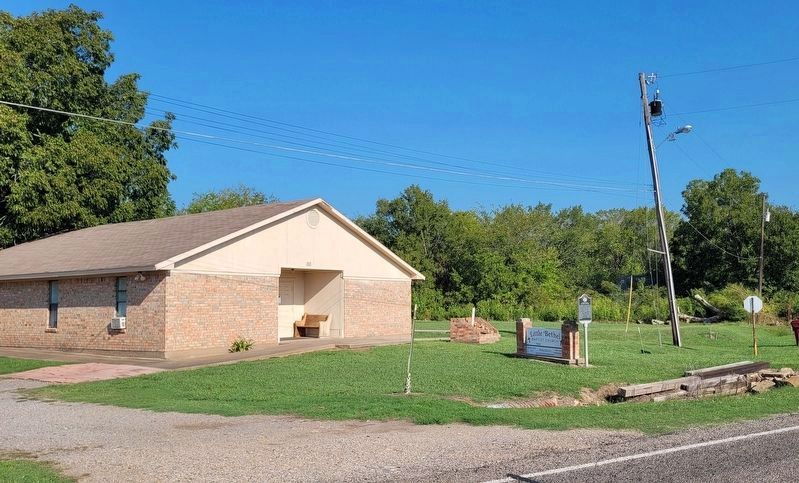 On this week in 1912, Little Bethel Baptist Church was founded in southeast Fannin County in northeastern Texas. It was the first community of faith for African Americans in Stall Cup and remains an active congregation today with its current building erected within the limits of Ladonia in 1938. The town's current population runs about 600. Regional Editor James Hulse filed this entry in 2023.
April 7–13, 2024
Printing Office of James Johnson Savannah, Georgia.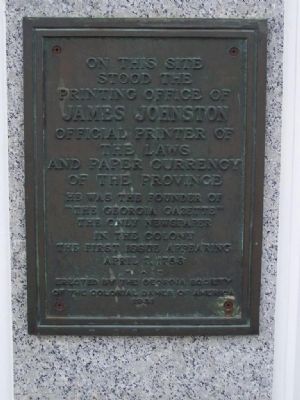 This week in 1763, James Johnson printed the first issue of The Georgia Gazette. At the time it was the only newspaper printed in the Colony of Georgia. Editor Mike Stroud of Bluffton, South Carolina filed this entry in 2008.
March 31–April 6, 2024
“Journey For Lives” Victoria, British Columbia.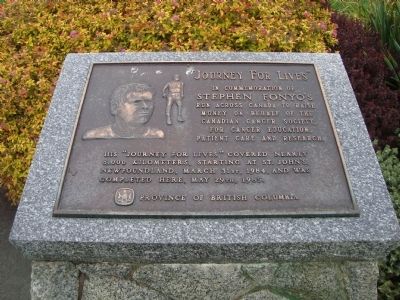 On March 31, 1984, Stephen Fonyo started his more than 8,000-kilometer (almost 5,000-mile) run across Canada to raise money for the Canadian Cancer Society. His run ended here in Victoria, British Columbia almost 14 months later. Contributing Editor Barry Swackhamer of Brentwood, California filed this entry in 2011.
March 24–30, 2024
Valmy Valmy, Nevada.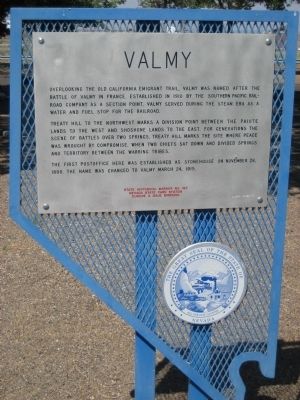 This week in 1915, the town of Stonehouse, Nevada changed its name to Valmy. It had been settled 5 years earlier as a section point for the Southern Pacific Railroad Company. Years earlier, at nearby Treaty Hill the Paiute and Shoshone ended a land dispute. This entry was filed in 2008 by Contributor Michael James of Fort Calhoun, Nebraska.
March 17–23, 2024
Nurse Margaret Kehoe Leighlinbridge, Leinster, Ireland. This week in April 24, 1916, Nurse Margaret Kehoe became the first civilian casualty of the Easter Rising in Leighlinbridge, Ireland. This memorial to her is part of a set of war memorials in Leighlinbridge. Contributing Editor William Fischer, Jr. of Scranton, Pennsylvania filed this entry in 2019.
March 10–16, 2024
Leandro Fernández de Moratín Madrid, Spain.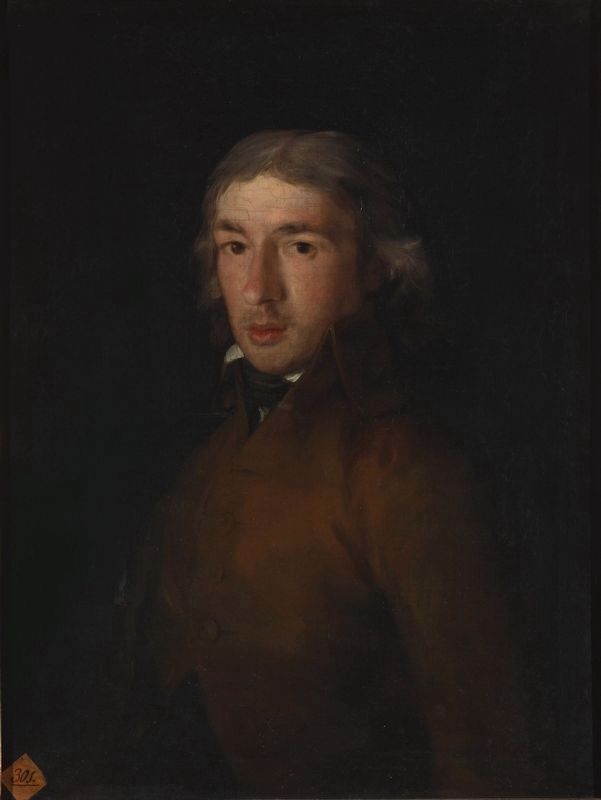 On this week in 1760, poet and playwright Leandro Fernández de Moratin was born in Madrid. His magnum opus was the comedy El sí de las niñas ("The Maidens' Consent"). He spent his career in Madrid and Paris until his passing in 1828. Regional Editor Andrew Ruppenstein of Lamorinda, California submitted this entry in late 2023.
March 3–9, 2024
In 1648 Margaret Brent Asks for “Vote…And Voyce” St. Mary's City, Maryland.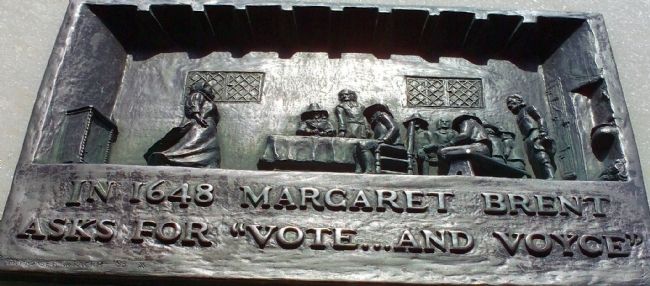 In honor of March serving as Women's History Month, this marker of the week is about an event in colonial Maryland where a woman sought the right to vote in January 1648. Former Editor Tom Fuchs of Greenbelt, Maryland filed this entry back in 2007, making it one of the first thousand on the database. Acknowledgement to Associate Editor Bill Pfingsten for recommending this marker of the week.
February 25–March 2, 2024
Johnny Cash Birthplace Kingsland, Arkansas.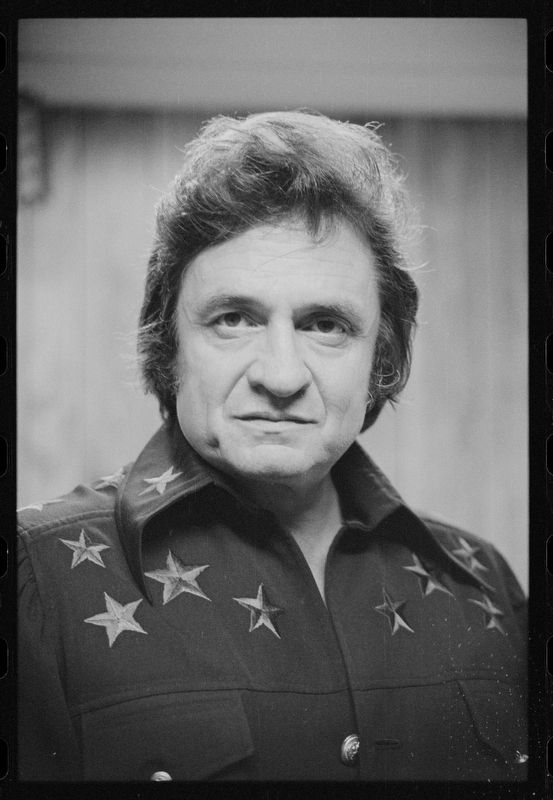 Famed country singer Johnny Cash was born this week in 1932, with a delivery by a midwife named Grace Easterling. He revisited his birth home throughout his lifetime to visit family and friends. This marker's entry was filed in 2021 by Series Editor Mark Hilton of Montgomery, Alabama.
February 18–24, 2024
Mast of the USS Maine Arlington, Virginia.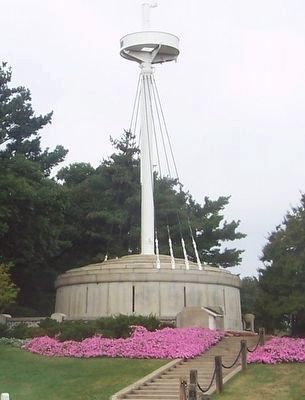 It was the first “modern” ship of its era and its explosion and sinking in Havana harbor in Cuba this week in 1898 precipitated the Spanish-American War. Its 229 victims were reinterred here in 1915, marked with the ship’s mast. This now-missing interpretive panel’s entry was filed in 2008 by Contributing Correspondent Richard E. Miller of Oxon Hill, Maryland.
February 11–17, 2024
Miracle House 1906 Freeport, New York.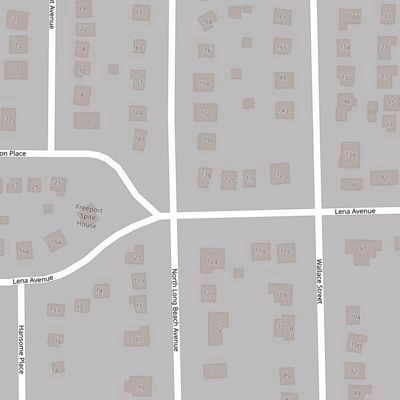 This Victorian is also known as “The Spite House.” The miracle was that it was built in one day—but it was built out of spite to thwart the street grid working its way west. Lena Avenue, was forced to fork because the house was now in the way! Regional Editor Andrew Ruppenstein of Lamorinda, California, filed this entry in 2018.
February 4–10, 2024
Love Affair with the Movies Los Angeles, California. The University of Southern California’s many contributions to cinema began with the nation's first university course in film. Douglas Fairbanks, Sr., delivered the opening lecture this week in 1929. Fairbank's statue, photographed by Contributing Correspondent Craig Baker of Sylmar, California, is on campus at the George Lucas building.
January 28–February 3, 2024
Michigan Central Railroad Depots Jackson, Michigan.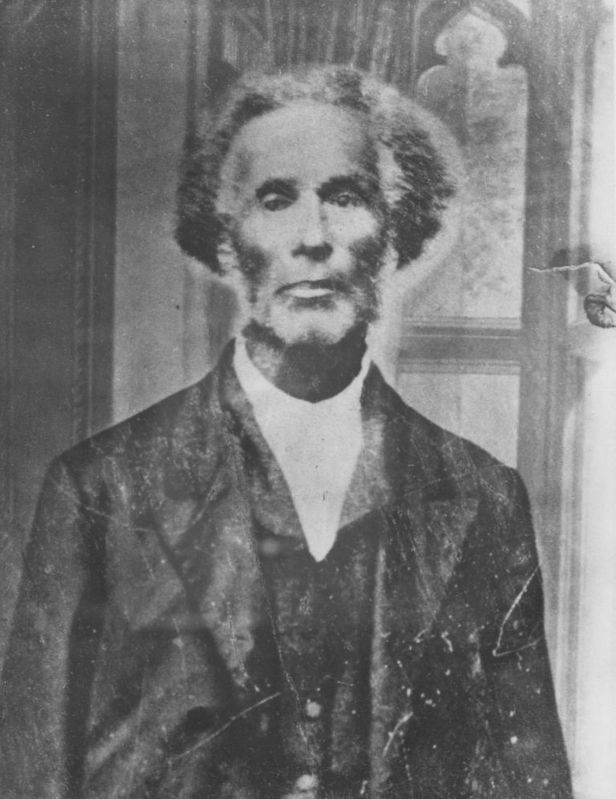 This week in 1847 Michigan abolitionists thwarted Kentucky re-enslavers by using this actual railroad, itself an Underground Railroad route to Detroit. Adam Crosswhite, shown here, and his family escaped to Canada. Contributing Correspondent J.T. Lambrou of New Boston, Michigan filed this entry last year.
January 21–27, 2024
John Jeremiah "Liver Eating" Johnston Cody, Wyoming.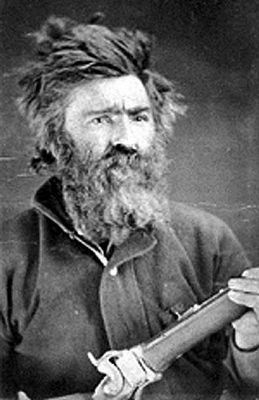 The 1965 novel Mountain Man and the 1972 film Jeremiah Johnson were based on this trapper’s life. Born in 1824, he died this week in 1900 and is buried here. This marker details his life at length. Contributing Editor Barry Swackhamer of Brentwood, California, filed this entry in 2015.
January 14–20, 2024
Mary Frances Housley Knoxville, Tennessee.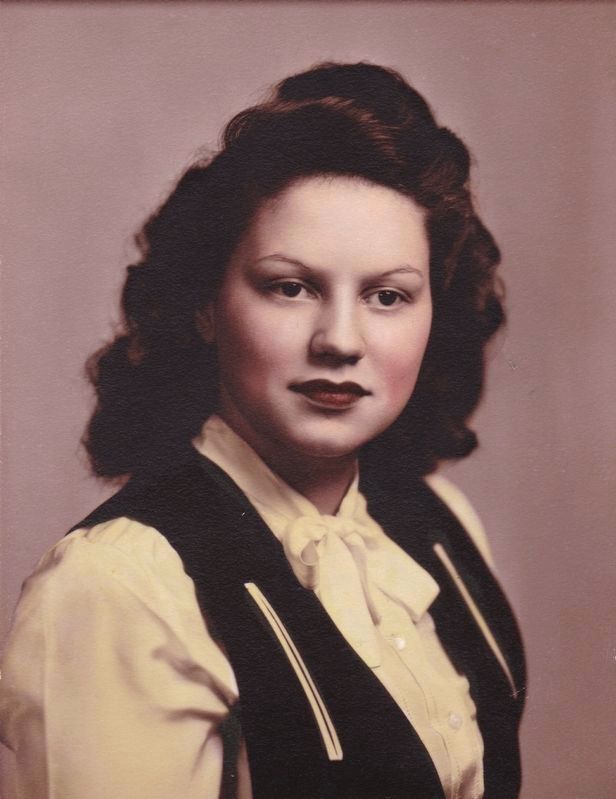 This flight attendant, born and raised here, died this week in 1951 in Philadelphia helping passengers escape a burning aircraft. Contributing Correspondent Tom Bosse of Jefferson City, Tennessee, filed this entry in 2021.
January 7–13, 2024
Ann Story Rutland, Vermont.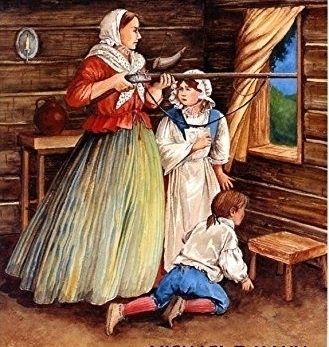 She was a Revolutionary War patriot, known as the Mother of the Green Mountain Boys. Contributing Correspondent Steve Stoessel of Niskayuna, New York, filed this entry in 2019.
December 31–January 6, 2024
Arnold Palmer Los Angeles, California. “He took a 12 on this hole!” This marker describes each of the strokes the Golfer of the Year and Professional Athlete of the Year took to get the ball in the 18th hole on the L.A. Open this week in 1961. Contributing Editor Craig Baker of Sylmar, California, filed this entry in 2021.
December 24–30, 2023
Milestone in Radio History Cobb Island, Maryland.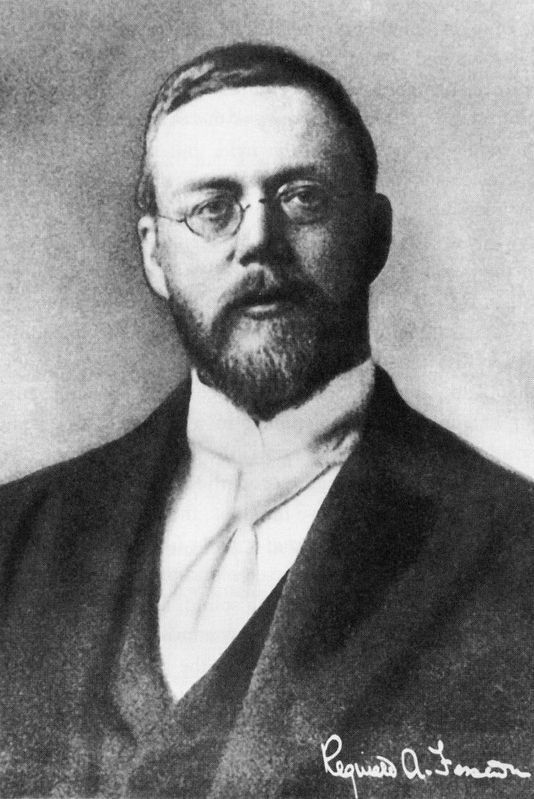 Another radio first happened here this week in 1900—human speech without wires. "One, two, three, four. Is It snowing where you are, Mr. Thiessen?", radioed Reginald Fessenden, who was a mile away. An anonymous contributing correspondent filed this entry in 2019.
December 17–23, 2023
Radio Station 1BCG Greenwich, Connecticut.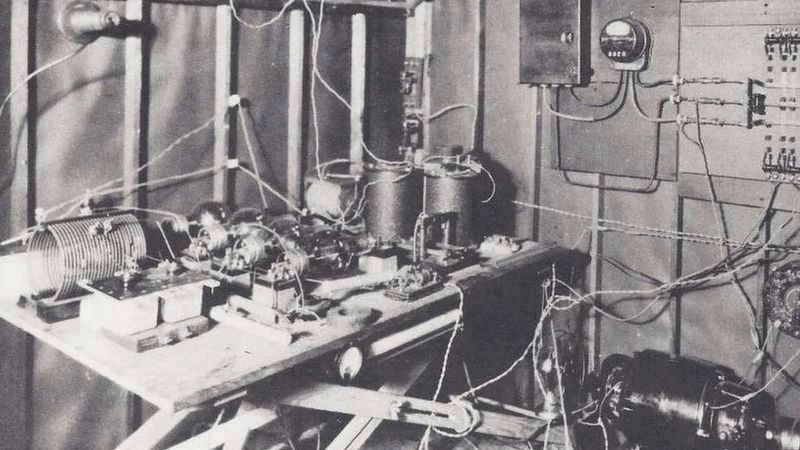 This week in 1921 the first radio Morse code message to span the Atlantic Ocean on short waves was sent from here to Ardrossan, Scotland. Later in the decade transatlantic telephone calls traveled on short waves until voice cables took over in the 1950s and ’60s. Regional Editor Michael Herrick of Southbury, Connecticut, filed this entry 100 years later.
December 10–16, 2023
The One Mile Hog Ranch Douglas, Wyoming.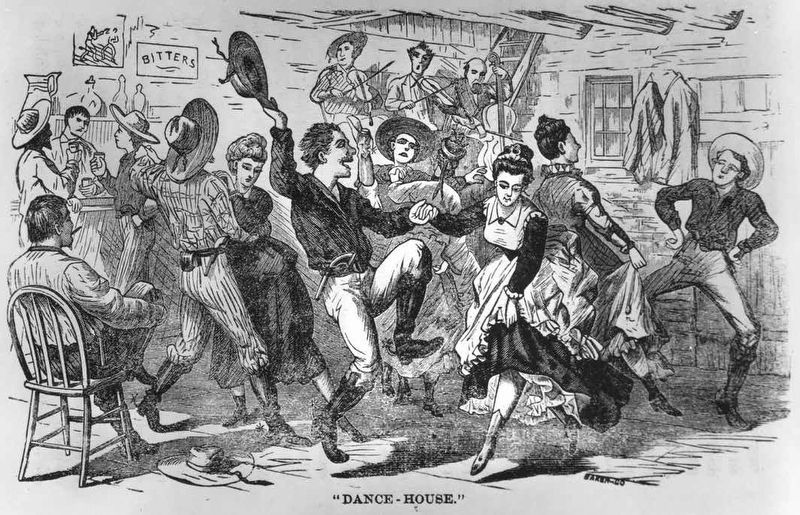 Even bawdy houses can get on official state historical markers. This saloon, cardroom, and dance hall complex included one, and after five years of operation authorities finally shut down “the most notorious red-light house west of Chicago” this week in 1885. Contributing Correspondent Barry Swackhamer of Brentwood, California, filed this entry in 2015.
December 3–9, 2023
First English Thanksgiving in Virginia Charles City, Virginia.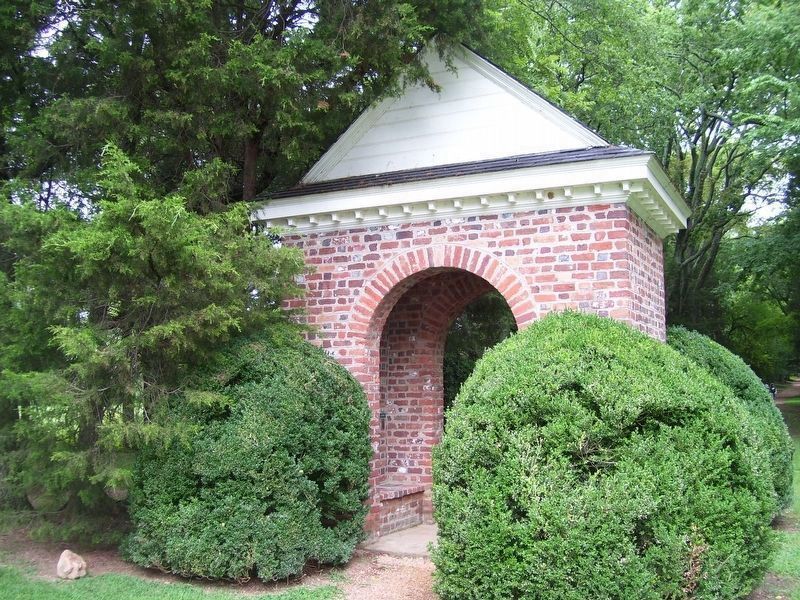 This roofed garden gate marks the spot of the first Thanksgiving in the U.S. which was celebrated this week in 1619, two years before the Pilgrims held theirs. Regional Editor Bernard Fisher of Richmond, Virginia, filed this entry in 2013.
November 26–December 2, 2023
Lombardi's Pizza Manhattan, New York. This marker says that Pizza Magazine said that this pizzeria was the first to open in the United States, in 1905. Contributing Editor Larry Gertner of New York, New York, filed this entry in 2018.
November 19–25, 2023
Nancy Kerlin Barnett Franklin, Indiana.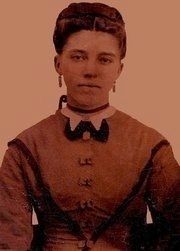 She was buried on a grassy hill in 1831. Years later near the turn of the century the grave was in the path of a new road. Her grandson, gun in hand, stood vigil here until the road crew gave up and divided the road to run around both sides of her grave. Contributing correspondent Marc Tobolski of Franklin, Indiana, filed this entry in 2009.
November 12–18, 2023
History of the Snagboat Montgomery Pickensville, Alabama.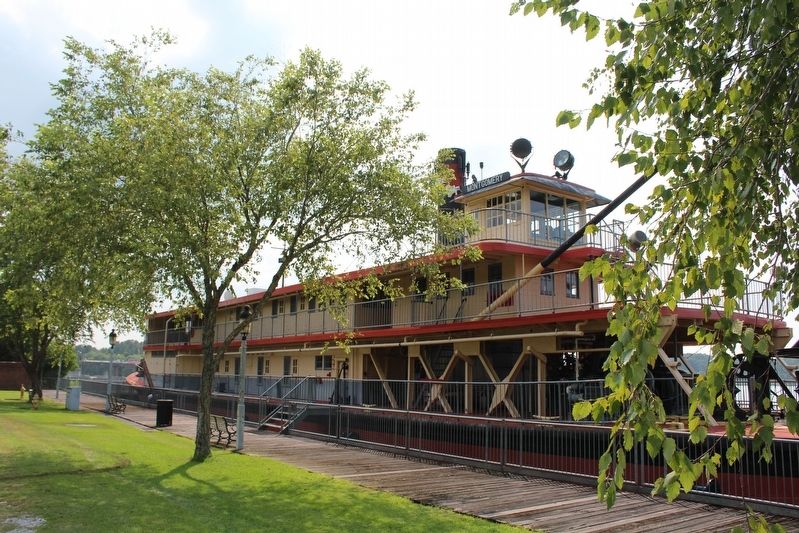 This, the last steam-powered snagboat on a southern river, was retired this week in 1982, after 56 years of service. Go on, click on the link—how else are you going to find out what a snagboat is? Contributing Correspondent Tom Bosse of Jefferson City, Tennessee, deciphered this weatherworn marker and filed this entry in 2021.
| Earlier Markers of the Week | |
| This week in 2018 the Santa Monica Mountains were on fire and Western Town, where countless movies and TV shows were filmed — most recently the series Westworld — burned. The National Park Service intends to rebuild it. Contributing Editor Craig Baker of Sylmar, California, visited before and after the fire and filed this entry. | |
| This marker faces the creek and has its own dock—once Ronnie Van Zant’s dock. But by car it is some distance behind a gated community’s gate. It looks like you have to rent a boat to see it. Contributing Editor and professional historical marker restorer Tim Fillmon of Webster, Florida, filed this entry earlier this year | |
| It was here this week in 1960 that Ed Yost tossed off the ropes and first flew free in this nylon-envelope propane-fired balloon. He flew it for 3 miles strapped in a chair seat. Contributing Editor Cosmos Mariner of Cape Canaveral, Florida, filed this entry in 2022. | |
| Contributing Editor Barry Swackhamer of Brentwood, California, filed this entry in 2016 and then a few months ago the granddaughter of the designer of the neon slipper wrote a commentary for it explaining who designed it and whose shoe he used as a model: “Look, there’s Momma’s shoe!” | |
| Those little bronze plaques that say little besides "registered historial site No. x” qualify for an entry in this database if the correspondent can find and link to the the nomination form or other document that explains why it qualified. Contributing Editor Craig Baker of Sylmar, California, went a step further, researching its significance and adding his more interesting findings to the entry. | |
| The Fugitive Slave Law of 1850 federalized the enforcement of slavery, even in free states, and criminalized helping escaped slaves. This community rebelled against it, storming the jail and freeing William Jerry Henry this week in 1851. 27 citizens were indicted. Contributing Editor Cosmos Mariner of Cape Canaveral, Florida, filed this entry in 2019. | |
| History does not get more local than this: There was a fire here this week in 1975, it shouldn't have happened, Telegraph Hill did not burn down, and the weathered boards you are standing on here were salvaged from the burnt pier. Regional Editor Andrew Ruppenstein of Lamorinda, California, filed this entry in 2021. | |
| President Jefferson sent Lewis and Clark to figure out what he had just purchased from France. They met the Nez Perce here this week in 1805, or better put, the Nez Perce met the white man for the first time, and saved them from starving to death. Contributing Editor Barry Swackhamer of Brentwood, California, filed this entry in 2018. | |
| This week in 2001 passengers on an airliner prevented its use to attack the U.S. Capitol. at the cost of their lives. It crashed here. Contributing Correspondent Allen C. Browne of Silver Spring Maryland filed this entry in 2016. | |
| This 100-foot statue commemorates the Kingdom of Dahomey’s all-female military regiment that existed from the 17th century to the 19th century. Regional Editor J. Makali Bruton of Accra, Ghana, filed this entry earlier this year. | |
| World War II started this week in 1939 when Germany invaded Poland, and within hours the U.S. named George Marshall Army Chief of Staff. The U.S. did not join the war until more than two years later, but Marshall started planning and mobilizing for it as soon as he took command. Contributing Editor Bradley Owen of Morgantown, West Virginia, filed this entry in 2021. | |
| This marker—nowhere near Sidra—relates a very detailed account of an “international incident” of the Cold War that happened this week in 1981 when two Soviet-made Libyan jets like this one shot at U.S. Navy jets over international waters of the Mediterranean Sea. The Navy jets evaded, returned fire, and downed the Libyan jets. Contributing Correspondent Brandon D Cross of Flagler Beach, Florida, filed this entry in 2022. | |
| The first air tanker, dropping just 170 gallons per run, made its first drop on the Mendenhall Fire in the Mendocino National Forest this week in 1955. The largest air tanker today holds 19,000 gallons. Contributing Editor Craig Baker of Sylmar, California, filed this entry using photos taken by Gene Russell. | |
| This historical marker at Folsom Prison outlines the remarkable life of this prison guard who was born this week in 1917, and includes an anecdote about the notorious criminal cult leader Charles Manson. Regional Editor Andrew Ruppenstein of Lamorinda, California, went inside to file this entry in 2022. | |
| The center line down the middle of highways was invented and first painted down Highway 99 here in Indio in 1917 by this woman, a medical doctor who had just been run off the road by a truck. Contributing Correspondent Michael Kindig of Elk Grove, California, filed this entry in 2011. | |
| To make ice cream you need ice. Before refrigeration an underground ice house—a sign of wealth—and plenty of sawdust kept winter ice frozen into summer. Contributing Correspondent Don Morfe of Baltimore, Maryland, filed this entry in 2014. | |
| Man can be cruel in the name of God. They were burned at the stake this week in 1556. One of the women gave birth to a son in the flames. He was rescued, then thrown back in. Contributing Correspondent Richard Denney of Austin, Texas, filed this entry in 2014. | |
| It took three tries this week in 1882. First the rope broke, then a deputy inadvertently broke his fall when the trap door opened. In 1927 the daughter of the murdered woman, who testified against the accused—her stepfather—confessed to the murder. Contributing Editor Cosmos Mariner of Cape Canaveral, Florida, filed this entry in 2018. | |
| Pass named for the awesome night scenes of bedlam under torch light in 1943 as emaciated World War II prisoners-of-war and locals, in fear of death by beatings, toiled around the clock in 18 hour shifts to cut these and other passes through rock using just hand tools and dynamite. Contributing Correspondent JJ Karwacki of Tha Maka, Kanchanaburi, filed this entry earlier this week. | |
| Summer is the season for theatre outdoors, and this venue, the Municipal Opera Theatre of St. Louis, is the country's oldest (since 1919) and remains the largest (12,000+ seats). The last 9 rows (1400 seats) are free at all performances. Contributing Editor Jason Voigt of Glen Carbon, Illinois, filed this entry in 2019. | |
| It wasn't until this week in 1914 that telephone lines were connected coast to coast when the AT&T construction crew working its way westward met the one working eastward here at the Utah state line. Contributing Editor Cosmos Mariner of Cape Canaveral, Florida, filed this entry in 2019. | |
| The riot here this week spelled the end in Nebraska of the agrarian labor organizing movement known as the Farm Holiday Movement. Communist labor organizer Mother Bloor, pictured here, and other activists were arrested. Contributing Editor Cosmos Mariner of Cape Canaveral, Florida, filed this entry in 2021. | |
| The U.S. Civil War did not start until 1861 in North Carolina, but this marker argues that its first battle began here this week in 1856 and John Brown was involved. Contributing Editor Thomas Onions of Olathe, Kansas, filed this entry in 2009. | |
| This week in 1880 Alexander Graham Bell, across the street from here, spoke to Charles Tainter over a beam of light. Contributing Editor Craig Swain of Leesburg, Virginia, filed this entry in 2009 and Allen C. Browne of Silver Spring, Maryland, added illustrations in 2015. | |
| This week in 1903 President Theodore Roosevelt was on a three-day two-mule camping trip with naturalist John Muir here. Roosevelt was proudest of his work in protecting land and wildlife. Contributing Correspondent Don Morfe of Baltimore, Maryland, filed this entry in 2013. | |
| Thomas Jefferson published Chief Logan's 1774 lament—found here on this monument—in 1782. It is eloquent and touching. The last sentence carved on this 1919 monument then proceeds to spoil the sentiment. Contributing Editor Dale K. Benington of Toledo, Ohio, filed this entry in 2012. | |
| The marker says it so it must be true. Contributing Editor William Fischer, Jr. of Scranton, Pennsylvania, filed this entry in 2009. | |
| This week in 1865 the last major Confederate force east of the Mississippi surrendered. The war was over. This interpretive panel describes the orderly surrender in detail. Contributing Editor Cosmos Mariner of Cape Canaveral, Florida, filed this entry in 2018. | |
| What's a stope? More than a million dollars worth of silver came out of this one, registered as the “Good Enough Stope”, and a horse and wagon fell into it when its roof collapsed this week in 1907. The horse survived but there is no mention of the wagon. Contributing Editor Cosmos Mariner of Cape Canaveral, Florida, filed this entry in 2019. | |
| This week in 1906 the Great Earthquake killed three thousand people and destroyed over 80% of San Francisco. A lot of the destruction was caused by subsequent fires that could not be put out for lack of water. But this fire hydrant continued working and saved the Mission District. Regional Editor Andrew Ruppenstein of Lamorinda, California, filed this entry in 2018. | |
| It raged for three days. Snow formed 20 foot drifts. There was no instant mass communications back then to warn you. Rain began to fall and changed to heavy wet snow and then the wind began to howl. As the marker relates, one minute you are bathing in the river and a short time later in the whiteout you stumble over a canoe, turn it over for shelter and wait out the storm. Contributing Editor Cosmos Mariner of Cape Canaveral, Florida, filed this entry in 2021. | |
| Everyone knows of the 1804 duel between Aaron Burr and Alexander Hamilton—the Vice President and the Secretary of the Treasury. But did you know of the duel held here this week in 1826 between the Secretary of State and a U.S. Senator? Contributing Editor Craig Swain of Leesburg, Virginia, filed this entry way back in 2007. | |
| The Queen of Soul was born here this week in 1942. Contributing Correspondent Steve Masler of Memphis, Tennessee, filed this entry in 2017. | |
| The country's ultimate weapon, the soldier, is embodied by this 12 foot high statue. The original, sculpted with Bondo on chicken wire here in the paint shop by Specialist 4 Steven M. Goodman and Private First Class Stuart J. Scherr, was unveiled this week in 1959. It was replaced with this bronze replica in 1990. One of our original Contributing Correspondents, R. C. of Shrewsbury, New Jersey, filed this entry in 2008. | |
| Near here this week in 1879 New Mexico Governor Wallace met with the fugitive Billy the Kid to offer him a pardon in exchange for murder-trial testimony. They staged a fake arrest and took him into custody. Contributing Editor Bill Kirchner of Tucson, Arizona, filed this entry in 2011. | |
| Often cited as the first rock’n’roll record, it was “waxed” this week in 1951 in Memphis. Jackie Brenston is credited as the writer and is the lead singer, and his gravesite is near here. The band is Ike Turner’s Kings of Rhythm but the record credits them as the Delta Cats. Former Regional Editor Mark Hilton of Montgomery, Alabama, filed this entry in 2021. | |
| Never heard of this 185 mile canal? President Johnson was at the construction start here this week in 1964. It was to bisect Florida from Jacksonville on the Atlantic Ocean to the Gulf of Mexico at Yankeetown. After 28% of it was built, environmentalists lead by Marjorie Harris Carr succeeded in stopping its construction in 1971. Today it is a protected green belt corridor named after her. Contributing Correspondent Brandon D Cross of Flagler Beach, Florida, filed this entry in 2017. | |
| Roy Bean, saloonkeeper and judge, called himself the “Law West of The Pecos” River—that part of Texas that extends under New Mexico. This week in 1896 he staged a heavyweight title fight on a sandbar in the Mexican side of the river, to thwart Texas Rangers sent to stop it. Contributing Correspondent Julie Szabo of Oldsmar, Florida, filed this entry in 2008. | |
| This marker says that the Snow White of Brothers Grimm fame was real and was born here in 1725. Her name was Maria Sophia, it says, and goes on at length as to why she would be the basis for the fairytale. However, a contributing correspondent from Bavaria has submitted a detailed rebuttal that we've just published on this page. International Editor Andrew Ruppenstein of Lamorinda, California, filed this entry last October. | |
| The Mexican-American War ended this week in 1848 with the signing of the Treaty of Guadalupe Hidalgo, which was later ratified here. The Mexican government had retreated to Queretaro after the U.S. occupation of Mexico City. Mexico gave up more than half of its territory, now all or part of ten western states. Regional Editor Makali Bruton of Accra, Ghana, filed this entry in 2017. | |
| Separated from her mother at 5 years of age when she was sold at auction here in Marion in 1846—never to see her again—Sarah Elizabeth Adams would slip out of the house to cry under this white oak and tell it her burdens and sorrows. Contributing Editors Duane and Tracy Marsteller of Murfreesboro, Tennessee, filed this entry three months ago. | |
| Signed this week in 1855 and celebrated here annually, this treaty includes the acknowledgement of certain rights retained by the Tulalip Tribes including the right to hunt and fish in all the usual and accustomed grounds outside of the reservations. Contributing Editor William Fischer, Jr. of Scranton, Pennsylvania, filed this entry in 2021. | |
| Here is a loyal dog story from what was then Kentucky County, Virginia, on the American frontier. In 1789 this unnamed canine protected his master’s body for days until help arrived. | |
| This turn of the 20th century author and poet is known for writing in the Hoosier dialect. The Jaybird he’s my favorite Of all the birds they is! I think he’s quite a stylish sight In the blue suit of his: An’ when he ’lights an’ shuts his wings, His coat’s a “cutaway”— I guess it’s only when he sings You’d know he wuz a jay. | |
| It came on New Years Day, killing 12 here, destroying houses and cars, and depositing mud, rocks and debris all over Montrose. The car in this photo was completely covered in mud. Contributing Editor Craig Baker of Sylmar, California, filed this entry in 2019. | |
| This week in 1732 his greatest business accomplishment, Poor Richard’s Almanack, was first published. He published 25 editions, all of them in Philadelphia. Unfortunately, the only historical marker in the database that mentions the Almanack is this one in Boston. Associate Editor Bill Pfingsten of Bel Air, Maryland, filed this entry in 2014. | |
| On Christmas Eve in 1851 Pastor Henry Schwan displayed a Christmas Tree at the Zion Lutheran Church that stood here. Contributing Editor Cosmos Mariner of Cape Canaveral, Florida, filed this entry just last year. | |
| One of the most polarizing figures in the history of urban development in the United States was born this week in 1888. He amassed unchecked power and created modern urban marvels with public money even as he destroyed others, favoring highways and tearing down neighborhoods. Regional Editor Andrew Ruppenstein of Sacramento, California, filed this entry in 2018. | |
| This Pulitzer Prize winning writer was born this week in 1873 in Virginia, moving to Nebraska ten years later. She is known for her novels of life on the Great Plains and the American West, including her 1918 My Ántonia (considered her first masterpiece), Death Comes for the Archbishop, and many others. Contributing Editor Bill Kirchner of Tucson, Arizona, filed this entry in 2014. | |
| This week in 1868, at midnight, two overnight passenger steamships collided near here. The America was traveling from Louisville to Cincinnati and the United States from Cincinnati to Louisville. 162 perished. | |
| Like clockwork, the gales usher in winter on Lake Superior. This week in 1905 the schooner barge Madeira with 10 crewmen onboard wrecked here after the steamer that was towing it had to cut it loose in the fierce storm. One of the crewmen leapt to shore with a safety line and was able to bring eight other men to safety. An anonymous contributing correspondent filed this entry this July. | |
| She was an imposing woman at six feet tall, and her priority was the wellbeing of her children. In 1907 she was promoted to Lead Western Placing Agent for the Children's Aid Society, of Orphan Train Movement fame. This statue of Miss Hill and one of her charges accompanies this very thorough interpretive panel. Contributing Editor Cosmos Mariner of Cape Canaveral, Florida, filed this entry in 2021. | |
| He was declared “Father of Veterans Day” by Elizabeth Dole, who prepared the briefing for the presentation of the Presidential Citizenship Medal to Weeks by Ronald Raegan in 1982. Weeks led the first celebration here in 1947 and seven years later Congress and President Eisenhower converted Armistice Day to Veterans Day. Contributing Editor Mark Hilton of Montgomery, Alabama, filed this entry in 2021. | |
| It had been purchased and needed to be surveyed, and this stone in this swamp marks the spot where U.S. Engineers this week in 1815 marked the starting point for their measurements. One of our early contributors, Contributing Editor Mike Stroud of Bluffton, South Carolina, took this photograph in 1991 and used it in entry he filed in 2008. | |
| King James sent his representative with a contingent of soldiers to rip up Connecticut's Royal Charter. During his meeting with colonists here this week in 1687—the legend goes—the candles all suddenly went out and in the darkness the Captain spirited the charter out of the room and hid it in a tree. Regional Editor Michael Herrick of Southbury, Connecticut, filed this entry in 2012. | |
| “It is the inhuman and infamous law that is wrong, not me,” said John Hossack, the man who grabbed Jim Gray from the marshals in broad daylight this week in 1859 and raced his carriage out of town and to freedom, after his conviction for violating the Fugitive Slave Act. Contributing Editors Duane and Tracy Marsteller of Murfreesboro, Tennessee, filed this entry earlier this year. | |
| She was a Georgist (look that one up!) and founder in 1907 of the School of Organic Education—still open on this 10-acre campus today—where tests were not administered, homework was withheld until high school, and grades were unknown. Recognized worldwide as a leader in Progressive Education. Contributing Correspondent Sandra Hughes Tidwell of Killen, Alabama, filed this entry in 2019. | |
| "You might just say my father traded me to someone for a pint of moonshine," said this former elementary school principal, much loved in his community, of his horrific childhood. He also said, “I hold no malice against any man.” Contributing Correspondent Brandon D Cross of Flagler Beach, Florida, filed this entry just last week. | |
| A gold rush began here this week in 1860 when W.F. Bassett struck gold. In six years 19% of all gold in the U.S. had been mined in Idaho. But silver, discovered a few years later in the Coeur d’Alene Mountains, became the mineral for which Idaho is known. Contributing Editor Barry Swackhamer of Brentwood, California, filed this entry in 2018. | |
| The GPS in your phone uses the Prime Meridian—the one that runs through England—for 0° longitude. But the north-south line that runs through this spot was the legal 0° for maps and surveys for 36 years after 1848, including the borders of many western states; the Arizona-New Mexico state line is exactly 32° west of this line. Long-time Contributing Correspondent Richard E. Miller of Oxon Hill, Maryland, filed this entry in 2011. | |
| The Emperor of these United States and Protector of Mexico lived here. He proclaimed himself Emperor Norton the First this week in 1859 and ruled for 21 years. His funeral was attended by more than 30,000 mourners. This marker, hiding in a pocket park, was submitted by Contributing Correspondent Frank Gunshow Sanchez of Hollister, California, in 2018. | |
| This marker claims that this poker hand was the one Wild Bill Hickok was holding when he was killed, and an official Ohio Historical Marker on this spot also said so —until it was removed in the late 1990s after the myth was debunked. The official marker was promptly replaced with this word-for-word official-looking unofficial copy, which was found and filed by Contributing Correspondent the Rev. Ronald Irick of West Liberty, Ohio in 2016. | |
| It happened this week in 1868. This is Henry McNeal Turner, one of the “Original 33” elected Black members of the Georgia House of Representatives expelled by majority vote, but not before he had his say on the floor of the House. He did not mince words. Contributing Editor Cosmos Mariner of Cape Canaveral, Florida, filed this entry in 2013. | |
| He was shot by a member of the notorious Stockton-Eskridge Gang this week in 1881 outside of Goode’s Saloon. The killer and another gang member were swiftly captured and lynched. Contributing Editor James Hulse of Medina, Texas, filed this entry a year ago. | |
| This was the age when women were beating records set by men. Amelia Earhart in the air, Babe Didrikson on the athletic field, Gertrude Ederle swimming the English Channel. Here, 17 year old Barbara Gordon did the same this week in 1935. Contributing Editor Barry Swackhamer of Brentwood, California, filed this entry in 2019. | |
| The Japanese conquest of Guam ended this week in 1944 when U.S. troops completed the liberation of the island. The bas-relief sculptures on this monument illustrate the 2½ year ordeal. Contributing Editor Duane and Tracy Marsteller of Murfreesboro, Tennessee, filed this entry in 2021 with Thomas P. Martin’s photographs. | |
| This 400 year old Japanese white pine, and bonsai artist Masaru Yamaki, survived the atomic bomb the U.S. dropped on Hiroshima this week in 1945. He gave it to the United States in 1976 and it is on display outside the National Arboretum Bonsai Museum. Regional Editor Devry Becker Jones of Washington DC filed this entry in 2020. | |
| This historical marker at the statue of Northern Shoshone leader Chief Pocatello succinctly summarizes his life and the tribulations inflicted on his people as the American West was resettled in the 1800s. Contributing Editor Barry Swackhamer of Brentwood, California, filed this entry in 2017. | |
| It was a hate crime and it happened this week in 1965. Later in the year there was a trial and conviction, with the first Alabama white jury to convict a white man for racial murder. Regional Editor Mark Hilton filed this entry in 2017. | |
| Florida was acquired by the U.S. from Spain 201 years ago this week, marked by the change of flags ceremony and other celebrations in Pensacola. Regional Editor Mark Hilton of Montgomery, Alabama, filed this entry last year. | |
| This was the site of the infamous Barbary Coast saloon the Billy Goat, operated by Pigeon-Toed Sal. Contributing Editor Barry Swackhamer of Brentwood, California filed this entry in 2012. | |
| Longshoremen’s strikes had paralyzed Pacific Ocean ports since May. They peaked this week in 1934 on “Bloody Thursday” when these two workers were killed in a confrontation with police. The long, bloody strike lead to the unionization of all ports on the West Coast. Regional editor Andrew Ruppenstein of Sacramento, California, filed this entry in 2010. | |
| The world’s largest statue of a potato-filled dumpling can be found here, with a marker explaining how it (the dumpling, not the statue) found its way to western Canada. One of our first Contributing Correspondents, University of Mary Washington geography professor Dawn Bowen of Fredericksburg, Virginia, filed this entry in 2008. | |
| “The Star Spangled Banner” may have been written in Baltimore’s harbor in 1814, but it got its impetus to become the National Anthem here in 1892, says this marker. Congress declared it so in 1931. Contributing Correspondent Ruth VanSteenwyk of Aberdeen, South Dakota, filed this entry last year. | |
| Four years before the Declaration of Independence the burning of this British Customs Service ship by the Sons of Liberty in Narragansett Bay is considered one of the first act of violent uprising of the American Revolution. Contributing Correspondent Bryan Simmons of Attleboro, Massachusetts, filed this entry in ten years ago. | |
| Speculation arose in 1960 that a Mastodon skeleton had been unearthed until locals enlightened the investigators as to whose bones they were. Contributing Correspondent Nicki Fuller of Poulsbo, Washington, found this marker across from a biker bar and filed it with us in 2009 and Contributing Editor Craig Baker of Sylmar, California, updated the entry in 2021. | |
| This week this American won his fourth gold medal and set a new world record for the Long Jump at the 1936 Berlin Olympics. The record stood for 25 years. Contributing Correspondent David J Gaines of Pinson, Alabama, filed this entry in 2015. | |
| This week in 1892 Frank Lenz set out westward to circumnavigate the world on a bicycle, publishing reports along the way for a cycling magazine. His last dispatch was some two years later from Tabriz in the Ottoman Empire, with his next stop to be Erzurum in today's Turkey. Regional Editor Bernard Fisher of Richmond, Virginia, filed this entry in 2021. | |
| Her murder was discovered and her husband convicted after her ghost appeared to her mother to recount how she was murdered. Contributing Correspondent Forest McDermott of Masontown, Pennsylvania, filed this entry in 2011. | |
| This week in 1965 it pulled in to its destination at this depot. The adjacent marker provides a longer narrative. Contributing Editor Jason Voigt of Glen Carbon, Illinois filed this entry in 2020. | |
| Here this week in 1865 “it was decided after mature deliberation
and discussion that it was useless to
continue the war longer and that the
government should be disbanded.” The late Contributing Editor Brian Scott of Anderson, South Carolina, filed this entry in 2008. | |
| This Civil War U.S. General and 18th President of the United States was born this week in 1822, 30 miles west of here in Point Pleasant, Ohio. He studied here. This marker reads like his résumé and was filed by TeamOHE of Napoleon, Ohio, in 2021. | |
| The RMS Titanic sunk this week in 1912. Many memorials have been erected to its dead but this might be the first one, erected by public subscription in 1913. Contributing Correspondent Erik Lander of Brooklyn, New York, filed this entry in 2009 and other correspondents and editors added photographs. | |
| Until this week in 1909 radio transmissions were pulses of noise—dots and dashes—used for the transmission text. From here—studios for public broadcaster KQED today—voice and music transmissions began. That first broadcasting station is today’s KCBS 740 AM. Regional Editor Syd Whittle of Mesa, Arizona, filed this entry in 2010 and Contributing Editor Craig Baker of Sylmar, California, recently updated some photographs. | |
| This week in 1933 President Roosevelt signed the Civilian Conservation Corps Act to employ the unemployed on environmental conservation projects throughout the U.S. We have more that 450 entries in the database about the CCC and the millions who worked for it. This one was filed in 2020 by Contributing Editor Anton Schwarzmueller of Wilson, New York. | |
| Ohio’s worst flooding occurred state-wide this week in 1913. Here in the Great Miami River Valley, citizens—rich and poor—voluntarily gave $2 million dollars (equivalent to $57 million today) to build five flood control dams without using government funds, ensuring no more floods since. Contributing Correspondent the Rev. Ronald Irick of West Liberty, Ohio, filed this entry in 2016. | |
| A decisive victory near here this week in 1713 ended this war. This 1928 tablet condenses the history of this event very succinctly, but omits an important fact about what happened to the captured combatants. Contributing Editor Cosmos Mariner of Cape Canaveral, Florida filed this entry in 2018. | |
| This abolitionist, underground railroad conductor, and Civil War scout, spy, and nurse, died here this week in 1913. Of the 1850 Fugitive Slave Law she said, “I wouldn’t trust Uncle Sam with my people no longer. I brought them all clear off to Canada.” Contributing Editor Anton Schwarzmueller of Wilson, New York, filed this entry in 2015. We have 72 historical markers about her. | |
| “From Stettin in the Baltic to Trieste in the Adriatic, an Iron Curtain has descended across the Continent," said British Prime Minister Winston Churchill here this week in 1946, giving name to the division of Europe by the Soviet Union after World War II. Contributing Editor William Fischer, Jr. of Scranton, Pennsylvania, filed this entry in 2013. | |
| Rock and blues guitarist and singer Johnny Winter was born here this week in 1944. Rolling Stone ranked him in the list of “100 greatest guitarists of all time.” Contributing Editor Mark Hilton of Montgomery, Alabama, filed this entry in 2015. | |
| The Boston Massacre occurred on March 5th in 1770, but a few weeks earlier—this week to be exact—a 12 year old boy was killed by a British loyalist protecting his house from tea tax protesters who were throwing stones through his windows. He fired into the mob. Contributing Editor Bill Coughlin of Woodland Park, New Jersey, filed this entry in 2009. | |
| The arrests at the anti-segregation sit-in this week in 1961 here at Stewart's Department Store triggered “Nothing New for Easter” boycotts and months of demonstrations throughout downtown, resulting in more arrests than anywhere else in the nation. It wasn't until 1963 that racial segregation in public accommodations in Louisville was outlawed. | |
| This week in 1812 the last of three separate powerful earthquakes dammed the Mississippi for a few hours and caused the river to flow backwards. Centered here, it still holds the record as the most powerful in North America. Contributing Editor Craig Swain of Leesburg Virginia filed this entry in 2009. | |
| He and Davey Crockett thwarted the first assassination of a U.S. president this week in 1835. He also figured prominently in the 1839 Amistad Affair. There is very little about him on the internet. Regional Editor Devry Becker Jones of Washington DC filed this entry in 2019. | |
| This week 64 years ago it was 70 degrees below zero here at Roger’s Pass, the continental U.S. record for coldest officially recorded temperature. The 1954 record still holds. Contributing Correspondent Cosmos Mariner of Cape Canaveral, Florida, filed this entry in 2014. | |
| This is one of two communities that claim the legendary steel-driving man as theirs—the other being Leeds in Alabama. Construction of C&O Railway’s Big Bend Tunnel began here this week in 1870 and legend has it that John Henry died after winning a race against a steam drill. Contributing Correspondent TeamOHE of Wauseon, Ohio, filed this entry in 2018. | |
| Alaska went dry this week in 1918, two years before the 18th amendment to the U.S. Constitution outlawed alcohol everywhere else. The territorial legislature had asked Congress to outlaw it with the “Alaska Bone Dry Law.” Alaskans coined the word “hootch” to mean any illegal liquor—and there was plenty available after the law was passed. Contributing Editor Duane Marsteller of Murfreesboro, Tennessee, filed this entry a few months ago. | |
| Continental forces defending this city were overwhelmed by the British this week in 1778 and this significant port in the southern theater of the American Revolution remained in British hands for most of the remainder of the war. Our late Contributing Editor Mike Stroud of Bluffton, South Carolina, filed this entry in 2008. | |
| The war was over, General Washington had won it, and some wanted to crown him king. Instead, he quit. His action here this week in 1783 ensured America would be a democratic republic, not a dictatorship. From here he rode his horse home to Mount Vernon in time for Christmas dinner. Regional Editor Devry Becker Jones of Washington DC filed this entry in 2018. | |
| In the desert that is Southern California, the city could pay more than the ranchers for scarce water, so the California Water War of 1924-1927 began here this week when ranchers seized this maintenance gate and diverted the Los Angeles Aqueduct back into Owens Valley. Contributing Correspondent Alvis Hendley of San Francisco, California, filed this entry in 2016. | |
| A surprising number of features of the yet-to-be-invented Internet were previewed and demonstrated this week in 1968. The demonstration occurred in San Francisco, but the marker stating this is here at the Computer History Museum. Contributing Editor Craig Baker of Sylmar, California, filed this entry a few months ago. | |
| This is a memorial to an atrocity that occurred here this week in 1864 that sparked the Plains Indian Wars of 1864-1890. The collection of markers on this page's Related Marker List tell the story chronologically. Contributing Correspondent Connor Olson of Lemmon, South Dakota, filed them in September. | |
| The last British flag was taken down near here this week in 1783, marking the official end of the American Revolution. Regional Editor Devry Becker Jones of Washington, DC, filed this entry just last month, but we've had the previous marker on this flagpole since Bill Coughlin of Woodland Park, New Jersey, filed it in 2011. | |
| This week in 1829 Manuel Armijo camped here while mapping a thousand-mile desert and mountain mule train trading trail from Santa Fe to Los Angeles. Until his route was published, goods for Los Angeles traveled through Mexico City, a 3000+ mile journey. Contributing Editor Jason Voigt of Glen Carbon, Illinois, filed this entry a few weeks ago. | |
| Pike first spied his peak this week in 1806. Ten days later he tried to climb it but a snowstorm foiled his attempt. In 1893 this view inspired Katharine Lee Bates to write the poem that was later set to music. Contributing Editor Mark Hilton of Montgomery, Alabama, filed this entry in 2019. | |
| Every Halloween since 1989 a slasher-film parody is performed live in this comedy theatre, covering its white walls with stage blood. Regional Editor Andrew Ruppenstein of Sacramento, California, filed this entry a few months ago. | |
| It happened this week in 1880 and this marker simply marks the location. Excerpts from a pair of Wikipedia articles fill in the details. Contributing Correspondent Denise Boose of Tehachapi, California, filed this entry in 2012. | |
| This California icon opened for business near here this week in 1948 and sold 57 burgers on its first day. Contributing Editor Craig Baker of Sylmar, California, filed this entry less than a year ago. | |
| The westbound transcontinental telegraph line was completed to here this week in 1861. Five days later the eastbound leg of the line arrived and the line was complete. This plaque records the first two telegrams sent eastward, both containing assurances of Utah's loyalty to the Union—the U.S. Civil War having started earlier in the year. Contributing Correspondent Dr. Dawn Bowen of Fredericksburg, Virginia, filed this entry in 2007. | |
| It was one of the bloodiest battles of the American Revolutionary War this week in 1779. “...American Continentals, Grenadiers of Old France, Irishmen in the service of King Louis XVI, Polish Lancers, French Creoles, and Negro volunteers from Haiti, fighting for American Independence against English Redcoats, Scotch Highlanders, Hessians, Royalist provincials from New York, Tory militia, armed slaves, and Cherokee Indians.” Contributing editor Mike Stroud of Bluffton SC filed this entry in 2008. | |
| The first African-American owned and operated television station went on the air this week in 1975. For 20 years it broadcast locally produced programs for an urban black audience as well as programs for the area's many ethnic communities. Contributing Correspondent J.T. Lambrou of New Boston, Michigan, filed this entry earlier this year. | |
| At first look a group of bears were seen farming four acres here this week in 1824. Contributing Editor Barry Swackhamer of Brentwood, California, filed this entry in 2017. | |
| This marker relates hyper-local history about a significant national event. They did not even perform here, they just passed through in 1964. But they made a lasting impression and were commemorated with this downtown vacant-lot park and sculpture and an annual Beatles Festival. Contributing Correspondent Thomas Smith of Waterloo, Illinois, filed this entry and Regional Editor Mark Hilton of Montgomery, Alabama, filled it out with additional photographs. | |
| The War of 1812’s Battle of Lake Erie occurred this week in 1813. American Commander Perry forced the surrender of British Commander Barclay and captured the entire British fleet. His report to General Harrison: “We have met the enemy and they are ours.” Contributing Editor Dale K. Benington of Toledo, Ohio, filed this entry in 2012. | |
| This week in 1781 the French Navy got here first, and promptly engaged the British naval forces arriving from New York. The French Navy prevented supplies and reinforcements from reaching British General Cornwallis in Yorktown—and blocked his retreat—ensuring American victory in October when Cornwallis surrendered to General Washington, ending the Revolutionary War and colonial rule. | |
| “The writer most responsible for bringing modern science fiction into the literary mainstream” was born this week 1920 and grew up here. His 1957 novel Dandelion Wine was set in this neighborhood, as was Farewell Summer. Many of his works were adapted to film. Contributing Editor Joel Seewald of Madison Heights, Michigan, filed this entry in 2019. | |
| More than 3 million acres burned in a forest fire that began this week 111 years ago. 85 firefighters were lost. Contributing Editor Barry Swackhamer of Brentwood, California, filed this entry in 2018. | |
| The steamboat Erie burned this week in 1841, the most horrific tragedy up to that time on Lake Erie. Then a German poet changed the helmsman's name and spun a tale of heroism that is still studied by German schoolchildren today. An English translation of that poem is cast in bronze on this marker. Contributing Editor Anton Schwarzmueller of Wilson, New York, filed this entry in 2016. | |
| The company was incorporated this week in 1926 and they made it here until 1974. It was the first hydrogenated peanut butter, a process invented and patented in 1923. Regional Editor Andrew Ruppenstein of Sacramento, California, filed this entry last December. | |
| Can history get more local than this? The marker tells us the tree's significance and of its sad demise. Contributing Correspondent Ruth VanSteenwyk of Aberdeen, South Dakota, filed this entry in 2017. | |
| This gravestone doubles as a historical marker because it explains how Judith Henry died. She was 85 years old and this week in 1961 became the first civilian casualty of the U.S. Civil War. Her grave is located just outside a reproduction of her house, which was located in the center of the battlefield park. | |
| He is considered among the three most famous playwrights of 20th century American drama. The writer of A Streetcar Named Desire and Cat on a Hot Tin Roof had his first produced play staged here this week in 1935. Contributing Correspondent Steve Masler of Memphis, Tennessee, filed this entry in 2015. | |
| The first and second college founded in California are both in this city. Which was first and which was second is up for discussion. What is now Santa Clara University started classes in 1851. But this week that same year this college, now the University of the Pacific, got its state charter first, but casses did not start until 1852. Contributing Editor Barry Swackhamer of Brentwood, California, filed this entry in 2012. | |
| Montana Territory Governor Thomas Francis Meager went overboard and drowned near here this week in 1867. His body was never recovered. Was it an accident? Suicide? Murder? The case, now in the court of history, is still open. Contributing Editor Barry Swackhamer of Brentwood, California, filed this entry in 2019. | |
| Local legend, a 1897 book, and this marker state that this week in 1777 during the Revolutionary War, Mrs. Frazee, a baker, responded to a British General’s demand by saying, “Sir, I give you this bread through fear, not in love.” Contributing Editor Bill Coughlin of Woodland Park, New Jersey, filed this entry in 2008. | |
| His death and rebirth in 2020 was controversial, and apparently so are some of the facts on this historical marker. A Suffolk historian weighs in with his commentary on this page. Contributing Correspondent Cynthia L. Clark of Suffolk, Virginia, filed this entry in 2016. | |
| The marker says this 15 x 25 foot structure is “one of the oldest ‘still attended’ churches in the state.” The otherwise open-minded founder, in 1854, deeded it for the use of all denominations except for the Northern Methodists. The Methodist Church had split in 1844 over slavery. Contributing Correspondent Don Morfe of Baltimore, Maryland, filed this entry in 2014. | |
| This week in 2008 flood waters breached a narrow strip of land and the entire contents of this man-made lake emptied into the Wisconsin River. A year later when the break was repaired and the lake refilled, this marker was erected to explain what happened. Contributing Editor Keith L. of Wisconsin Rapids, Wisconsin, filed this entry in 2010. | |
| This was state-of-the-art in power transmission in the 1870s, ingeniously adapted locally using wood instead of metal to guide the cable and use its motion to pump oil wells. Oil tanks were also made of wood. One person could operate more than 40 oil wells, and one did—the original owner's son. He was still “farming” oil in 1972 when he was 87 years old. | |
| This Oscar and Pulitzer winning writer and playwright died this week in 1981. He was born here in 1908. His best-known works are The Time of Your Life, My Name Is Aram and My Heart’s in the Highlands. Kurt Vonnegut said of him “the first and still the greatest of all the American minimalists.” Contributing Editor William Fischer, Jr. of Scranton, Pennsylvania filed this entry in 2019. | |
| He preserved the peace while resisting his people’s removal from here. He died this week in 1907 when the government exiled the Lemhi Shoshone from this valley. Contributing Editor Barry Swackhamer of Brentwood, California, filed this entry in 2017. | |
| A period of vigilante justice ended here this week in 1889 after the law caught up with the vigilantes. “This [2009] marker ... has been erected so that we will remember what happened, so it does not happen again.” Contributing Editor William Fischer, Jr. of Scranton, Pennsylvania, filed this entry in 2012. | |
| The Central Pacific Railroad laid it in one day this week in 1869, as they raced eastward from California to meet the Union Pacific, who was building westward from Nebraska. They were paid by the mile by the U.S. government to build the First Transcontinental Railroad, which would be completed a few weeks later when they met a few miles from here. Contributing Correspondent Rev. Ronald Irick of West Liberty, Ohio, filed this entry in 2016. | |
| The first American Indian to become a Catholic saint, Algonquin Mohawk Kateri Tekakwitha was 19 when she was baptized here this week in 1678. She died 5 years later. Her Canonization was begun in 1884, and she was declared Venerable in 1943, then Blessed in 1980 and Saint in 2012. Contributing Correspondent TeamOHE of Wauseon, Ohio, filed this entry in 2020. | |
| “They kept a good light” on Minot Ledge until this week in 1851 when they and their lighthouse were swept into the sea in a nor’easter. Contributing correspondent Roger W. Sinnott of Chelmsford, Massachusetts, filed this entry in 2011. | |
| You don't have to be dead to get on a historical marker. This blues-influenced country artist was born here this week in 1964. His latest album was released last summer—at about the time Contributing Correspondent Tom Bosse of Jefferson City, Tennessee, filed this entry. | |
| He was born here in 1815, and was first to use inhaled diethyl ether as an anesthetic for surgery this week in 1842 in nearby Jefferson. Our late Regional Editor and pioneering Georgia historical marker hunter David Seibert of Sandy Springs, Georgia filed this entry in 2012. | |
| The English Colony of Maryland was founded this week in 1634 and an act of its Assembly in 1649 established religious toleration. This marker is one of the first dozen markers entered at the beginning of this database and was recently “refurbished” with fresh photographs by Regional Editor Devry Becker Jones of Washington DC. | |
| He hit baseball's first over-500-foot drive (573 feet) here this week in 1918, the ball falling into an alligator pond. Two months later, he almost died in the 1918 pandemic. In September he was a World Series champion for the third time. Contributing Correspondent Steve Masler of Memphis, Tennessee, submitted this entry in 2018. | |
| The first suspension bridge in the world to carry a railway was built here. It was placed in service this week in 1855. Contributing Editor Anton Schwarzmueller of Wilson, New York, filed this entry in 2014. | |
| Baseball’s American League was born here this week in 1900. A year later it declared itself a major league and with that the National League lost its monopoly on major league baseball. In 1903 the two agreed their champions would play each other in a World Series. Contributing Correspondent Paul Fehrenbach of Germantown, Wisconsin, submitted this entry in 2010. | |
| A golf course marks the spot where the U.S. was last attacked by a foreign country, this week in 1942, while the U.S. president was speaking to the nation. The site, an oil field then, sustained just $500 worth of damage, but the attack spread fear up and down the west coast. Contributing Correspondent Craig Baker of Sylmar, California, filed this entry in 2019. | |
| Sound was first recorded and played back here in 1877 by Thomas Edison and his staff, and this week in 1878 the patent for his invention was issued. Contributing Editor Larry Gertner of New York, New York, filed this entry just a couple of months ago. | |
| AT&T’s Indiana Bell subsidiary announced plans to inaugurate the first 911 emergency call system in North America, but the independent telephone company that served this town beat them to it this week in 1968. Regional Editor Mark Hilton of Montgomery, Alabama filed this entry last summer. | |
| This 1921 silent film, Charlie Chaplin's first feature film, is often found on top 100 movies of all time lists. This heart-tugging reunion was filmed right here. The film, recut and scored by Chaplin himself in 1972, is currently playing in varying quality on a number of streaming services. Contributing Correspondent Craig Baker of Sylmar California filed this entry a year ago this week. | |
| Driving a gasoline tanker truck, this week in 1963 Pete Trudelle came up from a blind dip in the road to find a stopped school bus and an automobile blocking his way. Knowing he could not stop in time, he “yanked the wheel to the right.” Regional Editor Devry Becker Jones of Washington DC filed this entry in last June. | |
| Completed this week in 1912, it went over the sea for 128 miles to Key West by bridging the islands of the Florida Keys—until the Labor Day Hurricane of 1935 destroyed it. Coordinated service by four railroads and a steamship line advertised 51½ hour New York to Havana passenger service. Contributing Editor Cosmos Mariner of Cape Canaveral filed this entry in 2013 and Contributing Editor Tim Fillmon updated it in 2020. | |
| The infamous German telegram asking Mexico to invade the U.S. was transmitted through this telegraph station this week in 1917. British Intelligence deciphered it and President Wilson leaked it to the press, accelerating the U.S. entrance into World War I. Contributing Correspondent Jim Evans of Houston, Texas, submitted this entry 5½ months ago. | |
| This 1950 marker says one thing while the reality was completely different. The treaty with Native Americans that was signed here this week in 1852 was one of 18 treaties rejected by the U.S. Senate with the Senate ordering the rejections to be kept secret for 50 years so state officials could continue taking Indian land for new settlers. Contributing Correspondent Jerry Klinger of Boynton Beach, Florida, filed this entry in 2019. | |
| The father of rock and roll was born near here this week in 1926. His recordings influenced many artists including Elvis Presley, the Beatles, the Rolling Stones, the Animals and the Clash. His signature beat is the cornerstone of hip hop, rock and pop music. Contributing Correspondent Rick Collins of Grand Isle, Louisiana, filed this entry in 2017. | |
| The world’s first electrically lit outdoor Christmas tree is this one, says the marker at the Hotel del Coronado, which was first lit in 1904. Contributing Correspondent Don Morfe of Baltimore, Maryland, posted this entry in 2013. | |
| This Hunkpapa Lakota holy man and leader was killed a few miles from here this week in 1890 while being arrested by U.S. Indian Agency agents on (incorrect) suspicion of secretly leading a religious resistance movement. Contributing Correspondent Ruth VanSteenwyk of Aberdeen, South Dakota, filed this entry in 2018. | |
| This marker, on the eastbound climb up Shade Mountain, has been sobering motorists since it was erected in 1947. A couple of correspondents have been speculating on the page as to how this place got its name. Contributing Editor Howard C. Ohlhous of Duanesburg, New York, filed this entry in 2010. | |
| The New York Times called him the “greatest humorist the United States has produced,” and he was born here this week in 1835. He was born during an appearance of Halley’s Comet and predicted he would “go out with it.” He did, in 1910, on the comet’s next return. Contributing Editor Cosmos Mariner of Cape Canaveral, Florida, filed this entry in 2018. | |
| New York State ran out of turkeys in 1840. They had all fled to Pennsylvania. In 1959, in order to repopulate the state, state wildlife agents began shooting at them with cannons. Contributing Editor Anton Schwarzmueller of Wilson, New York, filed this entry earlier this year. | |
| You can’t rely on a magnetic compass when you're flying over the north pole, and you can’t find the sun with your sextant on winter days. SAS navigators figured out a third method and passenger flights from Los Angeles to Copenhagen began this week in 1954. Contributing Correspondent Craig Baker of Sylmar, California, filed this entry last year. | |
| The University of Arkansas football team got their nickname here this week in 1909 when coach Hugo Bezdek, speaking to a crowd a the train station across the street, compared the team’s performance to “a wild band of razorback hogs.” Contributing Editor William Fischer, Jr. of Scranton, Pennsylvania, filed this entry in 2012. | |
| Noted whip (stagecoach driver) One Eyed Charlie cast her vote this week in the presidential election of 1868. Not a typo: 1868. Was she a woman who used a persona to avail herself of opportunities available only to men, or was he a transgender man? We have two markers and a link to a Wikipedia article that tells her or his story. Contributing Editor Barry Swackhamer of Brentwood, California filed this entry in 2013. | |
| This week in 1847 Caroline and her four children escaped their Kentucky owner and were sheltered here by a number of Greensburg residents while they sought ways to get the family further north. One resident discovered and seized them to collect a $15,000 bounty (today's dollars), but others rescued them again. Our late Editor Al Wolf of Veedersburg, Indiana, filed this entry in 2011. | |
| En route to Baton Rouge their chartered airplane ran out of fuel and crashed here this week in 1977. Ronnie Van Zant, Steve Gaines, Cassie Gaines, road manager Dean Kilpatrick and the flight crew were killed on impact. Three granite monuments tell a detailed story. Twenty others survived with serious injuries. Contributing Editor Cajun Scrambler of Assumption, Louisiana, filed this entry earlier this year. | |
| “George Washington Slept Here” is an East Coast local history cliché—and not always accurate. He did a lot of traveling and travel-writing, though, so he did sleep around a lot. But this week in 1789, he merely “paused” here. Regional Editor Michael Herrick of Southbury, Connecticut, filed this entry in 2010. | |
| This battle occurred this week way back in 1571 and we have a marker for it. Many say it was pivotal as its outcome preserved the social norms, ethical values, traditional customs, belief systems, political systems and technologies that are associated with Europe today. Contributing Editor and global trekker Barry Swackhamer of Brentwood, California, filed this entry in 2018. | |
| “... I will fight no more forever.” This eloquent and heartbreaking surrender was spoken this week in 1887. Attempting to flee with his people to safety in Canada, the U.S. Cavalry under General Oliver Howard chased after them. They fought to a standoff here in this snowy field just a few miles from the Canadian border, and the Nez Perce that survived surrendered. Contributing Editor Barry Swackhamer of Brentwood in California submitted this entry last year. | |
| This Irish patriot, who publicly sympathized with rebel colonists of the American Revolution, was executed this week in 1803 for the rebellion he led that year against the British Crown in Dublin. His actions and famous speech in court after he was convicted inspired further uprisings that led to Irish independence more than a century later. Regional Editor Devry Becker Jones of Washington DC filed this entry in 2018. | |
| USA’s first officially reported UFO alien abduction occurred right here on this rural road this week in 1961 and we have an official state historical marker to prove it. Every sentence on it was meticulously researched and footnoted before it was cast and erected in 2011, so it must be true. A few months later Contributing Correspondent Roger W. Sinnott of Chelmsford, Massachusetts, filed this entry. | |
| This week in 1971 fourteen year old Annette McGavigan became the 100th civilian casualty of The Troubles, the violent ethnic conflict in Northern Ireland that raged for three decades near the end of the 20th century. Prolific Contributing Editor William Fischer, Jr. of Scranton, Pennsylvania, filed this entry in 2012. | |
| Spanish settlers trekked overland up Baja California to found—this week in 1781—the town of Our Lady Queen of the Angels: El Pueblo de Nuestra Señora Reina de los Angeles. The first settlement was not near this marker but on the Los Angeles River perhaps a mile and a half southeast, its exact location lost to history (and flooding). Contributing Correspondent Craig Baker of Sylmar California filed this entry in 2018. | |
| The British marched on Washington this week in 1814 and burned the White House around 11 PM. But before they torched it they served themselves a late supper with food they found in the scullery. The next day all that remained was the scorched masonry shell. Regional Editor Devry Becker Jones of Washington DC filed this entry last year. | |
| This nationally known outlaw “bragged he had killed 40 men ‘all in self-defense,’ including one for snoring too loud.” The 24 year old was captured here this week in 1877 on a Texas warrant while boarding a train for Alabama. Contributing Correspondent Sandra Hughes Tidwell of Killen, Alabama, filed this entry in 2015. | |
| The Berlin Wall, the physical manifestation of the allegorical Iron Curtain that separated the “Free World” from Communist totalitarianism, fell in 1989. But it was this week in 1961 that the East German government began its construction because too many people were leaving communism without permission. Contributing Correspondent Don Morfe of Baltimore, Maryland, submitted this entry in 2008. | |
| The Know-Nothing political party began in the early 1850s as an anti-Catholic anti-immigrant party. Its followers rioted in a number of U.S. cities including here this week in 1855. The party nominated former U.S. President Millard Fillmore in 1856, and soon waned from prominence. But its nativist spirit was rekindled a number of times over the years including as the Ku Klux Klan in the 1920s. Contributing Correspondent Karl Stelly of Gettysburg, Pennsylvania, filed this entry in 2009. | |
| Electric light was commonplace in cities beginning in the 1880s. Some fifty years later, with government help, it started arriving in rural America. And this week in 1937 it finally arrived here when this electric distribution substation was first energized. Our late Regional Editor, David Seibert of Sandy Springs, Georgia, filed this entry in 2008. | |
| There are a few more trees there now, but the once lone tree is still standing. This bleak and sad legend tells the story of the first two burials. Regional editor Andrew Ruppenstein of Sacramento, California, filed this entry just last week. | |
| Howard Hughes did it this week in 1938 traveling east across the northern latitudes, beating the previous record by more than four hours. Contributing Editor William Fischer, Jr. of Scranton, Pennsylvania, found it in 2015 in Iowa, of all places. Why here? Hughes’ flight operations manager was born near here. | |
| This week in 1999 U.S. soccer player Brandi Chastain sent her penalty kick into the net for the victory over China. “Her shirtless pose was transmitted all over the world and became an enduring symbol of female strength, skill and triumph.” Contributing Correspondent Craig Baker of Sylmar, California filed this entry last year. | |
| U.S. President James A. Garfield was shot this week in 1881 at the B&P Railroad station that was standing here then. It took more than two months for him to die of his wounds. Contributing Correspondent Allen C. Browne of Silver Spring, Maryland, filed this entry in 2018. | |
| The Civil War did not end when Lee surrendered at Appomattox in April, or even when Jefferson Davis was captured in May. The last Confederate General surrendered here this week in 1865. Contributing Correspondent Michael Manning of Woodlawn, Tennessee, submitted this entry in 2012. | |
| This week in 1850 “the passengers were all in their berths when the alarm of fire was given, about three o’clock in the morning. The day had just begun to dawn, and the shore was in sight. At first very little alarm was felt on board, as the boat was rapidly approaching the shore, to which her head had been directed. But alas ! the prospect of speedy deliverance soon vanished, and every heart was chilled with terror when the steamer, while yet half a mile from land, struck on a sand-bar and became immovable.” | |
| In order to complete the move of the capitol to Oklahoma City, the state seal had to be smuggled out of this courthouse this week in 1910. The U.S. Supreme Court later ruled in Coyle v. Smith that it had not been stolen. Contributing Correspondent Michael E Sanchez, Jr. of Kansas City, Missouri, filed this entry in 2019. | |
| Wilbur and Orville Wright made the first powered flight in 1903, but other aviation pioneers were advancing the state of the art. This one built a wind-tunnel that same year to study lift and drag of different wing designs. This photo is of one of his gliders. In 1908 he was first with the use retracting wheels, put on the lightest powered plane ever flown. | |
| Did you know that the 7th president of the United States fought a duel this week in 1806? He lived, Dickinson died. This marker page has a link to a Wikipedia article with the details. Regional Editor Mark Hilton of Montgomery, Alabama, filed this entry in 2018. | |
| “Never take no cutoffs and hurry along as fast you can” wrote 12-year-old Virginia Reed—who had been trapped for months by snow on the Donner Pass—to her cousin back east this week in 1847. This cutoff (shortcut) to the California Trail had been described by a guide-book writer who had never traveled it as “the most direct route” to California. Yet it was 125 miles longer and included no water for 80 miles across salt flats of the Great Salt Lake. The late Contributing Editor Duane Hall of Abilene, Texas, filed this entry in 2013. | |
| Bagley's killer, after he was released from prison, repentant, erected a hand-carved stone marker that read “Here is where Worth Bagley bit the dust at the hand of W. F. Keyes” to mark the spot where the murder that occurred this week in 1943 took place. Recently, after repeated vandalization, the stone was taken away for safekeeping and this marker erected. Contributing Editor Barry Swackhamer of Brentwood, California, filed this entry in 2019. | |
| There are a lot of “eighth wonders of the world” out there and this particular one on the Central Pacific Railroad’s portion of the first transcontinental railroad went into service this week in 1865. It is still in use and virtually unchanged since it was first laboriously dug. This marker, way off the beaten path, was found and filed in 2016 by Contributing Correspondent James King of San Miguel, California. | |
| Their first world-wide number 1 album was released this week in 1971 and three of the album’s cuts were recorded here in 1969: “Brown Sugar,” “Wild Horses,” and “You got to Move.” Contributing Correspondent Sandra Hughes of Killen, Alabama, filed this entry in 2014. | |
| This city of “crusty watermen” and “brainy NASA scientists” is both Virginia’s oldest and newest city. First mentioned in colonial records this week in 1631, it became an independent city in 1975 when it broke away from York County. Regional Editor Bernard Fisher of Mechanicsville, Virginia, filed this entry in 2010. | |
| It happened this week in 1865. He killed President Lincoln here and fled through southern Maryland into Virginia. His escape—documented in our Booth’s Escape marker series—starts with this marker and ends with the one marking the location of Booth’s death twelve days later. Contributing Correspondent Richard E. Miller of Oxon Hill, Maryland, filed this entry ten years ago. | |
| The so-called Spanish Flu peaked in the autumn of 1918, killing 260 in this small town, 675,000 in the U.S., and 50 million world-wide before waning. There were no antibiotics to tackle secondary infections or hospital ventilators to help you breathe; no vaccine to prevent it. Gauze masks were prescribed. Afterwards, history quickly forgot it if historical markers are any indication. While we have a number of markers that mention this pandemic, this is the only one I found that discusses it exclusively. Contributing Editor Mike Wintermantel of Pittsburgh, Pennsylvania, found it in 2014. | |
| Imagine your life without electricity. In this city the government still holds the monopoly to distribute it after planting its first pole here this week in 1916. The Department of Water and Power commemorated an unsightly but necessary piece of “street furniture” with this plaque in 1952. Contributing Correspondent Craig Baker of Sylmar, California, came across it just last year. | |
| Serene, I fold my hands and wait, Nor care for wind, nor tide, nor sea; I rave no more ’gainst time or fate, For, lo! my own shall come to me. This poet and naturalist, who died this week in 1921, wrote “Waiting” here in 1862. Contributing Editor Bill Coughlin of North Arlington, New Jersey, filed this entry in 2012. | |
| Straight victories and no losses led this “undersized group of farm boys” to the state high-school basketball championship this week in 1950. Coach said that to win “you have to have the boys, and I had the boys!” This piece of hyper-local history was filed in 2017 by Contributing Correspondent Michael Baker of Lima, Ohio. | |
| It was deep in the mountains of eastern Kentucky on a misty autumn morning, looking for the Moses Stepp official state marker—it about “colorful” 120 year old frontiersman—that I stumbled across this unofficial marker about a small community that in 1965 named itself after NBC’s mid-century newsman Chet Huntley, and then passed the hat to erect this marker in 1974 when he died. | |
| This infamous Supreme Court decision was handed down this week in 1857. Characterized as one of many legal efforts to protect and reinforce the practice of slavery in America, it was another precursor to Civil War five years later. This 2009 marker summarizes the decision, what happened to the enslaved Scotts, and the decision's nullification by the 14th Amendment nine years later. Contributing correspondent Allen C. Browne of Silver Spring, Maryland, filed this entry in 2015 and documented the marker's removal from the courthouse in 2017. | |
| How about a laugh this week! This plaque-on-a-plinth qualifies for inclusion into our database according to our rules: it is permanent, outdoors, and speaks of history. We don't pass judgement on what is written, instead we let the facts be explained or refuted lower down on the page. And while we are on the subject: No, George Washington did not wear wooden teeth—they were in fact made of ivory, gold and lead as shown here. One of our first editors, Christopher Busta-Peck now of Shaker Heights, Ohio, filed this entry in 2008 when he lived in Baltimore. | |
| This is a marker about a recovered stolen embellishment of a silent film star’s horse—Tony the Wonder Horse—who was a movie star his own right. The marker to which this metal silhouette was originally attached is 18 miles down the road at the spot where Tom Mix died—in a sports car crash—and was recovered this week 1994. Contributing Editor Bill Kirchner of Tucson, Arizona, filed this entry in 2010. | |
| This tablet tells the story of Submarine Commander Howard Gilmore, who this week in 1943 in the Southwest Pacific, under heavy fire from an enemy gunboat, remained on deck while ordering his men below. Mortally wounded, he gave his final order: “Take her down.”—ensuring their safety. Regional Editor Mark Hilton of Montgomery, Alabama, filed this entry in 2015 and Contributing Correspondent Don Morfe of Baltimore, Maryland, added photographs of his grave site later that year. | |
| The Coal Wars were flaring up again in 1912 when striking miners marched to the state capitol to read their declaration of war. This week in 1913 this armor-plated train built by the C&O Railway—complete with Gatling guns mounted on the baggage car—fired more than 100 rounds over this tent village of displaced miners and through the frame house of strike organizer Cesco Estep, killing him. A week later armed miners attacked the company store in nearby Mucklow, killing two. Martial law was imposed again, the U.S. Army deployed, and military tribunals meted summary justice. | |
| This week in 1987 a University of Alabama graduate student discovered one of physics’ “holy grails”—a material that showed no electrical resistance. It resulted in significant practical uses in computers and electric transmission. Contributing Correspondent Lee Hattabaugh of Capshaw, Alabama, filed this entry in 2016. | |
| We don’t have a topic for cannibalism markers, so Settlers plus Law Enforcement sufficed. The marker says Packer—who was born this week in 1841 and committed the crime in the winter of 1873-74—became a vegetarian before he died. Contributing Correspondent Frank Gunshow Sanchez of Hollister, California submitted this one last October. | |
| The best marker we have for this Montanan political pioneer is in Georgia! She was elected to the U.S. House of Representatives in 1916, before women had the right to vote nationally, because Montana allowed it. A staunch advocate for peace, she voted against World War I and II. And this week in 1968 she marched against war in Vietnam in the Jeannette Rankin Brigade march. Historical marker cataloging pioneer and HMdb editor David Seibert of Sandy Springs Georgia posted this entry in 2008. | |
| This 20th century cultural icon was born here this week in 1935. This Mississippi Country Music Trail marker tells his story with text and photos, and a life-size statue of a 13 year old Elvis Presley is nearby. Regional Editor Mark Hilton of Montgomery Alabama submitted this entry in 2017. | |
| This week in 1931, telephone service between Hawaii and the rest of the United States became a reality. Calls leapt from landline wires to the air via radiotelephone antennas at this location. A submarine cable replaced this service in 1957. Contributing Editor Barry Swackhamer of Brentwood, California, submitted this entry in 2017. | |
| This is about a 1872 Christmas Eve lynching of a murderer who had escaped justice for previous murders. After you read the account on this page you'll find it hard to be outraged. This entry was submitted earlier this year by Contributing Correspondent Frank Gunshow Sanchez of Hollister, California. | |
| In this precursor event to the Revolutionary War, this month in 1763 Patrick Henry succeeded in urging a jury to nullify King George III's veto of a Virginia Assembly law by arguing in court that the king had "degenerated into a tyrant and forfeits all rights to his subjects' obedience." The jury technically obeyed their king by awarding just one penny to the plaintiff. Regional Editor Bernard Fisher of Mechanicsville Virginia submitted this entry in 2009. | |
| Fact or legend? Mary the mother of Jesus Christ appeared to Juan Diego Cuauhtlatoatzin here this week in 1531, filling his cloak with Castilian roses. When he emptied his cloak before the archbishop, on the cloak’s fabric was the image of the Virgin of Guadalupe. This is the most visited Catholic pilgrimage site in the world. Regional Editor J. Makali Bruton of Querétaro, Mexico, filed this entry in 2016. | |
| This teacher and community activist became Baltimore’s first African-American police officer this week in 1937 and served for 30 years, reaching the rank of Lieutenant. She would often intervene when she saw students skipping school, earning her the nickname “Lady Law.” A judge described her as “a one-woman police force and a one-woman social worker combined.” Contributing Correspondent Don Morfe of Baltimore, Maryland filed this entry in 2017. | |
| It’s not often that you come across a historical marker and monument to a philosopher. This radical 17th century Dutch rationalist—born this week in 1632—taught that “the purpose of the state is freedom” and his ideas on freedom of speech, tolerance and democracy are still relevant. Regional Editor Andrew Ruppenstein of Sacramento California filed this entry in 2017. | |
| Did it start operation this week in 1882 like this marker says? Or was it earlier, in September, like the missing official Wisconsin historical marker said? And is it just the first one in America, like this marker says? Or the first one in the world, like that marker said? Contributing Editor Keith L. of Wisconsin Rapids Wisconsin filed this entry in 2009 when he was a Contributing Correspondent. | |
| Irish coffee—hot coffee, Irish whiskey, sugar and cream—was first served in Ireland in the 1940s. But its first serving in the United States occurred here this week in 1952. This marker states the brief facts and Regional Editor Andrew Ruppenstein of Sacramento California, who filed this entry last year, fleshes out the story on this page and took the time to taste one himself. | |
| Butch Cassidy and the Sundance Kid were reportedly killed in Bolivia this week in 1908 but the beginning of their end occurred here in 1901 when they paid photographer John Swartz to take this portrait of their train- and bank-robbing gang. Swartz put a copy in his shop window and a detective noticed it and sent it to Pinkertons to put on their “Wanted Dead or Alive” Poster. Contributing Correspondent Denise Boose of Tehachapi, California, filed this entry in 2012. | |
| The world's first commercial radio station went on the air here this week in 1920. This photograph is of the KDKA radio announcer who did the first ever play-by-play baseball and football game broadcasts. Contributing Editor Mike Wintermantel of Pittsburgh Pennsylvania filed this entry in 2011. | |
| It was here this week in 1777 that 100 Americans repelled 1200 Hessian mercenaries. A young American patriot, Jonas Cattell, had run 10 miles through the woods to warn them of the impending attack. Contributing Editor Bill Coughlin of North Arlington, New Jersey, photographed reenactors and filed this entry in 2015. | |
| In this place this week in 1867 the U.S. flag was first raised to signify the transfer of sovereignty of the territory of Alaska from the Russian Empire to the United States of America after the $7.2 million Alaska Purchase ($119 billion in today’s dollars). Contributing Correspondent Alvis Hendley of San Francisco, California filed this entry earlier this year. | |
| Google ‘first POW/MIA flag’ and you’ll find out when it was first conceived (1971), created and adopted (1972), first flown at the White House (1982) and in the U.S. Capitol Rotunda (1989), and when Congress recognized it officially (1990). But it was here this week in 1974 that the first permanent display of the POW/MIA flag began. American Vietnam War soldiers still missing today: 1,587. Contributing Correspondent Clifton Patrick of Chester, New York, filed this entry almost ten years ago. | |
| There is no question today that airplanes are faster than trains, but it had to be proven back then and this week in 1910 Walter Brookins piloted the Wright Brothers bi-plane from Chicago to Springfield that beat the Illinois Central Daylight Special express train, despite the bi-plane losing a wheel here during a fueling stop. Wilbur Wright was on the train. The prize was $10,000 ($270,000 today). Our late Editor Al Wolf of Veedersburg Indiana filed this entry in 2008. | |
| Did it happen near here this week in 1887 at the Coosa Tunnel or did legendary John Henry beat the steam drill at the Big Bend Tunnel in West Virginia? Both have markers. This one was filed by Contributing Correspondent Timothy Carr of Birmingham, Alabama, in 2009. | |
| It remains the deadliest hurricane in Florida history, and it crossed the state through here this week in 1928, pushing Lake Okeechobee over its dike, drowning 2500 people. Contributing Correspondent Tim Fillmon of Webster, Florida, filed this entry earlier this year. | |
| There is no Lang station or town here today, but this sturdy 1957 marker, now all alone in the middle of nowhere, still marks the spot where this week in 1876 Los Angeles was first connected to the rest of the nation by rail with the completion of the railroad line between Los Angeles and San Francisco. Contributing Correspondent Konrad R Summers of Santa Clarita, California, filed this entry in 2010 with photographs from 2008, and Contributing Correspondent Craig Baker of Sylmar, California, refurbished the page with new photographs in 2018. | |
| FDR was the first U.S. president to use media to speak to the American people directly, and this week on Labor Day, 1938, he traveled here to have both a live audience and a small town backdrop for the visual media. His speech—simulcast on all radio networks—urged the public to turn against congressmen who opposed his New Deal programs. Contributing Editor Devry Becker Jones of Washington DC filed this entry just a couple of weeks ago. | |
| Unless you happen to glance at it as you walk by, this historical marker is almost invisible: the text has been carved on the building’s drab stone veneer with no embellishment or frame. It says that this week in 1940 the first German bomb of the Blitz—what became the sometimes daily bombing of London during World War II that continued for more than nine months—hit here. Editor Andrew Ruppenstein of Sacramento, California, filed this entry in 2018. | |
| She was 12 years old when she was kidnapped by the Hidstsa, enemies of her people, the Shoshones, then sold as a slave to a French-Canadian fur trader who claimed her as his wife. Captains Lewis and Clark, when they wintered in North Dakota, hired her and her husband as an interpreters for their next leg of their expedition west and she traveled with her newborn son. This week in 1805 she was reunited with her brother near here. Contributing Editor Barry Swackhamer of Brentwood, California, filed this entry in 2017. | |
| This American folk hero, frontiersman, soldier, and politician was born here this week in 1786, when this was still North Carolina. During his lifetime he was famous for larger-than-life exploits, and after his death at the Battle of the Alamo in 1836 he continued to be credited with acts of mythical proportion. This photo is of Fess Parker playing Davy Crockett in the 1955 TV series. Contributing Editor Bill Coughlin of North Arlington New Jersey submitted this entry in 2012. | |
| Charles Lindbergh was the first to cross the Atlantic non-stop in an airplane—New York to France in June of 1919. Later that year he was on cross-country goodwill speaking tour and this was then the nearest airfield to Wheeling, his next stop. So he landed the Spirit of St. Louis, the single-engine plane he flew across the Atlantic, here this week in 1919. 140,000 people came out to Langin Field see him land and, later, take off. | |
| This 20th century dancer, choreographer and director who died this week in 1998 lived here. Think West Side Story, On the Town, Fiddler on the Roof, Fancy Free and many others; ballet, Broadway shows, motion pictures, television. Recipient of many accolades including two Academy Awards and five Tony Awards. Contributing Correspondent Larry Gertner of New York City filed this entry last December. | |
| The first to cross the United States coast-to-coast in a car, Dr. Horatio Nelson Jackson and his assistant Sewall Crocker, arrived in New York City this week in 1903. He had started 63 days earlier in San Francisco in his cherry-red 20-horsepower Winton, passsing this point on day 19. Then, road maps and gas stations and repair shops were non-existent. They relied on stagecoaches to bring new parts and on blacksmiths to make repairs. Contributing Editor Barry Swackhamer of Brentwood, California filed this entry last summer. | |
| 150 miles from here this week in 1864, a coal train collided with a train carrying 833 Confederate prisoners of war and 120 Union guards, killing 51 prisoners and 17 guards plus the crews of the two trains. The link on the page provides much detail. Contributing Editor Craig Swain filed this entry in 2010. | |
| The modern civil rights movement began here this week in 1944 when this registered voter was roughly turned away from his polling place. He expected he was going to be turned away and his attorney was waiting for him a few blocks away, ready to sue the Democratic Party. He won the suit a year later. Contributing Editor Mark Hilton of Montgomery, Alabama, filed this entry in 2017. | |
| Two stagecoaches running together from Virginia City to Sacramento were robbed of bags of silver bullion and their Wells Fargo strongboxes here after sunset this week in 1864. Pursued by sheriff deputies to Somerset, one of the robbers shot Deputy Staples, the first El Dorado County officer to die in the line of duty. Editor Syd Whittle of El Dorado Hills, California, filed this entry in 2008. | |
| The first powered flight was in 1903. In 1919 the first trans-Atlantic flight. And this week in 1924, Lieutenant Russell Maughan crossed the country in less than a day, stopping only to refuel and repair his Curtis PW-8. By 1969 man was on the moon. Contributing Correspondent Vincent Cascio of Logan, Utah, filed this entry in 2011. | |
| The last of the free-ranging bison had migrated here and this week in 1882 the last hunt started. Within 15 months they were all gone. This entry was filed in 2018 by Contributing Correspondent Ruth VanSteenwyk of Aberdeen, South Dakota. | |
| This American jazz, country, and blues guitarist, songwriter, luthier, and audio electronics architect was born here this week in 1915. He perfected the solid-body electric guitar, multi-track recording, tape delay, and other innovations; and had a national TV show on NBC (shown here) with his wife Mary Ford. But it was his innovative playing style that set him apart. Contributing Correspondent Linda Hansen of Waukesha, Wisconsin, filed this entry in 2011. | |
| American Astronomer David Rittenhouse was the first to calculate the distance from the Earth to the Sun after observing the transit of Venus across the sun near here this week in 1769. Contributing Correspondent Don Morfe of Baltimore, Maryland, filed this entry in 2015. | |
| Purchased in a Miami pet shop, Miss Baker, a common squirrel monkey, was launched aboard a Jupiter missile rocket this week in 1959. She and her capsule-mate Miss Abel were the first U.S. animals to travel in space and return unharmed. They were on the cover of Life magazine and she lived a long, pampered life. Contributing Correspondent Sandra Hughes of Killen, USA filed this entry in 2016. | |
| It’s called the “Devastated Area” and it was caused by a volcano eruption near here this week in 1915. There was no loss of life because Elmer Sorahan’s dog woke him up in the nick of time and he ran for miles to warn others. This pair of markers filed by Contributing Editor Barry Swackhamer of San Jose California in 2012 tells a detailed account of both eruptions and “lahars.” | |
| The first scheduled air mail flight left from here in sight of the Washington Monument this week 101 years ago. Letters with a 24 cent stamp versus a 3 cent stamp were carried between Washington, Philadelphia and New York on airplanes beginning in 1918. The marker neglects to say that the first flight got lost, ran out of gas, and crash-landed in a farmer's field 20 miles away. A truck was sent out to retrieve the mail for a second attempt. By 1926 passenger planes were also carrying air mail. | |
| The first heavy bomber to complete more than 25 missions in World War II (31 to be exact) crashed here in bad weather this week in 1943 while ferrying General Frank Andrews back to Washington to be named Supreme Allied Commander. He and 13 others on board perished. General Eisenhower was given the title and duties instead. This marker was only erected this week last year and Contributing Correspondent Frederick Bothwell of Georgetown, Texas, filed this entry a month later. | |
| The first projected moving picture, a series of very brief shorts, some hand-tinted, were shown in a vaudeville theater at this location this week in 1896. Macy’s flagship store stands here now. Contributing Correspondent R. C. of Shrewsbury, New Jersey, filed this entry in 2008. | |
| The English colonization of what became the United States of America began this week in 1584 when Philip Amadas and Arthur Barlow set sail from here and on the 13th of July claimed what they named Virginia. Michael Herrick of Southbury, Connecticut, filed this entry less than a year ago. | |
| Shouting “the British are coming!” this is as far as he got this week in 1775. He was stopped and arrested here, but his two companions, William Dawes and Samuel Prescott, spurred their horses and outran the British patrol, continuing to Concord. Contributing Editor Bill Coughlin of North Arlington, New Jersey, filed this entry 10 years ago. | |
| The Houston Astrodome opened this week in 1965 with an Astros-Yankees exhibition game. The first fully enclosed stadium and the first with luxury suites, it was designed to withstand hurricane-force winds and has withstood three. Today it is obsolete, awaiting demolition or revitalization. Contributing Editor Brian Anderson of Kingwood, Texas, filed this entry last year. | |
| The attack on the Confederate earthworks this week in 1865 was the beginning of the end for the War Between the States. One week later General Lee surrendered to General Grant at Appomattox Courthouse. Contributing Editor Bill Coughlin of North Arlington, New Jersey, filed this entry more than 10 years ago. | |
| It happened right here in this house this week in 1969. The marker tells that story and presents a great summary of the band’s history. Contributing Correspondent Tim Fillmon of Webster, Florida, was there just a few days ago and filed this entry. | |
| The marshal killed him here this week in 1882. Sheriff’s Deputy Stilwell—a member of the criminal gang The Cochise County Cowboys—was alleged to have killed Earp’s brother Morgan a few days earlier. “Cowboy” meant “cattle rustler” back then. Wyatt Earp was indicted for murder and fled to Colorado. Contributing Editor Bill Kirchner of Tucson, Arizona, filed this entry in 2010. | |
| This historical marker and monument was dedicated this week last year, the 90th anniversary of America’s worst civil engineering failure of the 20th Century. Contributing Correspondent Craig Baker of Sylmar, California, was there to record the marker and its dedication. In 1928 raging flood waters swept for 54 miles killing more than 450 people. The story of tragedy and heroism is told on the eight related markers indicated on this page. | |
| When a historical marker has more information on it than you can find elsewhere on the Internet, it illustrates the power of memorializing local history on a piece of metal left out in the elements. This avalanche this week in 1911 destroyed the town of Jordan. Contributing Editor Barry Swackhamer of San Jose, California, filed this entry shortly after the marker was erected in 2011. | |
| The first New Orleans Fat Tuesday parade started from here this week in 1857 when the Mistick Krewe “revealed a company of demons, rich and realistic, moving in a procession that seemed to blaze from some secret chamber of the earth.” This photo is of Mondo Kayo in 2007. The late Contributing Editor Mike Stroud of Bluffton, South Carolina, filed this entry in 2012. | |
| This engineering marvel and National Historic Landmark opened this week in 1854. The curve makes a 220 degree turn as the railroad, four tracks wide here, climbs over the Allegheny Mountains. Helper engines are added to long trains to provide additional power to ascend and additional braking when descending. Built by the Pennsylvania Railroad, it continues in use today as an important link in Norfolk Southern Railway’s network. Prolific Contributing Editor William Fischer, Jr. of Scranton, Pennsylvania, filed this entry in 2012. | |
| In heartfelt thanks for America’s aid to France during World War II, the French shipped the United States a train of these vintage boxcars, one for each state, packed with gifts and letters from ordinary french citizens. After arriving in New York by boat, this week in 1949 they were transported by rail to each state this week for unpacking and display. Sixteen of them have markers in this database. This one was filed by Contributing Editor Mark Hilton in 2016. | |
| This agricultural scientist, widely known for techniques he developed to improve soils depleted by repeated cotton planting, this week in 1940 established the Carver Foundation at Tuskegee University with a significant grant of his own money. At his death in 1943 he donated all of his life savings to the foundation. His epitaph reads, “he could have added fortune to fame, but caring for neither, he found happiness and honor in being helpful to the world.” Contributing Editor William Fischer, Jr. of Scranton, Pennsylvania, filed this entry in 2011. | |
| This poet, writer and activist was born this week in 1902. He wrote in 1936: O, let America be America again / The land that never has been yet / and yet must be—the land where every man is free. Contributing Editor Bill Kirchner of Tucson, Arizona, filed this entry in 2017. | |
| Danish physicist Niels Bohr announced the splitting of the atom here this week in 1939. He was quickly sworn to secrecy by Leo Szilard of Columbia University (shown here), who with Albert Einstein convinced President Roosevelt to start the Manhattan Project. He assisted with it after escaping Nazi-occupied Denmark in 1943. The world at large first learned of the Atomic Age in 1945 when the U.S. dropped the atomic bomb that ended World War II in Asia. Long-time Contributing Correspondent Richard E. Miller of Oxon Hill, Maryland, submitted this entry in 2011. | |
| It happened near here this week in 1911 by the same self-taught pilot who had first taken off from a Navy ship the year before. He wore a padded football helmet and a bicycle tire tube as his survival vest, landing on a temporary wooden platform. Editor Syd Whittle of El Dorado Hills, California, filed this entry in 2009. | |
| Here you will find riverboat Captain Isaac Hook’s tomb. From what he had chiseled on his gravestone one can surmise he was not an easy man to live with. Legend says his wife threatened to dance with joy on his grave when he died, but he denied her the satisfaction by ordering his tomb be built with a rounded roof. | |
| The British and the Americans fought two wars against each other: the Revolutionary War and the War of 1812. This Canadian attack this week in 1837 that set the Caroline on fire and adrift over Niagara Falls might have precipitated a third war with Britain, especially after the Americans retaliated early in 1838. Instead Daniel Webster for the U.S. and Baron Ashburton for Britain settled things with a treaty in 1842. Contributing Editor Mike Wintermantel of Pittsburgh, Pennsylvania, peacefully crossed the border in 2013 to file this entry. | |
| This 800 pound bull was washed out to sea during a disastrous flood this week in 1964 riding a constantly disintegrating raft of logs and debris some 16 miles down the Klamath River and out into the harbor. Dubbed Captain Courageous, he was rescued and lived a celebrity’s life into the 1980s. Editor Andrew Ruppenstein of Sacramento, California, filed this entry in 2016. | |
| This week in 1897 thousands of spectators traveled for miles by foot, horse and train here to view the public execution of the notorious murderer John Morgan. National newspaper and magazine articles and a book chronicled the gristly murders and hunt for the killer. The carnival-like spectacle resulted in legislation that ended executions in public places in West Virginia. | |
| This week in 1901, on the 12th hour of the 12th day of the 12th month, Guglielmo Marconi received the first transatlantic radio transmission here. It was sent from Poldhu England some 2000 miles away and had bounced off the ionosphere, something neither he or his detractors expected. Soon telegraph messages and telephone calls used Marconi’s discovery to span the oceans. Contributing Editor Barry Swackhamer of San Jose, California, posted this entry in 2014. | |
| The “Father of Mexico” demanded the end of slavery this week in 1810. As leader of the Army of the Americas, he was fighting against the Spanish for Mexico’s independence, and lost his life 8 months later. It took another 11 years for Mexico to gain its independence (1823) and in 1829 Mexico was the first country in the Americas to completely abolish slavery. Contributing Editor J. Makali Bruton of Querétaro, Mexico, filed this entry earlier this year. | |
| This FBI agent always got his man, and the last man he got this week in 1934 in Illinois, Public Enemy #1 Baby Face Nelson, cost him his life. The long-time director of the FBI, J. Edgar Hoover, called Sam Cowley “the bravest man he ever knew.” Contributing Editor Barry Swackhamer of San Jose, California, filed this entry in 2017. | |
| The “Father of the Blues,” one of the most influential songwriters in the United States, was born here this week in 1873. He did not create this genre of music but he took the blues to world-wide popularity. At his death in 1958 in New York, more than 150 thousand people thronged the funeral to pay their respects. This very detailed Mississippi Blues Trail marker was posted in 2015 by Contributing Correspondent Sandra Hughes. | |
| Two young couples went for a ride after dark this week in 1966 and saw a gray man-sized winged creature with large red eyes fly over their heads. They rushed to the police station to report it and the national press soon picked up the story. Some blamed Mothman for the 1967 collapse of the Silver Bridge connecting this town to Ohio that took 46 lives; others say he warned of it. Books, films, festivals, this 12 foot stainless steel statue, and a museum here perpetuate this intriguing legend. | |
| Here's a marker about an uncaught fugitive. After his arrest and release, Lew Cowan retuned and killed Fred French this week in 1916, then dissapeared. The marker gives a detailed report. Contributing Correspondent Denise Boose of Tehachapi, California, filed this entry in 2016. | |
| The King of Sweden is said to have said to Jim Thorpe "You, sir, are the greatest athlete in the world." This week in 1879 the school where he played football opened as a vocational school for Indians. Thorpe attended beginning in 1907. This marker filed earlier this year by Contributing Editor William Fischer, Jr. of Scranton, Pennsylvania, goes on at length about Thorpe and his football team. | |
| The Canadian coal-mining disaster that took 75 lives occurred this week in 1958. The governor of Georgia invited a group of 12 rescued miners and their families here for some Southern Hospitality without realizing that one, the one named “Citizen of the Year” in Canada for his heroism, was Black. Maurice Ruddick’s separate accommodations were televised world-wide. Contributing Correspondent Cosmos Mariner of Cape Canaveral, Florida, filed this entry earlier this year. | |
| The battle occurred on September 10th, but it was this week in 1779 that the British officially surrendered, ending the Revolutionary War in Louisiana. Read more about this significant milestone on the link on this page, which was filed by an anonymous correspondent in 2016. | |
| This Florida folk artist, musician and storyteller drowned here this week in 1991 while trying to rescue a swimmer in distress. The state named the beach after him. A number of musicians, including Jimmy Buffett, have acknowledged his influence. Contributing Correspondent Brandon D Cross of Flagler Beach, Florida, filed this entry in 2017. | |
| The first Europeans to set foot on what would later become the west coast of the United States, landed here this week in 1542. Explorer Juan Rodriguez Cabrillo was the first European to navigate the coast of present-day California on behalf of the Spanish Empire. Contributing Correspondent Allen C. Browne of Silver Spring, Maryland, filed this entry in 2015. | |
| The posse caught up with the Younger Gang here this week in 1876. They had robbed another bank earlier, in Northfield.
A quick-thinking 16-year-old boy recognized them and galloped off to sound the alarm. Next to this marker are these photos of the volunteers who formed the posse. Contributing Correspondent Ruth VanSteenwyk of Aberdeen, South Dakota, filed this entry in 2016. | |
| The famous Bowie knife was first made here by Jim Bowie’s brother Rezin. Jim Bowie used it in the infamous Sandbar Fight near Natchez this week in 1827. An anonymous contributing correspondent submitted this entry in 2016. | |
| Unlike most war memorials, this one has brief explanations of each war, including the war on Terrorism that the United States declared after the attacks on American soil that occurred this week in 2001. Take a look at the explanation. Contributing Editor William Fischer, Jr. of Scranton, Pennsylvania, filed this entry in 2015. | |
| The highest point in Maryland, hard up against the West Virginia border, is a crest of Backbone Mountain, a mountain ridge in the Allegheny Mountains. This week in 1952 the crest got named. It was named after Charles Hoye, a historian—a rare profession to have to get a mountain peak named after you. There is a marker there, one mile and 600 feet of elevation up from where you have to abandon your car if you want to photograph it. | |
| It was this week in 1896 that Butch Cassidy and his gang, in broad daylight, calmly stole $16,500 (about half a million in today's dollars) from this town's bank. This is his 1894 mug shot. Contributing Editor Barry Swackhamer of San Jose, California filed this entry in 2015. | |
| That was fast! Many of us were outside this week last year experiencing the solar eclipse and there is already a historical marker on a monument to it! Contributing Correspondent Cosmos Mariner of Cape Canaveral, Florida, found it last month. This fantastic photo is by Michael Adler. | |
| This week in 1504 Christopher Columbus arrived here. The governor in Santo Domingo had left him stranded in Jamaica for 7 months after learning that Columbus had beached his damaged ships there. One of his captains, who had purchased a canoe from a local Indian Chief and paddled here to seek help, had to charter a caravel to rescue him when the governor would not. On September 11th he returned to Spain. It would be the last time he would be in the New World. Contributing Editor J. Makali Bruton of Querétaro, Mexico, filed this entry in 2016. | |
| The first run of the iconic San Francisco cable car occurred this week in 1873. The system grew to 23 lines by 1890 and three remain in service today, still tackling San Francisco's hills. Contributing Editor Barry Swackhamer of San Jose, California, submitted this entry in 2016. | |
| This week in 1609 Bermuda—discovered in 1511 and ignored by the Spanish—was accidentally settled by the British after a shipwreck. The settlers were en route to Jamestown in Virginia, and eventually built new ships and all but two souls continued to Virginia. Contributing Editor Bill Coughlin of North Arlington, New Jersey, filed this entry this week last year. | |
| The James-Younger Gang, led by outlaw Jesse James, left, derailed and robbed a train here this week in 1873, killing the engineer. They took $2000 from the safe in the express car and another $1000 or so from the passengers. Sympathetic articles in the Kansas City Times elevated Jesse James to folk hero status. Contributing Correspondent Juris Bets of Des Moines, Iowa, filed this entry in 2010. | |
| This week in 1989 United Airlines Flight 232 from Denver to Chicago crash-landed at the Sioux City airport. 185 of the 292 passengers and crew survived. This statue salutes the life-saving first responders. Contributing Correspondent Ruth VanSteenwyk of Aberdeen, South Dakota, filed this entry earlier this year. | |
| This week in 1898, during the Alaska Gold Rush, Jefferson “Soapy” Smith—“king of the frontier con men, boss of the bunco brotherhood”—got his comeuppance. The story in the Wikipedia entry for “Shootout at Juneau Wharf” would make a great movie. Contributing Correspondent Jeff Smith of Corona, California, filed this entry in 2008. | |
| Here is a historical marker describing what did not happen: This week in 1779 the British who landed here did not burn New Haven. They retreated to their ships to avoid the local militia. Next week they did manage to totally destroy both Fairfield and Norwalk, where resistance was easily dispersed. Contributing Editor Dale K. Benington of Toledo, Ohio, filed this entry in 2010. | |
| This large monument attests to the gratitude this isolated rural and mountainous community still has for the doctor who made house calls, initially on horseback, from 1908 to 1960. Dr. Sutherland said in 1948 he had “caught over 6000 babies” and there are stories of kitchen table tooth extractions, bone setting, and even amputations. He explained that there was no hospital within fifty miles and no quick way to get to it if there had been one. More than a thousand people braved the poor mountain roads of the time to attend his funeral in 1960. | |
| This week in 1885, the Statue of Liberty arrived, a gift from the people of France. She arrived disassembled, a jigsaw puzzle of hammered copper plates. Meanwhile funds were being collected to build a pedestal and put her together. Emma Lazarus’ poem known for “Give me your tired, your poor ...” was part of the fundraising effort. In 2011 Contributing Editor Bill Coughlin of North Arlington, New Jersey, filed this entry. | |
| The World War II invasion of Normandy occurred this week in 1944 and on the same day the British transported and assembled this huge harbor here so that armored vehicles and heavy guns could be landed. Consisting of 33 jetties and 10 miles of floating roadways, its remains are still visible today from the beaches of Arromanches. Associate Editor Kevin W. of Stafford, Virginia, submitted this entry in 2015. | |
| Milton Hershey was 18 years old when he opened his first business here this week in 1876. It failed, but a subsequent enterprise he started in Lancaster, making caramels, became the chocolate candy company known the world over. Contributing Correspondent Don Morfe of Baltimore, Maryland, filed this entry in 2015. | |
| It was only seven years ago this week when a tornado scraped an 13 mile path of destruction through here. 161 people lost their lives and more than 1000 were injured. And there also were miracles. This marker, one of a series in the Joplin Tornado Memorial, tells of some of them. William Fischer, Jr. of Scranton, Pennsylvania, filed this entry less than a year ago. | |
| It was this week in 1892 that the Mornington football team—young men, most—were lost in a boating accident on their way home from playing rival Mordialloc. The sailing boat Process was skippered by an experienced sailor. It was thought a sudden squall hit the boat and capsized it. All aboard drowned. An anonymous contributing correspondent filed this entry in 2015. Click to see this gorgeous photograph full size. | |
| This teacher, poet and writer was “disappeared” at this spot (kidnapped and later secretly executed) by military intelligence this week in 1984. He was 45 when he was killed for espousing views the government did not like. His fate was not known until 1999 and was not acknowledged by the government until 2005. Contributing Editor J. Makali Bruton of Querétaro, Mexico, filed and translated this entry in 2017. | |
| After the American Revolutionary War ended with the defeat of the British, those who were loyal to the British were not welcome and their lands were confiscated. Many fled to Canada. This week in 1783 the first fleet carrying more than 2000 loyalists landed here. Contributing Editor Barry Swackhamer of San Jose, California, filed this entry in 2014. | |
| This legendary and heroic skier, the father of California skiing, was born this week in 1827 in Norway. For twenty years he delivered mail, medicine and supplies from his backpack while skiing through Sierra Nevada blizzards, and performed many rescues and errands of mercy. He was never paid for this hazardous service. Editor Syd Whittle of El Dorado Hills, California, filed this entry in 2012. | |
| The worst maritime disaster in U.S. history occurred just north of here this week in 1865 when this wooden steamboat exploded and caught fire. The ship was designed for 376 passengers plus freight but the greedy captain loaded 2155, most of them Union soldiers. 1192 died. This photograph, taken the day before her destruction, shows the crowd of passengers on the decks. Contributing Editor Mark Hilton of Montgomery, Alabama, submitted this entry two weeks ago. | |
| First with the murder in December, then with lynching this week in 1874, and finally with the difficulties in placing this historical marker “it can be assumed that whiskey was involved,” repeats the marker three times. Contributing Correspondent Frank Gunshow Sanchez of Hollister, California, filed this entry last week. | |
| After 57 years of service, first in the Atlantic and then in the Pacific, this whaling ship sank here this week in 1907. The city grew over it and it was forgotten until construction in 1978 rediscovered her. In the hold was a case of ginger-beer. Contributing Editor Barry Swackhamer of San Jose, California, filed this entry in 2015. | |
| After a grand jury refused to indict him, a Civil War military tribunal sentenced Mr. Milligan to hang. This week in 1866 the U.S. Supreme Court ruled that “martial rule can never exist” for civilians “when the courts are open” and confined military tribunals to “military operations, where war really prevails.” This entry was filed by Contributing Correspondent Willard McKinzie of Huntington, Indiana in 2011. | |
| The horrific fire at the Triangle Shirtwaist factory this week in 1909 in this building killed 146 garment workers. The outrage strengthened labor unions and forced safety legislation, first in New York State and then nationwide. Contributing Correspondent Erik Lander of Brooklyn, New York, filed this entry in 2012. | |
| This heartfelt tribute to the Sheriff of Greene County explains why he was a legend in his own time, and he was sheriff not that long ago. Editor David Seibert of Sandy Springs, Georgia, filed this entry in 2009. | |
| A great many of the markers in this database are made here and they planted this historical marker in front of their foundry to let folks know. Contributing Editor Michael Herrick of Southbury, Connecticut, trekked here in the middle of winter a few weeks ago and got the grand tour. | |
| The 183.85 MPH speed of this jet-powered rail car this week in 1966 is still the highest on commercial rails in North America. Unfortunately, nothing more came of it. Contributing Correspondent Christopher Light of Valparaiso, Indiana, filed this entry in 2007. | |
| This week in 1964 this jazz pianist and composer was on the cover of Time magazine. Credited as one of the creators of modern jazz and bebop, many of his compositions have become jazz standards, including “Round Midnight” and “Well, You Needn’t.” Contributing Correspondent Zoe Denise Atkinson of Rocky Mount, North Carolina filed this entry in 2016. | |
| The Selma Bloody Sunday march here was on March 7th, but it was triggered by the death of Jimmy Lee Jackson this week in 1965 in Marion at the hands of a state trooper. Contributing Editor Mark Hilton of Montgomery, Alabama, filed this entry in 2015. | |
| This camel handler, whose real name was Haiji Ali, arrived in Texas this week in 1856 with the first 33 camels of the United States Camel Corps. The Secretary of War in Washington, Jefferson Davis, thought the Southwest was a desert and camels could be useful to the Army. Contributing Correspondent Chris English of Phoenix, Arizona, submitted this entry in 2010. This photo was submitted by Contributing Correspondent Denise Boose of Tehachapi, California in 2012. | |
| Ft. Worth marshal and renowned gunman “Longhair Jim” Courtright was killed in a shootout this week in 1887 here. His reputation for killing those who crossed him, including businessmen who would not pay him for protection, reduced Ft. Worth’s murder rate by more than half. Contributing Correspondent Denise Boose of Tehachapi, California, filed this entry in 2012. | |
| Joe Redington, Sr., was born this week in 1917. He was instrumental in the first dog mushing race on this trail in 1967 and was a champion of it over the years until his death in 1999. The race was eventually extended to Nome in 1972, a course of more than 1000 miles with mushers and their dogs battling blizzards and sub-zero temperatures for 8 to 10 days from start to finish. Contributing Correspondent Rev. Ronald Irick of West Liberty, Ohio, filed this entry two years ago. | |
| This 3612 feet long feat of 19th century engineering piercing the Allegheny mountains was completed this week in 1854 after almost five years of work, a vital part of the second all-rail route from the Atlantic to the Midwest and Chicago. For many years a crucial transportation link, it was twice threatened in times of war. Contributing Editor William Fischer, Jr. of Scranton, Pennsylvania, filed this entry in 2012. | |
| This compact was the first constitution in what became the United States of America. It was adopted this week in 1639 to govern the settlements that became the State of Connecticut. Contributing Editor Michael Herrick of Southbury, Connecticut, filed this entry in 2012. | |
| This week in 1815 the British, who had not heard that the War of 1812 was over, marched to capture New Orleans. The Americans under General Andrew Jackson had been warned by the Pirate Jean Lafitte and were ready. This monument marks the American victory and its plaques tells of the defenders of New Orleans. Contributing Correspondent Tom Bosse of Jefferson City, Tennessee, filed this entry in 2016. | |
| Union forces took Galveston in October, then in a surprise attack on New Year’s Day in 1863 the Confederates took Galveston back for the duration of the war using a tug boat and a mail steamer retrofitted as gunboats, with their wooden hulls lined with bales of cotton for protection. Contributing Correspondent Gregory Walker of La Grange, Texas filed this entry in 2010. | |
| “When great obstacles present, and threaten to keep them back, their hearts swell, and they push forward,” wrote Washington Irving about this expedition. Captain Bonneville set out from Pocatello to Walla Walla on Christmas Day 1833 had had to climb out of an impassable Hells Canyon through here. This hard to reach marker was found and filed by Contributing Editor Duane Hall of Abiline Texas in 2016. | |
| It was this week in 1903 that “a machine carrying a man had raised itself by its own power into the air in full flight, had sailed forward without reduction of speed, and had finally landed at a point as high as that from which it started.” Orville Wright was the man who first flew, and his brother Wilbur wrote those words. Contributing Correspondent Don Morfe of Baltimore Maryland filed this entry in 2013. | |
| This gentleman is Fulwar Skipwith, who was President of the Republic of West Florida for 74 days until this week in 1810 when President James Madison finally figured out how to annex it to the United States as an additional piece of Louisiana. Contributing Editor Cajun Scrambler of Assumption, Louisiana, found this marker just last month. | |
| This week in 1783—after the British withdrew from New York after losing the American Revolutionary War—George Washington bade farewell to his officers in this tavern, having resigned his commission. “I most devoutly wish that your latter days may be as prosperous and happy as your former ones have been glorious and honorable.” Contributing Editor Bill Coughlin of North Arlington, New Jersey, filed this entry in 2008. | |
| It was this week in 1955 that Rosa Parks refused to give up her seat when ordered by the bus driver, triggering her arrest and triggering the Montgomery Bus Boycott four days later. A year later public transportation was ordered integrated by the U.S. Supreme Court. Contributing Correspondent Lee Hattabaugh of Capshaw, Alabama, submitted this entry in 2017. | |
| This prolific inventor invented the three-signal traffic light. He filed the patent this week in 1923 and later sold it to General Electric. To the "stop" and "go" indicators Morgan added "warning" which became today's yellow light, in order to clear the intersection. He was also well known for his 1912 smoke hood used by firefighters and rescuers that evolved into the gas masks used by the U.S. Army in World War One. Editor Emeritus Christopher Busta-Peck of Shaker Heights, Ohio, filed this entry in 2009 when he was on our Board of Editors. | |
| The Ellis Island Federal Immigration Station closed this week in 1954 after processing over 12 million immigrants since its opening in 1892. Previously the individual states processed immigrants. 40% of U.S. citizens can trace at least one ancestor to Ellis Island. While Ellis Island is in Jersey City, most of it is New York's territory. Contributing Editor Bill Coughlin of North Arlington, New Jersey, filed this entry in 2011. | |
| That this diplomat assigned to the Chinese embassy in Vienna helped thousands of Austrian Jews escape certain death at the hands of the Nazis has only recently been discovered. He issued visas for Shanghai, an open port that did not require visas for entry, but those visas fulfilled the requirement needed to leave Austria. International Editor Andrew Ruppenstein of Sacramento, California, posted this entry last month. | |
| Deadly smog here this week in 1948 killed 20 and sickened thousands. The disaster garnered national attention via radio commentator Walter Winchell, and the deadly potential of polluted air entered the national discussion. The federal Clean Air Act of 1955 and later the Environmental Protection Agency were its legacy. This entry was filed by Mike Wintermantel of Pittsburgh, Pennsylvania, in 2011. | |
| This week in 1921, the “Unknown American who gave his life in the World War” was selected from among four First World War Unknowns from the Meuse Argonne Cemetery in France to begin his return journey to the United States for permanent interment here. This entry, which details the selection and journey, was filed by Contributing Correspondent Don Morfe of Baltimore Maryland in 2016. | |
| This week in 1777 British General Burgoyne surrendered after the Battles of Saratoga. When word of the victory reached France the king recognized the independence of the United States and made arrangements with the American Ambassador Benjamin Franklin for crucial French aid for the revolutionaries. The war would continue until 1781. Contributing Editor Bill Coughlin of North Arlington, New Jersey, filed this entry in 2012. | |
| This fire this week in 1871 took more lives and property than the Great Chicago Fire that burned the next day. The forest fire destroyed the lumber town of Peshtigo. Streets covered with burning sawdust and a burning wooden bridge blocked escape routes. 1,200 people died. Contributing Editor Keith L. of Wisconsin Rapids first filed this entry in 2008 and other correspondents added to it. This marker was Wisconsin’s first official state historical marker erected. | |
| This week in 1895 The Red Badge of Courage was published. It was the first novel to portray the Civil War from an ordinary soldier’s point of view. Crane was frustrated with dryly-written stories of the war, saying “They spout enough of what they did, but they’re as emotionless as rocks.” Contributing Correspondent Tara Buckstad-Russo of Forestburgh, New York filed this entry in 2012. | |
| The newest statue in this statue-rich city is of this educator, activist, banker, newspaperwoman, merchant, and insurance company leader, to name a few of her simultaneous careers. This handsome memorial in Downtown Richmond on Broad Street tells her story in bullet-points etched on stone benches that beckon you take a moment and sit down and rest and contemplate her accomplishments. Pull out your phone and read up on her life. You will be amazed. | |
| This controversial Spanish explorer died this week in 1554, 12 years after leading an expedition that went from Mexico City to present-day Kansas. His expedition marked the first European sightings of the Grand Canyon and the Colorado River, as well as the Zuni, Hopi, the Tiwa—whose pueblos he destroyed—and the Teya nations, among others. Contributing Correspondent Chris English of Phoenix, Arizona, filed this entry in 2010. | |
| This week in 1608 28-year-old John Smith is elected council president of the Jamestown settlement. This marker says he was elected Governor of Virginia, but Jamestown was then the only settlement of the Virginia Colony, founded the previous year, so why quibble. Prolific Contributing Editor Bill Coughlin of North Arlington, New Jersey, submitted this entry in 2008. | |
| This week in 1836 he was elected the first President of Texas. Last week in 1836 the city of Houston—today the fourth largest city in the U.S.—was founded and named after him. He is buried here and this is one of a number of historical markers near his grave that tell his story. A contributing correspondent with the Buildings of Sam Houston State University website submitted this and some of the other entries in 2007. | |
| It was this week 100 years ago—in the midst of World War I—when women protesting in front of the White House demanding the vote clashed with bystanders and were jailed. Their hunger strike and force-feeding created negative publicity for President Wilson who finally agreed to back what became the 19th amendment that gave women the right to vote. Contributing Correspondent Allen C. Browne of Silver Spring, Maryland, filed this entry in 2014. | |
| The first text message ever was sent in 1844 from Washington to Baltimore, but this week in 1911, the first one sent around-the-world was transmitted from the New York Times via undersea cables and overland wires. It simply said “THIS MESSAGE SENT AROUND THE WORLD” and took 16½ minutes to be manually resent from station to station and back to the Times. This 2007 entry was first filed by Contributing Editor Tom Fuchs and has been updated by a number of other correspondents since. | |
| “The greatest baseball player of all time,” says this marker, played for the Steelers here before he was discovered by the Detroit Tigers. When he retired from playing in 1928, he had created or equaled more major league records than any other player. Contributing Editor Mark Hilton of Montgomery, Alabama, posted this entry earlier this month. | |
| Born into slavery near here, this man in 1849 mailed himself to freedom! He wrote eloquently about the evils of enslavement and of his life in an 1859 book that is linked to here. Editor Bernard Fisher of Mechanicsville, Virginia, filed this entry in 2012. | |
| It was not signed until this week in 1776! The Declaration was adopted by the Continental Congress in Philadelphia July 4th, but it had to be engrossed before it could be signed. Look that word up! Contributing Editor Bill Coughlin of North Arlington, New Jersey, submitted this entry earlier this week. | |
| This American short story writer was very prolific at the turn of the 20th century. Noted for their witticism, clever wordplay and twist endings, his realistic stories are well known throughout the world. He started writing when he was in prison to support his young daughter, and this week in 1901 he was released for good behavior. Contributing Correspondent Paul Fehrenbach of Germantown, Wisconsin, submitted this entry in 2012. | |
| A series of markers at Stony Point Battlefield Park tell the story of the audacious attack lead by General Anthony Wayne this week in 1779 against the “impregnable” British fort. It happened under the cover of darkness and in 30 minutes the garrison had surrendered. Wrote Wayne to Washington, “our Officers and men behaved like men who are determined to be free.” Bill Coughlin of North Arlington, New Jersey, submitted this entry in 2008. | |
| This week in 1918 this high speed head-on collision occurred. It remains the deadliest accident in U.S. history. Crew and tower operator errors put two trains on one track, one was running towards Nashville at 50 miles an hour when the even faster train to Memphis came around the bend. Contributing Correspondent Kevin Hoch of Tulsa, Oklahoma, filed this entry in 2012. | |
| He drew his sword and formally took command of the American Army under this tree this week in 1775 after he was named commander in chief by the Continental Congress. Six years and three months later General Washington had defeated one of the most powerful nations on earth. Contributing Editor Bill Coughlin of North Arlington, New Jersey, filed this entry in 2009. | |
| This week in 1956 the U.S. Congress approved President Dwight D. Eisenhower’s Federal Highway Act that provided for today’s 48,000 mile long Interstate Highway System. The idea was planted in 1919 when then Brevet Lieutenant Colonel Eisenhower, just 70 miles into the 3000 mile cross-country Army truck convoy, had to make the first of many detours, this one due to an unsafe wooden bridge. Contributing Editor Craig Swain of Leesburg, Virginia, filed this entry in 2008. | |
| This is Tom Dooley, hanged for the 1866 murder of Laura Foster, and subject of a North Carolina folk song made famous by the Kingston Trio in the 1958. Listen to the song on this page and use the Related Markers link to map his whereabouts in nearby Tennessee when he was captured by the posse; and where Laura Foster is buried. Contributing Editor Michael C. Wilcox of Winston-Salem, North Carolina, filed this entry in 2012. | |
| The influential singer and songwriter made his Grand Ole Opry debut on Nashville’s clear-channel WSM radio station this week in 1949 after his success with “Lovesick Blues.” He played the Opry regularly until 1952 when his heavy drinking got him fired, and shortly afterwards, killed him. He was 29. Contributing Editor Mark Hilton of Montgomery, Alabama, filed this entry in 2015. | |
| Her novel The Heart is a Lonely Hunter, about a deaf man in a Georgia mill town, was published this week in 1940. This Southern Gothic best seller and literary sensation was the first of her many works.There are few historical markers about literature in the database. Contributing Editor Mark Hilton of Montgomery, Alabama, filed this entry earlier this year. | |
| They were both women, both 19th century activists, and both lived in this city. But the former was a women’s rights activist and abolitionist and the later an educator and social reformer. I would have given them each their own marker but then I'm not privy to the reasons they ended up sharing a marker. Both stories are captivating and sobering, and Ms. Gage’s story brings in a third 19th century activist, Sojourner Truth, and the speech she gave in Akron. Listen to Kerry Washington reading a version of it at the bottom of this marker’s page. | |
| “The bridge which could not and should not be built” officially opened for traffic this week in 1937. The first day it was opened for pedestrian traffic only; vehicles first crossed a day later. At 4200 feet, for a time it was the longest suspension bridge in the world. Contributing Editor Barry Swackhamer of San Jose, California, filed this entry earlier this year. | |
| William Frederick "Buffalo Bill" Cody (1846–1917), the American scout, bison hunter and showman, performed his first Wild West Show near here this week in 1883. He was the most widely-known celebrity of his day world-wide. His show played for decades throughout the United States and overseas. This other marker provides a more detailed biography of Buffalo Bill Cody. Contributing Editor PaulwC3 of Northern Virginia filed this entry in 2010. | |
| This week in 1973 All-Star Cincinnati Reds catcher Johnny Bench hits three home runs off All-Star pitcher Steve Carlton. It was his fourth consecutive home run, tying a record. And one year earlier, he had also hit three home runs against Carlton. He was inducted to the Baseball Hall of Fame in 1989. Contributing Correspondent Melanie Born of Parma, Ohio, filed this entry in 2009. | |
| This week in 1975 Saigon fell and the Vietnam War was over. Nine years earlier this memorial had been dedicated—considered the first Vietnam Memorial in the country—in response to the first casualty of the war from this area. It was recently rebuilt and expanded and last week a roadside official Virginia historical marker relating the memorial's history was unveiled. Each of the fallen has his own etched metal plaque with a photograph and brief history. The memorial is impressive and sobering. | |
| This publisher, born this week in 1863, brought his newspaper empire to circulation heights at the turn of the 20th century practicing yellow journalism. This meant publishing fake news and sensationalizing real news. Hearst took credit for convincing Congress to declare war on Spain in 1898. Contributing Editor Barry Swackhamer of San Jose, California, submitted this entry in 2014. | |
| This week in 1947 a fire aboard a ship caused an explosion of ammonium nitrate fertilizer that destroyed three large freighters and much of Texas City itself. Some 600 people were killed in the most devastating industrial accident in U.S. history. Fires took days to extinguish. One of the freighter's 1½ ton anchor was flung 2 miles inland. Contributing Correspondent Gregory Walker of La Grange, Texas filed this entry in 2010. | |
| The bloody U.S. Civil War began here this week in 1861 with the Confederate bombardment of Fort Sumter in Charleston Bay. 34 hours later the Union surrendered the fort. 620 thousand Union and Confederate soldier dead later, the war ends this week in 1865 when Confederate General Robert E. Lee surrendered to Union General Ulysses S. Grant at Appomattox, Virginia. Contributing Editor and former Civil War Category Editor Craig Swain of Leesburg, Virginia filed this entry in 2010. | |
| The first woman judge in U.S. history died this week in 1902. Wyoming Territory was the first state to enfranchise women in 1870, and she was appointed to serve out the term of justice of the peace who had resigned. There is a bronze statue of her in the U.S. Capitol. Contributing Editor Barry Swackhamer of San Jose, California, filed this entry in 2015. | |
| This week in 1872 an 8.3 magnitude earthquake hits Lone Pine, in rural Inyo County, killing 27 as they slept. It was felt in Mexico. Thousands of aftershocks continued for months. The infamous San Francisco earthquake of 1906 350 miles away that killed 3000 was only 7.8 magnitude. Contributing Correspondent Beth Ann Thornhill of Cathedral City, California filed this entry in 2010. Contributing Correspondent Denise Boose of Tehachapi added this and other photos in 2012. | |
| This week in 1957 he put a down payment on Graceland, $1000.00 down on the Colonial mansion on a 14 acre wooded estate. He was 22 years old. His song “Too Much” was at the top of the jukebox charts. This entry was submitted by Contributing Correspondent Mary Ellen Coghlan of Warwick, New York. A number of other correspondents and editors have added photos to this entry. | |
| He was born this week in 1922. Kerouac became the voice of the Beat Generation when he lived here in 1957, when his bestselling and controversial autobiography On the Road was published. During the 1960s the Beat movement morphed into the Counterculture and the Beatnik stereotype morphed into the Hippies. Contributing Correspondent Tim Fillmon of Webster, Florida, filed this entry last year. | |
| Here this week in 1770 “the soldiers did fire without orders and killed five of his Majesty's good subjects...How fatal are the effects of posting a standing army among a free people!” wrote Samuel Adams. Paul Revere engraved and published this illustration. John Adams went on to defend the soldiers in court. Editor Bill Pfingsten of Bel Air, Maryland, submitted this entry in 2014. | |
| A coal mine black water impoundment dam failure occurred here this week in 1972 with little warning. The floodwaters killed 125 people and left thousands homeless. There is a ten minute History Channel video is on this page providing more detailed information. Contributing Correspondent Forest McDermott of Masontown, Pennsylvania, filed this entry in 2011 using photographs he had taken in 2008. | |
| This week in 1942, a dark day in United States history, President Franklin D. Roosevelt signed Executive Order 9066 which resulted in the forced relocation of over 110,000 Japanese Americans, many of whom were United States citizens. Yet, despite their internment, some 33,000 Japanese Americans served their country during World War II. This marker submitted in 2015 by Contributing Editor Barry Swackhamer of San Jose, California, honors the more than 750 men and women from this who served in the U.S. Military, one of whom was Barry's scoutmaster. | |
| It was this week in 1924 that George Gershwin's instantly recognizable Rhapsody in Blue was performed for the first time, demonstrating that jazz was indeed a sophisticated art form and not just popular music. Gershwin had not yet written the piano part, and he improvised it on the spot during the concert. Contributing Correspondent Larry Gertner of New York, New York, filed this entry last summer. | |
| The second and southernmost transcontinental railroad, Southern Pacific's Sunset Route, was completed this week in 1883 when it crossed the Pecos River near here. This photo is of the second bridge from 1892. The marker's location is at a highway wayside, but from nearby Amistad National Recreation Area you can see the bridge, the Pecos River Gorge and the Rio Grande with Mexico in the distance. Prolific and far-ranging Contributing Correspondent Richard E. Miller of Oxon Hill, Maryland, submitted this entry in 2010. | |
| His poem was first published this week in 1845 in the New York Evening Mirror and here is where he wrote it. Well, actually, it was across the street—the marker is in the wrong spot, says ManhattanPast.com. Quoth the Raven, “Nevermore!” International Editor Andrew Ruppenstein of Sacramento, California, filed this entry just last year. This marker entry quotes the poem in its entirety. | |
| This singer, actor, recording artist, athlete, and civil rights activist died in this house this week in 1976. He was born in Princeton, New Jersey, in 1898. His successful music and acting careers were cut short when he was blacklisted during the Red Scare of the 1950s. Contributing Correspondent Kathleen Weber of Upper Darby, Pennsylvania, filed this entry in 2014. | |
| This week in 1933 this utopian colony began using American currency for the first time. The Great Depression impacted economic conditions and they voted to become a stock corporation the previous year. In subsequent years the Amanas thrived once again. Contributing Editor PaulwC3 of Northern Virginia submitted this entry in 2010 and Contributing Correspondent Bob Weber of Prescott Valley, Arizona, added photographs. | |
| This week in 1904, Henry Ford set a land-speed record of 91.37 miles per hour in this vehicle, the 999. The race course was the frozen surface of Lake St. Clair in Michigan. The publicity proved valuable for the recently incorporated Ford Motor Company. Contributing Editor Barry Swackhamer of San Jose, California, filed this entry in 2014. | |
| This week only 27 years ago in 1990, Panamanian President Manuel Noriega surrenders to U.S. troops to face drug trafficking charges. Citizens on the streets of Panama City rejoiced. In 1989 he had declared war on the United States and this U.S. military operation had deposed him. Contributing Editor Mark Hilton of Montgomery, Alabama, filed this entry just a few months ago. | |
| Andrew Johnson, the 17th President of the United States, was born in this house (once the kitchen of an inn) this week in 1808. But he was not born here. The structure was moved from Fayetteville Street in 1904. Prolific Contributing Editor Bill Coughlin of North Arlington, New Jersey, filed this entry in 2013. | |
| The immigrant Simon Rodia took 34 years to create these 17 mosaic-encrusted works of art, the tallest of which is over 99 feet tall on what was then his property. He was in a continuous battle with the city over permits. Then one day in 1954 he stopped work, gave his property to his neighbor and never returned. Prolific and wide-ranging Contributing Correspondent Richard E. Miller of Oxon Hill, Maryland, filed this well illustrated entry in 2012. | |
| The co-founder of one of the most important cattle-drive trails died this week in 1929. With Oliver Loving in 1866 he marked the 500-mile route from Texas to New Mexico that was later extended into Colorado. When he died he was one of the American West’s great cattle barons. Contributing Editor Bill Kirchner of Tucson, Arizona, filed this entry a year ago this week. | |
| This week 60 years ago in 1956, at a Carl Perkins recording session here with Jerry Lee Lewis at the piano, Johnny Cash was hanging around the control booth when Elvis Presley dropped in. The four gathered around the piano and a tape rolled. Discovered 20 years later, the 47 track recording was released in the U.S. in 1990 as The Million Dollar Quartet. Contributing Correspondent Mary Ellen Coghlan of Warwick, New York, submitted this entry in 2009 and since then a number of contributing correspondents have added to the page. | |
| Nancy Langhorne, England’s Lady Astor, was born here. After her divorce in Boston this women’s rights advocate married the British Viscount Waldorf Astor and this week in 1919 this American became the first woman to be elected to Parliament. Civil War Category Editor Bernard Fisher of Mechanicsville, Virginia, filed this entry in 2013. | |
| Everyone knows that the first Thanksgiving in America occurred in 1621 in Plymouth, Massachusetts. The Pilgrims got together with the Indians and celebrated the good harvest. This marker begs to differ. The first Thanksgiving on what is now the United States happened here in 1598. The Spanish conquistador Oñate threw the feast in April, and Indians brought fish. Contributing Editor Bill Kirchner of Tucson, Arizona, filed this entry in 2010. | |
| Every Thursday for 30 years this doctor helicoptered to this tiny island populated by Chesapeake Bay watermen—blue crab fishermen—that still speak the old English of their ancestors, settlers from the Cornwall region of Great Britain. If not for the helicopter, the boat ride is close to two hours. Use the Related Markers list to map his flight, and check out the other markers on the island to learn some fascinating stories about this spec of Virginia that time forgot. | |
| The composer and Marine Band leader was born this week in 1854 in Washington, DC. The superstar musician of his era, today he is known for his marches like “The Stars and Stripes Forever.” When Sousa was 13, his father, a trombonist in the Marine Band, enlisted him in the United States Marine Corps as an apprentice to keep him from joining a circus band. This entry was filed by Contributing Correspondent Allen C. Browne of Silver Spring, Maryland. | |
| The astronomer who brought what is now the oldest telescope in America still in use from Bavaria to Cincinnati, died this week in 1862. Ormsby MacKnight Mitchel, the Carl Sagan of the 1800s, placed his scientific career on hold to fight for the Union during the Civil War and died of yellow fever in South Carolina. Contributing Editor William Fischer, Jr. of Fort Scott, Kansas filed this entry in 2009. | |
| With no trees along much of the route, even telephone poles had to be hauled great distances by wagon. This week in 1861 the first telegram from Washington to San Francisco was transmitted. It would be 8 more years before the transcontinental railroad was completed. Instantaneous electric communication east and west put an end to the Pony Express. Contributing Editor Duane Hall of Abilene, Texas, filed this entry in 2013. | |
| This week in 1767 Charles Mason and Jeremiah Dixon finished surveying the border between Pennsylvania and Maryland that became known as the Mason-Dixon line. This is the western end of the line at the Ohio River, nowhere near Pennsylvania or Maryland. Contributing Editor Mike Wintermantel of Pittsburgh, Pennsylvania, was out in the snow in 2015 photographing it. | |
| This week in 1635 Roger Williams, the founder of Rhode Island and an ordained Church of England priest, was banished from the Massachusetts Bay Colony for speaking out for the separation of Church and State and against the confiscation of Indian land. the Narragansett Indians took him in. Contributing Correspondent Bryan Simmons of Attleboro, Massachusetts, filed this entry in 2012. | |
| This week in 1948 the first American road race since World War II was held here, and it ran—first on the streets and roads of Watkins Glen, later on a dedicated course—until 1981. Cameron Argetsinger laid out the 6.6 mile course, got permits to close streets, and also raced in his MG-TC. He finished ninth. A few years later 100 thousand spectators were crowding this tiny village for the annual race and in 1961 it was added to the Formula One Grand Prix. | |
| It was this week in 1918 that the Meuse-Argonne Offensive began, leading to the end of World War I in November. Pershing Park is as close as Washington gets for a memorial to this war, but it is a fine one. Prolific Contributing Correspondent Richard E. Miller of Oxon Hill, Maryland, filed this entry in 2008. | |
| This is a rare war memorial that includes brass plaques to tell the story of each war and the U.S. involvement in it. For the Vietnam “military involvement” 128 words briefly describe who was fighting, when, and why. Other plaques describe other wars. Prolific Contributing Editor William Fischer, Jr. of Fort Scott, Kansas, filed this entry earlier this year. | |
| This monument can be found across from the World Trade Center site in the churchyard of St. Paul's Chapel, a gift from the United Kingdom. It is rung every September 11 to symbolize the triumph of hope over tragedy. Prolific Contributing Editor Bill Coughlin of North Arlington, New Jersey filed this entry in 2011. This photo was submitted by Contributing Correspondent Volker Schmidt of Albstadt, Germany. | |
| After 30 years of fighting to protect the Apache homeland, Chief Geronimo and Chief Nachite, son of Cochise, accepted the U.S terms of surrender near here this week in 1886. The two were exiled to Florida. Contributing Correspondent Bill Kirchner of Tucson, Arizona filed this entry in 2010. | |
| The first American Roman Catholic saint was born this week in 1774. She started the first Catholic parochial school in the U.S. in 1910 here in this stone house. Contributing Editor Craig Swain of Leesburg, Virginia filed this entry in 2008. | |
| The revolt occurred this week in 1831. He believed he was chosen by God to lead his people out of slavery. It was brutally suppressed. Nat Turner’s story is the subject of a new motion picture The Birth of a Nation due out this fall. This marker was filed by prolific Contributing Correspondent Richard E. Miller of Oxon Hill, Maryland in 2009. | |
| Gold was discovered near here this week in 1896 by this fellow, starting the last gold rush in the American West to the Klondike Region in Yukon Territory via Alaska. Thousands of prospectors hiked in. Contributing Correspondent Rev. Ronald Irick of West Liberty, Ohio, filed this entry just last month. | |
| Brief does not have to be dry. Take a look at how this marker tells the story of the shipwreck of the clipper Frolic that occurred here in 1850. It reads like an excerpt from an adventure novel or screenplay. Contributing Editor Barry Swackhamer of San Jose, California filed this marker entry this past week. | |
| This week in 1777 this 19 year old Frenchman accepted the commission of Major General from the Continental Congress—without pay! He had escaped arrest in France and eluded the British on the high seas to get to the U.S. to fight on the American side in the Revolutionary War. Contributing Editor Howard C. Ohlhous of Duanesburg, New York submitted this monument to the database in 2007. | |
| He was born in a log cabin near here and when he was 15 years old he developed the concept of how to transmit images electronically. In 1927 at age 21 he made it work with vacuum tubes—he is holding an image dissector tube in this statue. Farnsworth has long been called “the Father of Television.” One of our first Contributing Correspondents, Dr. Dawn Bowen of Fredericksburg, Virginia, filed this entry in 2007. | |
| Do you know this patriot? He died this week in 1793 after a long life. The only American Revolution patriot to sign all four documents that gave sovereignty to the United States of America. (Can you name all four?) The text of this marker was written on his gravestone. Contributing Editor Michael Herrick of Southbury, Connecticut, filed this marker in 2012. | |
| U.S. 30, America’s first paved coast-to-coast highway, started in 1912 as a route of existing roads cobbled together, many just dirt tracks or worse. A 1915 guide recommended packing a shovel, rope, block-and-tackle, multiple spare tires and skid chains if you wanted to go far. This week in 1916 Congress authorized the federal government to fund interstate highways and eventually this highway was the first paved. Contributing Editor Duane Hall found this fine-print marker that lays out the highway's history. | |
| Not only did America's independence have to be saved again from the British during this war, but the actual document had to be saved or it would have burned when the British sacked the young nation's capital, Washington. James Monroe sent it out of town and one of his clerks sent it west to here while President Madison and his cabinet fled north. Contributing Editor and former Board of Editors member Craig Swain of Leesburg, Virginia, filed this entry shortly after the marker was erected. | |
| This road went through each town and hamlet along the route from Chicago to Los Angeles and created many others. Then they built bypasses, then the Interstates took over, and this week in 1985 it was decommissioned, passing into history. But it is well commemorated with historical Markers. Check out the Route 66 Series which includes this marker filed by Contributing Correspondent Denise Boose of Tehachapi, California. | |
| “Killing men is my specialty.” This hired killer killed a 14 year old boy by mistake when he meant to assassinate the boy’s father. There were no witnesses. All he had to do is keep his mouth shut to get away with it. But the Marshal tricked a confession out of him and he was convicted and hanged. This very interesting marker was filed just last week by Contributing Editor Barry Swackhamer of San Jose, California. | |
| This week in 1777 Congress with the Flag Act adopted the U.S. flag. Since the Act was not specific beyond 13 stars and 13 stripes, there were many variations on the Stars and Stripes. This is considered to be the first one flown, at the Battle of Bennington in New York State. It takes a marker in Kansas to tell us about it, filed by our prolific Contributing Editor William Fischer, Jr. of Fort Scott, Kansas, in 2012. | |
| This week in 1775 this American patriot seized five wagonloads of muskets from the British as they evacuated New York City, with which he armed his troops. This illustration is on the marker itself. Prolific Contributing Editor Bill Coughlin of North Arlington, New Jersey, filed this entry of an 1892 brass marker in 2008. | |
| Obscure history today but a scandal back then, this week in 1806 future president Andrew Jackson fought a duel in Kentucky where he was wounded but killed this young man. It is this thin aluminum-sheet historical marker 800 miles away in Maryland that commemorates the story. The links on the page provide the details. Northern Virginia Contributing Editor Paul W.C.3 filed this entry in 2011. | |
| The famous criminals Bonnie and Clide were killed here this week in 1934 in an ambush by Texas and Louisiana officers. During their three year run they left photos of themselves at hideouts that were published nationwide. Contributing Correspondent Marvin Seibert of Colorado Springs, Colorado, submitted this entry in 2013. | |
| These two men camped here this week in 1903 and the conservationist inspired the President to double the number of National Parks and enact the Antiquities Act during his term. Contributing Correspondent Don Morfe of Baltimore, Maryland, submitted this page in 2013 and other correspondents quickly added to the visual record. | |
| Just added to the database this week by Contributing Editor Barry Swackhamer of San Jose, California, is this memorial to a World War II cultural icon. She represented American women who worked in factories and shipyards replacing men who had left for the military. It is claimed that Rosie forever opened the work force to women. | |
| It was the era of protests against the establishment at college campuses and here this week in 1970 this one turned deadly when the National Guard fired 60-some shots into protesters who were taunting them. Four students died and nine were wounded. Contributing Correspondent Don Morfe of Baltimore, Maryland, submitted this marker in 2013. | |
| This week in 1800 Congress approved legislation to buy books for its library. In 1814 the British burned the capitol and its library. Thomas Jefferson’s personal library replaces it. It burns again in 1851. Today the Library of Congress is the largest library in the world. There is a copy of every U.S. copyrighted work in the library. You can walk in, claim a desk, and ask for any book to be delivered to your desk. Contributing Correspondent Allen C. Browne of Silver Spring, Maryland, submitted this marker in 2015. | |
| This multi-talented and pragmatic founding father of the United States of America died this week in 1790. He was 84. The epitaphs on this marker succinctly describe his qualities and abilities that ranged from diplomacy, to humor, to writing and publishing, and to science. And he was someone who always spoke his mind. Associate Editor Bill Pfingsten of Bel Air, Maryland, submitted this entry in 2008. | |
| This U.S. president died while in office this week in 1945 a few months before World War II drew to a close. In 1941 he told his friend Justice Felix Frankfurter what a memorial to him should look like and where it should be placed. Twenty years after his death his wish was fulfilled. It was this simple block of stone. Long-time Contributing Correspondent Richard E. Miller of Oxon Hill, Maryland, entered the adjacent explanatory marker into the database in 2010. | |
| He claimed this town as his birthplace and he was born this week in 1913, 1914, or 1915—take your pick. After he took up the electric guitar in the 1940s in Chicago, he above others defined the Chicago Blues sound. His songs were inspiration for Bob Dylan on one hand and the Rolling Stones and other British Rock 'n' Roll musicians on the other. Contributing Correspondent Cleo Robertson of Fort Lauderdale, Florida, found this marker last year. | |
| "Sunshine On My Shoulders" became his first number one hit this week in 1974 and he went on to become a beloved entertainer selling more than 32 million recordings despite critical reviews from rock critics until his death here in 1997. Contributing Editor Barry Swackhamer of San Jose, California found this marker in 2013. | |
| Rock ’n’ Roll was born in Cleveland and this week in 1952 was when the first rock concert was held, headlined by Paul Williams and his Hucklebuckers. 25,000 fans, many with tickets they did not realize were counterfeit, turned out at the 10,000 seat Cleveland Arena. A riot broke out and the show was stopped. Contributing Editor Christopher Busta-Peck of Shaker Heights, Ohio, made this entry in 2009. | |
| Theoretical physicist Albert Einstein was born in Germany this week in 1879. With the rise of Nazi leader Adolph Hitler, he resigned his German citizenship and later settled in the United States, becoming a U.S. citizen in 1940. The marker next to this very interesting statue starts with a quote that has nothing to do with physics that illuminates another facet of this great man. It was added to the database by Contributing Correspondent Richard E. Miller of Oxon Hill, Maryland. | |
| This town is on a map correction line, where north-south lines jog east. So do its streets. Map corrections are needed because the earth is a sphere and therefore the distance between lines of longitude get smaller as the lines head further north. This is commemorated by the town's name, its street layout, and with this marker that Contributing Correspondent Ruth VanSteenwyk of Aberdeen, South Dakota, found and submitted. | |
| This week 172 years ago, the President of the United States, John Tyler, narrowly missed being killed when a gun exploded on the USS Princeton, a new U.S. Navy steam frigate he was touring. A number of sailors and members of the president's entourage were killed. This photograph was recently added by Contributing Correspondent Harold Colson of San Diego, California. One of our original Contributing Editors, Gary Nigh of Trenton, New Jersey, submitted this entry in 2008. | |
| George Washington was born here this week in 1732. No, not in the house that is portrayed on the right, but a few feet away in a house that burned down in 1779. This house was built in 1932 as an imagining of what it might have looked like. Four years later the foundation of the original house was found a few feet away. It was smaller and of a much different shape. This tranquil historic site is way off the beaten path, but well worth the trip. | |
| 154 years ago this week, on February 14, a Union flotilla came up the river to exchange deadly valentines with the Confederates.They were forced to withdraw. Contributing Editor Craig Swain of Leesburg, Virginia, submitted this entry in 2010. | |
| This week in 1793 the U.S. Congress passed the first fugitive slave law, requiring all states, even those who had outlawed slavery, to return escaped slaves. In this case Charles Nalle was rescued from the law. Contributing Correspondent Howard C. Ohlhous of Duanesburg, New York, intrigued by this terse marker, found the story behind it and added it to his entry. | |
| "The father of the western novel" was born in Zanesville Ohio this week in 1872, and there's a marker there. Here is where he wrote Riders of the Purple Sage, the most well-known of his 78 novels.Today it is a museum. He also wrote in an Arizona cabin and there's a marker there too. Prolific Contributing Editor Bill Coughlin of North Arlington, New Jersey, submitted this one in 2009. The Related Markers list on this marker will show you all three. | |
| This week in 1781 Americans raid this port which was defended by more than 200 British soldiers. General Francis “Swamp Fox” Marion and his men had the ability to strike and quickly disappear without a trace. When in June they heard he was returning, the British ran. There is a lot of history, pre-and post-Revolutionary War, in this small town. | |
| This memorial, near the Lincoln and Roosevelt memorials, is inspiring. Dr. King emerges from the granite looking across the Tidal Basin to the Jefferson Memorial. This marker describes the memorial and our entry has photographs of the memorial’s construction. Prolific Contributing Correspondent Richard E. Miller of Oxon Hill, Maryland, submitted it in 2011 and Contributing Correspondent Felecia G Jones of Washington, DC, added photographs to it. | |
| You could argue that this week in 1901 was when the American oil industry began when this well broke through and sprayed hundreds of thousands of barrels of petroleum all over the countryside. It took 9 days to cap it, and Beaumont soon became a boom town. In 2013 Contributing Correspondent Jim Evans of Houston, Texas, documented this marker and the park that is now located on the site of the gusher. | |
| The summer photos of this marker belie the below-freezing temperatures there this week, and snow is on the forecast. But 140 years ago this week it was balmy weather that turned deadly in less than 20 minutes, killing more than 70 people, most caught outside hurrying home. Four died right here. Howling wind and snow lasted three days. Long time Contributing Editor Keith L of Wisconsin Rapids, Wisconsin added this marker to the database in 2014. | |
| Like a cyclone, she would drop into towns and destroy bars, first with “smashers” (rocks), and then with her hatchet. Bars would close when barkeeps heard of her impending arrival. This week in 1900 she was arrested—the first of more 30 arrests—gaining national attention. She died here in 1911, before Prohibition became the law of the land in 1920. Contributing Editor William Fischer, Jr. of Fort Scott, Kansas, found this excellent summation in 2011. | |
| This week in 1803 the United States took possession of the Louisiana Territory, which President Jefferson had purchased from France for a mere $15 million earlier in the year. The Americans wanted to buy only the port of New Orleans, but quickly accepted the bargain before Napoleon could change his mind. An anonymous contributing correspondent found this marker earlier this year. | |
| George Washington, leader of the Revolution and first president of the United States, died this week in 1799 in Virginia. This is the only maker we’ve found on this subject so far. His funeral was held here, where Henry Lee spoke his famous tribute. Contributing Correspondent John Intile of Toms River, New Jersey found it in 2011. | |
| This memorial park commemorates the most devastating war-time explosion ever (before the atomic age) that destroyed the north side of this city this week in 1917, killing 1800 people and injuring 9000 others. It was caused by the collision of the freighter Mont Blanc, leaving with a load of munitions during World War I. Contributing Editor Barry Swackhamer of San Jose, California, submitted this entry last year. | |
| The “World’s First Real Automobile” won the first car race held in the U.S. this week in 1895. That race was over relatively flat roads from Chicago to Evanston and back. The test track marked by this marker was up a mountain and the Duryea brother’s “motor wagons” could climb it in high gear. Contributing Editor William Fischer, Jr. of Fort Scott, Kansas, was in Pennsylvania in 2009 to pick up this marker. | |
| There are hundreds, perhaps thousands, of Civil War memorials on courthouse lawns and cemeteries all over the U.S. in communities that sent their men to this war, a war that divided neighbors and families. Most mourn either Union or Confederate soldiers that fought, died, or were wounded. This one mourns both sides, and celebrates the hope that they are all brothers once more. | |
| This soldier, after a shell just missed him and destroyed his weapon, shouted “Corporal!, I'm unarmed! Give me another rifle!” This monument is one of the few that takes the time to thoroughly tell the story and provide background on the war that ended the Second Mexican Empire. Scroll down for English if you don't read Spanish. Contributing Editor J. Makali Bruton of San Salvador, El Salvador, was in Mexico last week and submitted this entry. | |
| In 1849 she was the first woman doctor in the U.S., and she founded a medical college after the Civil War. She was also the first woman on the Medical Register in the United Kingdom. The late Mike Stroud of Bluffton, South Carolina, found this marker in 2010. | |
| It's not often that pranksters cause a railroad depot to disappear by getting it hauled out of town when nobody was looking. Later, a replacement burned down. This believe-it-or-not story is on this marker, just added last week by Contributing Editor Mark Hilton of Montgomery, Alabama. | |
| This week in 1919 Congress overrode a presidential veto to pass the Volstead Act, enforcing the recent constitutional amendment prohibiting alcohol. Illegal ways to make or import and sell booze were promptly invented and the birth of organized crime immediately followed. This marker explains how rum was run. Contributing Editor Barry Swackhamer of San Jose, California, found this marker in Canada last year. | |
| Construction on Adolph Sutro's tunnel began this week in 1869. Nine years later it was draining hot water from Comstock Lode mines and transporting miners to and from their work. He sold his tunnel at just the right time and spent his money lavishly on San Francisco. There is plenty left to see today. Category Editor Andrew Ruppenstein of Sacramento, California, found some great photos to illustrate this marker. | |
| Staunton's Stonewall Brigade Band played for President Grant, at his funeral in New York, and at subsequent presidential inaugurations. Why? This marker parrots the legend and the band's own website (they're still playing!) elaborates and explains the truth. Contributing Correspondent Robert H. Moore, II of Winchester, Virginia, submitted this marker in 2009. | |
| It was only from to two miles away and it happened this week in 1876 from here between the inventor Alexander Graham Bell and his associate Mr. Watson. Today we think nothing of calling across the country or the world, but at that time this accomplishment was revolutionary and attracted wide notice. Contributing Correspondent Roger W. Sinnott of Chelmsford, Massachusetts, submitted this entry in 2011. | |
| The Boston Red Sox's Ted Williams hits .406 batting average this week in 1941, the last baseball player to break .400. We don't have a marker commemorating this particular achievement, but we do have this one outside Fenway Park about some of his many other achievements and causes. It was submitted by Contributing Correspondent Bryan Simmons of Attleboro, Massachusetts. | |
| The the U.S. Revolutionary War night battle known as the Paoli massacre occurred this week in 1777 when the British surprised American forces encamped here. The Americans first used this phrase as a battle cry in their attack at the Battle of Germantown October 4th. This marker, submitted by Contributing Editor Bill Coughlin of North Arlington, New Jersey, tells the story in detail. | |
| This week in 1857 the first contract for overland mail to the west coast was let and this was one of the way stations on the 24 day stagecoach trip between St. Louis and San Francisco. The stage coaches, pulled by four horses, had room for 9 passengers. It was not a pleasant journey. Contributing editor Duane Hall of Abilene, Texas, found this marker earlier this summer. | |
| On this spot this week in 1901 the 25th president of the United States was fatally shot at the Temple of Music of the Pan-American Exposition. He was the third president to be killed in office. Contributing Editor PaulwC3 of Northern, Virginia, submitted this entry in 2011. | |
| Scottish patriot William Wallace of The Wallace epic poem and Braveheart film fame was betrayed and captured at this site 710 years ago this August, leading to his execution in London. Contributing Correspondent Brandon Fletcher of Chattanooga, Tennessee, recently posted this entry of a 1900 monument to Wallace. | |
| This was the second capitol of what could have been the fifteenth state of the United States. The “Lost State” declared its independence this week in 1784 and stayed in existence for 4½ years. It was also a separate country for a while, although North Carolina thought otherwise and arrested the governor. Contributing Correspondents Stanley and Terrie Howard of Greer, South Carolina, ventured into former North Carolina territory to record this entry. | |
| Elvis Presley, the “King of Rock and Roll,” died this week in 1977 in Memphis. He was 42. And just last week this marker went up telling us about one place where he lived when he was a teenager. Contributing Correspondent Steve Masler of Memphis, Tennessee, was at the marker's dedication and promptly submitted it. | |
| A heartwarming story in the midst of an awful war is captured in bronze. Confederate “Sergeant Richard Kirkland is not seen as a ‘Reb’ but a hero" by Union troops for risking his life to give water to wounded Union soldiers during a lull in the Federal assault on Fredericksburg in 1862. Contributing Correspondent Dr. Dawn Bowen of Fredericksburg, Virginia submitted this entry in 2007 with Contributing Editor Craig Swain adding to it in 2008. Contributing Correspondent Brandon Fletcher of Chattanooga, Tennessee just added another photographic perspective last week. | |
| Christopher Columbus set sail this week in 1492 and where he landed first, nobody really knows because his journal got lost. Perhaps on Watling Island in the Bahamas, say many. But what about here instead? says this marker. Our prolific late Contributing Editor Mike Stroud of Bluffton, South Carolina, always on the lookout for historical markers, found this one in 2011. | |
| The “Journey of Peace.” This week in 1776 nine men, including two priests, left Santa Fe heading northwest hoping to blaze a route to Monterrey on the Pacific Ocean. A severe winter forced them to turn back, but they were the first Europeans to explore and document the Great Basin country of present-day Colorado, Utah, Arizona and New Mexico. Of all the Dominguez and Escalante markers in the database, this marker, marking the return journey, tells the story best. Contributing Correspondent Bill Kirchner of Tucson, Arizona, submitted it in 2011. | |
| One morning this week 100 years ago, this excursion steamer filled with more than 2500 telephone manufacturing employees, their families, and crew. More than 7000 were going to a company picnic in five ships. Without warning the ship rolled on its side while still at the wharf on the Chicago River, killing 844. Contributing Correspondent Barry Swackhamer of San Jose, California, submitted this marker, erected riverside at the tragedy's location. | |
| The most important historical markers in this database might be those for which no additional information can be found online. But for the marker on the side of the road, a little bit of history lies forgotten in a musty library, at risk of loss. This one, on a dead-end dirt road in the mountains of Appalachia, marks a community long gone. Only the name on the map remains, and now the marker. | |
| The plot, initially to kidnap President Lincoln, then to assassinate him, was nurtured in this building. Today it is a Chinese restaurant. This week 150 years ago, for her role in the plot, Mrs. Surratt became the first woman to be executed by the federal government. Our prolific Contributing Correspondent Richard E. Miller of Oxon Hill, Maryland, submitted this entry in 2009. | |
| Four states had claim on this triangle of land. Pennsylvania wanted it so it could have a port on the Great Lakes. The new U.S. government brokered the deal and pocketed the price Pennsylvania paid for it. Contributing Editor Mike Wintermantel of Pittsburgh, Pennsylvania, captured it on a rainy day just last week. But for history he could have been standing in New York or even in Connecticut or Massachusetts. | |
| This week in 1779 Spain declared war on Great Britain in support of its ally, France, and effectively became the ally of the United States in the Revolutionary War. This is the only marker in the database that comes closest to commemorating this act. The Spanish representative to the Continental Congress lived here. | |
| This week in 1777 the Continental Congress adopted the flag of the United States with a resolution that specified thirteen red and white stripes with thirteen stars on a blue field, “a new constellation.” But the marker in the database that best explains this is not Betsy Ross’s marker in Philadelphia, but this one 600 miles away in Greenville. It was found in 2008 by Contributing Correspondent Brian Scott of Anderson, South Carolina. | |
| Vladimir Lenin headed the Soviet Union from 1917 to 1922. So what’s a 16 foot statue of the infamous communist doing in the United States? This marker explains who found this Slovakian bronze face down in the mud, mortgaged his house to transport it to Washington State, and how it got to this street corner in the Freemont section of Seattle. It evokes strong reactions; notice the red paint recently splashed on it. | |
| This week in 1886 President Grover Cleveland married Frances Folsom at the White House. Then they took a B&O train to the railroad-owned Deer Park Hotel high in the mountains of western Maryland for their honeymoon. They stayed in this three story "cottage" on the hotel's grounds. The hotel is no longer standing, but the cottage is. Today it is a private residence. | |
| Earlier this month in 1869 the "last spike" opened the first transcontinental railroad in North America. But this marker is about the first transcontinental passenger train arriving here from New York, and that did not happen until September. Transcontinental trains have always been rare. You could travel across the country by train after 1869, but you had to change trains at least once to cross the continent. You still do. Editor Syd Whittle of El Dorado Hills, California, found this one in 2010. | |
| The unanimous decision of the U.S. Supreme Court this week in 1954 on Brown v. Board of Education was that segregation is inherently unequal. These were the plaintiffs in Topeka. Four other suits from Delaware, Virginia, South Carolina and the District of Columbia were joined to Brown and the Related Markers link lists markers for each. Prolific Contributing Editor William Fischer, Jr. of Fort Scott, Kansas, submitted this one earlier this year. | |
| The war was effectively over but the Confederate President was rushing to Mississippi to retrench and continue the war. He would not get there. The "revered leader of the Lost Cause" was captured here this week 150 years ago. Four markers within 400 feet of each other tell the story. This one was submitted by our late Contributing Editor Mike Stroud of Bluffton, South Carolina in 2008 using a photo he took in 1993. | |
| Born here when this was a Mexican province, this week in 1862 at the Battle of Puebla he and his poorly-armed soldiers defeated Napoleon’s Zouaves on May 5th, giving Mexico its “Cinco de Mayo.” Long-time, long-ranging and prolific Contributing Correspondent Richard E. Miller of Oxon Hill, Maryland, captured this entry in 2010. | |
| Field trials on school children began this week in 1954 in the U.S. and Dr. Jonas Salk’s vaccine was soon proven safe and effective. Its universal application virtually eradicated the scourge of poliomyelitis, which had reached epidemic proportions. Contributing Editor Mike Wintermantel of Pittsburgh, Pennsylvania, submitted this entry in 2011. | |
| This is one of those rare historical markers that needs no text to convey its story. It depicts one of the 77 armed men that British Major John Pitcairn encountered when he arrived at the Lexington Green. Minutes later this week in 1775 the “shot heard around the world” from a minuteman rifle began the American Revolution. Contributing Editor Dale K. Benington of Toledo, Ohio, submitted this entry in 2009. | |
| “He guided our nation through the Civil War and preserved our union for posterity.” Abraham Lincoln was assassinated 150 years ago this week. A plaque inside this monument summarizes his life, ending with the sentence quoted above. Contributing Correspondent Angie Shaffer of Springfield, Illinois, submitted this entry in 2008. | |
| This terse marker marks the house where 150 years ago this week Confederate General Robert E. Lee agreed to surrender his Army of Northern Virginia to U.S. General Ulysses S. Grant, starting the chain of surrenders that ended America's bloody Civil War. Our late Contributing Editor Mike Stroud of Bluffton, South Carolina, submitted this entry in 2008 using photographs he took in 1994. | |
| Spanish explorer Juan Ponce de León discovered Florida this week in 1513. Where he first set foot on Florida is the object of debate but this particular spot has an official state historical marker, so that must be worth
something. Contributing Correspondent Jamie Cox of Melbourne, Florida, first documented this marker in 2012. | |
| This was the last offensive movement of General Lee's Army of Northern Virginia this week 150 years ago, and after Lee failed here the Confederate government evacuated its capital, Richmond. Shortly thereafter on April 9th, Lee surrendered his army at Appomattox Court House, the beginning of the end of America's bloody Civil War. Our prolific Contributing Editor Bill Coughlin of North Arlington, New Jersey, submitted this entry in 2007. | |
| North Carolina is known for its terse historical markers, condensing what you need to know to a few words so you can read them as you drive by. But every once in a while they go long, like with this 5 foot tall cast-metal marker about one of the last battles of the Civil War that occurred this week 150 years ago. Too big to go on a mono-pole, it and its copy 50 miles north on the other side of the Interstate are on brick walls. Contributing Correspondent Kathy Walker of Stafford, Virginia, submitted this one at the north-bound rest area of I-95. | |
| Here is a historical marker to a lawman, the “slayer of Billy the Kid,” that describes his accomplishments while not whitewashing problems he encountered in his life. The marker is at a handsome bronze statue of Garrett, who was shot to death near Las Cruces in 1908. It was submitted by prolific Contributing Correspondent Bill Kirchner of Tucson, Arizona. | |
| There are few historical markers to the telephone, which is surprising as it has been a significant unifying force in local communities large and small. Here is one that accompanies a mural to the manual 8-position "number please" telephone exchange that switched calls in this community until 1979. It was submitted by Contributing Correspondent Sandra Hughes. | |
| 75 years ago this week singer-songwriter and folk musician Woody Guthrie wrote his best-known song “This Land is Your Land” in New York City. The version we all know was his first recorded version which omits the two political verses he originally penned. This is the only Woody Guthrie historical marker in the database today, commemorating where he moved to at age 17 and where he learned to play guitar. It was submitted by Contributing Correspondent Bill Kirchner of Tucson, Arizona in 2012. | |
| The USS Maine blew up in Havana Harbor this week in 1898, drawing the United States into the the Cuban War of Independence which expanded into the Spanish-American War. The U.S. and Cuba have been in a continuous love-hate relationship since then, and those relations are back in the news this year. This small monument is a token of good relations from 1928. Contributing Editor Tom Fuchs of Greenbelt, Maryland, submitted this entry in 2008 and Contributing Correspondent J. Makali Bruton of San Salvador was the most recent contributor to spruce up the page. | |
| The Seven Years’ War—a global conflict that first began in the American Colonies in 1754 as the French and Indian War when George Washington defeated a party of Frenchmen at Jumonville in the forests of Pennsylvania—ended nine years later this week in 1763 with the signing of the Treaty of Paris. This historical marker, hiding in an alley in Cumberland, has an excellent summary of the conflict. It was submitted by Colonial Era Category Editor Bill Pfingsten of Bel Air, Maryland in 2009. | |
| If you want to see the largest rose bush in the world it looks like you'll have to come to Tombstone. It covers more than 8000 square feet of the trellis in this courtyard, first an inn, now a museum. Contributing correspondent Denise Boose of Tehachapi, California, submitted this page in 2012. | |
| One of the oldest markers in the database, this Revolutionary War memorial was authorized by the Continental Congress this week in 1776 when word of his death during the assault on Quebec reached Philadelphia. Benjamin Franklin hired King Louis XV's personal sculptor, Jean Jacques Caffieri, to design and build it. Pierre L'Enfant installed it here in 1788. Contributing Editor F. Robby of Baltimore, Maryland, documented it for us in 2008. | |
| It was this week in 1778 that this British Royal Navy captain landed here and became the first European to discover what he named the Sandwich Islands. The Hawaiians soon decided he was not a god, and he met his end on the Big Island a few weeks later (there is a marker there also). This one was submitted by Contributing Correspondent Bill Kirchner of Tucson, Arizona. | |
| In 1906 Congress gave the President the right to name national monuments. This week in 1908 Theodore Roosevelt declared the entire Grand Canyon—1280 square miles—a National Monument. Someone owning a mining claim sued. But some 12 years later the Supreme Court ruled against the claimant. Contributing Editor William Fischer, Jr. of Fort Scott, Kansas, added this well-illustrated entry to the database in 2010 and provided this view from Grandview. | |
| From the marker: “At midnight on July 31, 1912, having been neglected for over thirty years, the clock struck 2,411 times over seventeen continuous minutes. A large crowd of city residents gathered in the Square, and hundreds more lay awake in fear of some disastrous event. When the chiming finally ceased, the crowd erupted into a relieved applause and cheering.” | |
| “Independence is my happiness and I view things as they are without regard to place or person.” This political activist helped win the American Revolution with his pen. He then moved to France in time for theirs but was imprisoned there this week in 1793 and narrowly escaped the guillotine. His anti-religious-establishment pamphlets The Age of Reason ruined his reputation and he died penniless in New York City. Contributing Editor Bill Coughlin of North Arlington, New Jersey, filed this entry in 2008. | |
| It was 150 years ago this week when Union General Sherman, as he promised, reached the sea. After taking the city he wrote to President Lincoln, “I beg to present you as a Christmas gift, the city of Savannah.” Unlike with Atlanta, he did not burn Savannah, but this marker states that “burning Confederate Navy vessels lit up the Christmas Season Sky.” Later, Union soldiers dressed up mules as reindeer to deliver Christmas meals to areas of the city where food was scarce. Our late Contributing Editor Mike Stroud of Bluffton, South Carolina, documented this marker in 2009. | |
| This week in 1791 the first 10 amendments to the U.S. Constitution, the Bill of Rights, became federal law when Virginia voted to ratify them. The bill of rights was based on Virginia’s 1776 Declaration of Rights, drafted by George Mason, that enumerated certain rights that the government could not take away. His memorial in Washington is tucked away in a small quiet garden far from the Mall where Contributing Correspondent Richard E. Miller of Oxon Hill, Maryland, found this marker. | |
| Sunday morning this week in 1941 peace was shattered when Pearl Harbor in Hawaii was attacked and this ship, the U.S.S. Arizona, was sunk. This memorial honors the fallen crew of USS Arizona and all those who died in the attack on December 7, 1941. Contributing Correspondent Denise Boose of Tehachapi, California, documented this marker and war memorial. | |
| Sixty years go this week a meteor fell out of the sky in the afternoon, crashed through the roof, and struck a woman napping on her couch at this location after leaving a trail of smoke for all to see. Ms. Hodges was hit on the rebound and was severely bruised. Contributing Correspondent Timothy Carr of Birmingham, Alabama, submitted this marker shortly after it was erected in 2010. | |
| Recent history is commemorated by this historical marker about the 1986 shootout between bank robbers and FBI agents that occurred in broad daylight right here in this residential neighborhood. These two Special Agents were killed. Contributing Correspondent Marsha A. Matson of Palmetto Bay, Florida, filed this entry earlier this year. | |
| This 2012 historic moment became historical real fast when markers went up, first on the Canadian side of the wire, then on the U.S. side. The Canadian one was sheet-metal first, then bronze, but this one is the more handsome of the two, with the bas-relief image you see here. Contributing Correspondent Anton Schwarzmueller of Wilson, New York, snapped this one earlier this year on the the day it was dedicated. | |
| It was this week in 1975 when this freighter sank in a storm on Lake Superior. Her crew of 29 all perished. Gordon Lightfoot’s ballad chronicling this tragedy topped radio charts in the U.S. and Canada the following year. Contributing Correspondent Al Barrera of Brownstown, Michigan, filed this entry in 2008. | |
| This advocate for religious freedom became the first Catholic bishop in United States this week in 1789, severing the U.S. Catholic Church from the authority of British bishops after the Revolutionary War. During the war he accompanied Benjamin Franklin to Quebec to negotiate with the Canadians. Later he became the first U.S. archbishop. Among other accomplishments he oversaw the creation of Georgetown University. This entry, originally filed in 2010, by Contributing Editor Tom Fuchs of Greenbelt, Maryland, was updated in 2013 by Contributing Correspondent Allen C. Browne of Silver Spring, Maryland. | |
| This is the eastern terminus of the canal. When it opened this week in 1825 goods could be transported to and from western New York, Ohio, Michigan, Indiana, Illinois, and Wisconsin at one-tenth the previous cost. There are 100 markers in the Erie Canal Series where you can click to see them all on a map. This one was filed by Contributing Correspondent Howard C. Ohlhous of Duanesburg, New York, in 2008. | |
| This week in 1934 the notorious fugitive Pretty Boy Floyd was killed by FBI agents here. As his notoriety grew, unsolved cases were pinned on this bank robber and murderer. This popular marker page was filed by Contributing Editor Mike Wintermantel of Pittsburgh, Pennsylvania, with additional photographs by Dale K. Benington of Toledo, Ohio. | |
| Wahington native and jazz great Duke Ellington recorded his first hit, "Mood Indigo," this week in 1930. The renowned pianist, composer, and band leader grew up and played music in the Shaw neighborhood of D.C., and a series of markers filed by prolific Contributing Correspondent Richard E. Miller of Oxon Hill, Maryland, paint a picture of this African-American city-within-a-city. | |
| Some park signs don't just tell you not to pick the flowers. This one gives you the history of what was once one of the natural wonders of Virginia and thus qualifies as a historical marker. Luckily for us Artist Edward Beyer published this lithograph of the falls as they looked like in 1857. By the 20th century, quarrying for travertine reduced this marvel from multiple 200 foot falls to the single 80 foot cascade you see today. | |
| James Dean, a 24 year old actor by all accounts poised for superstardom, died here in a car accident this week in 1955. This stainless steel monument surrounding the tree was erected by a Japanese fan in 1977 and the historical marker in 1983. It was filed in this database by Contributing Correspondent Konrad R Summers of Santa Clarita, California. A recent 6½ minute documentary on the crash is embedded on this page. | |
| He was appointed Governor of Louisiana by the Spanish Crown when he was 28 years old. As governor he provided significant military and monetary assistance to the American side in the Revolutionary War. And this week in 1779 he defeated British colonial forces in Baton Rouge. Follow the Related Markers link to see the audacious move he made against the British in Pensacola two years later. Contributing Correspondent Cosmos Mariner of Cape Canaveral, Florida, filed this entry just last month, and Contributing Correspondent Mark Hilton of Montgomery, Alabama, took this photo in Pensacola, Florida, two days earlier. | |
| U.S. Forces took Mexico City this week in 1847 after this United States invaded that other United States during the Mexican American War. There is no entry in the database commemorating this, but there are dozens of entries along the route of "the longest infantry march in history" by this battalion during this same war. This one is where the battalion arrived at the end of their march from Kansas to the Pacific. Category Editor Syd Whittle of El Dorado Hills, California filed this entry, and Contributing Correspondent Michael Kindig of Long Beach, California added this photo. | |
| Last week 150 years ago Atlanta burned, and this week 75 years ago the motion picture “Gone with the Wind,” based on the Pulitzer-winning 1936 book by this author, was previewed in Riverside, California. This almost four-hour-long Technicolor epic would debut in Atlanta in December and become a hit, breaking all box office records. This marker was filed by our go-to contributing correspondent for Georgia historical markers, David Seibert of Sandy Springs, Georgia. | |
| In 1986 this paved walkway up the hill to Martyrs’ Cross was built with 20 plaques that together briefly described New Mexico’s and Santa Fe’s fascinating history. By the time you get to the top you have read a thumbnail sketch of history from 500 AD to 1985 and you have a fantastic view Santa Fe laid out below you. You too can climb the hillside virtually by clicking on the Related Markers link on this page, then click “First.” | |
| This marker's page tells the inspirational story of an association of former residents of Ashland who had to leave town to look for work when anthracite coal mining failed in the late 1800's. Ashland men and boys returned home this week every year for more than a century to visit the old hometown and march in a grand parade. This unique show of attachment to family, friends, and comforts of home built the Mothers’ Memorial statue that became association’s legacy—an American icon and a symbol of motherhood. An anonymous contributing correspondent did an excellent job of documenting this unique show of attachment to family and home. | |
| One of the bloodiest killers of the Old West was shot in the Acme Saloon here this week in 1895 while he was playing dice, and the gunman, an El Paso officer, was later acquitted of his murder. He had served his time, studying law in prison, and was practicing as a lawyer when he was murdered. Contributing Correspondent Richard Denney of Austin, Texas, filed this entry in 2009. | |
| Here’s a marker about the woman who grew the then independent Coca-Cola Bottling Company to a behemoth that by 1928 sold more Coca-Cola in bottles than Coca-Cola itself sold from soda fountains. This was in the early 1900s when the business world was dominated by men. She became “the wealthiest woman in the South” by virtue of her business acumen, and a prolific philanthropist by virtue of her conviction that she was a “trustee for the poor, the meek, and the unfortunate.” | |
| The heat of August gets lots of folks to the local pool to cool off. Here is the only one which has been placed on the National Register of Historic Places, a beautiful facility dating from the 1924. It was filed by Contributing Correspondent Marsha A. Matson of Palmetto Bay, Florida. | |
| These two doctors along with J.J.R. Macleod successfully isolated insulin this week in 1921, a godsend to more than 31 million people with diabetes in the U.S. and Canada and many many more in the rest of the world. These markers (one in English and one in French) were filed by our International Category Editor Andrew Ruppenstein of Sacramento, California. | |
| And you thought the martini was invented in San Francisco. Or maybe in New York City. This marker begs to differ. No other slabs of metal have been found to refute this claim. International Category Editor Andrew Ruppenstein of Sacramento, California, found it here. You'll find the official recipe for this classic cocktail right on the marker. | |
| Don't visit these historical markers! That's what this marker says about two others (pictured) which are a few feet away up an embankment on the narrow shoulder of a 55-mile-an-hour two-lane highway. This battle occurred this week at the beginning of the American Civil War in 1861. Our prolific Contributing Editor and former Civil War Category Editor Craig Swain of Leesburg, Virginia, filed this marker, and the other two, back in 2009. | |
| This incomparable trumpet player and vocalist left us this week in 1971. We are left with audio and video that show us a small portion of his talent. Duke Ellington said of Louis Armstrong, “he was born poor, died rich, and never hurt anyone along the way.” Prolific Contributing Correspondent Richard E. Miller of Oxon Hill, Maryland, filed this entry in 2009. | |
| This week in 1950 President Harry S. Truman orders troops to Korea, marking the official entry of the United States into the Korean War in support of South Korea. This recently erected Memorial is outside of downtown, in a beautiful and peaceful setting. | |
| This marker talks about very ancient history. Millions of years ago this river found an unconventional way to cross a mountain range. And not realizing it, we humans gave the waters a different name when they showed up on the other side. | |
| This week in 1776 Delaware declared its independence from both Britain and Pennsylvania, a proposal of this gentleman and Thomas McKean’s in the colonial assembly. Then an ill Rodney had to ride to Philadelphia at the last minute the night of July 3rd to cast Delaware’s deciding vote. Delaware was never a separate colony of Britain, but the “Lower Counties” became “The First State” in 1787. Contributing Correspondent Nate Davidson of Salisbury, Maryland added this marker to the database. | |
| This week in 1846 American settlers in California begin the Bear Flag Rebellion against the Mexican government, proclaiming the California Republic. The Bear Flag was first raised here. Category Editor Syd Whittle of El Dorado Hills, California, submitted this entry. | |
| This week 150 years ago, the Battle of Cold Harbor near Richmond was a disaster for Union forces. By using the Related Markers list on this entry, you can take a tour of this Battlefield's 26 markers, arranged for a walking tour. Contributing Editor Bill Coughlin of North Arlington, New Jersey, and Category Editor Bernard Fisher of Mechanicsville, Virginia, documented this battlefield. | |
| The order that declared Memorial Day was issued in 1868 by General John A. Logan, in his capacity as Commander in Chief of the Grand Army of the Republic. He was so well known in his time that this 1901 statue is simply marked “Logan.” Our first Civil War Category Editor, Craig Swain of Leesburg, Virginia, added this entry and Contributing Correspondent Allen C. Browne of Silver Spring, Maryland, added to it. | |
| Contributing Editor Duane Hall of Goshen, Indiana, found a marker that meets all of our criteria for a bona fide historical marker in a rather unique way. The text is inscribed linearly on the handrails of this viewing platform. Read the text, then gaze at the subject in the distance. | |
| Lewis and Clark departed St. Louis to explore what is now the U.S. Northwest this week in 1804, one year the Louisiana Purchase was completed. They would arrive at the Pacific 18 months later, the first Europeans to cross what is now the United States by land. Contributing Editor William Fischer, Jr. of Fort Scott, Kansas, documented a series of markers at Lewis and Clark State Park that tell the first part of the story. | |
| It was 150 years ago this week that the showdown that decides the Civil War began with this battle in and around the dense forest in Virginia known as the Wilderness. Our first Civil War Category Editor Craig Swain of Leesburg, Virginia, documented this series of four markers, and many others, that together tells the Wilderness Campaign story. | |
| Category Editor Bernard Fisher of Mechanicsville, Virginia, found this cluster of six markers on "the Route of the Hiawatha" trail in the Lolo National Forest of Montana. Together they tell the story of forest fires and harsh winters endured by the inhabitants and the role of the railroad in their lives. | |
| During the Civil War the locomotive with this name was stolen by Northern raiders and recovered 86 miles later by the train crew who gave chase. Books and a full-length movie were made from this story. Contributing Correspondent David Seibert of Sandy Springs, Georgia, found this marker in front of the Southern Museum of Civil War and Locomotive History. | |
| Contributing Editor Bill Coughlin of North Arlington, New Jersey, added a number of markers on the Battle of Bound Brook, which took place this week in 1777. Early in the morning, the British crossed the first bridge erected at this spot, overrunning the American defenses. | |
| You can see his acting and dancing talent yourself first-hand on Netflix and YouTube. Robinson's humanitarian history is harder to visualize, but see Photo No. 7 for an example. This marker page was submitted by an early Contributing Correspondent to the database, Dawn Bowen of Fredericksburg, Virginia. | |
| Gustave Eiffel’s office was at the top of the tower, which opened this week in 1889. It remained the tallest man-made structure in the world for 41 years until New York City’s Chrysler Building was built in 1930. The upper platform is the highest accessible public place in Europe. Contributing Editor Barry Swackhamer of San Jose, California, added this entry to the database in 2012. | |
| This self-taught geologist and Western explorer mapped and photographed the Green and Colorado rivers. A disabled Civil War veteran, he rose to head the U.S. Geological Survey until he was pushed out for repeatedly speaking truth to politicians. Contributing Correspondent Mary Johnston-Clark of Lander, Wyoming, submitted this entry in 2008 and a number of other contributors have added to it over the years. | |
| A community's response to a horrific tragedy in 1959 is this touching memorial and its poem. | |
| This week in 1841 the U.S. Supreme Court ruled that Sengbe Pieh and his shipmates had been illegally enslaved and had rightfully fought for their freedom. Contributing Editor Michael Herrick of Southbury, Connecticut, copiously illustrated the entry for this handsome historical marker. | |
| The man who blazed this legendary trail died this week in 1868 in Oklahoma. He designed it for freight wagons but the year before he died Texas cattle were first driven on it through Oklahoma to the railhead at Abilene, Kansas, for train rides to Chicago and points east. Contributing Correspondent Gary D. Carter of King George, Virginia, took this photo in 2004 and submitted this entry in 2008. | |
| This week in 1945 AP Photographer Joe Rosenthal took the iconic photograph of the flag raising at Iwo Jima. That photograph inspired this Marine memorial across the river from Washington. Long-time Contributing Editor Tom Fuchs of Greenbelt, Maryland, documented this marker at the memorial and Contributing Editor Mike Stroud added this photograph. | |
| This week in 1885 Mark Twain’s The Adventures of Huckleberry Finn was published. It was controversial then and it still stirs up controversy today. Earnest Hemingway declared it the beginning of American literature. The late Mike Stroud of Bluffton, South Carolina, long time Contributing Editor, found this marker about the fictional fence in 1997. | |
| This was the home of Laura Ingalls Wilder, the writer of Little House on the Prairie and other books that chronicled life on the frontier. She died this week in 1957. Her home is now a museum. Contributing Editor William Fischer, Jr. of Fort Scott, Kansas, documented this and number of other markers about her. | |
| Baltimore burned this week in 1904. 1500 buildings were consumed. The rebuilt port city you see today is only a little more than 100 years old. Former Editor Christopher Busta-Peck, now of Shaker Heights, Ohio, found this marker and Contributing Correspondent Tabitha Preast of Hanover, Maryland, added Frederick Mueller's panoramic photographs. | |
| Mahatma Gandhi, leader of India's movement for independence, was assassinated this week in 1948. His methods of non-violent civil disobedience influenced civil right movements around the world. This memorial in Washington was documented by prolific Contributing Correspondent Richard E. Miller of Oxon Hill, Maryland. | |
| This week in 1957 one of the most important figures in country music appeared on Arthur Godfrey’s television show, gaining national attention for the first time with her performance of “Walkin’ After Midnight.” Contributing Editor Craig Swain of Leesburg, Virginia, found this marker in front of her childhood house here. | |
| This famous lawman of the wild west died this week in 1929 nearly 50 years after the gunfight at the O.K. Corral in Tombstone, Arizona. Contributing Correspondent Bill Kirchner of Tucson, Arizona, submitted this marker, and a number of other correspondents have added photographs and postcard images. | |
| Construction began on this iconic landmark this week in 1933. It held the record as the longest suspension bridge from its opening until 1964. Contributing Correspondent Stephen R. Myers of Dublin, California, submitted this entry in 2010. | |
| Washington crossed the Delaware River on Christmas and beat the British at Trenton the next day. A week later, this week in 1777, he needed to avoid the enemy and rest his exhausted troops. This he managed to do under the cover of darkness and on the 3rd fought Cornwallis' rear guard here. This marker, documented by Contributing Editor Bill Coughlin of North Arlington, New Jersey, commemorates this well-known story without using words. | |
| It may not snow here in the winter but they can sure light up trees for the holidays. Since 1920 Floyd Nash and then the Christmas Tree Lane Association have been lighting up mile-long Santa Rosa Avenue every year. Here is a photo from the late 1930s. Michael Kindig of Long Beach, California, submitted this marker in 2012. | |
| They call it an "installation" but to us it's just a historical marker. It points out that the nearby 1903 marker placed by the city is wrong on every fact it presents as well as its location. Oh, and the name Kennison is probably misspelled. Contributing Correspondent Kathy Walker of Stafford, Virginia, found it in 2008. | |
| Otis Redding, one of the great Rhythm and Blues singers, died this week in 1967 on his way to a concert here. He was 26. “(Sittin’ On) The Dock of the Bay” was released two months later. Editor William J. Toman of Green Lake, Wisconsin, came across this marker in 2010. | |
| The Anglo cowboys could not kill this western legend during the 36 hour standoff here this week in 1884. Their atrocities against the Mexican townfolk stopped when he stood his ground. This marker and monument—submitted by Contributing Correspondent Chris English of Phoenix, Arizona—tells the story. | |
| With this battle 150 years ago this week on Lookout Mountain the Union begins to break the two-month Confederate siege of Chattanooga, Tennessee. Dale K. Benington of Toledo, Ohio, submitted this marker last year and Mike Stroud of Bluffton, South Carolina, added his 1984 photo of a nearby bronze plaque with this bas-relief of Colonel William Rickards, Jr. and his troops at the cliffs. | |
| 150 years ago this week President Lincoln traveled by train from Washington DC to Gettysburg Pennsylvania to give the memorable address at the dedication of the Soldiers' National Cemetery on the fields of that July's battle. There is a monument to the speech about 300 yards away, but tradition says the Gettysburg Address was delivered right here. Or was it?! Contributing Editor Craig Swain of Leesburg, Virginia, documented both of them in 2008 for the database. | |
| The Great War for Civilization ended this week in 1918. There is no national memorial for World War I, not yet anyway, but like in many communities throughout the country there is a DC memorial, and it is on the National Mall. Prolific Contributing Correspondent Richard E. Miller of Oxon Hill, Maryland, took its portrait in 2008. | |
| The legendary California thief who left lines of rhyme at his robberies and never disturbed the passengers—all he wanted was the Wells Fargo strongbox—robbed his last stagecoach near here this week in 1883. He left a clue that did him in this time, his 29th holdup, and was subsequently captured and tried. Category Editor Syd Whittle of El Dorado Hills, California, submitted this marker, one of two on Black Bart in the database. | |
| Category Editor Bernard Fisher calls this marker "the wandering marker." First it moved from Perryville to Battlefield Park and now it stands between Perryville and the park. It gets a different paint job for each move. Scroll down to Related Markers to pull up a map of the three locations. Contributing Correspondent Ken Smith of Milan, Tennessee, found it at its latest location in August. | |
| “Old Ironsides” was launched this week in 1797 in Boston. It fought during the Barbary Wars and the Tripoli 1805 peace treaty was signed on its deck. But it was during the War of 1812 off the coast of Nova Scotia when British shots seemed to bounce off its wooden sides that its nickname was born. Contributing Editor Bill Coughlin of North Arlington, New Jersey, submitted this page and Contributing Correspondent Richard E. Miller of Oxon Hill, Maryland, added this stunning 1997 photograph by Navy photographer Todd Stevens. | |
| The U.S. invasion of Canada did not go well this week in 1812. British General Brock's punishing defeat of American General Van Rensselaer ensured that the U.S. would not invade Canada again. Contributing Correspondent Dale K. Benington of Toledo, Ohio, crossed the border at least twice to document this monument. | |
| Here this week in 1780 “the tide of battle turned in favor of the American Colonel” William Campbell, says this cenotaph. A year later the British surrender in Yorktown and Declaration of Independence is fulfilled. Contributing Correspondents Stanley and Terrie Howard of Greer, South Carolina, submitted this page in 2009 and Contributing Editors Bill Coughlin of North Arlington, New Jersey, and Brian Scott of Anderson, South Carolina, added photographs. | |
| The first volume of the young adult classic Little Women was published this week in 1868. The author was born here but spent most of her life in Massachusetts. Prolific Contributing Editor Bill Coughlin of North Arlington, New Jersey, found this during one of his scours of Philadelphia. | |
| You have to go 600 miles north to Humboldt County to find a marker related to the famous “Four-Level” in Los Angeles, the first stack interchange in the world completed this week in 1954. It solved the accelerating-decelerating merges of cloverleafs, and Mr. Helwer was the project’s engineer. This was one of the first markers added to the database by Contributing Editor Karen Key of Sacramento, California. | |
| This week in 1821 the Act of Independence for what became five Central American nations: Costa Rica, El Salvador, Guatemala, Honduras, and Nicaragua, was signed here 192 years ago. Our newest correpondent, Contributing Correspondent Jo Solorzano of Guatemala City, submitted this entry a few days ago. | |
| No it wasn't! His wife Anne Key didn't live here either. Contributing Editor Craig Swain of Leesburg, Virginia, submitted this marker in 2007 but last week Contributing Correspondent Allen Browne of Silver Spring, Maryland, reported the error a couple of weeks ago and one of our Editors, Bill Pfingsten of Bel Air, Maryland, got confirmation. It's all on the maker's page now. | |
| This fellow is credited with proposing the idea of Labor Day in 1882. Oregon was the first state to make it a holiday in 1887, but it took the deaths of workers at the hand of federal troops during the Pullman Strike of 1894 for it to become a federal holiday. Editor Al Wolf of Veedersburg, Indiana, submitted this marker in 2012. | |
| According to this marker, Cable TV is 65 years old. Now that the Internet can deliver TV shows and movies in real time to many subscribers, Cable TV in and of itself may not survive to 100. But there is no denying it has been a revolutionary agent of change during its first 65 years. Correspondent PaulwC3 of Northern Virginia found this marker during an expedition across the Mason-Dixon Line a couple of weeks ago. | |
| The exclamation “the best thing since sliced bread!” can’t be more than 85 years old because mechanically sliced bread was only invented in 1928, says this marker, which also reports that sales increased 2000% in two weeks. Contributing Editor William Fischer, Jr. of Fort Scott, Kansas, just added this one last month. | |
| This week in 1898 the Treaty of Paris officially ended what the Spanish officially call the War of ’98 and unoficially called “that unfortunate campaign” for many years after. The U.S. won the Philippines, Cuba and Puerto Rico. War memorials such as this one—cataloged by Contributing Editor Michael Herrick of Southbury, Connecticut—dot communities all over the country. | |
| The Father of Country Music was born here in Meridian in 1897. He recorded his first song this week in 1927 in Bristol, Tennessee, and there is a marker there too. His first blue yodel, “ ‘T’ For Texas,” was recorded later that same year in Camden, New Jersey, but there does not appear to be a marker to that there yet. Prolific Contributing Editor Mike Stroud of Bluffton, South Carolina, published this entry in 2012. | |
| Winter and Summer. A father and daughter collaboration two years apart. Contributing Editor William J. Toman of Green Lake, Wisconsin submitted this marker in 2010, illustrating it with photos taken after a snowfall. Two years later he interspersed his winter photos with matching photos of the park in bloom taken by his daughter. Looks like a park worth visiting any time of the year. | |
| Sometimes what is truly fascinating is not what the marker says plainly but the story hinted at by the inscription—in this case by one sentence. Contributing Correspondent Richard E. Miller of Oxon Hill, Maryland, documented this marker in 2008. More recently, Contributing Correspondent Allen C. Browne of Silver Spring, Maryland, added a link to a 2005 Washington Post article by Jefferson Morley—the story of Washington's forgotten 1835 Snow Riot. | |
| Contributing Correspondent Bill Kirchner of Tucson, Arizona explains that Ringo was Wyatt Earp’s chief antagonist. The witty Shakespeare-quoting outlaw with a quick draw was found dead here this week in 1882. Did he kill himself or was he murdered? | |
| Two stray dogs caught the interest of San Franciscans in the 1860s with newspapers reporting their joint adventures, but the Emperor of the United States reportedly did not appreciate being depicted with them. Contributing Correspondent Barry Swackhamer of San Jose, California found this E Clampus Vitus marker last year. | |
| The Korean War began 63 years ago last week, and President Truman ordered U.S. troops into the conflict this week. It’s still not officially over. A marker at this memorial explains this “forgotten war” to us. Former Editor F. Robby of Baltimore, Maryland, added this entry in 2008 and Contributing Correspondent added more detail in 2010, including this striking photograph. | |
| This Nobel prize winner invented the integrated circuit (a.k.a. the microchip) and by extension today's information and entertainment technology. Contributing Editor William Fischer, Jr., of Fort Scott, Kansas, found it more than 4 hours away from home. | |
| Contributing Editor William J. Toman of Green Lake, Wisconsin, had a lot of work to do to transcribe and illustrate this statue / monument / marker. 76 panels! It’s local history presented in first-person sound-byte accounts. A neighborhood’s history. | |
| Washington DC has been doing an excellent job of highlighting neighborhood history with its many heritage trails marker series. They provide the dedicated marker hunter with plenty to photograph nearby. Here is one that Contributing Correspondent Allen C. Browne of Silver Spring, Maryland, added just last week. | |
| This week in 1754, 22 year old Lieutenant George Washington constructed this stockade fort. Later he lost the battle with the French and Indians and the British has to intervene—and retreat too. | |
| Memorial Day may have started to commemorate our Civil War dead, but there are more memorials to the first World War in the United States than for any other war. There is one at just about every county courthouse, and maybe 140 of them display a copy of this exact doughboy, sculpted by E. M. Viquesney. We have 39 of them in the database and this one was entered by our Associate Editor Kevin W. from a submission by photographer Sunny Brook. | |
| The verdant green mountains of far southwestern Virginia, sandwiched between Kentucky and Tennessee, are not overrun by tourists because of their remoteness, but are a treasure-trove of both frontier history—Daniel Boone trekked through the Cumberland Gap here—and natural history, such as this 800 foot natural tunnel which gave this railroad a free ride under Purchase Ridge. | |
| This lawyer led the legal team that successfully argued before the Supreme Court that “separate but equal” racial segregation was unconstitutional. The court unanimously ruled in his favor this week in 1954. Marshall became a Supreme Court Justice in in 1967. Prolific contributing correspondent Richard E. Miller of Oxon Hill, Maryland, included photos of the 1996 dedication of this monument. | |
| In order to qualify for inclusion into this database, a historical marker must be outdoors. So why was this marker included? Because it had once been out of doors. Contributing Correspondent Allen C. Browne of Silver Spring, Maryland, found it indoors and documented its move from roadside marker to museum artifact. | |
| Oops! Virginia's official state historical markers are periodically replaced to add more information or correct errors of fact. The old one is always retired. This may be the only one that was—accidentally?—on purpose?—left behind when the new one went up a few blocks away. | |
| The last battle in the Texas War of Independence was fought this week in 1836 when Texan General Sam Houston defeated and captured Mexican General Lopez de Santa Ana right here. Contributing Correspondent R. C. of Shrewsbury, New Jersey, added this historical marker to the database back in 2008. | |
| The American Revolution started this Saturday 228 years ago when "the shot heard around the world" was fired here in 1775. Our very prolific Contributing Editor Bill Coughlin of North Arlington, New Jersey, was on the Lexington town green in 2009 and submitted this entry. | |
| The Battle of Shiloh concluded this week 151 years ago. Contributing Correspondent Allen Gathman of Pocahontas, Missouri, added the majority of the 537 markers at Shiloh Battlefield to the database and this is a representative entry. Your best look into the Shiloh markers is with a town search for Shiloh, Tennessee. | |
| Ponce de Leon discovered Florida and named it for the Easter season this week in 1513, and Contributing Correspondent Jamie Cox of Melbourne, Florida, discovered this 2005 Brevard County Historical Commission marker in 2012. | |
| There are a number of markers in this database that were placed by foreigners. This one, of the first Governor of California, is on a statue and it was placed by the King of Spain himself. Contributing Correspondent Barry Swackhamer of San Jose, California, found it. | |
| After loosing battles for two years in the east, the Federals retreated at the end of the day again here this week 150 years ago, but the day’s battle proved they could hold their own against the Confederates. This marker was not by the side of the road. Category Editor Craig Swain of Leesburg, Virginia, had to hike here to find it. | |
| It wasn’t just the French who helped America win the war. The Spanish were on our side too, and California belonged to them then. Contributing Correspondent Barry Swackhamer of San Jose, California, found this plaque last month. | |
| How many historical markers commemorate fruit? Contributing Correspondent Bill Kirchner of Tucson, Arizona, submitted this one late last year. | |
| John Wesley chartered the first Methodist church in the U.S. this week in 1784 after the Anglicans lost their flock during the American Revolution. But it was in 1736 that he first brought his brand of methodical Anglicanism to these shores, as Contributing Editor Mike Stroud of Bluffton, South Carolina, found out in Georgia a few years ago. | |
| It’s the dead of winter and therefore time to plan for a beach vacation next summer. How about a trip to the home of the Shag? Once known as fas-dancing, the Carolina Shag is now the official state dance of both states. But it began on beach pavilions where jukeboxes enabled white kids in the segregated 1950s to dance to black Rhythm & Blues music, to the consternation of their elders. | |
| This is Joan of Arc of the Coal Fields. In 1921 she and maybe 6000 other women were prepared to face the state militia barehanded in support of miners who were on strike. This fascinating bit of history was submitted by Contributing Editor William Fischer, Jr. of Fort Scott, Kansas. | |
| This week in 1846 the first Donner Party member dies after the party is trapped by snow. Half of 87 people who set out from Wyoming in late October would die and horrible things would happen before they were rescued. This is one of California and Nevada Category Editor Syd Whittle’s early entries for the database. | |
| The word “incongruous” comes to mind when contemplating this two-sided marker, except that the mushroom clouds could be seen from Las Vegas’ neon-festooned streets. The first nuclear test at the Nevada Test Site was conducted 63 years ago this week. Contributing Correspondent Bill Kirchner of Tucson, Arizona, documented this marker well. | |
| Contributing Correspondent Jamie Abel of Westerville, Ohio, documented an odd pair of 1913 markers. Seems that the bronze tablet that was once on Marker 12 is now on Marker 13. The guess is that number 13 lost its tablet and, since it was in a more visible place, got number 12’s tablet. So what if the inscription does not quite match the location. | |
| This week in 1919 a wave of hot molasses killed 21 people and dozens of horses, and knocked down a nearby firehouse and the elevated train line. This industrial accident took weeks to clean up. Nearly $1 million ($12 million in today’s dollars) was paid out in settlements. Contributing Correspondent Michael Tiernan of Danvers, Massachusetts, found this hard-to-spot marker. | |
| This Blue Mountains engineering marvel from the 1860s was replaced by ten tunnels in 1910. Contributing Correspondent Cosmos Mariner of Cape Canaveral, Florida, did an excellent job of illustrating this marker page. | |
| General Braxton Bragg, commanding the Army of the Tennessee, in a text message (a telegram) to Confederate President Jefferson Davis on New Years Day 150 years ago this week after pushing back the Federals New Years Eve. Another entry from Civil War Category Editor Craig Swain of Leesburg, Virginia. | |
| If it wasn't a Flexible Flyer sled it was one of these, found under Christmas trees in northern climates by millions of kids in the early and mid 20th century. The factory is now an antique store. I could not find a Flexible Flyer marker in the database but Category Editor Craig Swain found this one near Pennsylvania's capital in 2009. | |
| The Mayflower landed here this week in 1620 and the Pilgrims disembarked. One of our first Contributing Editors, F. Robby of Baltimore, Maryland, was not impressed by the size of the rock. | |
| The Battle of Great Bridge marked the end of British control of Virginia, and it happened this week in 1775. Category Editor Bernard Fisher of Mechanicsville, Virginia, submitted a series of markers erected this year by the Great Bridge Battlefield & Waterways History Foundation that describe the lead up to the battle and the battle itself. Follow the timeline with the Related Markers link on this page. | |
| Virginia hanged John Brown this week in 1859 making the Civil War all but inevitable. That story ends hundreds of miles north of Virginia and Contributing Correspondent Howard C. Ohlhous of Duanesburg, New York, did an excellent job of illustrating this marker. | |
| The recent History Channel series on the Hatfield and McCoy feud must have something to do with elevating this marker to top 2 most viewed this year. 13 miles away in Kentucky is the McCoy cemetery, the Hog Trial site, and a number of other Hatfield and McCoy markers. Contributing Correspondent Forest McDermott of Front Royal, Virginia, got them all for the database back in 2008. | |
| The French Resistance was very important to the success of D-Day, the invasion of occupied France by the Allies, and this monument commemorates the way the Allies told the French Resistance when it was going to occur: By reading a poem on the radio. Contributing Correspondent Barry Swackhamer of San Jose, California, found it on Juno Beach in Normandy. | |
| Three markers in this ghost town tell the story of Polynesian immigrants to the Skull Valley town of Iosepa in 1889 and hint at Polynesian migration to other parts of the world. Contributing Correspondent Dawn Bowen of Fredericksburg, Virginia found them on her trip out west in 2007. | |
| This week 150 years ago President Lincoln relieved General McClellan of command for repeated refusals to pursue General Lee. Category Editor Craig Swain of Leesburg, Virginia, traces McClellan’s exit with four markers. | |
| The Battle of Island Mound happened 150 years ago this week and this marker tells the story the First Kansas Colored Volunteer Infantry who defeated Missouri guerrillas. Contributing Editor William Fischer, Jr., of Fort Scott, Kansas, came across it this weekend. | |
| The Oklahoma City National Memorial
Foundation has erected a series of interpretative panels and descriptive signs at the memorial—the location of the 1995 bombing and destruction of the federal building and two others. Contributing Editor William Fischer, Jr., of Fort Scott, Kansas, spent some time there last year and recently added them to the database. | |
| You have to get off the bypass and drive through the sleepy little towns to find interesting markers like this one about the subject of this famous oil painting. It is on a monopole but it is not on the official list of North Carolina Historical Markers because it was the Daughters of the American Revolution who erected it. | |
| This picturesque town has done a great job placing interpretive panels like this one describing the horror of the battle 150 years ago this week that stopped the Confederate takeover of Kentucky. Category Editor Bernard Fisher of Mechanicsville, Virginia, did a great job of illustrating today’s views of battle sites. | |
| The Restaurant that “seasons its garlic with food” cooked up this plaque facing the sidewalk with a bit of Roman garlic history. Contributing Correspondent Barry Swackhamer of San Jose, California, found it earlier this year. | |
| This week in 1779 John Paul Jones brought the Revolutionary War to Britain when within view of the British shore he captured the frigate HMS Serapis after a bloody sea battle. Contributing Correspondent Richard E. Miller of Oxon Hill, Maryland, found this 1912 memorial and an adjacent interpretive panel a few years ago. | |
| This marker is representative of the over 230 markers erected in the 1890s in and around the Antietam battlefield by the War Department. 250 years ago this week Confederate General Robert E. Lee invaded Maryland and was repelled by Union General George B. McClellan after the bloodiest single-day battle of the war here at Antietam. Category Editor Craig Swain of Leesburg, Virginia, entered most of them into the database and grouped them into a number of Related Markers trails. The best way to see and map them all is from this page on his blog, To the Sound of Guns. | |
| Down but not out! Contributing Editor Brian Scott of Anderson, South Carolina, found this marker off its pole in 2008. It was still there and still down in 2011 when he paid it another visit. 130 years after it was erected, though, the nearby mill building is still up. But is the marker back up on its pole? | |
| This week in 1789 the U.S. Treasury was founded and national debt and inflation immediately followed. This fellow had nothing to do with that back then, but as Secretary of the Treasury he collected taxes to pay for the War of 1812 and in 1814 negotiated the peace treaty to end the war. He is also credited with the first interstate highway, the National Road. Civil War Category Editor Craig Swain submitted this statue-as-a-marker that has nothing to do with the Civil War in 2007. | |
| Called “Second Bull Run” by the Union, this battle took place near Manassas 150 years ago this week. In the late 1920s Virginia erected a series of roadside markers with the same title so that motorists could follow General Lee and his men to victory and they are still guiding us today. Category Editor Craig Swain of Leesburg, Virginia, put them in order for us, using this marker to anchor the sequence. | |
| This is one of 46 plaques in Thoroughbred Park that Contributing Correspondent Ken Smith of Milan, Tennessee, recently found and submitted. Together they highlight the history of Thoroughbred Racing from the point of view of the owners, many of them well known celebrities in their own right. | |
| This African-American deputy U.S. Marshal and 19th century legend was recently recognized with this fine monument. His son was one of the over 3000 felons he arrested during his 32 years as a Federal peace officer in the Indian Territory. Contributing Correspondent Denise Boose of Tehachapi, California, submitted this and a number of other markers in Fort Smith. | |
| Dick Clark’s daily television show “American Bandstand” went national this week in 1957, broadcast from this location in West Philadelphia. Contributing Correspondent Stephen Nazigian of Folsom, Pennsylvania found this marker earlier this year. | |
| Called ‘Cleopatra of the Confederacy,’ she shot and killed an Union soldier in 1861 for insulting her mother and was arrested this week in 1862 for spying for the Confederacy. There are five markers about Belle Boyd in the database. This particular marker was submitted by Contributing Editor Tom Fuchs of Greenbelt, Maryland. | |
| Google this epigram and you’ll see that Abraham Lincoln gets quoted saying it just about every day. And this marker—submitted by our intrepid Contributing Editor Al Wolf of Veedersburg, Indiana—says Lincoln said it here in Clinton this week in 1858. But finding proof that he actually said it has proven elusive. | |
| “Dog days” usually refer to August, but they arrived early this year for most of the United States. So let’s celebrate the story of a dog named July and the story of how the marker to July got erected. Where there’s a will there’s a way. Long time Contributing Correspondent David Seibert of Sandy Springs, Georgia, submitted this entry in 2007; and in 2010 Contributing Correspondent Nancy Stephens of Sparta, Georgia, submitted the back story. | |
| Movie and television actor Andy Griffith died last week and Contributing Correspondent Michael C. Wilcox of Winston-Salem, North Carolina, pointed out this statue and marker he added to the database in April. It depicts Griffith’s character Andy Taylor and son Opie from the long-running TV series. | |
| U.S. Independence Day on July 4th is celebrated with parades, picnics, concerts, fireworks . . . and anvil firings. There are a couple of YouTube video links on this page in case you’re not familiar with the process. Contributing Correspondent Barry Swackhamer of San Jose, California, found this very interesting marker last month. | |
| Prolific Correspondent Richard E. Miller added this image to the page submitted by prolific Contributing Editor Mike Stroud of Bluffton, South Carolina. It is best appreciated full size on the monument’s page. Three other correspondents also worked the presentation of this marker. The United States lost this battle 136 years ago this week. | |
| The first major military confrontation of the War of Independence was fought here 237 years ago this week. American General William Prescott told his men “Don’t fire ’til you see the whites of their eyes” and twice they mowed the British down before running out of ammunition and retreating on the third advance. Contributing Editor Bill Coughlin of North Arlington, New Jersey submitted this and a number of nearby markers in 2009. | |
| 320 years ago this week the first woman to be tried in Salem was put to death for the crime of witchcraft. Her name was Bridget Bishop and this monument records her name and 18 others. Prolific Contributing Editor Bill Coughlin of North Arlington, New Jersey, added it to the database. The histeria that began in February continued until October when the governor intervened. | |
| I wonder if Contributing Correspondent Michael Kindig of Long Beach, California, was trying to find the photos-per-page limit when he submitted this marker. 88 images and plenty of detailed captions later, he did a great job of illustrating this fascinating historical site. | |
| The clear, well-lit photographs, despite a wet and dark autumn day, shows the skill of photographer K. Linzmeier on this page submitted by Contributing Correspondent Keith L. of Wisconsin Rapids, Wisconsin. Don’t settle for so-so photos. Learn your camera! | |
| The bronze plaque pictured here would not qualify for entry into the database. But the plaque explaining why it took 47 years after it was cast to get it mounted does. It’s a marker about a marker with the self-deprecating humor characteristic of E Clampus Vitus, the organization that erected them. Correspondent Barry Swackhamer of San Jose, California, added it to the database a few weeks ago. | |
| Do you celebrate Anna Jarvis's version of Mother's Day or John Wanamaker's? The answer, says a mother I know well, is in how much time you devote to your mother on Mother's Day. Correspondent R. C. of Shrewsbury, New Jersey submitted this marker a few years ago. | |
| The fourth largest bank is the United States started as an express company in 1852 using stagecoaches to move important business valuables across the western United States. Here is one of their offices, carefully documented by our southwestern Category Editor Syd Whittle of El Dorado Hills, California. | |
| Here this week in 1789 the first President of the United States took the oath of office. Prolific and far-traveling Contributing Editor Bill Coughlin of North Arlington, New Jersey, did not have to travel far to record the monument at this location. | |
| E Clampus Vitus is a fraternal organization now dedicated to marking history in the western United States. Their markers commemorate local history with relish: this marker contains slot machine parts. Correspondent Lester J. Letson of Fresno, California, captured this gathering of Clampers at this marker's dedication in 2010. | |
| A misspelled word makes this the Marker of the Week to illustrate the fact that we correct errors when the text is transcribed. Why? Because you can see the error when you examine the photograph, so why perpetuate the mistake. Also, when this database is used to automatedly "speak" the text, a spelling error may mangle the pronunciation. This marker was submitted in 2009 by correspondent R. C. of Shrewsbury, New Jersey. | |
| You’ve heard of bridges built to carry railroads, highways, roads, streets, and even pedestrians across rivers. How about a suspension bridge that was built to carry sheep? Before this 1943 bridge they had to swim across. This marker was found by correspondent Wyndfire of Phoenix, Arizona. | |
| Perhaps the only known peace treaty with Native Americans in the United States never to have been broken. Submitted by our prolific and far-traveling correspondent Richard E. Miller of Oxon Hill, Maryland. | |
| Here’s proof that an atomic bomb was dropped on the United States during the Cold War. It’s just that we dropped it on ourselves. Luckily it was not armed. Correspondents Stanley and Terrie Howard of Greer, South Carolina, submitted this marker and Correspondent Paul Crumlish of Haymarket, Virginia, hiked into the woods to get this photo of the bomb. | |
| This marker mentions three educational institutions and one of them, Patrick Military Institute, caught the eye of the grandson of an alumnus, who ended up putting names to every face on this 1892 photograph. His grandfather had written them on the back of his copy. Correspondent Stuart Payne also contributed a copy of his grandfather’s diploma to this page, which was originally submitted by Correspondent Ronald Miller of Gray Court, South Carolina and later embelished by Contributing Editor Brian Scott of Anderson, South Carolina. | |
| George Washington himself was responsible for this “monument,” one of the boundary stones for the District of Columbia—the southernmost—erected in 1791. So it could be argued that this is the first National Monument erected in the United States. | |
| The last member of the infamous Joaquin Murietta gang lived to be 112 years old. Correspondent Denise Boose of Tehachapi, California, submitted this historical marker mural. It tells an interesting story and features a portrait of Avelino on his horse. | |
| Continental Army bombardment from here started this week in 1776 in the Siege of Boston, the first strategic success of the American War for Independence. Contributing Editor Bill Coughlin of North Arlington, New Jersey, submitted this Boston monument marking the historic site. | |
| Here Thomas Edison invented the phonograph. This week in 1878, he filed the patent.
The technology he invented dominated the music industry for a century until digital recordings took over, beginning with the compact disc. Plaque 6 on this memorial—submitted and profusely illustrated by contributing correspondent R. C. of Shrewsbury, New Jersey—commemorates this significant invention. | |
| If it wasn't for this marker this once vibrant area of the city would be truly forgotten. There is very little on the Internet. But there is a wealth of information on this and nearby markers and all that is now on the Internet because Contributing Editor William Fischer, Jr. of Fort Scott, Kansas, did a lot of typing. | |
| Everyone knows the Benedict Arnold story. Here is where the plot was hatched. Correspondent John Intile of Toms River, New Jersey, trudged through the snow last winter to get us the marker. | |
| You may be old enough to have read the story as it broke in the Washington Post or your local paper. Now it’s old enough to be cast in metal on a marker. Our correspondent Steve Berkowitz of Annandale, Virginia, spotted it and added it to the database. Contributing Editor William J. Toman of Madison, Wisconsin, showed up a few months later and took this photo of the garage space where intelligence was exchanged. | |
| The title hints at the gruesome story, but the marker text glosses over it and instead points us to Robert Redford’s 1972 movie which said nothing about it either. The Wikipedia entry recounts the legend, which ends with Johnson making peace with those he persecuted. Alan Edelson of Union Township, New Jersey, found the marker and Keith Smith of West Chester, Pennsylvania, added to it. The gruesomeness occurred in Wyoming, where Johnson is buried and where there is another marker waiting to be submitted. | |
| Can a marker without an inscription tell a story (and therefore be allowed into this database)? This one does (and is). It was submitted by Contributing Editor Tom Fuchs from Greenbelt, Maryland. | |
| Here is an odd marker with no title and no indication of who put it up or when. It is about the real location of a fictional scene in the famous 1847 poem by Henry Wadsworth Longfellow. But check out the excerpt from a 1890 non-fiction book that places the fictional scene at a different almshouse in Philadelphia. Rebuttal, anyone? | |
| Contributing Editor William J. Toman of Madison, Wisconsin, knows how to take pictures. His photographs are not only crisp and clear, but well lit and well framed. Take a look at this album of photogenic park features, taken in the dead of winter, and tell me you don't agree. | |
| You've been hearing this song all month. Now you can check on where it was written, when, and by whom. Correspondent Roger W. Sinnott of Chelmsford, Massachusetts, just found it on the 24th! Follow the Related Marker link for another marker that Contributing Editor Mike Stroud of Bluffton, South Carolina, found in 2008 in Savannah. | |
| This memorial “reprints” in its entirety newspaperman William Allen White’s often-reprinted essay — a beautiful tribute to his daughter — on two large brass tablets. Contributing editor William Fischer, Jr. of Fort Scott, Kansas, submitted it in November. | |
| This one is a recent addition to the Believe It or Not marker series. After his 1848 accident Mr. Gage recovered and lived 12 more years, but he was not himself. Correspondent Kevin Craft of Bedford, Quebec, found this one for us earlier this year. | |
| Here is a marker written in Egyptian hieroglyphics. And it has nothing to do with Queen Cleopatra. Instead it speaks of Horus, the “bull of victory” from Thebes. Our correspondent Erik Lander of Brooklyn found it in Central Park and correspondent Henry T. McLin of Hanover, Pennsylvania, added more photos. It has to be the oldest marker in the database, since it was originally erected in Egypt around 1600 BC. | |
| The symbol of the borax industry and a symbol of the American West is marked by a wooden historical marker submitted in 2010 by Contributing Editor Mike Stroud of Bluffton, South Carolina. Who says historical markers have to be made out of metal? They just have to be permanent, outdoors, and tell a story. | |
| On the 20th 150 years ago she was at the review of Civil War Union troops nearby in Virginia, where she heard the song “John Brown’s Body.” At dawn on the 21st she wrote new lyrics to it and titled them “Battle Hymn of the Republic.” Our prolific correspondent Richard E. Miller of Oxon Hill, Maryland, found this plaque at the Willard Hotel, where she had spent the night writing. | |
| This week on the 16th in 1776 Lt. General Wilhelm von Knyphausen with Hessian mercenaries and British Redcoats laid siege and took the fort, a significant loss for the Americans. The victory was due in part to the treachery of the first traitor to the Patriot cause, William Demont. Our prolific Contributing Editor Bill Coughlin submitted this entry in 2008. | |
| Friday this week is Veteran’s Day in the U.S. Until 1954 it was Armistice Day, commemorating the end of World War I and that war’s veterans. The poppy flower became the symbol of the First World War’s veterans world-wide because of the Georgia teacher celebrated on this marker, which was submitted by our prolific correspondent David Seibert of Sandy Springs, Georgia. | |
| Here is an official state marker commemorating a UFO abduction. Not much more to say except to thank our correspondent from Chelmsford Massachusetts, Roger Sinnott, for finding it. Definitely unique. | |
| This week on October 23rd, 1777, with cannon fire from this fort, Americans severely damaged or destroyed six British ships. The victory was short-lived. The British laid siege to the fort, forcing the Americans out November 15th. This marker serves as the “trail head” to 17 historical markers about Fort Mifflin submitted by our prolific Contributing Editor Bill Coughlin of North Arlington, New Jersey, and copiously illustrated with numerous photographs. | |
| This week in 1859 John Brown raided the arsenal near Harpers Ferry and holed up in the armory’s firehouse, dubbed his “fort.” Some say his raid and subsequent state trial and execution made the Civil War inevitable. This marker was submitted by Category Editor Craig Swain in 2007 and is one of many about John Brown. Trace his steps from Chambersburg Pennsylvania to Maryland to what is now West Virginia using historical markers. | |
| This week in 1936 Boulder Dam began transmitting electricity to Los Angeles. It was renamed for President Hoover in 1947. This marker page, originally submitted in 2007 by Dawn Bowen of Fredericksburg Virginia, has been updated by a number of other contributors. As one of its many markers decrees, it is indeed a monument to civil engineering. | |
| Historical marker or just another memorial? It caught our Spartanburg, South Carolina, Correspondent Michael Sean Nix’s eye in 2008. But what did the Latin inscription say? Correspondent Gregory Guderian of Belleville, New Jersey, saw the HMdb entry and earlier this year traveled to South Carolina to see the monument for himself. He then transcribed and translated the inscription. It is definitely a historical marker now that we know what it says. | |
| This week in 1776 Revolutionary War Patriot Nathan Hale was hung by the British for treason. His last words were “I only regret that I have but one life to lose for my country.” He was 21 years old. Contributing Editor Bill Coughlin of North Arlington, New Jersey submitted the only marker of Hale in the database that tells his story. | |
| This week in 1814 Francis Scott Key wrote the poem which was later set to music and became the U.S. national anthem. He had just witnessed the British bombardment of Fort McHenry in Baltimore harbor and was inspired when, at daybreak, “the flag was still there.” This is one of the first markers added to the database, in 2006, by long-time Contributing Editor Tom Fuchs of Greenbelt Maryland. | |
| The largest and tallest church in Lynchburg when it was built in 1880, it remains a landmark on the city’s skyline today. The controversy of building a black church in the most prominent residential neighborhood of this southern city is told in the National Register of Historic Places nomination form. The trustees protected the purchase with a binding contract and prevailed. After it was built the handsome church was quickly applauded by the white community. | |
| Ishi, perhaps the last Native American not assimilated into Anglo society to some degree, was discovered, starving, in Oroville this week in 1911. Befriended by anthropologist Alfred Kroeber, he spent the rest of his life at a San Francisco Museum. This marker was submitted by our California Category Editor, Syd Whittle. | |
| You know you’re getting old when an era you lived through gets commemorated on a historical marker. This one says that the psychedelic rock scene began as “The Red Dog Experience” with Jefferson Airplane, the Grateful Dead and other unknown bands first playing here in 1965. Our correspondent Barry Swackhamer of San Jose, California, found it in July. | |
| Local chapters of the latest reincarnation of the fraternal organization E Clampus Vitus are dedicated to, among other things, historically marking the American West. This database is full of their markers. Category Editor Syd Whittle of El Dorado Hills, California came across the marker that marks the spot where around 1849 the first Clamper, Noble Grand Humbug Joe Zumwalt, founded the first ECV chapter. Check out the link for a history lesson on this absurd and important organization. | |
| Two landmarks for the price of one! The database has many markers that discuss more than one thing, but this may be the only one that acknowledges its multiplicity with two marker numbers on its single face. It was submitted two weeks ago by Barry Swackhamer of San Jose, who has submitted over 100 markers since his first entry in May. | |
| Three markers mark this picturesque little valley in the remote southwest corner of Virginia that is bounded by West Virginia, Kentucky, Tennessee and North Carolina. I’m guessing that this particular marker had to be replaced when it turned out that the valley’s namesake and his wife were not killed by Indians, as reported on the original marker. The new marker reports that Mr. Burke lived to ripe old age after moving to North Carolina, but is silent about the wife. On the other hand, the potato peels story (on the nearby marker) is still holding as authentic. | |
| As the nation celebrates the 150th Anniversary of the American Civil War, many federal, state and local organizations are placing new markers to improve the public history displays, often replacing older dated or worn out markers. In other cases, new markers draw our attention to subjects which were considered somewhat controversial, and thus not covered by markers in the past. Such is the case of a marker dedicated on July 14 in Dalton, Georgia. Frequent contributor David Seibert was on hand to photograph the ceremony for a marker which discusses considerations given by Confederate leaders to arm slaves. | |
| Profusely illustrated and popular, this marker page was added to the database in 2009 yet is one of the top 5 viewed this year. It is about the oldest brick house still standing in Carroll County. Ginger Drenning took the photographs and her dad, our intrepid and prolific correspondent, Al Wolf of Veedersburg, Indiana, submitted it. | |
| 207 years ago this week Alexander Hamilton, the first U.S. Secretary of the Treasury, felt compelled to protect his honor in a duel against challenger Aaron Burr, the 3rd U.S. Vice President. He died of his wound a few days later. This marker at the dueling ground across the Hudson River from New York City, was found by prolific Contributing Editor Bill Coughlin of North Arlington, New Jersey. | |
| Here is a mural-as-a-marker found by our Associate Editor Kevin W. about one of Oregon’s founding fathers. The link completes the story on a sad note. | |
| When correspondents Tim & Renda Carr of Birmingham Alabama arrived in Cordova to catalog and document this marker they found the town devastated by two tornadoes, and the landmarks commemorated on the marker destroyed. | |
| Virginia may have the oldest official roadside historical marker program in the country (1927, more info here) but The Pennsylvania Historical and Museum Commission, the organization that erects Pennsylvania's monopole roadside historical markers, was erecting marker-monuments earlier, just not roadside. Contributing Editor Paul Crumlish of Haymarket Virginia found this one dated 1921. But wait; follow the line of telephone poles on the satellite map: this marker might have been roadside when it was erected, before Route 15 was realigned. | |
| Also consider this the Marker Page of the Week. The markers at the memorial commemorate both the high school and the significant achievements of it students and educators. Contributing Editor Brian Scott from Greenville illustrates and fleshes out the story with 24 illustrations, 8 links and additional text. | |
| It was hard to choose which Virginia City marker to highlight for this week’s Marker of the Week. I finally chose this one at random. Copiously illustrated by our Nevada Category Editor, Syd Whittle of El Dorado Hills California—together they tell a tale of the 19th century American West. Take a look at them all. | |
| The Army order is reproduced on this marker and begins, “The 30th day of May, 1868 is designated for the purpose of strewing with flowers or otherwise decorating the graves of comrades who died in defense of their country during the late Rebellion;” that rebellion being the Civil War. This marker was submitted by long time and prolific contributing correspondent Richard E. Miller of Oxon Hill, Maryland. | |
| This marker not only tells a story from our Jim Crow past in detail, but it comes with a poem engraved in the sidewalk next to it. It was submitted by our correspondent from Tampa, Father Len Plazewski, who also transcribed the poem on this page. | |
| This official Michigan Registered Historic Marker was erected in Maryland in 1986. Category Editor Craig Swain found another Michigan marker erected in Tennessee. That one crossed the border in 1966. Have you noticed any other markers that have strayed from their state? Post it in the Forum. | |
| The City of Leavenworth, Kansas, has erected a number of audio markers with no text, just pictures. Walk up to the marker, push a button, and a recording tells you about the location. Contributing Editor William Fisher, Jr. of Fort Scott Kansas submitted a number of them, transcribing the recordings. This one is in front of the Union Depot, now the Riverfront Community Center. | |
| The Kid’s tombstone is behind bars. Seems that it keeps getting stolen. Contributing Correspondent Ron Pounds of Whittier, California, submitted this interesting marker grounding the end of the legend with a fact. | |
| 5000 hubcaps and counting. Bottles and pulltops too. Contributing Correspondent Andrew Ruppenstein of Sacramento found this Registered Historical Landmark in Napa County, north of San Francisco. | |
| This profusely illustrated marker page by Category Editor Syd Whittle is the second most viewed page on this website so far this year. This mission was the northernmost and the only one established after colonial rule ended in Mexico. | |
| This monument was unveiled on Emancipation Day this week in 1876 and was controversial from the beginning. Prolific correspondent Richard Miller of Oxon Hill Maryland found a New York Times article with the text of Frederick Douglass’ speech at the unveiling, now reproduced on this page, which makes a very interesting read. | |
| The Powhatan Indian princess of fame and legend married English tobacco planter John Rolfe this week in 1614 in Jamestown with the blessing of her father Chief Powhatan. Their marriage brought peace between the English colonists and the Powhatans. This William Partridge statue of Pocahontas at the marker was photographed by our prolific Contributing Editor Bill Coughlin of North Arlington New Jersey a few years ago. | |
| This week in 1806 the U.S. Congress authorized the survey of the National Road, the first federal highway. When construction stopped it stretched from Baltimore to Vandalia, Illinois. Predating railroads, it opened the West to this fledgling nation. It was hard to choose one of the 124 National Road markers in the database. The Marker of the Week this week is “The National Road” marker series itself. The series highlights HMdb.org’s mapping capability; marker pushpins follow the road from Maryland to Illinois. | |
| This week in 1775 the most famous cry for freedom in the world, “give me liberty or give me death,” was spoken by Patrick Henry in this church to more than 100 Virginia colonial leaders present at the Second Virginia Convention—including Washington, Jefferson, Lee, and Randolph—to organize protests against the British. On the following month shots were fired at Lexington and Concord. Editor Bernard Fisher of Mechanicsville, Virginia submitted this marker last year. | |
| This is one of a series of markers recently erected to commemorate this city's rich musical history. Jazz, swing, blues, gospel, country, southern rock, and americana have roots in Spartanburg and these markers—well documented by Contributing Editor Brian Scott of Greenville—include a telephone number to call to hear song excerpts and additional spoken historical information on the featured artists. | |
| North Carolina, like New York, erects very concise markers like this one about the steepest section of railroad in the U.S. Our correspondents from Greer, South Carolina, Stanley and Terry Howard, fleshed out the story and tell us about how the railroad dealt with runaway trains. | |
| An anonymous contributor submitted this series of 10 privately erected markers with a decidedly different language from that found on most historical markers. They are about the Pittsburgh edition of Great Railroad Strike of 1877 that shook the nation. To see all 10 in order, scroll down to the Related Markers section and take the tour. | |
| This was one of those state-of-the-art rural schools that South Carolina built and staffed in the 1950s in an attempt to preserve school segregation by spending to "equalize" the "separate but equal" doctrine. An amount equivalent today to $1.1 billion, financed by a new 3% sales tax, was spent between 1951 through 1955 on education in this state—an amount never equaled before or since. | |
| While historical markers are sometimes criticized for what they say, few if any have ever been put on trial. Such is the case for this marker, which will soon have its day in court. The marker was erected April 16th, 2009 with the full blessing of the city council. On April 18th 2011, two years later almost to the day, a court will determine if it gets to remain at the location it memorializes. | |
| Strictly speaking, neither of the two champions playing in Sunday’s Super Bowl have a historical marker named after them. But the Green Bay Packers did once. It’s gone missing, but it is in our database. We also have one that mentions the Pittsburgh Steelers. It is the Three Rivers Stadium marker in Pittsburgh. Both were added recently. This photo is a file photo from the Green Bay Historic Preservation Commission that our intrepid Contributing Editor Bill Toman officially obtained. Do you have a clearer photo you could contribute? | |
| Just in time for Groundhog Day this week, our new correspondent from Pittsburgh, Mike Wintermantel, adds this marker. Wouldn't it be great if he or another correspondent or a correspondent-to-be is present to photograph Punxsutawney Phil on Wednesday, when he does or does not see his shadow, and adds the photos to this page? | |
| This one now standing is a replica of North Carolina’s first official highway historical marker. Dedicated on January 10, 1936, it was replaced exactly 50 years later with another with the same text. | |
| I know it’s the dead of winter, but spring will show up on time again this year and mother ducks and their ducklings in cities and towns everywhere will cross streets on their way to swimming lessons oblivious to traffic. Gertie and her ducklings got on the cover of Life magazine in 1945 and now she is on a historical marker discovered by William Fischer, Jr., our contributing editor from Ft. Scott, KS | |
| Elvis steps out of his limousine and stops a street fight. “Is everything settled now?” he asks. Our correspondent from Madison, William J. Toman, found this marker in his home town. | |
| The world’s shortest railway—one city block—in 1901 connected the mansions on Bunker Hill with the commercial district below. You could always save the penny fare (now 25 cents) and use the stairs for free. Relocated half a block south, it is running again and the complete story is told starting with a brass tablet on top and continuing on a kiosk at the bottom. Our correspondent Sandra Hughes of Killen did an excellent job illustrating it. | |
| It is Christmas week, and Richard Miller, our correspondent from Oxon Hill in Maryland gets a second Marker of the Week in a row with this marker he first captured in last April. He recently updated it with this gorgeous photograph of the decorated tree. | |
| Connections. The same explorer with the interesting name discovered for Spain both Tampa Bay and the spectacular waterfall where this marker is located. A couple of markers in Tampa Florida submitted by our new Tampa correspondent Glenn Sheffield earlier this year made the connection to this marker Richard Miller—our long-time and prolific correspondent from Oxon Hill Maryland—found in Argentina around this time last year. | |
| The historical marker on the sidewalk calls attention to the monument, sited in the middle of the intersection, celebrating an insect considered to be an agricultural pest. The marker says the bug is a “Herald of Prosperity ” but does not explain why. Our correspondent from Tampa Florida, Glenn Sheffield, clues us in. | |
| There is a marker behind the razor wire you can no longer stand in front of ... unless you are female and convicted of a crime in Wisconsin. It is now inside the Taycheeda Correctional Institution, where the oldest building in the county is located. William Toman, our correspondent from Madison, got approval from the Warden and an escort to photograph it. | |
| I knew a lot of things about Albert Einstein, but I did not know he also played the violin. He played it in this building. This marker was submitted by our correspondent from Sacramento California, Andrew Ruppenstein. It is in Prague, the capital of the Czech Republic. | |
| This marker did not have to reduce the story to a few sentences because it is designed to be read by pedestrians. The designers took this plaque that was originally affixed the the building that is no longer there and added a short essay on the history of this department store and its founder and family. Bill Kirchner, our correspondent from Tucson, found it downtown and made a side trip to photograph the founder's home. | |
| There can’t be too many markers commemorating a Supreme Court decision. Here is one that our correspondent Sandra Hughes of Killen Alabama found in Memphis. The 1971 decision left a gap on Interstate 40 that is there to this day. | |
| Not long ago the country was dotted with distinctive gas stations. Most are gone now. This one got preserved, and more importantly for us, it got marked by a historical marker which our contributing editor William Fischer from Fort Scott recently found. I found only three others in the database. Today’s gas stations are large, bright, and boring; but unlike stations of old, the restrooms are nicer. | |
| This should be titled the Non-Marker of the Week because the marker is missing—probably stolen and sold for scrap. I wonder what it said, and who put it up when? Our correspondent from Southbury, Michael Herrick, submitted the entry, and used a wooden sign on the property as the stand-in for the bronze plaque. Who knew that Borden’s Condensed Milk—there is probably a can of it in your cupboard—was first canned here in 1857! | |
| Alabama erects handsome markers and our correspondents from Birmingham, Tim & Renda Carr, submit copiously illustrated marker pages. This marker summarizes the town's history, and this marker page becomes an album of Jacksonville and its landmarks. | |
| There is only one place in the United States a marker like this could be placed, simply because there is only one place in the United States where four states, Arizona, Colorado, New Mexico, and Utah, meet. Around this marker, are four others identifying how the area commonly called "Four Corners" came to be. | |
| While most of the markers entered in the Historical Marker database are from the United States, markers have been entered from 17 countries, including this one in South Korea. The gruesome title reflects on one of the many skirmishes, incursions, and incidents between North and South Korea along the 38th Parallel since the Armistice was signed in 1953. | |
| The Historical Marker database contains many War Memorials. While very different, all hold their own special meaning. This marker is unique in that it features, cast in thin sheets of bronze, letters written during our country's various wars from service members who paid the ultimate sacrifice shortly after sending their letters home. | |
| There are a small number of markers in the database dedicated to towns that exist only in personal memories and historical photographs. This marker, in what was once Kopp, Virginia, marked such a town, or at least the church there. Once home to about 100 local farming families, the church cemetery is the only visible reminder. Thanks to recent additions from a descendent of one of those families, these memories are now available for all to see. | |
| This idyllic setting in southeastern Pennsylvania was home to The Blob one of the most iconic science fiction movies of the 1950s. The first serious production from this studio, the movie's popularity is still celebrated in an annual Blobfest at the Colonial Theater in nearby Phoenixville, where many of the scenes were filmed. Marker pictures and information provided by Category Editor Craig Swain of Leesburg, VA. | |
| In transportation’s early days, businessmen used catchy signs and unusual architecture to attract customers. Many unusual buildings cropped up along America’s highways, including this “Coffee Pot” in Bedford, Pennsylvania, which was recently moved and restored. Marker pictures and information were submitted by Contributing Editor William Fischer, Jr. of Fort Scott, Kansas.. | |
| Labor Day, the first Monday in September, is a dedication to the social and economic achievements of American workers. While there is still some doubt as to who first proposed the holiday, it was first observed near this marker, a National Historic Landmark site, on September 5, 1882. Marker pictures and information provided by Contributing Correspondent R.C. of Shrewsbury, New Jersey. | |
| One of the oldest markers in the Historical Marker database was recently updated with historical photographs dating over the last century. Through these historical photos, you can see the extensive changes that have taken place here that changed a mountain into a pit, and swallowed a town along with it. | |
| Sometimes the story behind a marker is as interesting than its subject. While this ghost town marker, near the homes of two former State Senators, a gold mining hobbiest discovered he enjoyed visiting ghost towns, and then found the history worth preserving, creating a whole new endeavor. Marker pictures and information submitted by Contributor Lester J Letson of Fresno, CA. An "Also See" link provides more history, photos, and other information. | |
| While the story on this marker starts with the bad news, it also has a happy ending. It tells the story of two seemingly unrelated episodes in history and how they became associated with each other. It's location, in the once desolate Parker Valley, became the site of a Japanese internment camp during WWII. From its misguided beginnings, the area grew to become a fertile expanse of thriving reservation to four Colorado River Indian Tribes. Marker pictures and information submitted by Contributing Correspondent Bill Kirchner of Tucson, AZ. | |
| Scattered around the countryside are remains of various furnaces, the heart of iron production throughout the centuries. While many have long since been lost to history, there are still a few left to show how iron ore was processed. Correspondent Tim Carr of Birmingham, AL submitted this marker, including pictures of the furnace from inside and out. | |
| Fantastic views can be seen from the top of Mount Bonnell, often described as the highest peak in Austin, Texas. At the base of stairs leading up to the peak is this marker. Luckily for us, Contributing Correspondent Richard Denney of Austin, TX made the trek and shares his pictures of the surrounding countryside. | |
| This week marks 57 years since the armistace ending the Korean War was signed. One of the most striking memorials to this tragic time in our history is this memorial marker in New York, NY, which includes a unique centerpiece statue and mosaic flags of participating countries. Marker and pictures submitted by F. Robby of Baltimore, MD and Richard E. Miller of Oxon Hill, MD. | |
| East of the Mississippi, canals and waterways were a significant part of America's early history. We've even divided them into five unique series to better identify them. While there are many markers in the database dedicated to various canals, only this one (so far) is near a simulated canal water feature. Submitted by Contributing Editor William Fischer, Jr. of Fort Scott, Kansas. | |
| Although there are many historical markers identifying a local school, it's not just nostalgia that leads to a marker's installation. In many cases it is due as much to the architectural, educational and historical signifance of the structure itself. In the case of this marker, submitted and well documented by Contributing Editor Brian Scott of Greenville, SC, we find it was both the building and the school districts administration that made this school districts one of the best in the south. | |
| While the world recognizes July 4th as the date the United States declared it's independence, there are many who could not tell you where the Declaration of Independence was signed. Thankfully this marker, contributed by Editor Bill Pfingsten of Bel Air, MD identifies where the Continental Congress sat during the revolution, as well as other events there that led to making the United States a free country. | |
| There is no way of knowing how many markers have been lost to history. Whether a marker is replaced after it has been lost or removed is often up to the owners of either the marker or its location. We like to know when something changes about a marker in the database. Thanks to Contributing Correspondent R. C. of Shrewsbury, NJ, we found out this marker, maintained by the U.S. Army, is being relocated from Fort Monmouth, NJ to Fort Gordon, GA. | |
| Master craftsman and designer Lawrence Reese taught himself how to design and build homes, 14 of which are now included in the National Register of Historic Places. This marker page is full of stunning photos to enjoy the day looking through them; the 'American Dream' displayed. Marker and photos contributed by Contributing Editor Paul Crumlish of Haymarket, Virginia. | |
| For Americans June 14th is known as "Flag Day." However, not many know Flag Day dates back to 1885 where it first started in a little school in Waubeka, Wisconsin. Since they placed this marker in 1962, the Ozaukee County Historical Society has hoped this marker would get the word out to people visiting their town. Now, thanks to the effort of Contributing Correspondent Paul F. of Germantown, Wisconsin, this marker and the history behind Flag Day, can be viewed from anywhere in the world. | |
| Within the Historical Marker database are only a small handful of historical markers erected as part of an Eagle Scout project. This is one of them and includes a link to the Newspaper article announcing his achievement. Two other scouts have recently proposed, as their Eagle Scout project, to research, catalog, and make available to the world, their local area's rich and varied history. We welcome their help to improve the database, and look forward to seeing their results. | |
| Formerly known as Decoration Day, Memorial Day commemorates U.S. men and women who died while in the military service. Although it was first observed by liberated slaves in Charleston, SC in 1865 to honor Union soldiers, the official birthplace is considered Waterloo, NY because the community began observing it annually on May 5, 1866. Marker pictures and information provided by Contributing Correspondent Bryan Olson of Syracuse, NY. | |
| This week in history includes the Brooklyn Bridge's 127th birthday. Began in 1867 and completed May 24th, 1883, it was the world's first steel-wire suspension bridge and the longest suspension bridge in the world for over 15 years. Marker pictures and information provided by Contributing Correspondent R. C. of Shrewsbury, New Jersey. | |
| While our guidelines state the marker must have historical information to be published, we make an exception for National Historic Landmarks like the one identified by this marker. Adding context to the marker page, Contributing Editor Mike Stroud of Bluffton, SC shares the many pictures taken of the various historical trains and buildings near the marker. | |
| In the 19th Century, buildings such as this mill met the needs of New Jersey's growing population with linseed oil and, later, apple cider. A testament to quality worksmanship, the Little York grist mill has stood for over 200 years; still a prominent feature of the town. Marker, pictures and links provided by Contributor Alan Edelson of Union Township, NJ. | |
| Scattered around remote areas in the American Southwest are remnants of early Spanish colonization, primarily forts and missions. While many are still standing, many others are long forgotten or lie in ruins. The ruins of one such fort are identified by this marker, with pictures and information submitted by Contributor Richard Denney of Austin, Texas, who also provides insight into the confusion surrounding the nearby mission of the same name. | |
| While the marker is for just a small section of the Swamp Rabbit's original route, its location shows the great effort Greenville is taking to revitilize its city center. Now part of the rails-to-trails network the Swamp Rabbit Tram Trail runs 13 miles north along the Reedy River. Contributing Editor Brian Scott of Greenville, SC has provided several pictures and links for more information, and even a 1926 news article. | |
| One room schoolhouses hold a special place in the hearts of local communities, and it shows with the many markers about them surrounding this great country. Some are clapboard sided buildings, some are brick or local stone; some are plain, and others are more fanciful, like this one. Marker and pictures submitted by Category Editor Syd Whittle, of El Dorado Hills, California. | |
| In 1889, roadside Historical Markers were very rare, but Joseph Peace Hazard wanted a man remembered and filled all four sides of this low stone pillar with a lengthy inscription. For over 100 years, it was a visible reminder to locals and passing motorists. Today, it is surrounded by vegetation, virtually invisible and nearly impossible to photograph. Luckily, Contributing Correspondent Dwight C. Brown Jr. of Bradford, RI provided some taken over 20 years ago. | |
| Historical Markers are often removed to keep them safe during road improvements or when their locations are no longer accessible. That was the case of this marker, originally in a wayside area near Mosinee, Wisconsin. When the highway was upgraded, the wayside was closed and the marker removed. Until last week, it's location was unknown. It was recently found at the Marathon County Historical Society by new Correspondent Paul F. of Germantown, Wisconsin. | |
| Historical Markers often disappear for various reasons. Regrettably, this often means a marker is gone from history. Not so with this marker, erected in 1971, stolen in 2009, and replaced 38 years later to the day. Two of the original dedicators were even present when it was replaced. Marker pictures and information provided by Correspondent Lester J Letson of Fresno, CA. | |
| One benefit of the Historical Marker database is to provide a respository of pictures, information and links to the subject behind the marker. In the case of this marker, one link tells the whole story on the house and its renovation. It helps that the marker page, and the provided link, were provided by the current owner of the house, Contributor Gerald Chaix of Jackson, CA. | |
| Situated in the center of a sundial like circle marking the four directions, this unique war memorial, commemorates the bravery and sacrifices of Navajo Warriors. Set amidst natural beauty near majestic Window Rock in Navajo Nation, Arizona, the marker is of few words, but lists many names who made the ultimate sacrifice. | |
| Sometimes it takes more than one marker to give a good historical perspective of an area's early history, so communities place several. Such was the case with these colocated markers, submitted by Paul Jordan of Burlington, NC. It tells both the story of the original German settlers and Revolutionary War events near this strategic site, where many in the community served with the American army. | |
| Contributors are encouraged to submit pictures especially relevant to the subject marker. Seldom do we see a related set of pictures so distant from the marker itself. In the case of this marker in South Carolina, originally submitted by Correspondent David Bullard of Seneca, SC, pictures of the Panama Canal's Gaillard Cut, named for the subject on the marker, were later added by Correspondent Tim Carr of Birmingham, AL. | |
| Extravagant movie palaces, like the one highlighted on this marker, once defined the glamour and glitter of a city and drew crowds of thousands three to four times a day. Most of them built in the 1920s were the most fanciful and elaborate architecture of the times. Victims of changing venues and modernization, many no longer stand unless, like the Alabama Theater, concerned citizens acted to preserve them. Correspondent Tim Carr of Birmingham, Alabama even takes us inside, with pictures of the fanciful decor. | |
| While the goal of the Historical Marker database is to serve as an online catalog of permanent outdoor historical markers, it serves well to preserve and make available pictures and historical information about the subject on the marker. Regrettably, the subject of many historical markers, like this one submitted by J. J. Prats of Springfield, Virginia, no longer stand. | |
| One of the earliest examples of an historic trail is the General Henry Knox Trail, a series of New York and Massachusetts markers like this one, submitted by Contributing Editor Bill Coughlin of North Arlington, New Jersey. These markers, placed at intervals of a few miles, follow the route used by Henry Knox, then a twenty-five year old Boston bookseller, to transfer cannons from Fort Ticonderoga to Cambridge, Massachusetts during the Revolutionary War. | |
| There's a lot of history behind this little statue, one of 24 found in fountains and little parks throughout the world. Tragically common to most of them, is their being subject to mindless vandalism and occasional disappearances. This marker, submitted by Keith L of Wisconsin Rapids, WI, tells the woes experienced by Stevens Point's copy and their efforts to restore it for public enjoyment. | |
| One the goals of the Historical Marker database is to capture additional information and history beyond what is located on the marker itself. We encourage commentary, links, and related photographs. By including links and additional pictures with this marker, submitted by Howard Ohlhous of Duanesburg, NY, we can see the different phases of the construction to restore the aqueduct. | |
| Markers and Museums are often located in strategic places in towns across the United States, like this one submitted by Contributor Tom Gillard of Tullahoma, TN. Inside the museum itself, once Cowan's railroad depot, visitors are offered a rich history of area railroads and their impact on the town, while the nearby park outside offers its own little bit of town history. | |
| Automobile travel has changed dramatically over the last 100 years, and so has the automotive service station. Here is preserved an example of an early “House with Canopy” design, popularized in the mid-1920s. The gas pump still sports a sign advertising gasoline at 17 cents a gallon. | |
| Jack London, one of America's most popular authors from the early 20th Century, purchased the land near this marker for he and his wife. Thanks to the generosity of the Londons, it is now a State Historical Park and a National Historic Landmark. The marker, submitted by Andrew Ruppenstein of Sacramento, CA, is attached to the house donated by Charmian London for use as a museum, housing many of his works and memorabilia collected by them during their world travels. | |
| Far from being forgotten, some sites of historical significance receive more attention, and more interpretation as years pass. Such is the case with the Site of the Ward Massacre near Middleton, Idaho, which occurred in August 1854. Sometime in the middle of the 20th century a local Daughters of the American Revolution placed an obelisk with a plaque to commemorate the site. Later markers include a state highway marker and three more recent wayside markers. The slight differences in the details and interpretation speak to the ever changing perspective of history. Correspondent Rebecca Maxwell of Boise, Idaho submitted this marker of the week. | |
| This marker's title is familiar around the world as one of the most popular Christmas poems. But it was here near this marker, on December 23, 1823, that the poem was first published, anonomously, as an "Account of a visit from St. Nicholas." Clement C. Moore accepted credit for the verse 14 years later, but controversy over the original artists exists to this day. This marker and additional information were submitted by Correspondent Howard C. Ohlhous of Duanesburg, New York. | |
| Historical buildings are often the subject of Historical Markers. The full story of many buildings, like this adobe in California's Bay Area, could never fit on a small marker. Fortunately, Contributing Editor Syd Whittle of El Dorado Hills, California researched and provided much of it, in text and many photographs, for you here. | |
| Many old towns across the United States are taking steps to recognize and preserve their heritage. In addition to erecting historical markers like this one, submitted by Michael Sean Nix of Spartanburg, SC, they are listing their downtowns as historic districts and taking steps to restore buildings and shops, like has happened in this little South Carolina town. | |
| Historical markers come in many shapes and sizes. Some more unusual than others, like this marker submitted by Roger W. Sinnott of Chelmsford, Massachusetts. Commemmorating Louis Blériot's successful 1909 flight across the English Channel, 5½ years after the historic Wright brothers' first flight, the outline of Blériot's monoplane is marked in stone. | |
| Many communities across the United States are rediscovering their rich histories and revamping downtown streets into pedestrian malls. Correspondent Richard E. Miller of Oxon Hill, Maryland submitted one such marker in Vermont that celebrates Burlington’s history, complete with a flashback and historical photographs. | |
| Sometimes historical markers contain more information than their often short titles imply. Such is the case with this marker, submitted by Contributing Editor Bernard Fisher of Mechanicsville, Virginia. This marker provides a great background on the area's rich history and events leading up to constructing a canal ship lock in this area, now a popular park. | |
| On November 10, 1775, a committee of the Continental Congress approved a resolution officially forming the Continental Marines. Since that day, Marines have defended freedom in every major war. The Marine Corps War Memorial is dedicated to all U.S. Marines who have given their lives in the defense of freedom since 1775. Happy Birthday, Marines! This marker, submitted by Tom Fuchs of Greenbelt, Maryland, is one of many near the memorial. | |
| Located along a quiet country road, this historical marker in its few words cannot fully express the beauty found in this area of Virginia. Fortunately for us, the contributor provided some handsome photographs to help display what the marker could not. Fortunately for the contributor, Paul Crumlish of Haymarket, Virginia, the weather and so many photogenic subjects made his effort easy. | |
| Fewer than 2,500 historic places bear the national distinction of being designated a National Historical Landmarks. While the Historical Marker database includes a small fraction of this number, there is a Marker Series to eventually collect them all. Included in the growing list is this marker, submitted by Al Wolf of Veedersburg, Indiana, outlining this graceful legacy of Aurora, Indiana's rivertown heritage. | |
| This marker, submitted by Bill Coughlin of North Arlington, New Jersey, may well be the only stone historical marker protected under glass. Considered the second oldest war memorial in the United States, and the oldest in Pennsylvania, time took its toll over the years until concerned historians and citizens acted to preserve it. | |
| Many historical markers around the country, like this one submitted by Richard E. Miller of Oxon Hill, Maryland, highlight buildings and individuals that contributed to their local community's history. Bordellos and “Soiled Doves” were often a large part in their community's growth, and the Seattle area was no exception. The subject of this marker, Lou Graham, like many women of her trade, served her community in many other ways, and ultimately left her estate to the Seattle Public Schools. | |
| While the Historical Marker database may not be the most effective genealogical research tool, some historical markers lend themselves well to this service, like this one, originally submitted by Editor Syd Whittle of El Dorado Hills, California. Within a year from it being published, two descendents of the Dynan family, unknown to each other at the time, added pictures and additional information to the marker page, found each other as a result, and used the opportunity to connect and share their sides of the family history. | |
| Many decades after the Civil War, veteran George Albee returned to the battlefield of the 2nd Manassas. On one of several visits between 1878 and the early 1900s, Albee placed a simple wooden sign indicating the location his company stood and fought on August 30, 1862. The original, weathered and deteriorated, is now in the Manassas National Battlefield Park collection. But a replacement wooden marker stands at the same point where Albee and other men from Wisconsin fought that day. Historian Jim Burgess provided the detailed history of this marker of the week to editor Craig Swain. | |
| Sometimes, historical markers are erected to identify objects or structures whose importance has been lost over time. Such is the case with this marker, submitted by Contributing Editor Bill Coughlin of North Arlington, New Jersey. The appropriately titled marker identifies to beach visitors the odd concrete structure, once an important addition to World War II shore defenses, along this stretch of New Jersey coastline. | |
| Occasionally when our volunteers are "collecting" markers, they also uncover an odd history behind the marker itself. That was the case with this marker, submitted by Correspondent Julie Szabo of Oldsmar, Florida. The man in this pictue, who only identified himself as MarkerMan, had found it after it had sat in storage for almost 30 years. He had apparently researched its original location and was reinstalling it himself at the time Ms. Szabo arrived. | |
| Another Historical Marker Database milestone was reached with the 20,000th marker, recently submitted by Contributing Editor F. Robby of Baltimore. It took one year and two days to publish 10,000 historical markers, double the rate of the previous year. While singled out as the Marker of the Week, it is honored here as a symbol of the efforts of all HMdb volunteers, and in appreciation for your outstanding support. | |
| Every now and again, a visitor to the Historical Marker database finds and contributes a historical pictures from their files, helping to improve the story behind a particular historical marker. That was the case with this marker, where new correspondent Jessica Tiderman of Hamler, Ohio contributed historical photos of the Shenandoah crash, adding a great visual reference to the marker page, originally submitted by William Fischer, Jr. of Lancaster, Ohio. | |
| Contributor Thomas Onions of Olathe, Kansas located this unique monument in Harrosonville, Missouri recalling an event from the Civil War. In response to increased partisan warfare along the Kansas-Missouri border area, a Federal commander issued "General Orders No. 11" on August 25, 1863 requiring the removal of Confederate sympathizers from certain counties. The pro-Union families that remained were in turn harassed by Confederate raiders. As a result, little remained but chimneys and burnt houses. This reconstructed chimney represents the families displaced by the war and plaques on the sides offer a wealth of details. | |
| This week marks the 40th Anniversary of the "Three Days of Peace and Music" held on Max Yasgur's farm in Bethel, New York. Behind this marker, submitted by Correspondent Erik Lander of Brooklyn, New York, with additional pictures by Howard C. Ohlhous of Duanesburg, New York, the hillside in the background forms a natural amphitheater were thousands of concert attendees enjoyed what would become the most famous rock concert ever. The festival site is much quieter now. | |
| In the days before maps were readily available, landmarks played an important part in early settlers' travels. This marker, submitted by Contributing Editor Keith L of Wisconsin Rapids, Wisconsin, showcases "the Little Rock" which began as a supply of building stone and ended up a natural gateway for the road from Rockbridge to Woodstock, Wisconsin. | |
| Historical markers come in many shapes and sizes, and cover many different times and topics, some less serious than others. One Western Heritage organization, E Clampus Vitus, takes particular pride in pointing out more absurd moments in history. This marker, submitted by West Coast Editor Syd Whittle, highlights the folly of one man who dreamt of building an airship, tried twice to build it, but mysteriously never managed to get it off the ground. | |
| While most markers tell a short story about a local area landmark or event, the area near this marker allows visitors a taste of the historical era behind the marker. Toledo, Ohio Correspondent Dale K. Benington submitted this entry, detailing not only the marker, but the unique boat ride offered in nearby Providence Metropark. | |
| These monuments were dedicated to the spirit of pioneer women, providing a symbol of their courage and faith to migrate and establish new homes in the west. Created by sculptor August Leimbach and commissioned by the National Society of Daughters of the American Revolution (NSDAR) in 1929, they were placed along the National Old Trails Highway in each state the road passed through. This one, submitted by Contributing Editor Tom Fuchs of Greenbelt, Maryland, was the last of the twelve erected. | |
| Many historical markers you see along your travels are there to point out historical events. This marker, submitted by Correspondent Richard E. Miller of Oxon Hill, MD, commemorates another type of marker, a monument to the heroic Harlem Hellfighters. This New York unit was the first American unit to see combat in World War I, fighting it out on the front lines until the Armistice, the longest of any American unit. | |
| While the marker's a bit faded and the building no more impressive than many others, the story along with it is noteworthy. You see, in 1900 San Francisco prohibited burials within city limits. Then, in 1914, removal notices were sent out. Colma inherited hundreds of thousands of evicted monuments and remains. As many had no relatives to pay the $10 removal fee, many remains went into mass graves. There are now 17 cemeteries within this small two mile square mile area, including a pet cemetery. Despite this, the town's slogan is "It's Great to be Alive in Colma". | |
| Almost 100 years ago, Hardin County, Ohio erected markers to celebrate their role in the War of 1812. In 1912, using the front stone columns from their old courthouse, the county marked "Hull's Trail," the path Hull traveled from Urbana, Ohio to Detroit, Michigan. Pictures of many of these stone columns, and the traditional highway historical marker on this page, were submitted by Correspondent Dale K. Benington of Toledo, Ohio. | |
| It's taken a year and a half to finally get pictures of all four sides of this marker, commemorating the soldiers of the 7th US Cavalry who died at the Little Bighorn Battlefield, 133 years ago this week. Correspondent Mike Stroud initiated the entry, with pictures he took in June 1992. The page was recently updated by a relative of one of the soldiers listed on the monument. | |
| Joaquin Murrieta is one of California's biggest "folklore" characters from our past; right up there with Black Bart. His story is told throughout California on several historical markers, like this one submitted by Andrew Ruppenstein of Sacramento, California. While this marker, and many others, praise him as a local "Robin Hood," historical evidence suggests differently. An included link tells the true story. | |
| Sometimes, markers are placed in the wrong location. Editor Christopher Busta-Peck of Shaker Heights, Ohio, had occasionally heard rumors that the marker in front of the birthplace of Hall of Famer John Heisman was in front of the wrong house, an error which occurred due a change in the numbering of the houses. He was able to locate a copy of the original deed transferring the house to the Heisman family, and, utilizing historic maps, locate the correct house. Documentation of this research is included with the photographs of the marker and the house. | |
| It's not often, miles from the nearest town, one comes across an obelisk marker like this one submitted by Correspondent Andrew Ruppenstein of Sacramento, California. There is just enough room for visitors to park on the side of the road to pause and reflect on one man's short life and tragic end, and the love of friends who sought to honor him. | |
| One of the most comprehensive entries in the database is The Honolulu Memorial at the National Memorial Cemetery of the Pacific. This stunning memorial, located in Honolulu's Punchbowl, is one of those rare war memorials where historical information is included. Visitors can read a thorough history of war in the Pacific theatre and follow events through a map gallery of World War II and the Korean War. Originally submitted by Correspondent Mike Stroud of Bluffton, SC, with pictures and text recently added by HMdb Editor J. J. Prats of Springfield, Virginia. | |
| Many small towns across America often honor their home town hero with historical Markers. Darke County Ohio honored one of their own, Annie Oakley, at this site with both a traditional marker and a life-sized statue. Both the marker and statue are well presented with pictures submitted by Correspondent William Fischer, Jr. of Lancaster, Ohio. | |
| For a brief period in 1985, news around the country centered on a whale. Dubbed "Humphrey," the whale quickly became the most widely publicized humpback whale in history. Concerned for his safety, people around the world watched him errantly travel into San Francisco Bay and up the Sacramento River as far as Rio Vista, where this marker is located. The marker, one of less than a hundred entered dedicated to animals (so far), was contributed by Correspondent Andrew Ruppenstein of Sacramento, CA. | |
| While historical markers are meant as permanent reminders of historical events, sometimes markers of historical significance need help to remain in place. This historical marker, submitted by Correspondent Ron Pounds of Whittier, California, was placed to identify Billy the Kids's grave marker. Having already "disappeared" twice in the last 60 years from its home near Fort Sumner, New Mexico, the grave marker now sports an iron cage to keep it from disappearing again. | |
| Chances are you've heard the saying, "George Washington slept here." There is a reason for the saying; the man slept in a lot of places. He also kept very accurate records of each visit. We have a Marker Series, appropriately titled, "George Washington Slept Here," dedicated to his overnight visits. Of over 120 markers entered into the series so far, this marker, submitted by correspondent Mike Stroud of Bluffton, SC, is the first to actually announce that event in its title. | |
| Sometimes in the search for "Bite-Size Bits of Local History," you get a real history lesson too. HMdb Associate Editor Kevin White stopped to get pictures of this marker and the Mount Moriah Baptist Church, and had the opportunity to speak with the church elders and take a guided tour of the church and cemetery. In addition to pictures and a copy of the church's informational handout, his history lesson is briefly repeated for readers to enjoy. | |
| Many historical markers are placed to recall places that are lost to history. This marker, submitted by Syd Whittle of El Dorado Hills, California and with contributions from a Sacramento California contributor, was intended to do just that. It seems, however, the town's disappearance wasn't meant to be, as "geology and water rights negated" the plan. The people of Volcano, their town no longer threatened, had this marker moved closer to the town in 1980. | |
| Few markers tell a long story, and most that do are considerably larger than your standard highway historical marker. This average-sized, road side post marker, submitted by veteran marker hunter David Seibert of Sandy Springs, Georgia, manages to tell Sheriff Wyatt's life story within its small space, complete with humorous anecdotes. | |
| Six high relief bronze plaques flank the central stone marker of this Veterans Monument in Branchburg, NJ. The impressive artwork on these reliefs, clearly seen in detailed photographs submitted by correspondent Alan Edelson of nearby Union Township, commemorate events in our country's military history from the American Revolution through Vietnam. | |
| Veterans of the Union and Confederate armies from across the nation converged on Gettysburg in 1938 - 75 years after the battle - for one last great "hurrah" for the old soldiers.
Nearly 2,000 gathered here, the majority were in their 90s and many were over 100, to view the unveiling of this monument. As one of the most popular stops when touring Gettysburg, tens of thousands visit the memorial every year. Unfortunately in January of this year, the monument was defaced by vandals. To learn more, follow the links provided with this entry, submitted by Civil War Category Editor Craig Swain of Leesburg, VA. | |
| No history of California is complete without mention of at least one of 21 missions. This mission, the 15th and largest, is as beautiful as it is historic. Started in 1803, it has survived numerous earthquakes and been in continuous use since July 1, 1812. Current pictures and period postcards, submitted by Contributing Editor Syd Whittle of El Dorado Hills, California, touch on its historic beauty. | |
| While all we require for marker entries is a marker's text, location and a clear picture, our site intends to provide a source for those interested in researching further into the area or history a marker describes. In this thorough submission by correspondent Michael Sean Nix of Spartanburg, S.C., not only is the marker explored, but also the neighborhood for which it was named. | |
| Historical Markers are placed to honor history, promote civic pride, and educate visitors about local history. Many read markers and then seek to learn more about the person or area marked. Some markers touch on more personal history, such as this marker submitted by Correspondent Robert H. Moore, II of Swoope, Virginia, whose third great grandfather ran a flatboat along this very canal. | |
| Correspondent Mike Stroud, of Bluffton, South Carolina, submitted this marker located at the base of an ornamental gateway arch in Tampa Florida’s Latin Quarter. The arch announces entry into Ybor City, an Old World enclave rich in Spanish and Cuban influence and once known as the "Cigar Capitol of the World." | |
| A small wooden marker with brief bullets of history identifies this 100 year old opera house in Abbeville, SC. Greenville, SC correspondent Brian Scott's interest in this Landmark of American Music led to detailed history, historic newspaper articles and 10 pictures to tell the story behind the marker. | |
| Older New York historical markers like this one have very few words, and this one is no exception. Marking an event proudly remembered by the Schoharie County citizens, Correspondent Howard Ohlhous from Duanesburg, New York uncovered the history behind the marker and, very professionally, shares the details. | |
| Historical markers are often small, and therefore list only enough brief facts to interest the viewer in local history. This marker, submitted by contributor Richard E. Miller of Oxon Hill, Maryland, has much more to say, and is big enough to tell the story. This is the first of 14 poster-sized illustrated signs along Greater U Street in Washington DC, illustrating that neighborhood's colorful history through story and period images. | |
| Though telling only a brief history of the Pennsylvania Turnpike, and looking very much like any other of the more than 2500 other markers in its home state, this Pennsylvania historical marker is now enjoying national recognition. Originally submitted by HMdb editor Christopher Busta-Peck of Cleveland, Ohio, this week's Marker of the Week is currently on display at the Smithsonian's National Museum of American History. | |
| The first non-Indian settlements in California were Catholic missions. The first of these, in San Diego, was established by Father Junipero Serra. Serra established nine of the 21 California Missions. This statue and marker, submitted by Contributing Editor Syd Whittle of El Dorado Hills, CA, is one of many throughout the state recognizing his legacy. | |
| Not only a marker outlining local history, but also one with local history of its own. This ornate marker, with a silhouette at the top depicting the Schenectady Massacre of 1690, was submitted by Correspondent Howard Ohlhous from Duanesburg, New York. Originally erected in 1925, the unique marker has been refurbished twice by Schenectady County volunteers. | |
| Many frontier outposts, like the one described on this marker submitted by correspondent Brian Scott of Greenville, SC, began as military posts and grew to become centers of trade. As was common with most early outposts, Oconee Station was built near established crossroads and gathering places. One can now only wonder if it was the gentle terrain, or the beautiful surroundings, that attracted this area's first visitors. | |
| On an overcast New Year's Eve in 1783, the Revolutionary War was officially over and British ships were evacuating troops and Loyalists. In what many considered "the last tragic incident" of the Revolutionary War, 14 members of the British Navy lost their lives. A small fraction of the story is told on this marker, submitted by correspondent R.C. of Shrewsbury, New Jersey. | |
| One of the most famous events in American military history occurred when General George Washington crossed the Delaware River to defeat British forces in the Battle of Trenton. This historic event, depicted on this marker submitted by North Arlington, NJ Contributor Bill Coughlin, took place on a Christmas night 232 years ago. | |
| From the link provided on this page, climb into Lincoln’s buggy and follow his travels through Illinois while he was a member of the Circuit of the Eighth Judicial District (of Illinois) during 1847-1857. Al Wolf, our Correspondent from Veedersburg, Indiana, recently travelled Lincoln's route and captured 47 markers to help guide you on your way. | |
| It took 33 pictures and two correspondents to best capture and display all the markers, sculptures and commemorative panels of this impressive memorial to the sea services. Correspondent Richard Miller, a Navy Veteran himself, first entered the main marker and its story. Category Editor Craig Swain then added pictures of the 26 bronze relief panels surrounding the 100-foot diameter of the world and its center piece, the symbolic statue of a Lone Sailor. | |
| The "Safety Follows Wisdom" award was first presented by the Portland Cement Association in 1924. Near identical markers sprouted up in small cement communities around America. Many, including this one submitted by William Fischer, Jr. of Ohio, out-survived the plants who earned them. Though their legacy still lives on with annual plant safety awards, these costly eight-foot tall trophies are now just a historical reminder. | |
| As Americans stop to celebrate Thanksgiving with feast and family, it is fitting to remember its beginnings in this country over 230 years ago. This York Pennsylvania Historic Marker, submitted by veteran correspondent Bill Pfingston, reminds us it was Sam Adams of Massachusetts who first advocated a "day of public thanksgiving." | |
| Churches were often a town's centerpoint during our country's early days, and this one is no exception. Many of Edgefield, South Carolina's most upstanding citizens frequented its Baptist church during their lives, and were subsequently buried on its grounds. Our Greenville correspondent, Brian Scott, captured many beautiful pictures of the church today, and its remembrances of Edgefield's most famous sons. | |
| While many entries in the Historical Marker database are simply a marker picture and inscription, we encourage anyone to add new photographs, links, information and commentary about the subject of the marker. Al Wolf, our correspondent from Veedersburg, Indiana, contacted the designer of the Whitley County Korean War Memorial, who provided information and 18 pictures to illustrate the history of its design and installation by a small group of dedicated volunteers. | |
| A marker in Georgia with a lot of text was recently a marker of the week for its verbosity, but this one takes the cake. It describes the history of the sugar industry in Hawaii and more specifically in Koloa on Kauai Island. And it faces a fascinating sculpture celebrating each of the diverse peoples who worked to make sugar first the Hawaiian Kingdom’s and then the U.S. Territory of Hawaii’s most important and profitable export. | |
| Historical markers cover a broad range of topics. Not all are concerned with serious textbook history. Some discuss the lighter side of our history and culture. Correspondent Dawn Bowen located this marker discussing the "birthplace" of a very familiar character from many children's entertainment programs - "Kermit" the Frog. | |
| While sports fans know there are many games over the years which are considered "historic." Yet few get their own markers. But how about a marker to a "historic" loss? Well that is just what our correspondent William Fischer, Jr located - a marker detailing a 64-0 loss by Ohio State University to Wooster in 1890. Just so happened this was the first game in Ohio State's history. What the marker doesn't mention is since the loss the "Buckeyes" have compiled a record including over 800 wins, seven national championships, and nine undefeated seasons. It's football season, and the Site of the First Ohio State Football game has our marker of the week. | |
| When gold was discovered at Sutter's Mill in January 1848, it sparked a watershed event in American history. During the "California Gold Rush," over a quarter million people made their way west, quickly advancing the then Territory of California into statehood in 1850. The long term effects of this mass migration and increased wealth on the American economy are difficult to measure. However, as with many historical events, the profound often begins in rather ordinary settings. While documenting the California state marker on site, correspondent Syd Whittle snapped this photo of the Sutter's Mill reproduction, showing it's rather simple construction. | |
| Last year this month our Category Editor Craig Swain from Leesburg Virginia was dodging traffic in Winchester looking for this marker, without success. Maybe the guidebooks were wrong. He checked with the Department of Historic Resources in Richmond and found out that it had been temporarily removed. Our Contributing Editor Bill Coughlin from North Arlington New Jersey had a photo from earlier in the year, so the marker was added to the database, marked missing. And just last Saturday, a prolific anonymous contributor added a photo taken earlier that day of the marker, newly replanted. Team work! | |
| Although he won’t admit it, we suspect one of the reasons our Category Editor Christopher Busta-Peck moved from Baltimore to Cleveland was that he ran out of markers. Here is one from his new home. This one is at Case Western Reserve University and is about a 19th century experiment with light—one of the cornerstones of modern physics. | |
| Everybody knows about the first transcontinental railroad across the United States and how the two railroads that were simultaneously building from west and east met at Promontory Utah May 10, 1869. But it appears that on that day the railroad did not go further west than Sacramento. Syd Whittle, our Contributing Editor from El Dorado Hills California found this marker and reports that it was not until this bridge was completed on September 10th that the railroad finally reached San Francisco Bay. | |
| A lot of history happened in Oxford, and it took a big historical marker to summarize it. This one would have broken its monopole. It probably has more words on it than any other marker in the database. Our correspondent David Seibert of Sandy Springs managed to stuff all those words onto its page. | |
| Craig Swain, our Civil War Category Editor from Leesburg Virginia, is tackling Gettysburg in his usual thorough and well annotated manner. This marker is one of the very many he has added recently. This spring he finished entering the hundreds of markers at the Antietam battlefield in the same way. All of his and other contributors' entries from Gettysburg and surrounding the town are the marker(s) of the week this week. | |
| Here is a historical marker unique in the way it has been mounted—upside down—yet appropriate to its subject. Our correspondent from El Dorado Hills in California, Syd Whittle, found it in Mono County. Everything in the Upside-Down House is upside down, therefore so should its historical marker! | |
| Markers come and markers go. Our Civil War Category Editor, Craig Swain of Leesburg Virginia recently revisited the Fredericksburg and Spotsylvania National Military Park and was surprised to find this handsome panel replacing the simple unadorned one he entered into the database 9 short months ago. Use the link on this marker’s page to see the marker it replaced. | |
| Our Associate Editor Kevin W of Stafford Virginia submitted a set of markers about the Wright brothers’ first powered flight from atop Big Kill Devil hill in 1903. It was one of those singular feats that changed the world. | |
| Our correspondent Andrew Ruppenstein from Sacramento California has been visiting Hawaii and illustrates this marker with this stunning photograph, complete with a rainbow. | |
| Is there a better way to recount the accomplishments of a comic strip artist than with comic strip 50 feet wide? This mural was created by a local artist, Leo Strawn, Jr., for the Public Library in Lancaster Ohio. It economically states—in 13 words plus two images—that Richard Outcault created the first newspaper comic strip (in 1895) and that he created Buster Brown (in 1902). | |
| Here is a marker that you can’t drive to. It in the middle of the ocean 70 miles from the nearest road. Our correspondent R.E. Smith from Nashville had to get to Loggerhead Key by boat to take its picture. It commemorates a seafaring zoologist from the turn of the 20th century. Alfred Mayor was an early ecologist and marine biologist who founded the Tortugas Laboratory, the first tropical marine station in America. | |
| Tooting their own horn? It doesn’t say who erected this marker, but the last sentence may be a hint. This marker about a jewelry store tells a couple of interesting stories. Our correspondent from Sacramento, Andrew Ruppenstein, found it last week and fleshed out the stories. | |
| “The Dry Capital of the World” is the subtitle of this marker about the Anti-Saloon League and Prohibition. From this town a grassroots propaganda machine succeeded in modifying the Constitution of the Unites States in 1919, making alcoholic beverages illegal. This was the only amendment to the Constitution that has ever been repealed, in 1933. This marker carefully avoids discussing the controversy. Westerville lost its bragging rights in 2004 when it granted a liquor license to the Old Bag of Nails pub. | |
| Does this bent tin sign bolted to a wooden pole qualify for inclusion into this database? It is permanent, it is outdoors, and it speaks of history; so yes, it qualifies. One of our correspondent from Sacramento, Andrew Ruppenstein, found it and illustrated it with bright and detailed photographs. | |
| Happy Birthday America! From a jocular response in 1812, the nickname for the United States government was born. Uncle Sam was a real person, Samuel Wilson, and Howard Ohlhous, our correspondent from Duanesburg New York, tells us all about it in words and photographs illustrating this rusty 45 year old marker. Uncle Sam lived in this house in Troy. Howard reports that the State of New York pulled Uncle Sam’s house down on USA’s bicentennial year, 1976. They’re having second thoughts now. | |
| Our correspondent from Fredericksburg Virginia, Dawn Bowen, is traveling across North America again, taking pictures. Last summer she swept through Utah and Nevada adding hundreds of markers with glorious photographs to the database. This is her first entry this summer, and it is also the database’s first marker from Manitoba and the database’s first marker with Ukrainian text. Luckily for many of us, it is also in English. | |
| This marker quotes legend for the name of this area of Paramus. It is a historical marker or a “legendical” marker? It was submitted by Bill Coughlin of North Arlington, New Jersey. No matter what kind of a marker it is, it's interesting. | |
| Speaking of handsome markers, here is another one marking the location of a historic 1848 convention. It was submitted by Bryan Olson of Syracuse, New York. This convention demanded suffrage (the right to vote) for women. They would not get it for another 72 years. Who is the woman on the marker? Perhaps it is “everywoman” or perhaps it is Elizabeth Cady Stanton, who wrote the Declaration of Sentiments for this convention. | |
| Handsome photos of a handsome 1872 railroad station illustrate this entry submitted by our newest Contributing Editor Bill Coughlin of North Arlington, New Jersey. Passenger trains ran on this line for more than 100 years, serving mostly commuters to New York City. | |
| This is the first of many markers that plot the course of Abraham Lincoln’s 1861 train trip to assume the Presidency of the United States. It was submitted by our correspondent from Springfield, Angie Shaffer. Al Wolf, our correspondent from Veedersburg Indiana, added a very informative essay and period photographs. Lincoln traveled from here for 12 days across to New York and down to Washington, stopping often and giving numerous speeches. There should be plenty of markers along the route that have not yet been added to the database. Have you seen one? | |
| Here is a marker about two wrought-iron fences submitted by our editor from Baltimore, Christopher Busta-Peck. The 1935 fence was designed to keep out jackrabbits. The 2002 fence behind it keeps out terrorists. The marker boasts a 100% success rate in thwarting terrorists. No mention is made of the success rate with jackrabbits. | |
| “America’s first feminist” preserved Lord Baltimore’s authority over the colony and put down a Protestant rebellion that threatened Maryland’s policy of religious toleration. But the Assembly did not give her vote or voice. Tom Fuchs, our Contributing Editor from Greenbelt Maryland, found this marker in a gazebo overlooking the St. Mary’s River. The marker depicts Mrs. Brent facing the Assemblymen demanding her vote. | |
| This marker comes complete with a flying saucer. “For a brief time [in 1938] as many as one million people throughout the country believed that Martians had invaded the Earth” because of an entertainment program broadcast nationwide that sounded like a real newscast. The landing site is only 35 miles west of Shrewsbury, New Jersey, where our correspondent R.C. lives. | |
| In its first 21 years, this gun was French, then British, French again, British, American, British, and again American. Since its last capture, it’s been American without interruption for 228 years. Bill Coughlin, our correspondent from North Arlington, New Jersey, found it in front of the Union County courthouse behind this 1905 marker that explains all. It was cast in France in 1758 for the defense of Quebec and was used by both sides during the U.S. Revolutionary War. | |
| Here is a marker that describes history pictorially. Julie Szabo, our correspondent from Oldsmar Florida found it commemorating the celebration in 1852 of the acquisition by the U.S. of more land from Mexico, this time by payment rather than by war. The artwork is by A. J. Fountain Jr. Go to the marker page and click on the photo to see it in detail. | |
| Here’s a baseball marker just in time for baseball season. This one commemorates the first officially recorded baseball match at Elysian Fields in 1846. New Jersey also boasts the first professional basketball game on a marker in Trenton. Sports markers are rare. There are just a few of them in this database’s Sports category, and you can count the ones about baseball in one hand. Our correspondent R.C. from Shrewsbury in New Jersey submitted this one last week. | |
| Did you ever eat Nuto, the “strictly vegetarian” meat substitute sold in health food stores through the 1970’s? I never had the pleasure. It was canned in this building, a health food factory opened in 1921 by Jethro Kloss, author of the 1939 herbal therapy guide Back to Eden. Persons unknown erected this marker and Kevin W, our editor in Stafford Virginia found it. I didn’t know about Nuto until correspondent Michael Miller of Washington DC came across the marker’s web page and sent in a scan of the label. —J. J. Prats | |
| Historical markers are everywhere. Here’s an easy-to-miss 6 by 10 inch brass plaque commemorating the location of what is reputed to be the first umbrella factory in the United States. Can you spot it to the right of the metal door of this nondescript shuttered storefront on a side street in Baltimore? Christopher Busta-Peck, our editor from Baltimore, spotted it and added it to the database. | |
| It’s not just the gorgeous snow-and-blue-sky photos, it is also the way our correspondent Howard Ohlhous from Duanesburg New York fleshes out the story hinted at by the marker. Official New York State historical markers are very concise and our correspondent from Duanesburg New York always takes the time to explain why the person, building, or site commemorated by a marker is historic and deserving of commemoration. | |
| This is Craig Swain’s 1000th marker, added last week. It is one of the hundreds of markers around the Antietam Civil War battlefield that he’s been meticulously cataloguing this winter. Squint at this photo and you’ll see five. Craig has added more markers to the database than anyone else, and every one of them is profusely annotated. He is our Category Editor for Civil War markers and every Civil War marker that is submitted to the database crosses his virtual desk. He hails from Leesburg, Virginia. | |
| Arlington County has a series of numbered markers marking the locations of forts and batteries in Arlington that protected Washington during the Civil War. An anonymous contributor recently added them to the database and this is stop 13. Our Civil War Category Editor, Craig Swain of Leesburg VA, rounded up these and other markers in Virginia, Maryland and DC into the Defenses of Washington marker series. This series illustrates the power of this database to automatically map a collection of markers. Go to the series, click on the Click to Map link, and take a look. Be sure to switch to Satellite mode and zoom in. This week’s Marker of the Week is all 40 markers in this series. Next time you are visiting our Nation’s Capital, print out this map and take the tour. | |
| In 1935 the contest was held 4 blocks west and Lawrence Pitzer didn’t win. That’s about all this tablet says. But Al Wolf, our correspondent from nearby Veedersburg, Indiana, added a short essay about corn husking—it was the only way to harvest corn until the mechanical corn picker—and about the contest, which was broadcast live on national radio. I suspect the “bang board” that deflected the cobs of corn into the wagon made a great sound, perfect for radio. Finally, Kevin W. of Stafford, Virginia, turns the page into a multimedia presentation by adding a link to a color movie of the 1941 contest, the last one ever held. This page will keep you engrossed for a while. | |
| From the marker text itself, there is no way to know that this boarding school for wards of the state was beloved by many of its students. The marker’s web page makes the link. Our correspondent R.E. Smith from Chattanooga Tennessee submitted this marker on February 2nd. Associate Editor Kevin W. published it and added a link to the school’s alumni website and a want list for photos of the school. Two days later Christine Haven of Houston Texas, a former student and today webmaster of a website dedicated to the boys and girls of the former Bonny Oaks School, filled in the blanks. | |
| This tiny image does not do justice to the handsome photos that illustrate this page, which tells the story of horticulture advancements in Texas in the 1880’s. The accompanying comments by our correspondent Samuel Collins III of Hitchcock tell two more stories. One is the story of how Mr. Stringfellow paid his workers—many of which were African Americans—a fair wage. The other is the present day story of how the community came together to restore, preserve, and reuse this significant landmark. | |
| At the confluence of the Shenandoah and Potomac Rivers is Harpers Ferry. Rich in commercial and military history, it also offers breathtaking views from the surrounding hillsides. Craig Swain from Leesburg, VA, hiked to the top of Maryland Heights to contribute a magnificent series of markers in the area. Use the Related Markers link on this page to see what there is to explore at Harpers Ferry. | |
| Everyone knows who Robert E. Lee was: he was the most celebrated general of the Confederate forces during the American Civil War. But did you know he was an engineer first? This marker, submitted by Mike Stroud of Bluffton, South Carolina, commemorates his 1837 to 1841 work with the Mississippi River at St. Louis harbor. | |
| Excluding war memorials, World War II historical markers on continental U.S.A. are relatively rare because the war itself, with few exceptions, did not reach the continent. Here is an exception. This marker commemorates the Filipino mess boy and others who died in the 1942 sinking of a U.S. Merchant Marine tanker off Cape Fear by a German U-boat. | |
| Does a historical marker have to be stuck on a pole or made out of metal? No. All it has to do is tell facts or a story (and, to be included in this database, be outdoors and be permanent). Here is a mural as a historical marker. And what a story it tells! William Pfingsten—our correspondent from Bel Air, Maryland—found it on the side of a building. | |
| Next time you find yourself in Trenton, follow in George Washington’s footsteps by following this series of twelve 93 year old markers that mark his soldiers’ 1777 midnight march to Princeton and victory against the British. Our Trenton correspondent Gary Nigh found them all and you can too. Use the Virtual Tour link on its page to bring up the HMDB map available on the link on that page. They did it on foot, but you’ll need a car. | |
| Here is a winter scene to ring out the holiday season, taken—in June!—by Michael Stroud, our correspondent from Bluffton, South Carolina. Can you guess the name of the mountain? This marker is currently the northernmost in our database, marking the spot where in 1923 President Harding drove the golden spike on the completion of the Alaska Railroad. | |
| This is one the banks that the Dalton Gang attempted to rob that famous day 1892 when the U.S. Marshal and residents of Coffeyville stopped them in a tremendous firefight. The Marshal and three citizens were killed. Michael Stroud, our correspondent from Bluffton, South Carolina, does a great job of fleshing out the story only hinted at by a fourteen word marker. | |
| It was hard to single out one marker to illustrate the collection of historic building and house markers that Keith Peterson, our correspondent from Cedar Park Texas has been methodically adding to the database. Use this one to take virtual walking tour of Georgetown, just north of Austin, by browsing through the markers Keith Peterson has documented. | |
| Did you know that windmills were once used to grind grain? Where falling water was not available for the more typical waterwheel mills, they did the job. In the 19th century, steam power made them obsolete. Our correspondent F. Robby found this one on Maryland’s Eastern Shore. | |
| Our Pasadena Maryland contributor F. Robby documented the death of a marker by submitting this photograph showing the marker lying on the ground, felled by the tree it was commemorating. Maryland’s venerable Wye Oak came down in 2002 and took the marker with it. The stump remains on display, the marker is history. | |
| Sports markers are rare. There are only a handful in this database. Gary Nigh, contributing correspondent from Trenton New Jersey, just submitted this one commemorating Fred Cooper, captain of the Trenton Trentons in 1896, along with a photo of the original venue. | |
| The inscription is short, but the story that Al Wolf—our contributing correspondent in Veedersburg Indiana—tells is fascinating. He writes, “not one word of this is made up. Even this morning at the Cafe people still remembered the details.” Check it out. | |
| Contributor Tom Fuchs from Greenbelt Maryland has assembled an very interesting and very well illustrated series of markers about the Glen Echo Amusement Park just outside of Washington D.C., one of the oldest in the country. This former trolley park is now a National Park Service park. Use the Related Markers link on any of the pages for a handy list of all eleven markers. | |
| Beverly Pfingsten can go into the postcard business with this picture-perfect photograph from Maryland’s Eastern Shore submitted by our correspondent from Bel Air Maryland, William Pfingsten. | |
| George Washington’s doctor lived here and boated over to Mount Vernon in Virginia 200 years ago faster than we can drive between the two points today. During the Civil War, the house belonged to a Confederate secret agent. Two markers mark the spot. Check out both marker pages, one of which has the larger version of the photo you see here, and marvel at the delicate spring colors that our Alexandria Virginia correspondent Roger Dean Meyer managed to capture with his camera. | |
| A man-made hole in the ground more than five square miles wide and 600 feet deep is maked by a Minnesota Historical Society marker submitted by our correspondent from Wisconsin Rapids Wisconsin. Read all about it and check out Keith L.’s spendid photographs. | |
| Here’s a marker with no text save title and date. The picture visually describes what is happening. Who won’t immediately recognize Abraham Lincoln from his stove-pipe hat. Notice the action depicted around him. Our correspondent Steve Fernie from Arlington Virginia submitted this marker. | |
| This marker declares Roland Park’s Tudor-style shopping center dating back to the 1890s to be the oldest shopping center in America. Our correspondent from Bell Air Maryland, William Pfingsten, submitted it and reports that the center is still Tudor and still full of shops. Roland Park was a streetcar (trolley) suburb, now part of the City of Baltimore. On this page are photos of some of the fine houses there. | |
| “This is a beautiful place,” wrote Corporal Newton T. Hartshorn of the U.S. Army Corps of Engineers in 1863. This photo by Kevin W. of Stafford Virginia proves that Occoquan still is a beautiful place 144 years later. Dropping into Occoquan from the suburbia that surrounds it is like escaping into an earlier time. Don’t forget to stop next time you’re in the area. It’s infested with markers.
| |
| While the beautiful day didn’t hurt, you can tell that a good photographer is at work here based on the sharp, bright photos that Tom Fuchs of Greenbelt Maryland took to illustrate this page and those of other nearby markers about the B&O Railroad in Martinsburg. Railroad history is hard to find on markers, but the Baltimore & Ohio is an exception since it is tied to early railroad innovation, western settlement, and the Civil War. It has its own marker series in this database. | |
| Northridge California correspondent Thomas O’Connor’s first submission includes photos of this rusty metal wheel. In 1868 Samuel Knight came up with the first device that captured close to 100% of rushing water’s kinetic energy: the Impulse Turbine. A jet of water precisely directed at closely-spaced small metal buckets around the wheel—they look like gear teeth at first glance—turns the wheel in the most efficient way possible. The Knight Wheel principle continues in use today for hydroelectric power generation. | |
| It’s easy to miss the gorgeous photographs of the Hetch Hetchy Reservoir behind the dam because of the very boring photos of the brass plaques that precede them. Unfortunately this is a marker database so the boring sometimes has to come first. Please scroll down to see all of the photos by Karen Key, our Sacramento California correspondent. Well worth the wait as they arrive one by one from the server. This one is of Wapama Falls. | |
| This well-researched and profusely illustrated and commented page by Craig Swain of Leesburg Virginia features a marker commemorating a Cold War missile site that protected Washington DC from the possibility of an attack by Soviet aircraft. In the “duck and cover” 1950s and ’60s it was a secret, well-guarded location 19 miles from the Capitol. Today it is a suburban neighborhood park with baseball and soccer fields in sight of this abandoned observation tower. | |
| Dawn Bowen of Fredericksburg Virginia discovers another fascinating marker, this one written in verse. The poem, by Gertrude Claytor, tells the story of Colonial Governor Alexander Spotswood’s 1716 exploration of the Blue Ridge Mountains and the Shenandoah Valley. Right next to it is the database’s first marker titled in a foreign language—Latin. That marker’s title is the inscription Governor Spotswood had engraved on horseshoe-shaped golden pins given to some of his fellow explorers, dubbed “Knights of the Golden Horseshoe.” | |
| This marker page is a great example of of the potential of this website to bring together dispersed historical records. Donald Daniel of Forsyth Georgia first submitted this page July 2006. In May 2007 Mark and Maryann Pifer of Columbus Ohio, stumbled across the page while browsing the Internet. Maryann Pifer is a descendant of B. F. Morris, pictured here, who was mentioned on the marker. They submitted photographs and a chapter from a book that has been passed down from generation to generation. | |
| “A Summer Morning on the Potomac.” I'm a sucker for landscapes reflected in still waters, but you have to admit this is a great photo. Craig Swain of Leesburg Virginia provides in-depth commentary and insight for most any marker he submits, and this entry is no exception. Follow the Civil War in Northern Virginia and Maryland through his marker pages and you will always learn something new. | |
| In addition to telling the story of the Pony Express, this marker—submitted by Dawn Bowen of Fredericksburg Virginia—discusses the life-size Avard Fairbanks sculpture that is directly in front of it. The page includes first-person quotes from Pony Express riders. | |
| Photos of a Soo Line steam locomotive illustrate this marker submitted by our correspondent from Wisconsin Rapids, Keith L. This page is has 10 bright and detailed photographs of the marker, depot, Locomotive 2713 and Caboose 158. | |
| This thumbnail does not do justice to the beautiful photograph that Karen Key of Sacramento California submitted for this marker’s page. Go to the page to see it in its full glory. Karen captured the lake in October. On the same page is Nina Sunseri’s photo of Convict Lake in January, with skaters enjoying its glass-like frozen surface. | |
| Ugly marker, handsome house. Tom Fuchs of Greenbelt Maryland submitted this excellent photo of “Edgewood,” the Berkeley County house mentioned on this marker. The marker itself is a monument located roadside at the driveway to Edgewood, consisting of a 15 foot column with its capital topped by a pyramid of cannon balls. | |
| Dawn Bowen of Fredericksburg Virginia submitted this marker—a large bronze tablet with intricate bas-relief artwork. This image is a close-up of one of the muses on the marker; go to the marker page to view this work of art in its entirety. It is signed “Mahonri 1940” indicating that this marker may have been created by the notable 20th century Salt Lake City painter and sculptor Mahonri Young. Follow Link 2 on the marker page to see photos of other works by the artist and I think you’ll agree that the connection is plausible. | |
| William Pfingsten of Bell Air Maryland recently submitted this facinating photo of a topiary fox hunt. Take a look at the full size photo on the marker page to better see the hunter in a bowler hat astride a horse jumping over a fence just behind the pack of dogs. |