Railroads tame the White Mountains
Rivers as roads for lumber
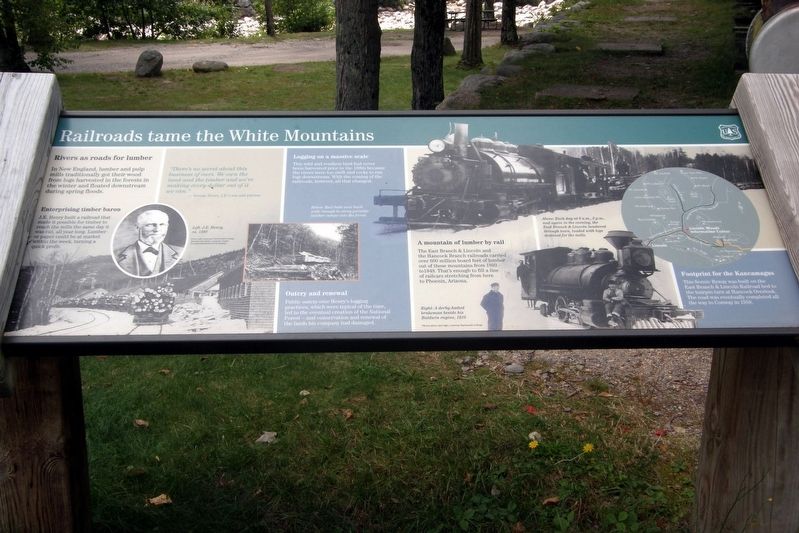
In New England, limber and pulp mills traditionally got their wood from logs harvested in the winter and floated downstream during spring floods.
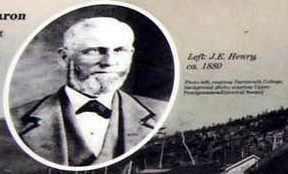
Enterprising lumber baron
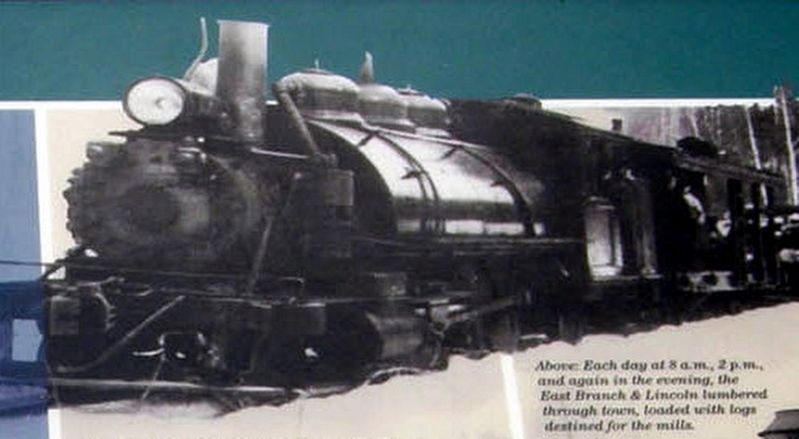
J.E. Henry built a railroad that made it possible for timber to reach the mills the same day it was cut, all year long. Lumber or paper could be at market within the week, turning a quick profit.
“There’s no secret about this business of ours. We own the land and the timber and we’re making every dollar out of it we can.”
George Henry, J.E.’s son and partner
Logging on a massive scale
This wild and restless land had never been harvested prior to the 1880s because the rivers were too swift and rocky to run logs downstream. With the coming of the railroads, all that changed.
Outcry and renewal
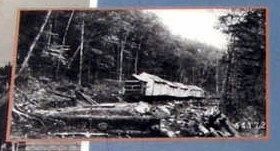
Public outcry over Henry’s logging practices, which were typical of the time, led to the eventual creation of the National Forest – and conservation and renewal of the lands his company had damaged.
A mountain of lumber by rail
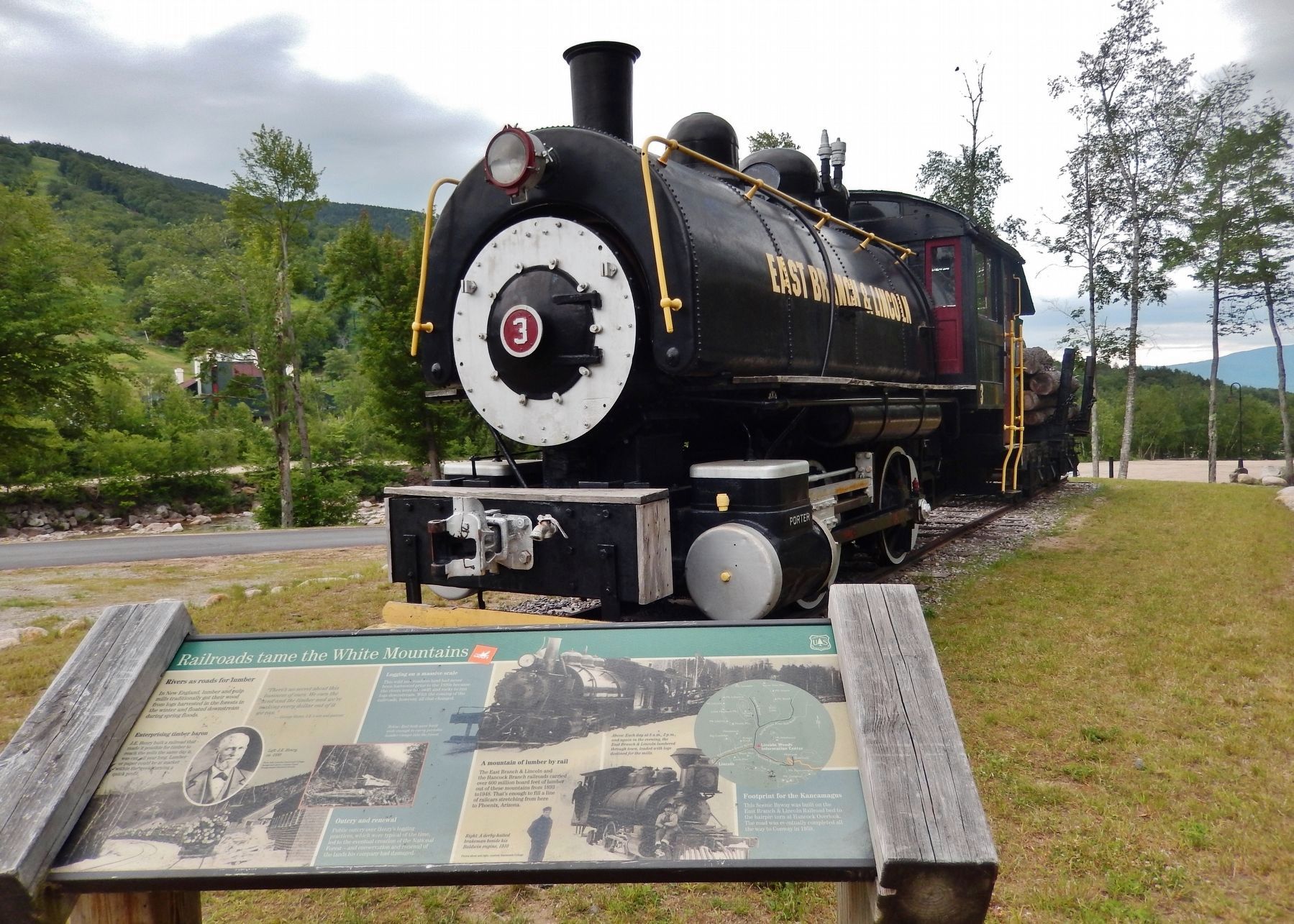
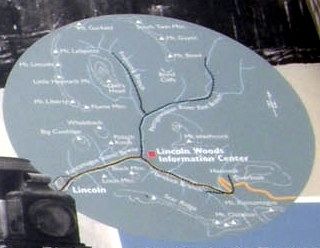
The East Branch & Lincoln and the Hancock Branch railroads carried over 600 million
this page online
Footprint for the Kancamagus
This Scenic Byway was built on the East Branch & Lincoln Railroad bed to the hairpin turn at Hancock Overlook. The road was eventually completed all the way to Conway in 1948.
Topics. This historical marker is listed in these topic lists: Industry & Commerce • Railroads & Streetcars.
Location. 44° 3.44′ N, 71° 38.083′ W. Marker is in Lincoln, New Hampshire, in Grafton County. It is on Kancamagus Highway, on the right when traveling east. The Marker is at the entrance to the Loon Mountain Resort. Touch for map. Marker is in this post office area: Lincoln NH 03251, United States of America. Touch for directions.
Regionally, this marker is in the White Mountains. It is also in the American Northeast and in New England. Globally, it is in North America, the Great North Woods, the Western Hemisphere, the Western World, and the Anglosphere. Historically, it finds itself in what was once one of the original Thirteen
Other nearby markers. At least 8 other markers are within 3 miles of this marker, measured as the crow flies: Loon Mountain (here, next to this marker); The People who Worked the Mills (approx. 2 miles away); A Timber Based Economy (approx. 2 miles away); Boom Town, Company Town (approx. 2 miles away); The Bear Show (approx. 2.6 miles away); The First Passenger Carrying Aerial Tramway in North America (approx. 2.6 miles away); Borasaurus (approx. 2.6 miles away); Quinten E. Mulleavey (approx. 2.7 miles away). Touch for a list and map of all markers in Lincoln.
Also see . . . East Branch & Lincoln Railroad. Images from the railroad's right of way. (Submitted on April 13, 2020, by Larry Gertner of New York, New York.)
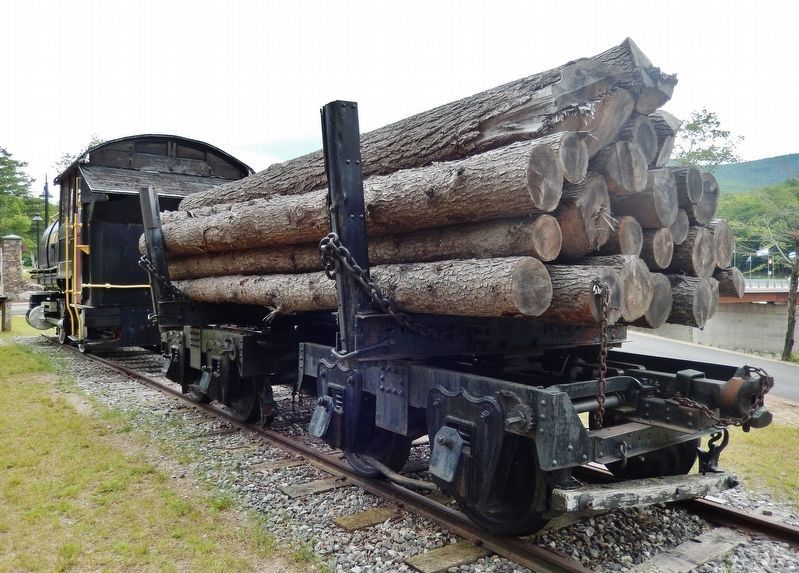
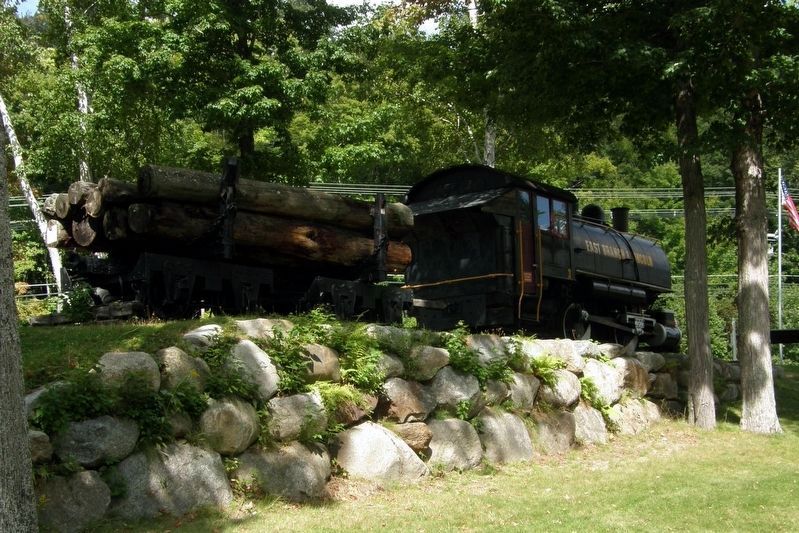
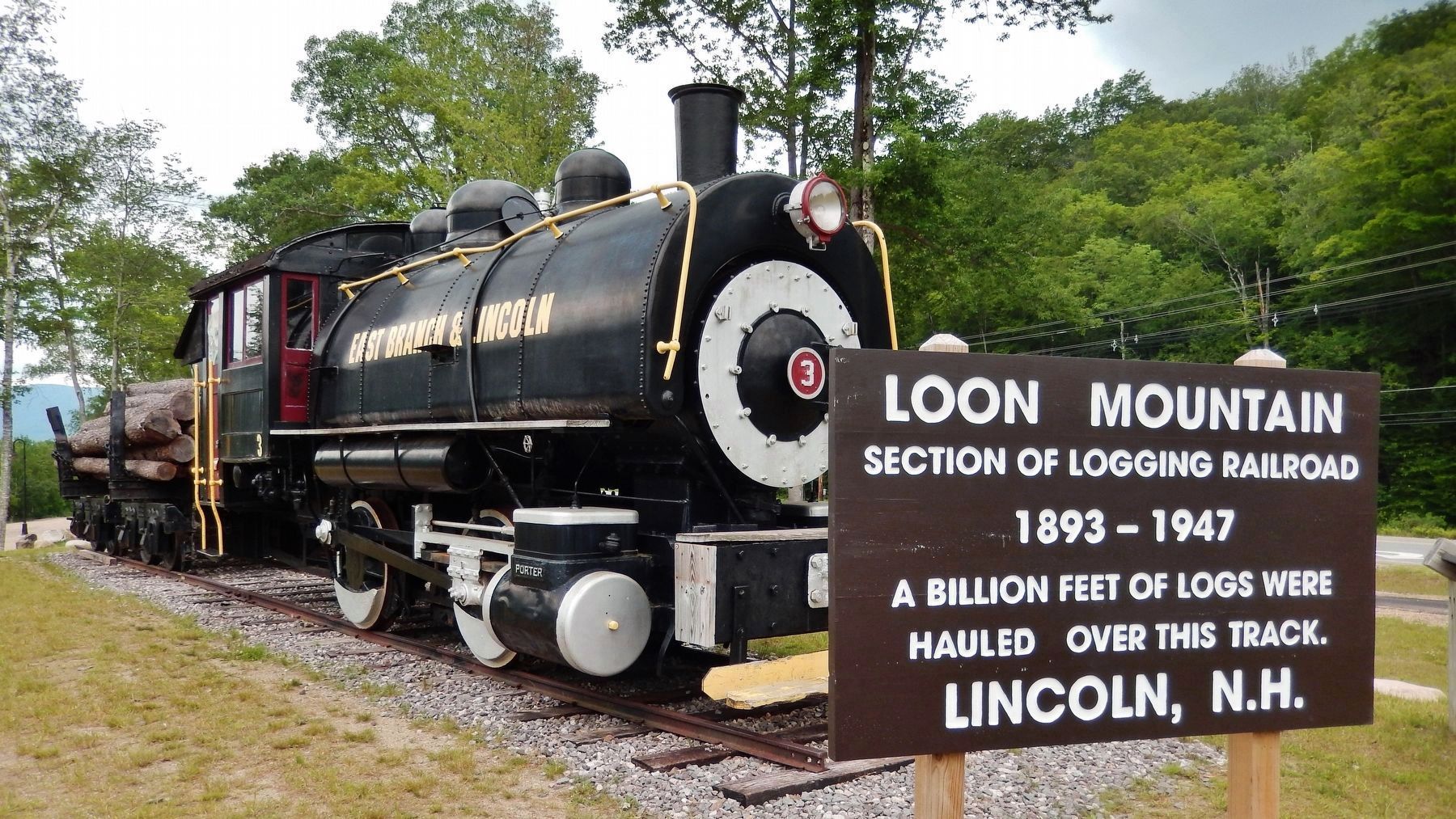
Section of Logging Railroad
1893 - 1947
A billion feet of logs were
hauled over this track.
Lincoln, N.H.
Credits. This page was last revised on April 13, 2020. It was originally submitted on July 23, 2017, by Larry Gertner of New York, New York. This page has been viewed 836 times since then and 56 times this year. Photos: 1. submitted on July 23, 2017, by Larry Gertner of New York, New York. 2. submitted on April 12, 2018, by Cosmos Mariner of Cape Canaveral, Florida. 3, 4, 5, 6. submitted on July 23, 2017, by Larry Gertner of New York, New York. 7. submitted on April 12, 2018, by Cosmos Mariner of Cape Canaveral, Florida. 8. submitted on July 23, 2017, by Larry Gertner of New York, New York. 9. submitted on April 12, 2018, by Cosmos Mariner of Cape Canaveral, Florida. • Bill Pfingsten was the editor who published this page.
