Locust Point Industrial Area in Baltimore, Maryland — The American Northeast (Mid-Atlantic)
British Bomb
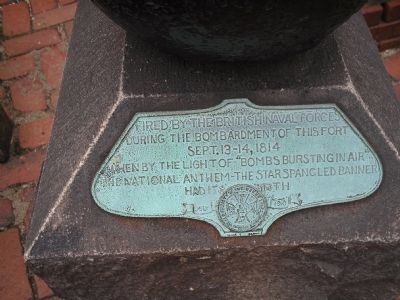
Photographed by Bill Coughlin, August 15, 2008
1. British Bomb Marker
Erected 1910 by Society of the War of 1812 in Maryland.
Topics and series. This historical marker is listed in these topic lists: Arts, Letters, Music • War of 1812. In addition, it is included in the Maryland, Fort McHenry series list. A significant historical month for this entry is September 1814.
Location. 39° 15.809′ N, 76° 34.807′ W. Marker is in Baltimore, Maryland. It is in the Locust Point Industrial Area. It can be reached from Constellation Plaza 0.3 miles east of Wallace Street, on the right when traveling east. Marker is on grounds of Fort McHenry National Monument. Touch for map. Marker is at or near this postal address: 2400 East Fort Avenue, Baltimore MD 21230, United States of America. Touch for directions.

Regionally, this marker is in Central Maryland. It is also in the American Mid-Atlantic, in the Chesapeake Bay Region, and on the Eastern Seaboard. Globally, it is in the North Atlantic Region,
this page online
Other nearby markers. At least 8 other markers are within walking distance of this marker: Providing For The Common Defense (here, next to this marker); Mortars vs. Guns (a few steps from this marker); Another Day on Duty… 1814 (within shouting distance of this marker); In Full Glory Reflected (within shouting distance of this marker); A Star Spangled Centennial (within shouting distance of this marker); Fort McHenry (within shouting distance of this marker); 1814 Enlisted Men's Barracks, No 2 (within shouting distance of this marker); Bombproofs (within shouting distance of this marker). Touch for a list and map of all markers in Baltimore.
Other markers no longer nearby. Powder Magazine (was a few steps from this marker but has been permanently removed); Commanding Officer’s Quarters (was a few steps from this marker but has been permanently removed); Star-Spangled Banner (was within shouting distance of this marker but has
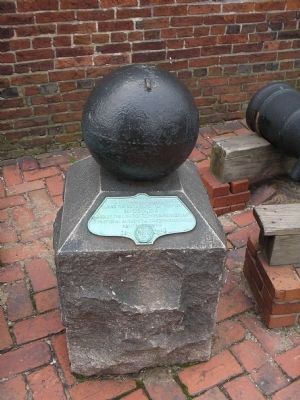
Photographed by Bill Coughlin, August 15, 2008
2. Marker at Fort McHenry
This carcass was a hollow shell filled with flammable ingredients. Had the British defeated Fort McHenry and reached Baltimore, these weapons would have been used to incinerate the wooden buildings in the city.
Also see . . .
1. Battle of Baltimore. HistoryCentral.com. (Submitted on August 30, 2008, by Bill Coughlin of Woodland Park, New Jersey.)
2. Fort McHenry National Monument and Historic Shrine. National Park Service. (Submitted on August 30, 2008, by Bill Coughlin of Woodland Park, New Jersey.)
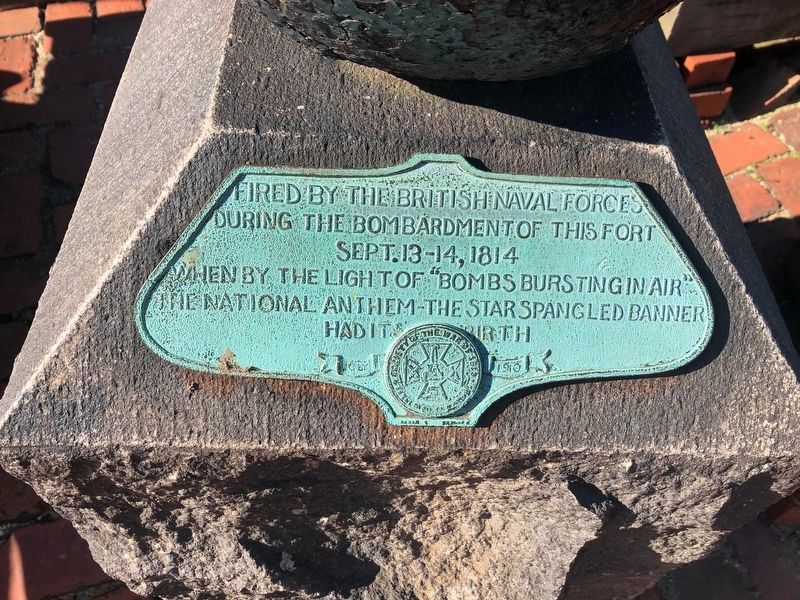
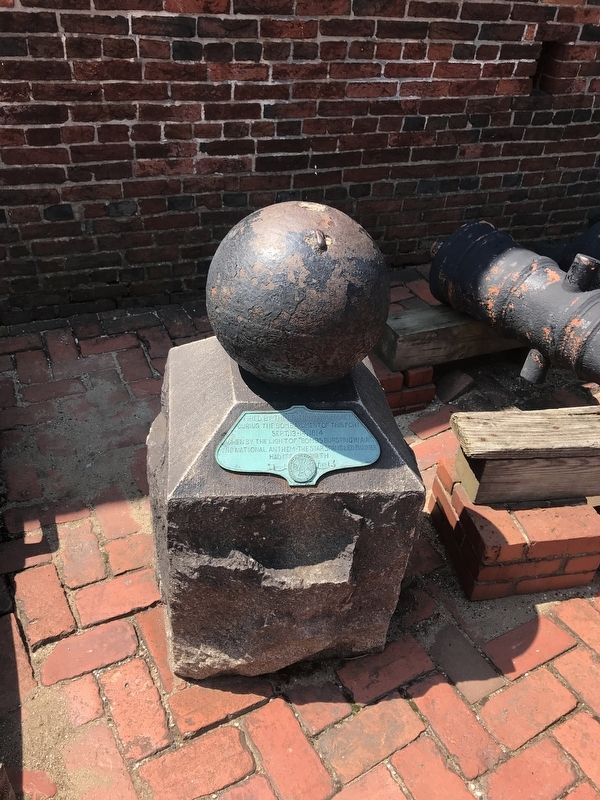
Photographed by Adam Margolis, August 25, 2021
4. British Bomb Marker
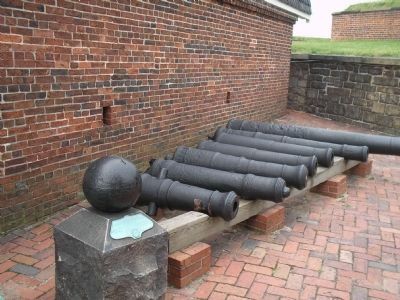
Photographed by Bill Coughlin, August 15, 2008
5. British Bomb Marker
This is one of four carcasses fired at the fort from the British bomb vessel Volcano during the bombardment. Nearly 1500 mortar bombs hurled at the fort were even more damaging. They killed four and wounded 24 defenders.
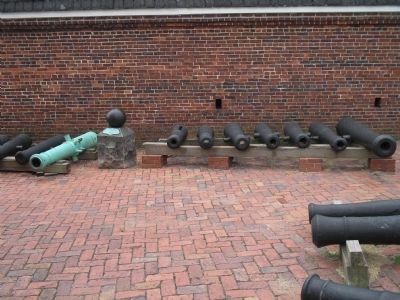
Photographed by Bill Coughlin, August 15, 2008
6. British Bomb with Mortar and Gun Display
Cannon, like the ones displayed here, were stationed at Fort McHenry during the British bombardment. They prevented the British ships from entering the harbor, but could not shoot far enough to damage the ships.
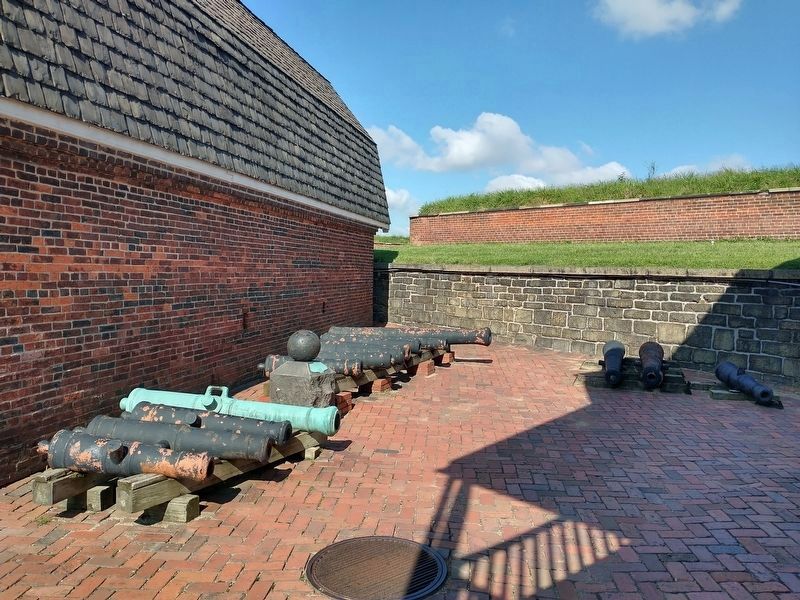
Photographed by Tom Bosse, September 18, 2025
7. British Bomb Marker
Credits. This page was last revised on February 6, 2026. It was originally submitted on August 30, 2008, by Bill Coughlin of Woodland Park, New Jersey. This page has been viewed 2,601 times since then and 56 times this year. Photos: 1, 2. submitted on August 30, 2008, by Bill Coughlin of Woodland Park, New Jersey. 3. submitted on February 17, 2020, by Devry Becker Jones of Washington, District of Columbia. 4. submitted on January 16, 2022, by Adam Margolis of Mission Viejo, California. 5, 6. submitted on August 30, 2008, by Bill Coughlin of Woodland Park, New Jersey. 7. submitted on January 31, 2026, by Tom Bosse of Jefferson City, Tennessee.
