Sackets Harbor in Jefferson County, New York — The American Northeast (Mid-Atlantic)
President James Monroe
Photographed by Michael Herrick, October 18, 2017
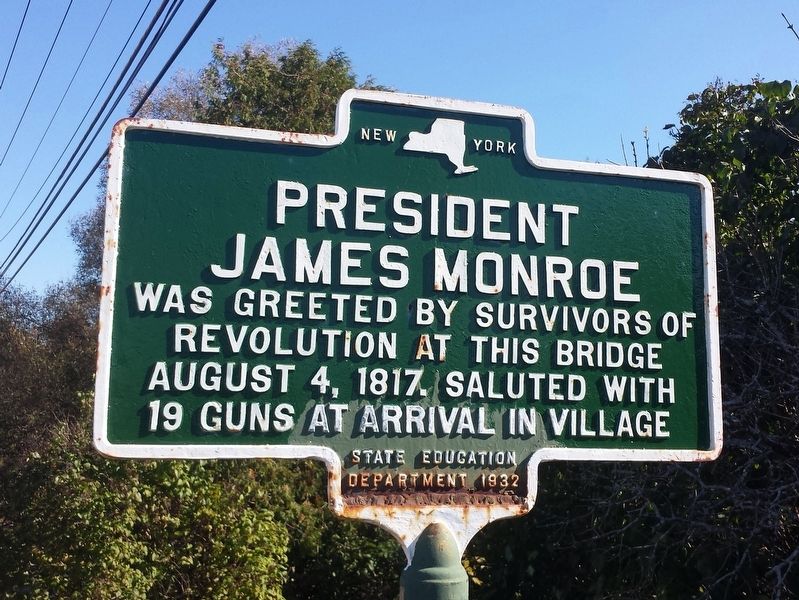
1. President James Monroe Marker
James Monroe
Was Greeted By Survivors Of
Revolution At This Bridge
August 4, 1817. Saluted With
19 Guns At Arrival In Village.
Erected 1932 by State of New York Education Department.
Topics and series. This historical marker is listed in these topic lists: Patriots & Patriotism • War, US Revolutionary. In addition, it is included in the Former U.S. Presidents: #05 James Monroe series list. A significant historical date for this entry is August 4, 1817.
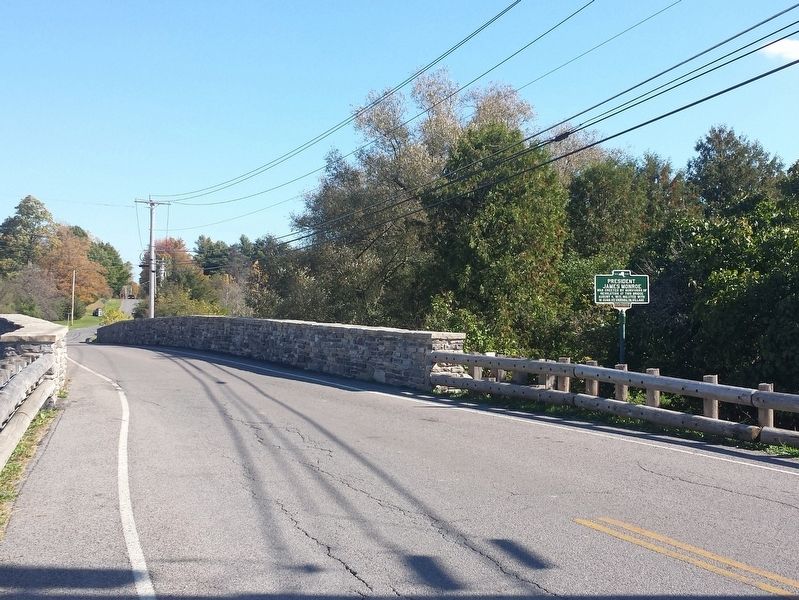
Location. 43° 57.172′ N, 76° 6.166′ W. Marker is in Sackets Harbor, New York, in Jefferson County. It is at the intersection of Military Road and Hounsfield Street, on the right when traveling north on Military Road. Touch for map. Marker is in this post office area: Sackets Harbor NY 13685, United States of America. Touch for directions.

Regionally, this marker is in Upstate New York and in the Adirondacks & North Country. It is also in the American Northeast and in the Mid-Atlantic. Globally, it is in North America, on the Great Lakes, in the Western Hemisphere, in the Western World, and in the Anglosphere. Historically, it finds itself in what
this page online
Other nearby markers. At least 8 other markers are within walking distance of this marker: Patriot Burials (approx. ¼ mile away); Polo Field (approx. ¼ mile away); Sackets Harbor Military Cemetery Memorial (approx. 0.3 miles away); In Memory of the War of 1812 (approx. 0.3 miles away); Ninth U.S. Infantry Memorial (approx. 0.3 miles away); Semper Fidelis (approx. 0.3 miles away); In Memory of Our Comrades (approx. 0.3 miles away); Water Tower Observation Tower (approx. 0.3 miles away). Touch for a list and map of all markers in Sackets Harbor.
Photographed by Michael Herrick, October 18, 2017
2. President James Monroe Marker
Photographed by Allen C. Browne, February 16, 2015
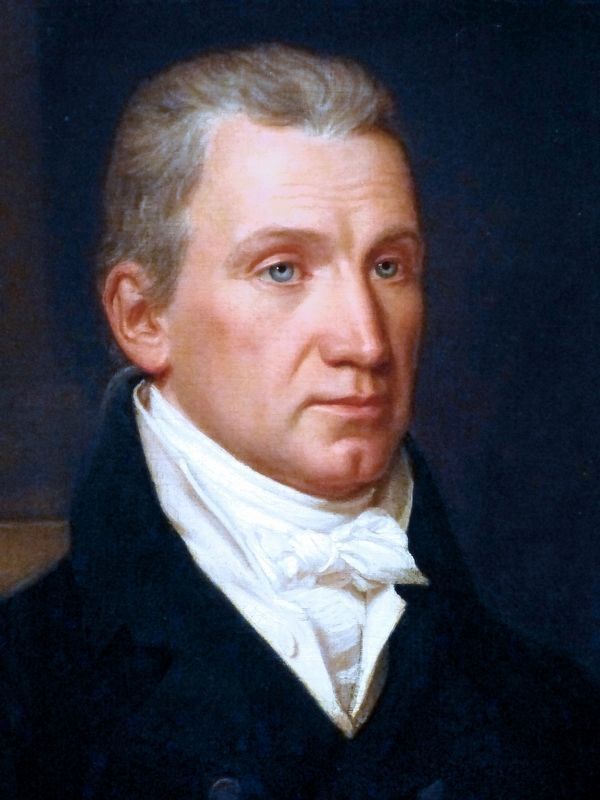
3. President James Monroe
This 1816 portrait of James Monroe by John Vanderlyn hangs in the National Portrait Gallery in Washington, DC.
“In 1820, White House incumbent James Monroe stood virtually unopposed in his bid for a second term, an expression of the so-called ‘Era of Good Feelings’ that set in after the War of 1812 and was marked by a temporary halt in two-party factionalism.
Monroe brought to his presidency a style that meshed well with this rancorless climate. When, for example, he vetoed public improvements legislation, he offered Congress suggestions for accomplishing the same end through means that circumvented his Constitution-based objections. The most enduring legacy of his administration, however, was the Monroe Doctrine, which registered opposition to European meddling in the Western Hemisphere. It ultimately became a keystone of American foreign policy.
The restrained coloring and brushwork in Monroe's portrait by John Vanderlyn testifies to the strong influence of French neoclassicism during the artist's years of study in Paris. It may also reflect Monroe's own tastes, which ran to the French as a result of several diplomatic missions to Paris.” — National Portrait Gallery
“In 1820, White House incumbent James Monroe stood virtually unopposed in his bid for a second term, an expression of the so-called ‘Era of Good Feelings’ that set in after the War of 1812 and was marked by a temporary halt in two-party factionalism.
Monroe brought to his presidency a style that meshed well with this rancorless climate. When, for example, he vetoed public improvements legislation, he offered Congress suggestions for accomplishing the same end through means that circumvented his Constitution-based objections. The most enduring legacy of his administration, however, was the Monroe Doctrine, which registered opposition to European meddling in the Western Hemisphere. It ultimately became a keystone of American foreign policy.
The restrained coloring and brushwork in Monroe's portrait by John Vanderlyn testifies to the strong influence of French neoclassicism during the artist's years of study in Paris. It may also reflect Monroe's own tastes, which ran to the French as a result of several diplomatic missions to Paris.” — National Portrait Gallery
Credits. This page was last revised on November 27, 2019. It was originally submitted on October 22, 2017, by Michael Herrick of Southbury, Connecticut. This page has been viewed 684 times since then and 42 times this year. Photos: 1, 2. submitted on October 22, 2017, by Michael Herrick of Southbury, Connecticut. 3. submitted on October 23, 2017, by Allen C. Browne of Silver Spring, Maryland.
