Hofje van Oorschot
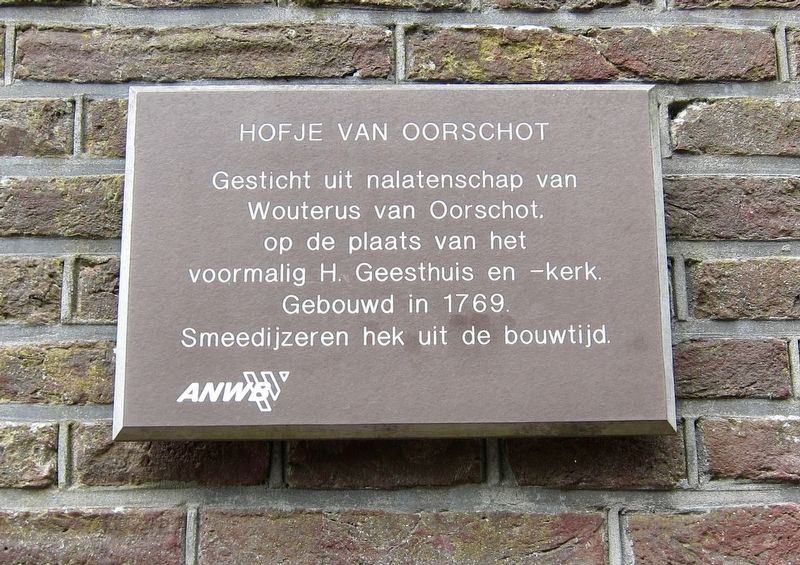

Wouterus van Oorschot,
op de plaats van het
vormaalig H. Geesthuis en - kerk.
Gebouwd in 1769.
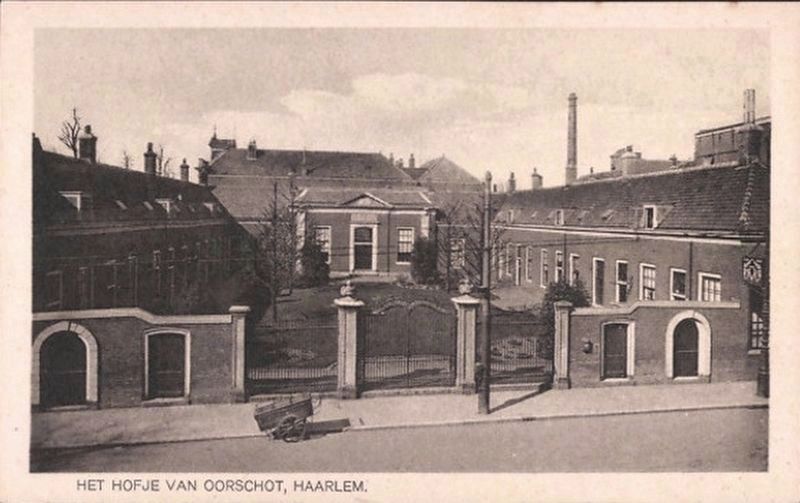
Smeedijzeren hek uit de bouwtijd.
Founded from the bequest of Wouterus van Oorschot, on the former site of the Church- and House of the Holy Spirit. Built in 1769. The wrought iron gate dates from the time of construction.
Erected by The ANWB.
Topics. This historical marker is listed in this topic list: Charity & Public Work. A significant historical year for this entry is 1769.
Location. 52° 22.995′ N, 4° 38.111′ E. Marker is in Oude Stad, Noord-Holland (North Holland), in Haarlem. It is at the intersection of Kruisstraat and Krocht, on the right when traveling south on Kruisstraat. Touch for map. Marker is at or near this postal address: Kruisstraat 44G, Oude Stad, Noord-Holland 2011 PZ, Netherlands. Touch for directions.
Regionally, it is in Europe, the European Union, Atlantic Europe, the Benelux Low Countries, the Schengen Area, Western Europe, and the Western World. Historically, it finds itself in what was once the Holy Roman Empire.
this page online
Other nearby markers. At least 8 other markers are within walking distance of this marker: Paterskerk (R.K.) / Church of Our Father (Roman Catholic) (about 90 meters away, measured in a direct line); ‘The Hiding Place’ (about 120 meters away); Hartog de Leeuw (about 150 meters away); Zijlstraat 76 (about 180 meters away); Jansridder Statue (about 180 meters away); V.m. Postkantoor / Former Post Office (about 180 meters away); Laurens Janszoon Coster (about 180 meters away); Janskerk (about 180 meters away).
Regarding Hofje van Oorschot. The literal meaning of the Dutch word "hofje" in English, "small garden" is inadequate to convey its functional meaning. A hofje is a social institution, usually funded and operated by a foundation, that provides housing (with a small garden) for those in lesser circumstances, i.e. the aged, single mothers, or widows.
Also see . . .
1. Hofjes in Haarlem (Wikipedia). "What we would call 'social work' today was called charity work in earlier centuries. Hofjes in Haarlem are the remnants of charity work that were founded by defunct community structures that were divided by religious order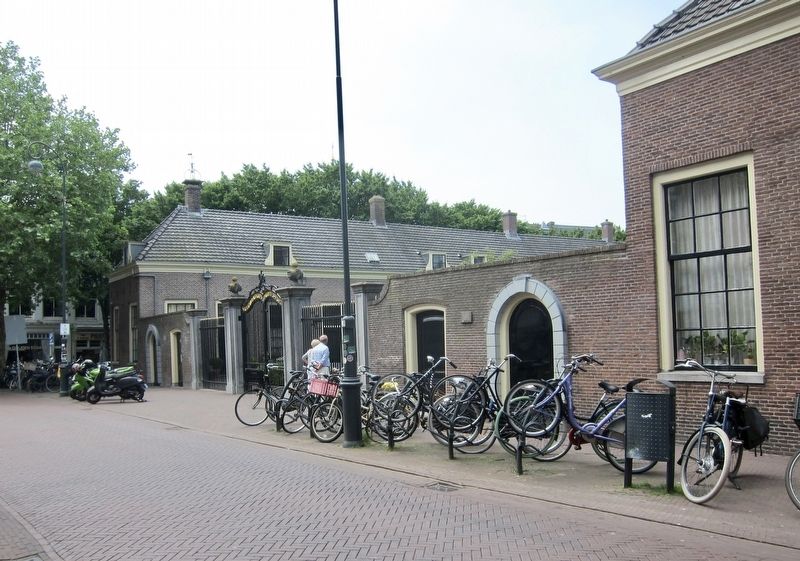
2. InZicht Haarlem: Hofje van Oorschot (YouTube, 3 min., in Dutch). A short video tour of the hofje and its grounds. (Submitted on February 5, 2018.)
3. Hofje van Oorschot (Wikipedia). "This hofje was founded upon the death of the donor in 1768 (the date on the memorial plaque on the facade), but wasn't built until 1770, because of demands made by the neighbor on the other side of the street, David Van Lennep. He wanted an attractive view, and organized the commission of the monumental wrought-iron gate that exists today. The donor was Wouterus van Oorschot, a burger of Amsterdam who was born in Dordrecht. He founded the hofje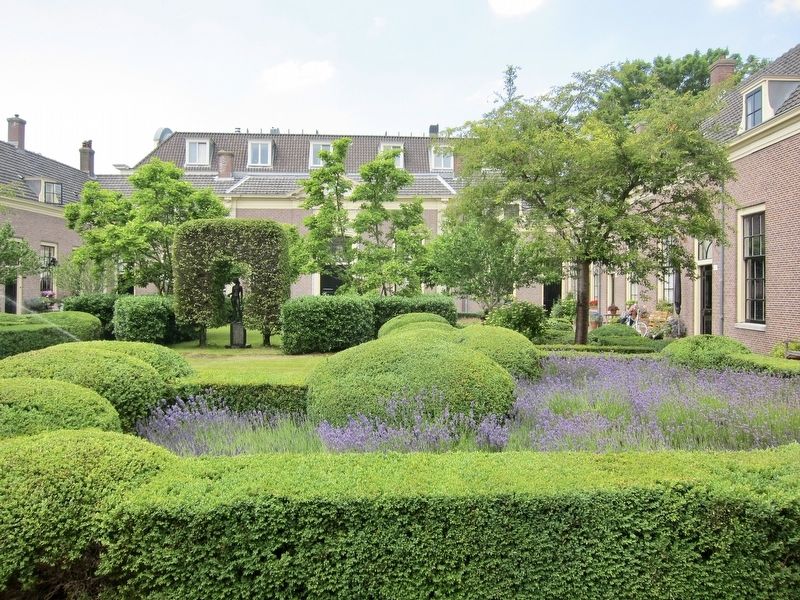
Credits. This page was last revised on February 12, 2022. It was originally submitted on February 5, 2018, by Andrew Ruppenstein of Lamorinda, California. This page has been viewed 350 times since then and 40 times this year. Photos: 1, 2, 3, 4. submitted on February 5, 2018, by Andrew Ruppenstein of Lamorinda, California.
