D'Iberville in Harrison County, Mississippi — The American South (East South Central)
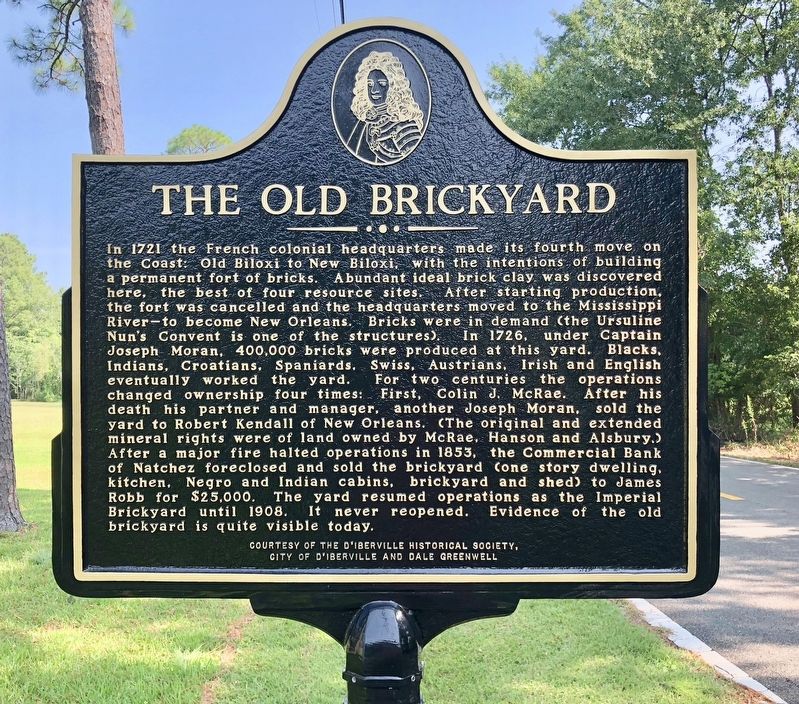
The Old Brickyard
Photographed by Mark Hilton, August 23, 2018
1. The Old Brickyard Marker
this page online
Erected 2017 by the D'Iberville Historical Society, City of D'Iberville and Dale Greenwell.
Topics. This historical marker is listed in these topic lists: Industry & Commerce • Notable Places. A significant historical year for this entry is 1721.
Location. 30° 25.686′ N, 88° 54.003′ W. Marker is in D'Iberville, Mississippi, in Harrison County. It is on 7th Avenue north of Moran Street, on the right when traveling south. Touch for map. Marker is at or near this postal address: 7th Avenue, Diberville MS 39540, United States of America. Touch for directions.

Regionally, this marker is in the American South, specifically in the Deep South, and on the Gulf Coast. Globally, it is in North America, a Gulf of Mexico state, the Western Hemisphere, the Western World, and the Anglosphere. Historically, it finds itself in what was once New Spain, the Viceroyalty of New France, the territory of the Mississippian Culture, one of the Confederate States of America, and the
Photographed by Mark Hilton, August 23, 2018
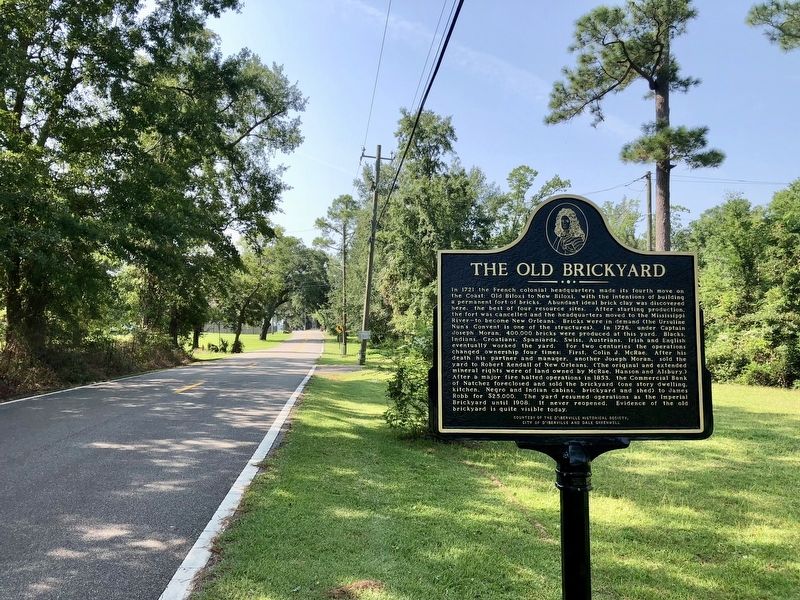
2. The Old Brickyard Marker looking south on 7th Avenue towards the Back Bay.
Other nearby markers. At least 8 other markers are within walking distance of this marker: Santa Cruz Landing (approx. 0.2 miles away); Harvey's Hill (approx. 0.4 miles away); The Quave Commercial Strip (approx. half a mile away); The Five Trails (approx. 0.6 miles away); Fort Maurepas and Old Biloxi (approx. 0.6 miles away); D'Iberville High School Original Site (approx. 0.6 miles away); Original D'Iberville Community House (approx. 0.6 miles away); The Land and Legend of the Cross (approx. 0.6 miles away). Touch for a list and map of all markers in D'Iberville.
Photographed by Mark Hilton, August 23, 2018
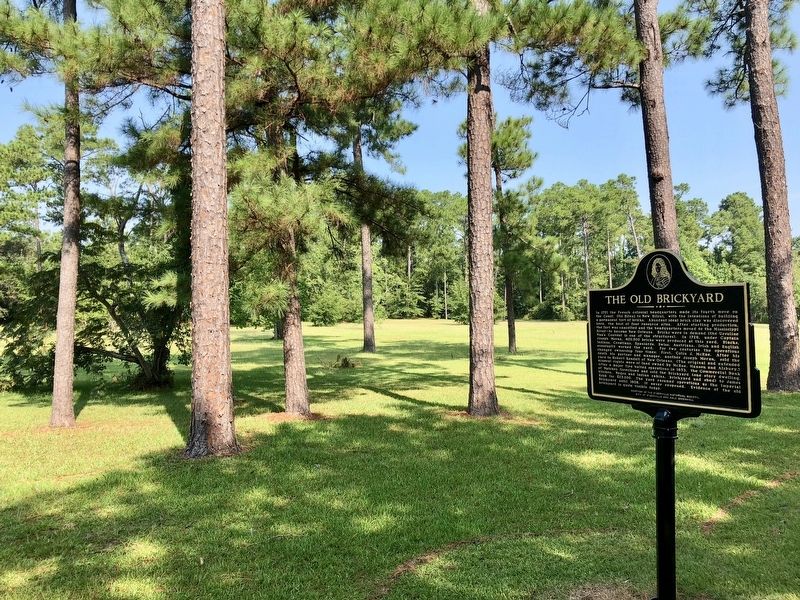
3. The Old Brickyard Marker
Credits. This page was last revised on August 24, 2018. It was originally submitted on August 24, 2018, by Mark Hilton of Montgomery, Alabama. This page has been viewed 1,152 times since then and 81 times this year. Photos: 1, 2, 3. submitted on August 24, 2018, by Mark Hilton of Montgomery, Alabama.
