
Ventura in Ventura County, California — The American West (Pacific Coastal)
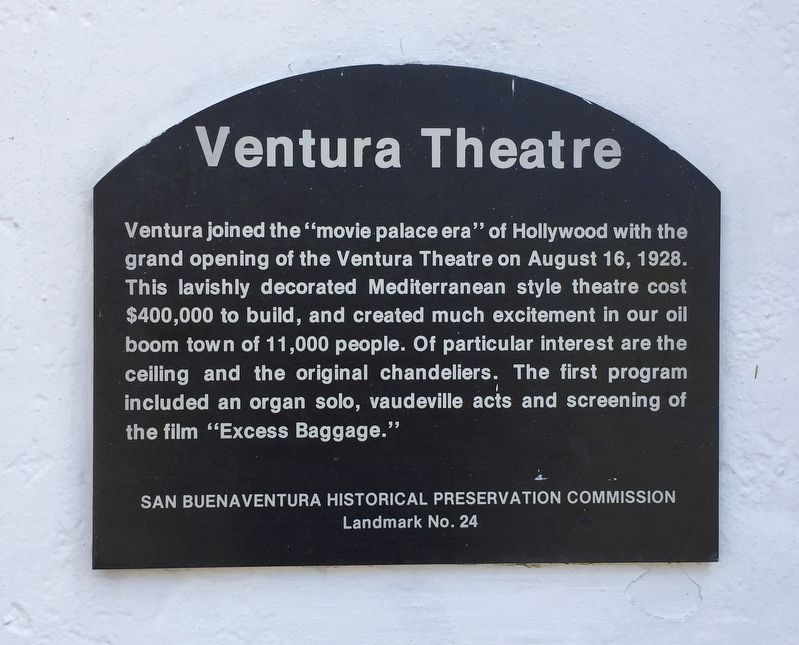
Ventura Theatre
Photographed by Andrew Ruppenstein, March 4, 2019
1. Ventura Theatre Marker
Erected by San Buenaventura Historical Preservation Commission. (Marker Number 24.)
Topics. This historical marker is listed in these topic lists: Arts, Letters, Music • Entertainment. A significant historical date for this entry is August 16, 1928.
Location. 34° 16.814′ N, 119° 17.488′ W. Marker is in Ventura, California, in Ventura County. It is on South Chestnut Street south of East Main Street, on the right when traveling north. Touch for map. Marker is at or near this postal address: 26 South Chestnut Street, Ventura CA 93001, United States of America. Touch for directions.

Regionally, this marker is in Greater Los Angeles, on Central Coast, and in the Transverse Ranges. It is
this page online
Other nearby markers. At least 8 other markers are within walking distance of this marker: Groene Building (within shouting distance of this marker); Jack Rose (about 300 feet away, measured in a direct line); Erle Stanley Gardner’s Law Office (about 500 feet away); Dr. Cunane House (about 600 feet away); Ventura Veterans Memorial (about 700 feet away); Dacy Fazio House (about 700 feet away); Bard Hospital (about 800 feet away); 632 E. Thompson Boulevard (about 800 feet away). Touch for a list and map of all markers in Ventura.
Also see . . . Ventura Theatre (Wikipedia). "Ventura Theatre (also known as Majestic Ventura Theatre) is a historic live concert venue in downtown Ventura, California. This was the only luxury theatre built in Ventura County in the 1920s in the "style of the great movie palaces." The lavish, elegant interior of gilt
Photographed by Andrew Ruppenstein, March 4, 2019
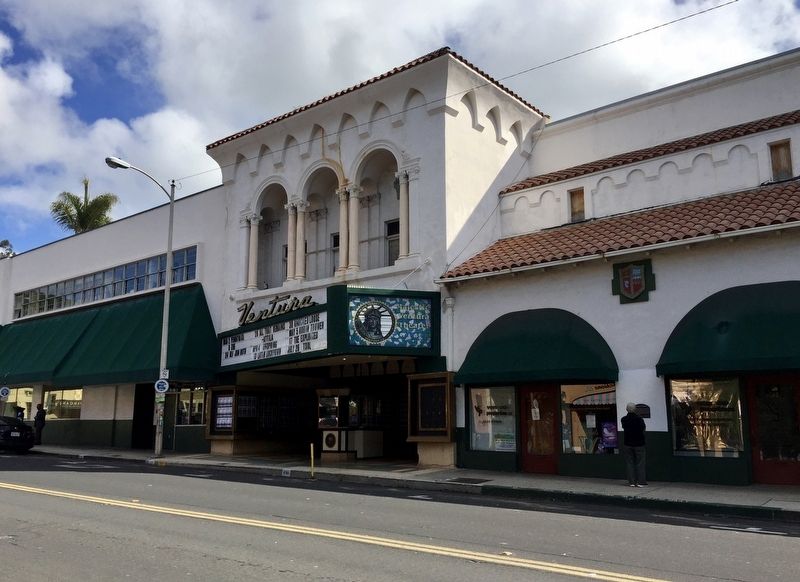
2. Ventura Theatre and Marker
The marker is visible here on the right of the picture, with a gentleman standing in front, reading it.
Photographed by Andrew Ruppenstein, March 4, 2019
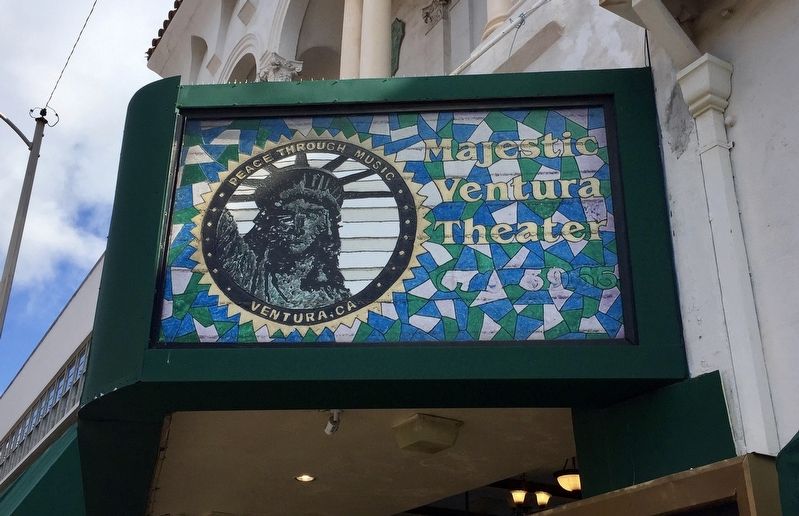
3. Ventura Theatre Marquee - "Peace Through Music"
Credits. This page was last revised on March 18, 2019. It was originally submitted on March 16, 2019, by Andrew Ruppenstein of Lamorinda, California. This page has been viewed 1,045 times since then and 57 times this year. Photos: 1, 2, 3. submitted on March 18, 2019, by Andrew Ruppenstein of Lamorinda, California.
