Smithville in Wayne County, Ohio — The American Midwest (Great Lakes)
Historic John Mishler Weaving Mill
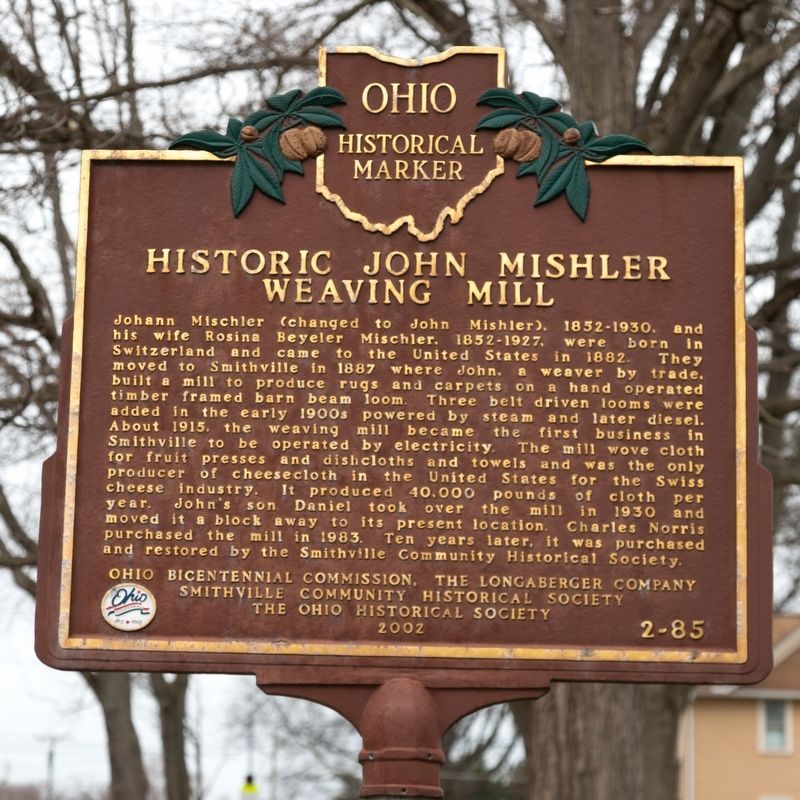
Photographed by J. J. Prats, April 4, 2019
1. Historic John Mishler Weaving Mill Marker
Erected 2002 by Ohio Bicentennial Commission, The Longaberger Company, Smithville Community Historical Society, and The Ohio Historical Society. (Marker Number 2-85.)
Topics and series.
this page online
Location. 40° 51.934′ N, 81° 51.345′ W. Marker is in Smithville, Ohio, in Wayne County. It is at the intersection of East Main Street (Ohio Route 585) and East Prospect Street, on the right when traveling east on East Main Street. It is at the mill. Touch for map. Marker is at or near this postal address: 383 E Main St, Smithville OH 44677, United States of America. Touch for directions.

Regionally, this marker is in Amish Country and in Greater Cleveland. It is also in the American Midwest and in the Corn Belt. Globally, it is in North America, the Western Hemisphere, the Western World, and the Anglosphere. Historically, it finds itself in what was once the Haudenosaunee (Iroquois) Confederacy, the territory of the Mississippian Culture, and the Northwest Territory.
Other nearby markers. At least 8 other markers are within 7 miles of this marker, measured as the crow flies: Charles W. Follis (approx.
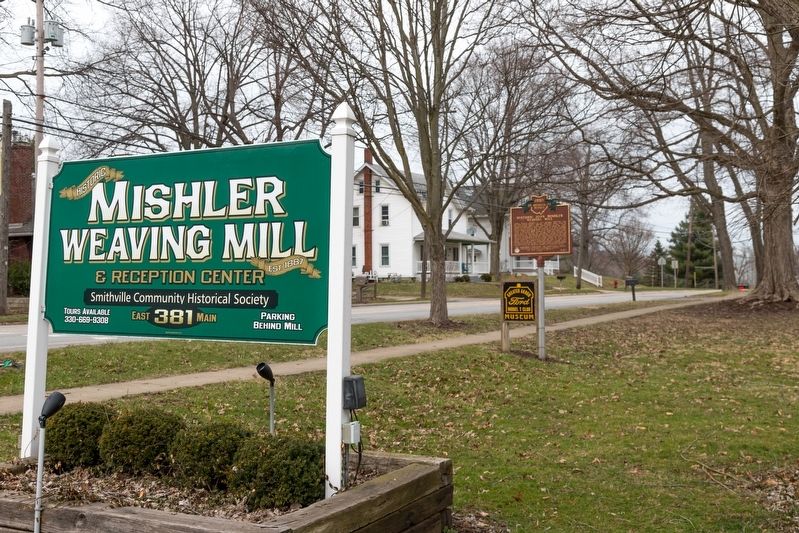
Photographed by J. J. Prats, April 4, 2019
2. Historic John Mishler Weaving Mill Marker
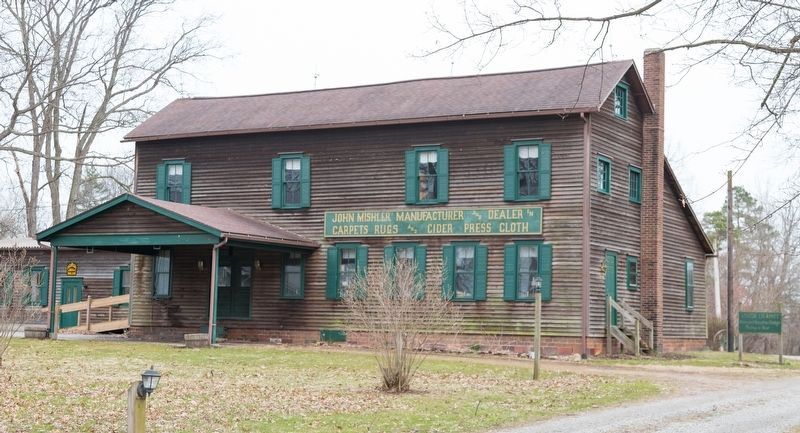
Photographed by J. J. Prats, April 4, 2019
3. John Mishler Weaving Mill
“John Mishler, Manufacturer and Dealer in Carpets, Rugs and Cider Press Cloth”
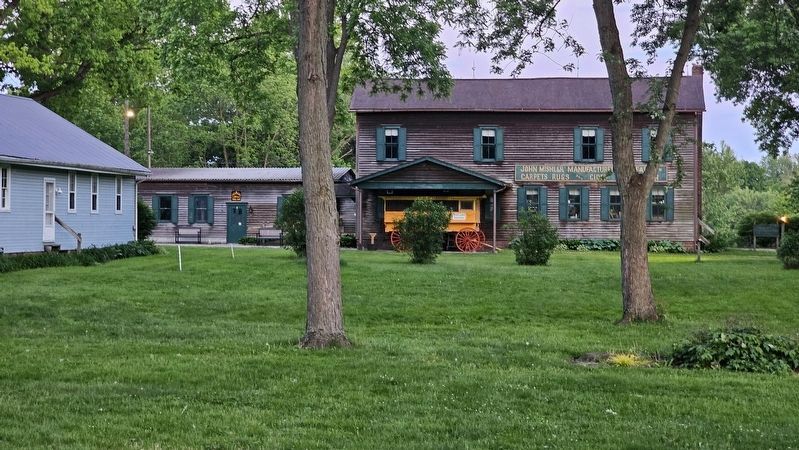
Photographed by Ian Lefkowitz, May 23, 2025
4. Historic John Mishler Weaving Mill
The mill at sunset, with a carriage in tow.
Credits. This page was last revised on June 19, 2025. It was originally submitted on April 13, 2019, by J. J. Prats of Powell, Ohio. This page has been viewed 2,085 times since then and 142 times this year. Photos: 1, 2, 3. submitted on April 13, 2019, by J. J. Prats of Powell, Ohio. 4. submitted on June 13, 2025, by Ian Lefkowitz of New York, New York.
