Missoula in Missoula County, Montana — The American West (Mountains)
Joseph Dixon Residence
This Property Contributes to the East Pine Street Historic District
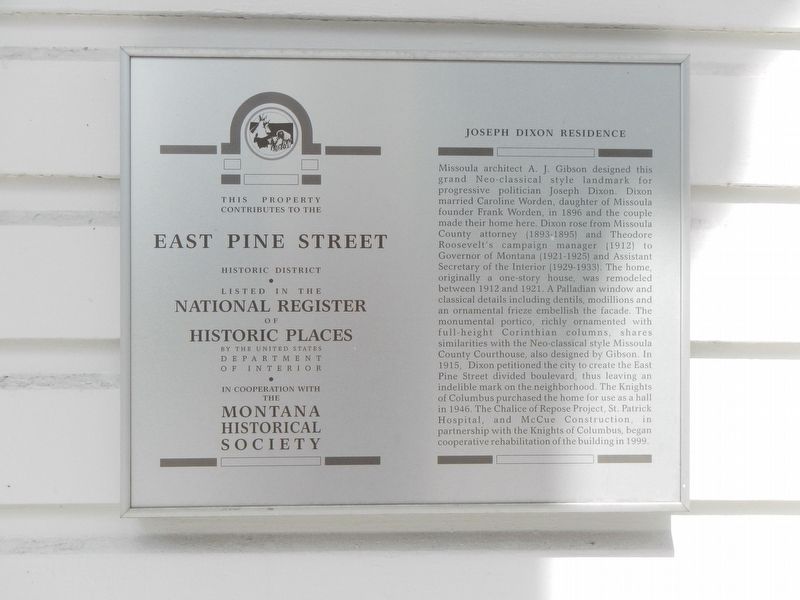
Photographed by Barry Swackhamer, August 21, 2019
1. Joseph Dixon Residence Marker
this page online
Erected by Montana National Register Sign Program.
Topics and series. This historical marker is listed in these topic lists: Architecture • Fraternal or Sororal Organizations • Government & Politics. In addition, it is included in the Former U.S. Presidents: #26 Theodore Roosevelt, and the Montana National Register Sign Program series lists. A significant historical year for this entry is 1896.
Location. 46° 52.339′ N, 113° 59.392′ W. Marker is in Missoula, Montana, in Missoula County. It is on East Pine Street near Washington Street, on the left when traveling east. Touch for map. Marker is at or near this postal address: 312 East Pine Street, Missoula MT 59802, United States of America. Touch for directions.

Regionally, this marker is in Western Montana and in Glacier Country. It is also in the American Mountain West and in the Lewis & Clark Corridor. Globally, it is in North America, the Rocky Mountains, the Western Hemisphere, the Western World, and the Anglosphere. Historically, it finds itself in what was once Rupert’s Land and also the Louisiana
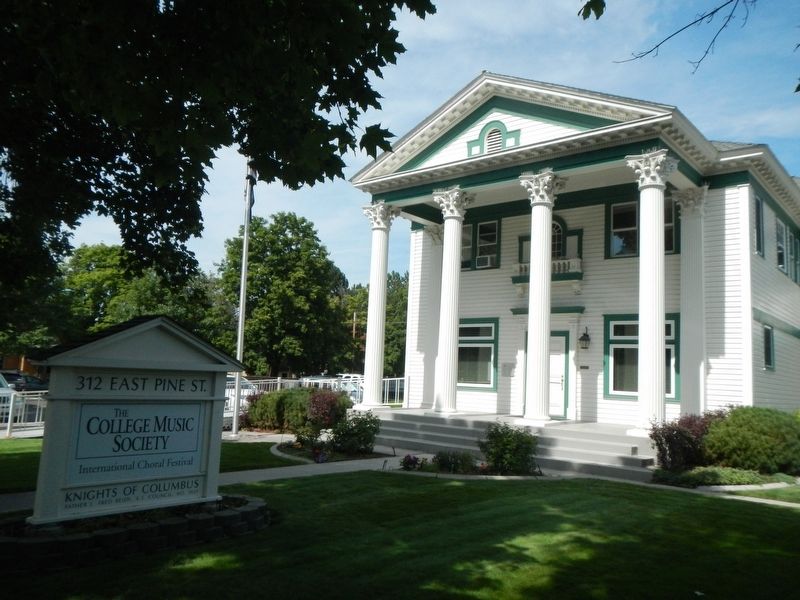
Photographed by Barry Swackhamer, August 21, 2019
2. Joseph Dixon Residence and Marker
The marker is to the left of the entrance.
Other nearby markers. At least 8 other markers are within walking distance of this marker: Francis L. Worden Residence (within shouting distance of this marker); Steiger Apartments (about 500 feet away, measured in a direct line); Federal Building & United States Post Office (about 600 feet away); Draper Residence (about 700 feet away); Missoula Laundry Company (about 700 feet away); Labor Temple (approx. 0.2 miles away); Dixon-Duncan Block (approx. 0.2 miles away); The Atlantic Hotel (approx. 0.2 miles away). Touch for a list and map of all markers in Missoula.
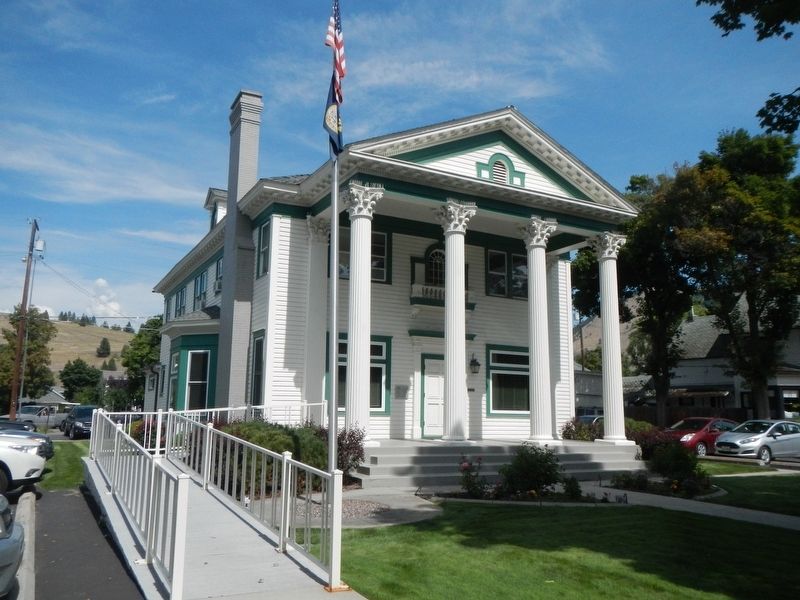
Photographed by Barry Swackhamer, August 21, 2019
3. Joseph Dixon Residence
Credits. This page was last revised on January 20, 2020. It was originally submitted on January 20, 2020, by Barry Swackhamer of Brentwood, California. This page has been viewed 404 times since then and 40 times this year. Photos: 1, 2, 3. submitted on January 20, 2020, by Barry Swackhamer of Brentwood, California.
