Shandaken in Ulster County, New York — The American Northeast (Mid-Atlantic)
The History of Shandaken, Bushnellsville & Allaben
Photographed by Cosmos Mariner, July 3, 2019
1. The History of Shandaken, Bushnellsville & Allaben Marker
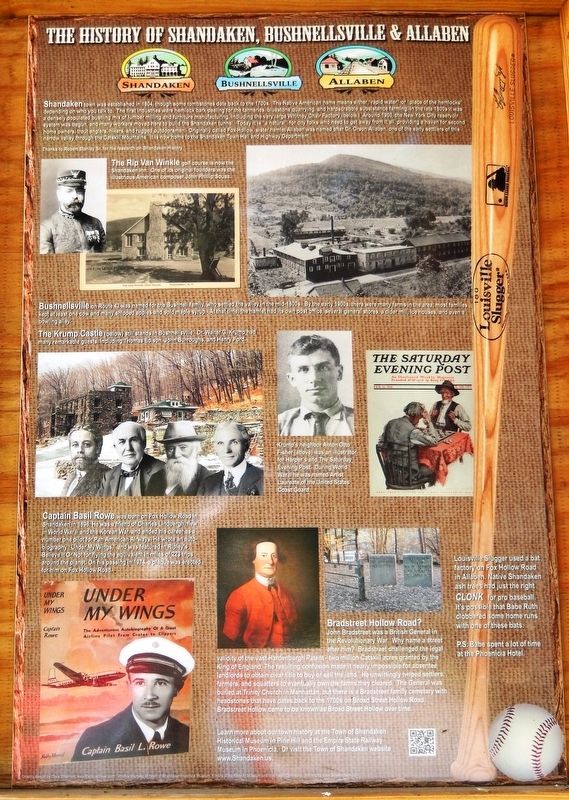
Originally called Fox Hollow, sister hamlet Allaben was named after Dr. Orson Allaben, one of the early settlers of this narrow valley through the Catskill Mountains. It is now home to the Shandaken Town Hall and Highway Department.
Louisville Slugger used a bat factory on Fox Hollow Road in Allaben. Native Shandaken ash trees had just the right CLONK for pro baseball.
this page online
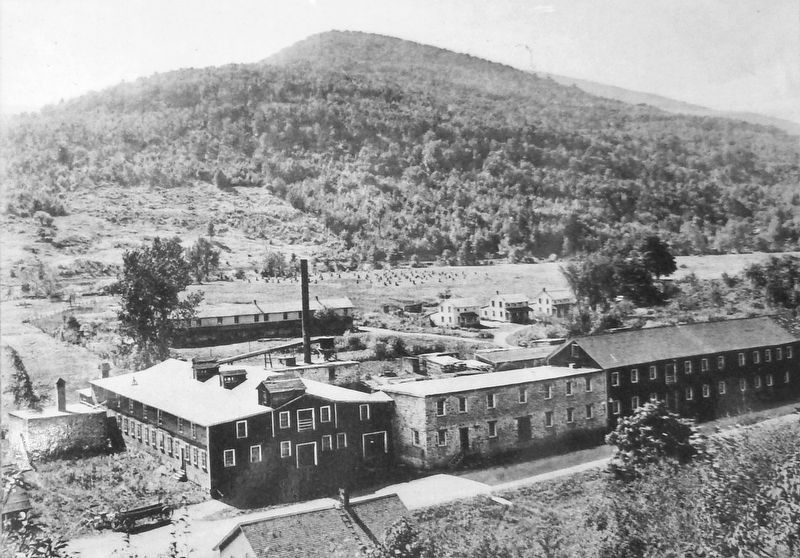
Bushnellsville on Route 42 was named for the Bushnell family, who settled the valley in the mid-1800s. By the early 1900s, there were many farms in the area; most families kept at least one cow and many shipped apples and sold maple syrup. At that time, the hamlet had its own post office, several general stores, a cider mill, ice houses, and even a bowling alley.
Learn more about our town history at the Town of Shandaken Historical Museum in Pine Hill and the Empire State Railway Museum in Phoenicia. Or visit the Town of Shandaken website www.Shandaken.us.
Topics. This historical marker is listed in these topic lists: Industry & Commerce • Settlements & Settlers. A significant historical year for this entry is 1804.
Location. 42° 7.171′ N, 74° 23.561′ W. Marker is in Shandaken, New York, in Ulster County. It can be reached from New York State Route 28 just west of Ruthenbeck Road, on the right when traveling west. Marker is mounted in
2. Marker detail: Whitney Chair Factory

Regionally, this marker is in Upstate New York and in the Hudson Valley. It is also in the American Northeast, in the Mid-Atlantic, and on the Eastern Seaboard. Globally, it is in the North Atlantic Region, North America, the Western Hemisphere, the Western World, and the Anglosphere. Historically, it finds itself in what was once New Netherland and also one of the original Thirteen Colonies.
Other nearby markers. At least 8 other markers are within 5 miles of this marker, measured as the crow flies: Town of Shandaken Historic Sites (here, next to this marker); The Shandaken Tunnel and the N.Y.C. Water Supply System (here, next to this marker); Catskill Water Supply System (approx. 1½ miles away); History of Big Indian and Oliverea (approx. 3 miles away); State Land (approx. 3.2 miles away); Chichester (approx. 4½ miles away); Belleayre Mountain Ski Center (approx. 4.6 miles away); History of Pine Hill and Highmount
3. Marker detail: John Phillip Sousa
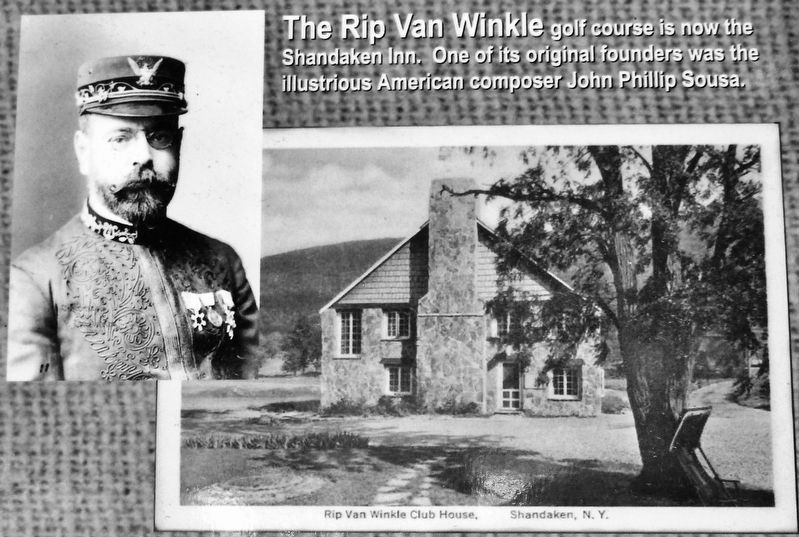
The Rip Van Winkle golf course is now the Shandaken Inn. One of its original founders was the illustrious American composer John Phillip Sousa.

4. Marker detail: The Crump Castle
The Crump Castle still stands in Bushnellsville. Dr. Walter G. Crump had many remarkable guests, including Thomas Edison, John Burroughs, and Henry Ford.
5. Marker detail: Anton Otto Fisher
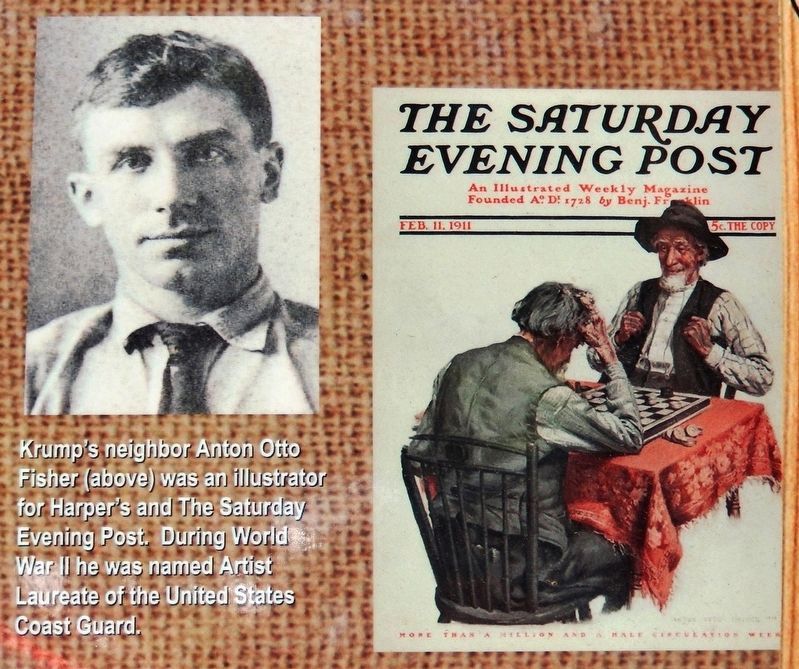
Crump’s neighbor Anton Otto Fisher (above) was an illustrator for Harper’s and The Saturday Evening Post. During World War II he was named Artist Laureate of the United States Coast Guard.
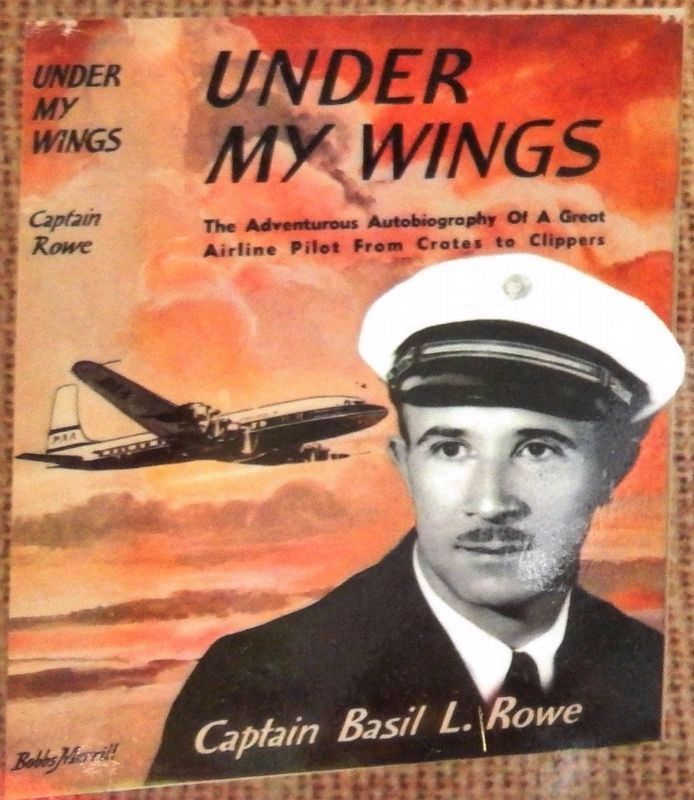
6. Marker detail: Captain Basil L. Rowe
Captain Basil Rowe was born on Fox Hollow Road in Shandaken in 1896. He was a friend of Charles Lindbergh, flew in World War II and the Korean War, and ended his career as a number one pilot for Pan American Airways. He wrote an autobiography “Under My Wings,” and was featured in Ripley’s Believe It Or Not for flying the equivalent in miles of 223 trips around the planet. On his passing in 1974, a plaque was erected for him on Fox Hollow Road.
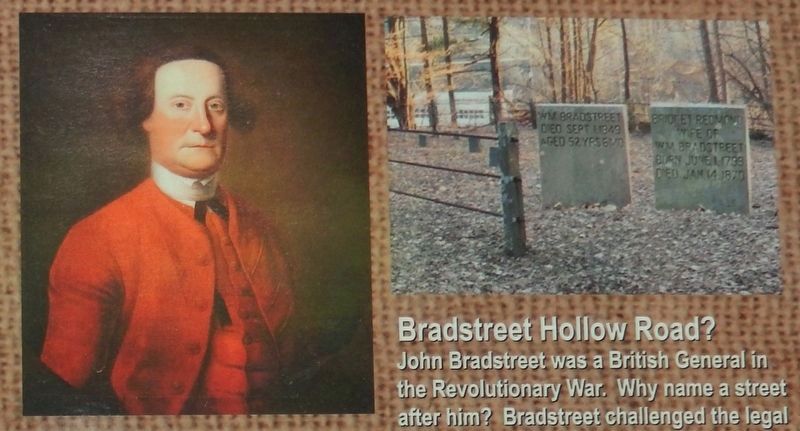
7. Marker detail: Bradstreet Hollow Road?
John Bradstreet was a British General in the Revolutionary War. Why name a street after him? Bradstreet challenged the legal validity of the vast Hardenburgh Patent - two million Catskill acres granted by the King of England. The resulting confusion made it nearly impossible for absentee landlords to obtain clear title to buy or sell the land. He unwittingly helped settlers, farmers, and squatters to eventually own the farms they cleared. The General was buried at Trinity Church in Manhattan, but there is a Bradstreet family cemetery with headstones that have dates back to the 1700s on Broad Street Hollow Road. Bradstreet Hollow came to be known as Broad Street Hollow over time.
Photographed by Cosmos Mariner, July 3, 2019
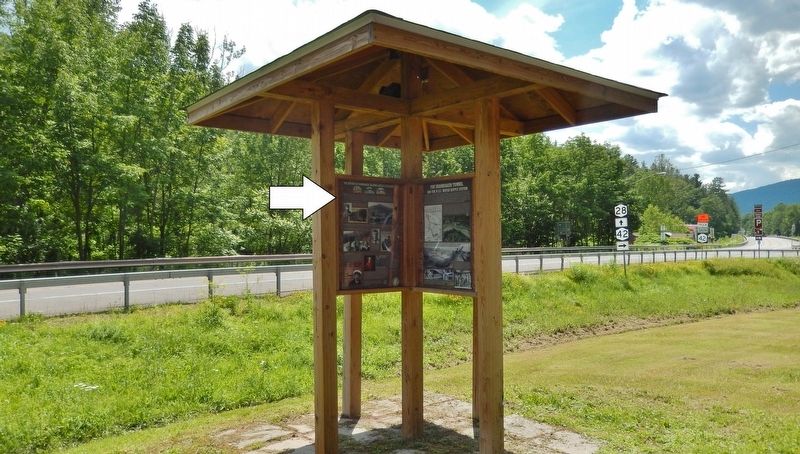
8. The History of Shandaken, Bushnellsville & Allaben Marker
Credits. This page was last revised on June 26, 2024. It was originally submitted on March 27, 2020, by Cosmos Mariner of Cape Canaveral, Florida. This page has been viewed 3,328 times since then and 254 times this year. Photos: 1, 2, 3, 4, 5, 6, 7, 8. submitted on March 28, 2020, by Cosmos Mariner of Cape Canaveral, Florida.
