Ridgecrest in Kern County, California — The American West (Pacific Coastal)
MK IV Special Weapon
Photographed by Craig Baker, March 28, 2025
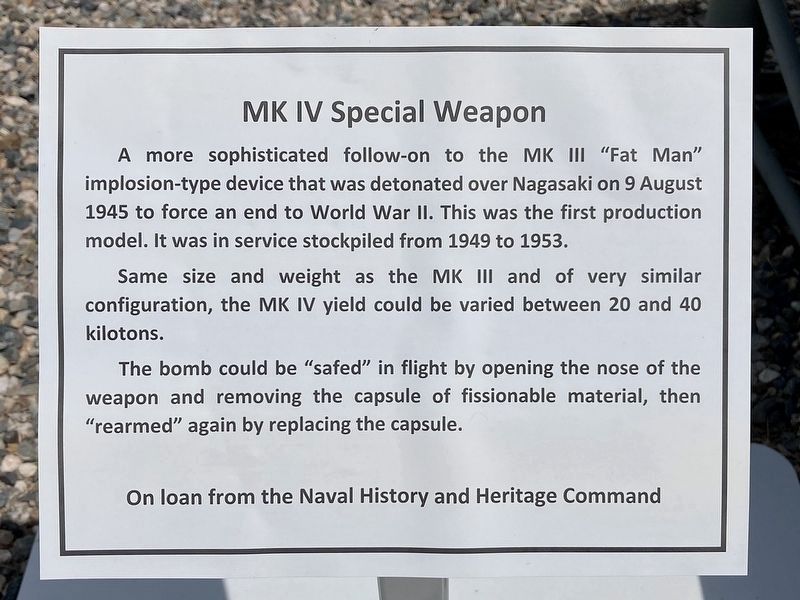
1. MK IV Special Weapon Marker
A more sophisticated follow-on to the MK III "Fat Man" implosion-type device that was detonated over Nagasaki on 9 August 1945 to force an end to World War II. This was the first production model. It was in service stockpiled from 1949 to 1953.
Same size and weight as the MK III and of very similar configuration, the MK IV yield could be varied between 20 and 40 kilotons.
The bomb could be "safed" in flight by opening the nose of the weapon and removing the capsule of fissionable material, then "rearmed" again by replacing the capsule.
On loan from the Naval History and Heritage Command
Erected by China Lake Museum.
Topics. This historical marker is listed in these topic lists: Military • War, World II.
Location. 35° 37.789′ N, 117° 40.072′ W. Marker is in Ridgecrest, California, in Kern County. It is on Las Flores Avenue 0.1 miles east of China Lake Boulevard, on the left when traveling east. Located in the parking lot of the China Lake Museum, open Tue-Sat 10-4. Touch for map. Marker is at or near this postal address: 130 E Las
this page online

Regionally, this marker is in the San Joaquin Valley, specifically in the Central Valley, in the Mojave Desert, and in the Sierra Nevada. It is also on the American Pacific Coast. Globally, it is in North America, on the Ring of Fire, on the Pacific Rim, in the Western Hemisphere, in the Western World, and in the Anglosphere. Historically, it finds itself in what was once New Spain and also Mexico’s Alta California.
Other nearby markers. At least 5 other markers are within 9 miles of this marker, measured as the crow flies: North American T-39D Sabreliner (a few steps from this marker); F-18A Hornet (a few steps from this marker); F11 F-1F "Super Tiger" (within shouting distance of this marker); Naval Ordnance Test Station, China Lake (within shouting distance of this marker); "Siding 16" (approx. 8.2 miles away).
More about this marker. The China Lake Museum was originally located at nearby Naval Air Weapons Station China Lake. It has been moved to this location in town for easier public access, and to allow room for expansion. The
Photographed by Craig Baker, June 27, 2020
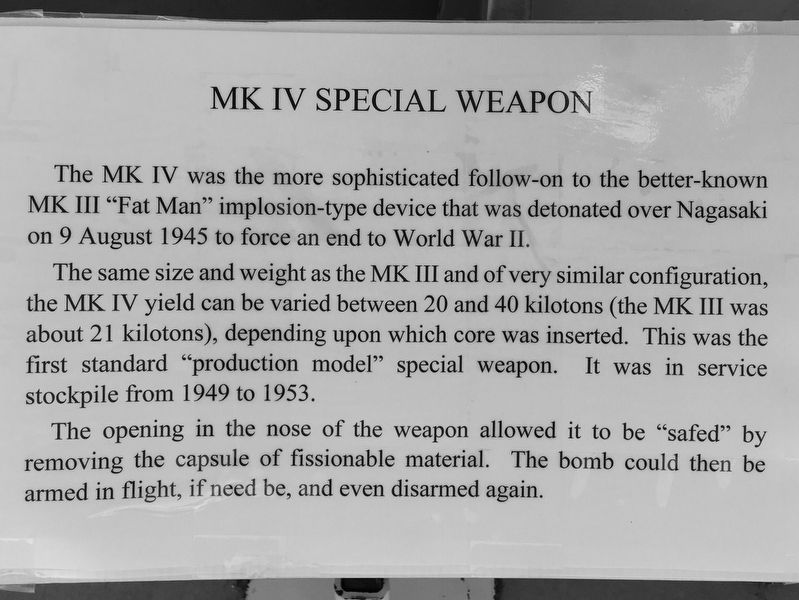
2. Original Marker
Regarding MK IV Special Weapon. Original marker inscription:
The MK IV was the more sophisticated follow-on to the better-known MK III "Fat Man" implosion-type device that was detonated over Nagasaki on 9 August 1945 to force an end to World War II.
The same size and weight as the MK III and of very similar configuration, the MK IV yield can be varied between 20 and 40 kilotons (the MK III wasabout 21 kilotons), depending upon which core was inserted. This was the first standard "production model" special weapon. It was in service stockpile from 1949 to 1953.
The opening in the nose of the weapon allowed it to be "safed" by removing the capsule of fissionable material. The bomb could then be armed in flight, if need be, and even disarmed again.
Also see . . . China Lake Museum. (Submitted on July 19, 2020.)
Photographed by Craig Baker, June 27, 2020
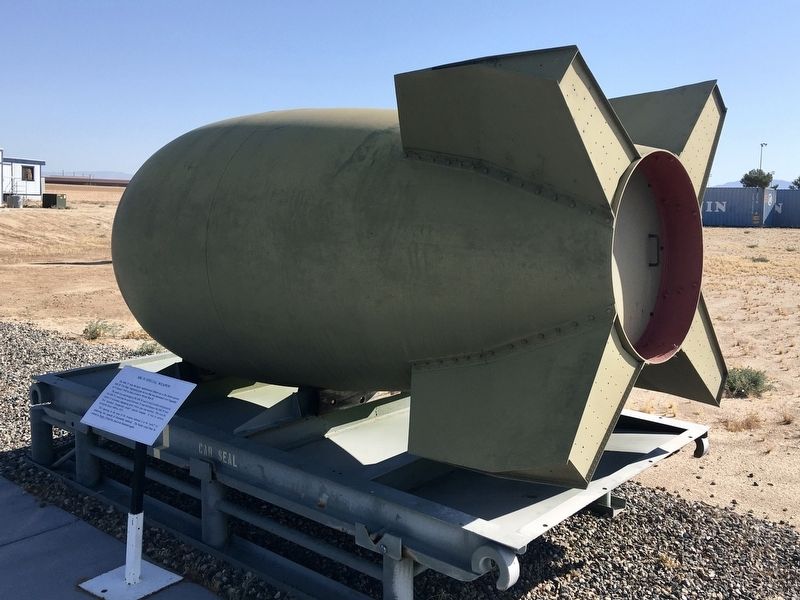
3. Mk IV Special Weapon and Marker
Photographed by Craig Baker, June 27, 2020
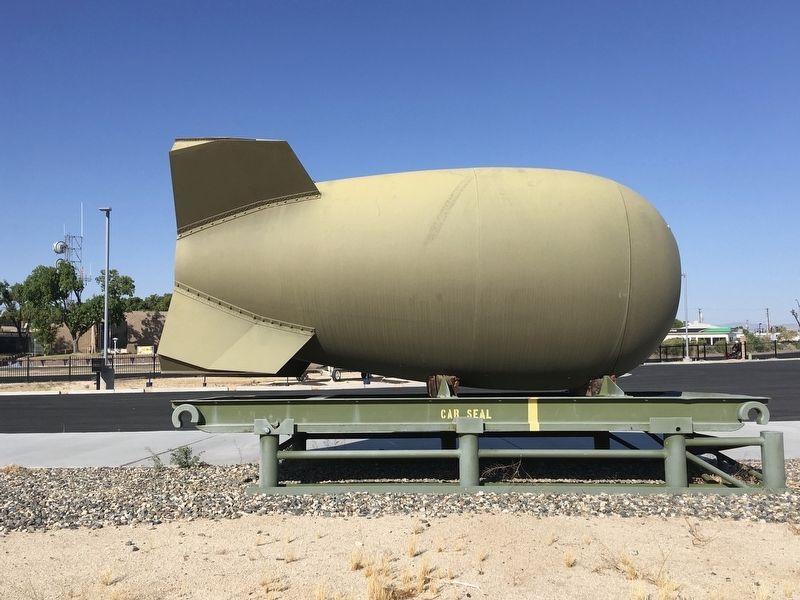
4. MK IV Special Weapon
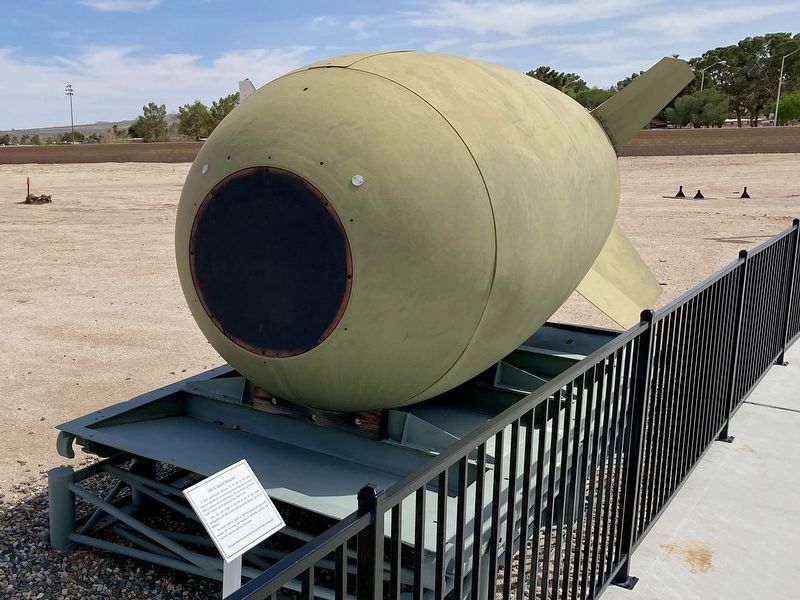
Photographed by Craig Baker, March 28, 2025
5. MK IV Special Weapon and Marker
Credits. This page was last revised on May 24, 2025. It was originally submitted on July 19, 2020, by Craig Baker of Sylmar, California. This page has been viewed 343 times since then and 24 times this year. Last updated on July 19, 2020, by Craig Baker of Sylmar, California. Photos: 1. submitted on May 13, 2025, by Craig Baker of Sylmar, California. 2, 3, 4. submitted on July 19, 2020, by Craig Baker of Sylmar, California. 5. submitted on May 13, 2025, by Craig Baker of Sylmar, California. • J. Makali Bruton was the editor who published this page.
