Near Big Sandy in Chouteau County, Montana — The American West (Mountains)
Fort Chardon
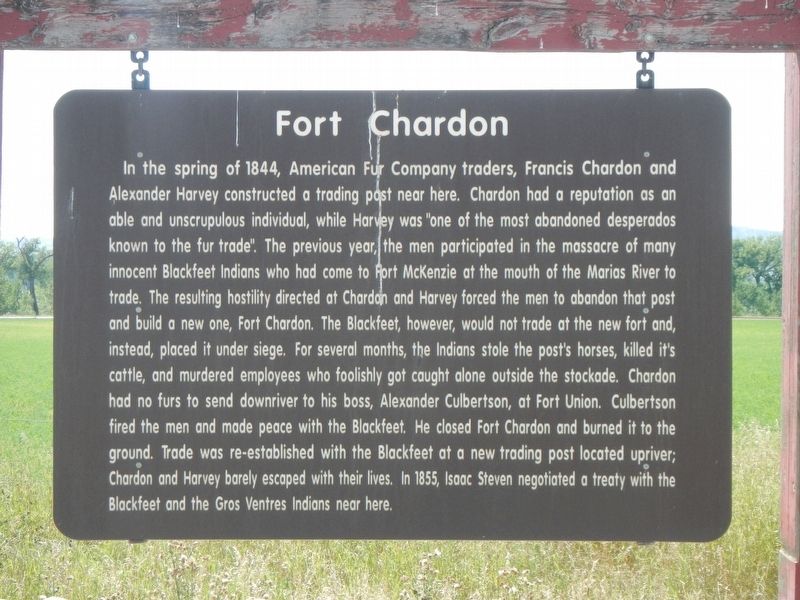
Photographed by Barry Swackhamer, August 23, 2020
1. Fort Chardon Marker
this page online
Erected by Montana Department of Transportation.
Topics. This historical marker is listed in these topic lists: African Americans • Forts and Castles.
Location. 47° 44.643′ N, 109° 37.64′ W. Marker is near Big Sandy, Montana, in Chouteau County. It is on Judith Landing Road (State Highway 236), on the right when traveling south. The marker is about 1/4 mile north of the PN Bridge. Touch for map. Marker is in this post office area: Big Sandy MT 59520, United States of America. Touch for directions.

Regionally, this marker is in Central Montana, in Missouri River Country, and specifically in Russell Country. It is also in the American Mountain West and in the Lewis & Clark Corridor. Globally, it is in North America, the Western Hemisphere, the Western World, and the Anglosphere. Historically, it finds itself in what was once Rupert’s Land and also the Louisiana Purchase.
Other nearby markers. At least 8 other markers are within 2 miles of this marker,
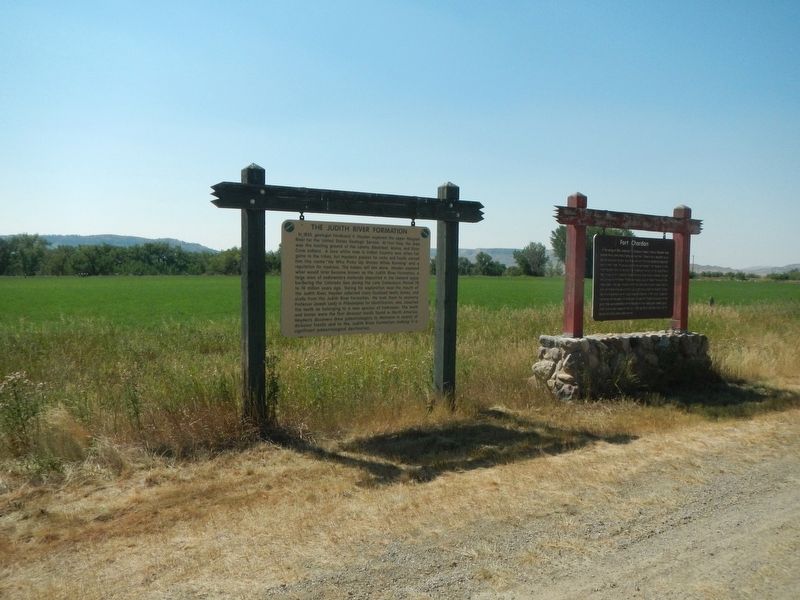
Photographed by Barry Swackhamer, August 23, 2020
2. Fort Chardon Marker
Marker on the right
Also see . . . Black Fur Traders and Frontiersmen -- Lest We Forget. Fur trade narratives often mentioned black slaves. A black man named Reese who was a servant to Francis A. Cardon was killed by members of the Blood band of the Blackfoot tribe at Fort Chardon on the Mouth of the Judith River. The killing took place in 1842 or 1843 according to Elliott Coues, but Charles Larpenteur remembered the event taking place during the winter of 1844-1845. Chardon made public his vow to revenge Reese's death. It is not known what job Reese held but it is fairly safe to say that in that part of the west in the 1840's it may have had something to do with the fur trade. (Submitted on December 5, 2020, by Barry Swackhamer of Brentwood, California.)
Credits. This page was last revised on December 5, 2020. It was originally submitted on December 5, 2020, by Barry Swackhamer of Brentwood, California. This page has been viewed 641 times since then and 55 times this year. Photos: 1, 2. submitted on December 5, 2020, by Barry Swackhamer of Brentwood, California.
