Benicia in Solano County, California — The American West (Pacific Coastal)
Fischer-Hanlon House
Photographed by Syd Whittle, February 20, 2009
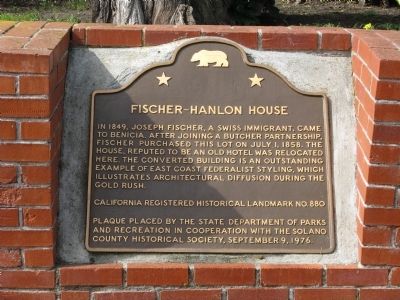
1. Fischer-Hanlon House Marker
In 1849, Joseph Fischer, a Swiss immigrant, came to Benicia. After joining a butcher partnership, Fischer purchased this lot on July 1, 1858. The house, reputed to be an old hotel was relocated here. The converted building is an outstanding example of East Coast federalist styling, which illustrates architectural diffusion during the Gold Rush.
Erected 1975 by This site was designated as California Registered Historical Landmark No. 880 on March 14, 1975. (Marker Number 880.)
Topics and series. This historical marker is listed in these topic lists: Industry & Commerce • Settlements & Settlers. In addition, it is included in the California Historical Landmarks series list. A significant historical month for this entry is July 1861.
Location. 38° 3.012′ N, 122° 9.538′ W. Marker is in Benicia, California, in Solano County. It can be reached from West G Street. The marker is located on the grounds of the Benicia Capitol State Historic Park. The house is located next door at 137 West G Street. Touch for map. Marker is at or near this postal address: 135 West G Street, Benicia CA 94510, United States of America. Touch for directions.

Regionally,
this page online
Other nearby markers. At least 8 other markers are within walking distance of this marker: Benicia (here, next to this marker); Founders of Benicia (a few steps from this marker); Robert Semple (a few steps from this marker); Old State Capitol (a few steps from this marker); Antonio M. De LaGuerra 1825 – ‘81 (a few steps from this marker); Commemoration of California Legislature in Session (a few steps from this marker); Benicia Capitol State Historic Park (a few steps from this marker); The Joseph Fischer Residence (within shouting distance of this marker). Touch for a list and map of all markers in Benicia.
Regarding Fischer-Hanlon House. This site was designated as California Registered Historical Landmark No. 880 on March
Photographed by Syd Whittle, February 20, 2009
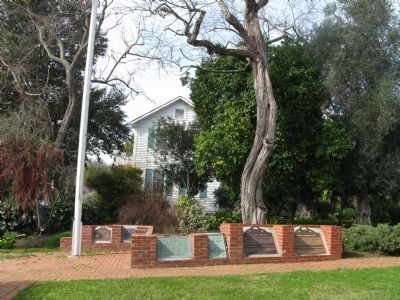
2. Fischer-Hanlon House Marker
Also see . . . The Fischer-Hanlon House. Benicia Capitol State Historic Park entry (Submitted on February 21, 2009, by Syd Whittle of Mesa, Arizona.)
Additional commentary.
1. From “Camel Tracks”, the Benicia Historical Museum’s Newsletter Oct/Nov 2007
Museum Curator Beverly Phelan wrote for the “Curator’s Corner”:
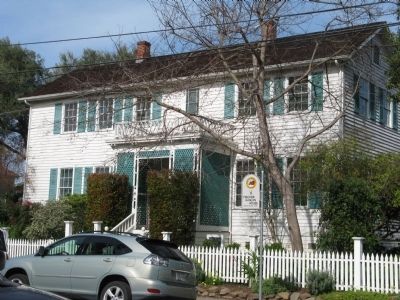
“One of the notable homes in Benicia is the Fischer-Hanlon House next to the State Capitol Building. This former Gold Rush era hotel was built in 1848. It was purchased by Joseph Fischer in 1858 and then moved from First Street to its present location on East G. The front of the hotel was positioned to face the rear of
the lot and the former Spanish style balcony was enclosed and a kitchen area was built underneath the balcony. A New England style balcony was built on the former back of the home. Joseph Fischer was born in Switzerland in 1823. He arrived in the United States in 1844 and worked on a farm on Staten Island, New York. By 1849, he arrived in Sacramento. In 1850, he partnered
Photographed by Syd Whittle, February 20, 2009
3. Fischer-Hanlon House
in Benicia but lived in San Francisco for many years. With the passing of Joseph Fischer in 1884 and then Catherine in 1893 the house was left to the three children. Elizabeth and Joseph deeded the house to Martha. Starting in 1901, Martha began remodeling the house. She started by installing plumbing and two bathrooms were installed in the back porch area east of the kitchen.
Photographed by Syd Whittle, February 20, 2009
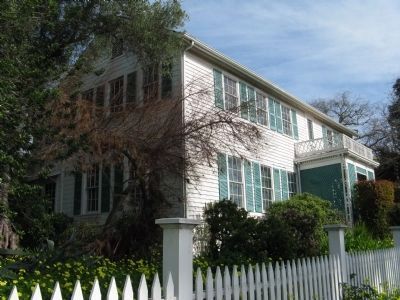
4. Fischer-Hanlon House
collection. It has been on display in the Victorian living room. The Benicia Historical Society has put on loan to the Museum the Fisher-Hanlon silver serving pieces. Included in this beautiful collection is a water server, coffee pot, pitchers, silver utensils, candlesticks and more.”
— Submitted February 21, 2009, by Syd Whittle of Mesa, Arizona.
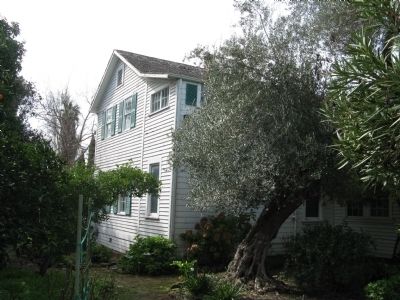
Photographed by Syd Whittle, February 20, 2009
5. Fischer-Hanlon House
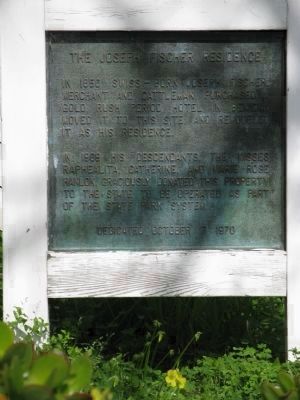
Photographed by Syd Whittle, February 20, 2009
6. A Second Fischer-Hanlon House Marker
In 1969 his descendants, the Misses Raphealita, Catherine, and Marie Rose Hanlon, graciously donated this property to the state to be operated as part of the State Park System.
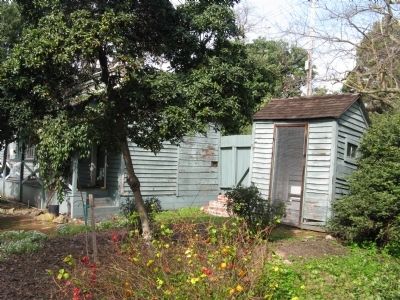
Photographed by Syd Whittle, February 20, 2009
7. Out Buildings
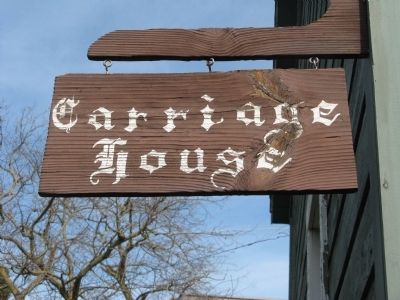
Photographed by Syd Whittle, February 20, 2009
8. The Carriage House
From signage inside of building:
This carriage house was used by three generations of Fischers to house their horse-drawn vehicles and with the progression of time, the modern day motor vehicle. Vehicle entrance was from the back alley.
Fischer history indicates that at one time the carriage house was rented to a cobbler for his place of business. During restoration of the building, remnants of leather used in the cobblers trade were found.
The carriage house was used very much the same as a current-day garage – shelter for vehicles, storage, repair of home furnishings, etc.
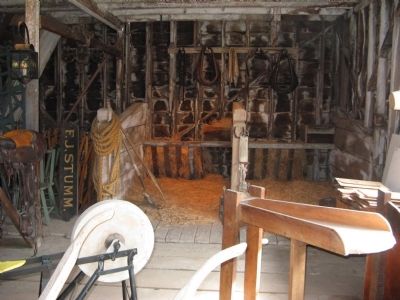
Photographed by Syd Whittle, February 20, 2009
9. Inside the Carriage House
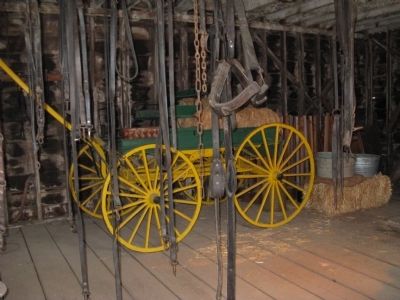
Photographed by Syd Whittle, February 20, 2009
10. Inside the Carriage House
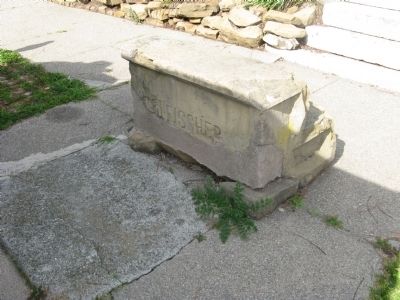
Photographed by Syd Whittle, February 20, 2009
11. The Cement Step to Assist in Entering a Coach or Wagon
Credits. This page was last revised on February 11, 2021. It was originally submitted on February 21, 2009, by Syd Whittle of Mesa, Arizona. This page has been viewed 2,512 times since then and 48 times this year. Photos: 1, 2, 3, 4, 5, 6, 7. submitted on February 21, 2009, by Syd Whittle of Mesa, Arizona. 8, 9, 10. submitted on February 22, 2009, by Syd Whittle of Mesa, Arizona. 11. submitted on February 21, 2009, by Syd Whittle of Mesa, Arizona.
