Mid-Beach in Miami Beach in Miami-Dade County, Florida — The American South (South Atlantic)
Collins Waterfront Architectural District
Photographed by Tim Fillmon, June 15, 2021
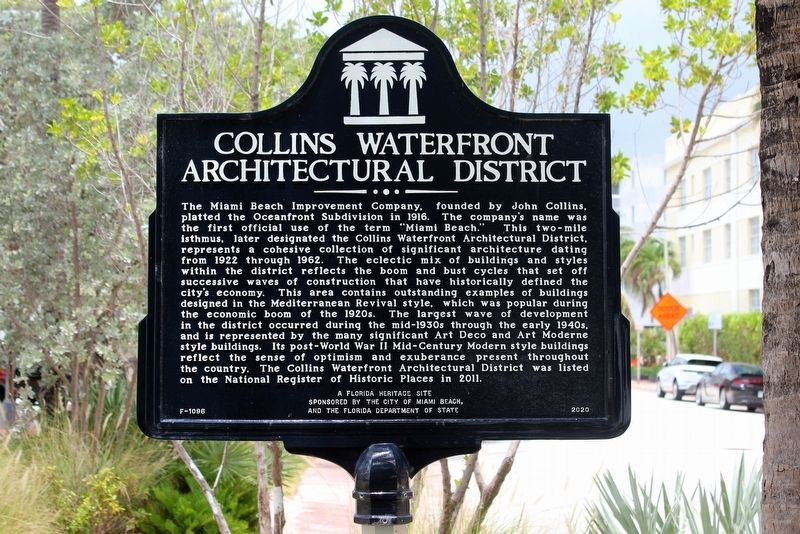
1. Collins Waterfront Architectural District Marker
Inscription.
Collins Waterfront Architectural District. . The Miami Beach Improvement Company, founded by John Collins, platted the Oceanfront Subdivision in 1916. The companys name was the first official use of the term Miami Beach. This two-mile isthmus, later designated the Collins Waterfront Architectural District, represents a cohesive collection of significant architecture dating from 1922 through 1962. The eclectic mix of buildings and styles within the district reflects the boom and bust cycles that set off successive waves of construction that have historically defined the citys economy. This area contains outstanding examples of buildings designed in the Mediterranean Revival style, which was popular during the economic boom of the 1920s. The largest wave of development in the district occurred during the mid-1930s through the early 1940s, and is represented by the many significant Art Deco and Art Moderne style buildings. Its post-World War II Mid-Century Modern style buildings reflect the sense of optimism and exuberance present throughout the country. The Collins Waterfront Architectural District was listed on the National Register of Historic Places in 2011.
The Miami Beach Improvement Company, founded by John Collins, platted the Oceanfront Subdivision in 1916. The companys name was the first official use of the term Miami Beach. This two-mile isthmus, later designated the Collins Waterfront Architectural District, represents a cohesive collection of significant architecture dating from 1922 through 1962. The eclectic mix of buildings and styles within the district reflects the boom and bust cycles that set off successive waves of construction that have historically defined the citys economy. This area contains outstanding examples of buildings designed in the Mediterranean Revival style, which was popular during the economic boom of the 1920s. The largest wave of development in the district occurred during the mid-1930s through the early 1940s, and is represented by the many significant Art Deco and Art Moderne style buildings. Its post-World War II Mid-Century Modern style buildings reflect the sense of optimism and exuberance present throughout the country. The Collins Waterfront Architectural District was listed on the National Register of Historic Places in 2011.
Erected 2020
Click or scan to see this page online
by City of Miami Beach, and the Florida Department of State. (Marker Number F-1096.)
Topics. This historical marker is listed in these topic lists: Architecture • Settlements & Settlers. A significant historical year for this entry is 1916.
Location. 25° 48.568′ N, 80° 7.363′ W. Marker is in Miami Beach, Florida, in Miami-Dade County. It is in Mid-Beach. It is on 36th Street 0.1 miles east of Collins Avenue, in the median. Marker is located at the end of 36th Street in 36th Street Park. Touch for map. Marker is at or near this postal address: 1 36th Street, Miami Beach FL 33140, United States of America. Touch for directions.

Regionally, this marker is in South Florida, on the Gold Coast, and in Greater Miami. It is also in the American South and on the Eastern Seaboard. Globally, it is in the North Atlantic Region, North America, a Gulf of Mexico state, the Western Hemisphere, the Western World, and the Anglosphere. Historically, it finds itself in what was once New Spain, the territory of the Mississippian Culture, one of the Confederate States of America, and the Antebellum South.
Other nearby markers. At least
Photographed by Tim Fillmon, June 15, 2021
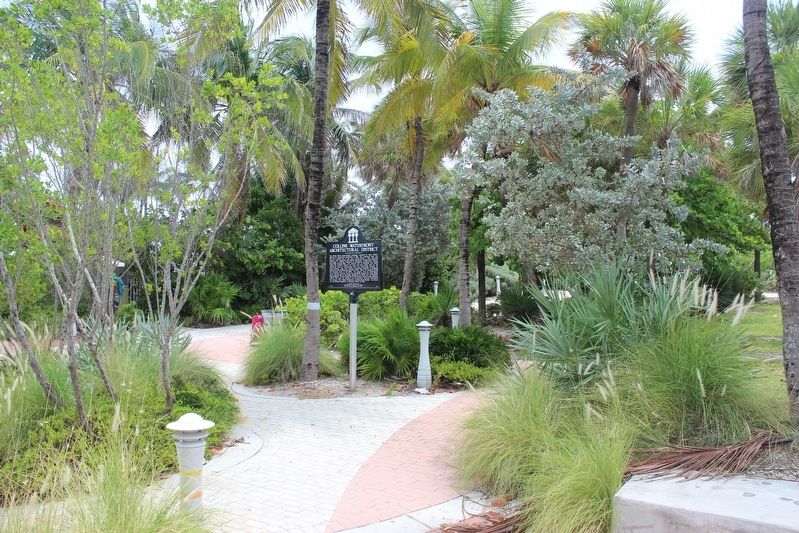
2. Collins Waterfront Architectural District Marker looking east
Credits. This page was last revised on June 20, 2021. It was originally submitted on June 20, 2021, by Tim Fillmon of Webster, Florida. This page has been viewed 661 times since then and 69 times this year. Photos:1, 2. submitted on June 20, 2021, by Tim Fillmon of Webster, Florida.
