Downtown Seattle in King County, Washington — The American West (Northwest)
Assay Office
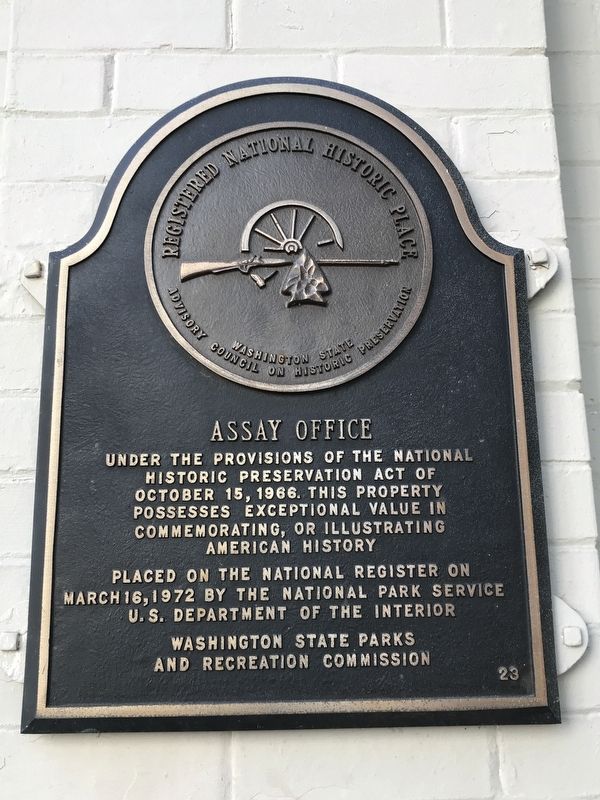
Photographed by Duane and Tracy Marsteller, August 29, 2021
1. Assay Office Marker
Historic Preservation Act of
October 15, 1966, this property
possesses exceptional value in
commemorating, or illustrating
American history
Placed on the National Register on
March 16, 1972 by the National Park Service
U. S. Department of the Interior
Erected by Washington State Parks and Recreation Commission. (Marker Number 23.)
Topics. This historical marker is listed in these topic lists: Architecture • Fraternal or Sororal Organizations • Industry & Commerce. A significant historical year for this entry is 1886.
Location. 47° 36.354′ N, 122° 19.514′ W. Marker is in Seattle, Washington, in King County. It is in Downtown Seattle. It is on 9th Avenue south of Cherry Street, on the right when traveling south. Touch for map. Marker is at or near this postal address: 613 9th Avenue, Seattle WA 98104, United States of America. Touch for directions.

Regionally, this marker is in the Puget Sound Region. It is also on the American Pacific Coast, in the Pacific Northwest, and in the Lewis & Clark Corridor. Globally, it is in North America, in the Cascade Range,
this page online
Other nearby markers. At least 8 other markers are within walking distance of this marker: Trinity Parish Church (about 300 feet away, measured in a direct line); The First Presbyterian Church of Seattle, Washington (approx. ¼ mile away); 50th Anniversary of First Presbyterian Church of Seattle (approx. ¼ mile away); First Presbyterian Church of Seattle World War Memorial (approx. ¼ mile away); First Presbyterian Church of Seattle World War II Memorial (approx. ¼ mile away); First Presbyterian Church Cornerstone (approx. ¼ mile away); The Baroness Hotel (approx. ¼ mile away); Women's University Club of Seattle (approx. 0.3 miles away). Touch for a list and map of all markers in Seattle.
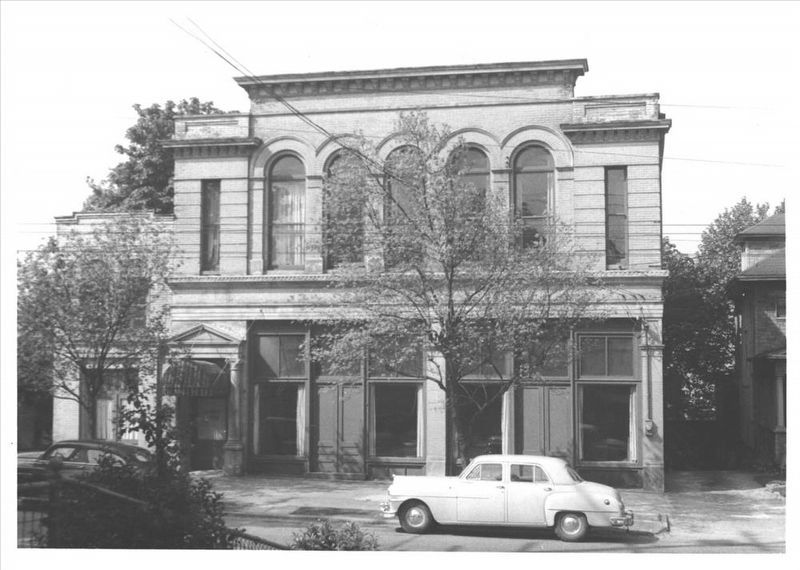
Regarding Assay Office. Excerpt from the National Register inventory-nomination form, submitted in 1972:
…The Assay Office was built by Thomas Prosch, noted newspaper publisher, civic leader and secretary of the Chamber of Commerce in Seattle, probably in 1886. It contained 11 rooms and a basement. The firstfloor was rented for offices, the second floor was a ballroom. When gold began pouring into Seattle after the Klondike strike of 1897 miners needed a repository for their gold. Banks could hardly handle the bulk. The Federal government decided to open an assay office here, and rented the building. It opened for business July 15, 1898 and had a melting department and an assay department…The building was purchased by Deutsches Haus in 1935 as a social center and was renovated and remained in use until World War II. In 1943 women of society in several organizations leased it as an officers' club. It was refurbished and opened by members of the Sunset Club, Seattle Garden Club, Colonial Dames, Junior League, and English Speaking Union. At the end of World War II it reverted to occupation and use by Deutsches Haus…via NPS, unknown2. Assay OfficeNational Register of Historic Places Digital Archive on NPGallery
Click for more information.
Also see . . .
1. German House (Seattle). Wikipedia entry on the property, under another name it is commonly known by. (Submitted on September 11, 2021, by Duane and Tracy Marsteller of Murfreesboro, Tennessee.)
2. A Fortune in Gold (Dust) How a Seattle Assayer Skimmed a Klondike Fortune. Spring 2015,
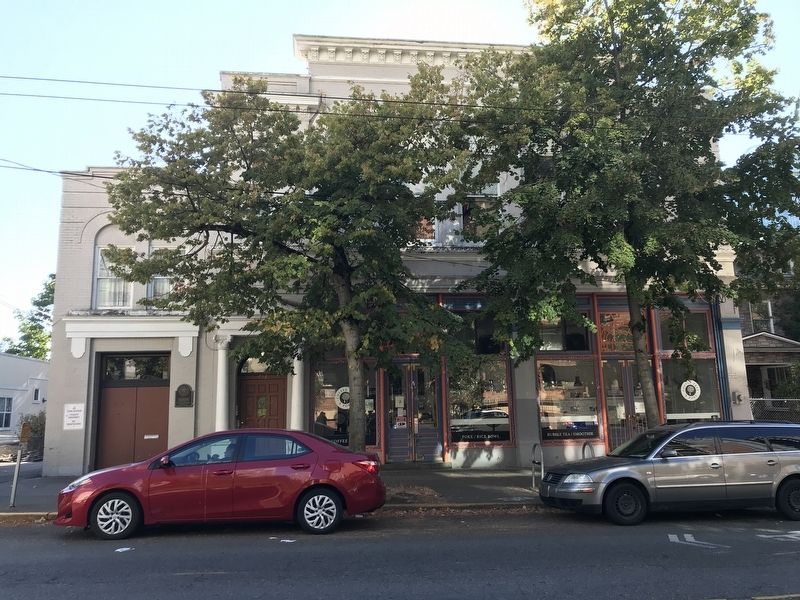
Photographed by Duane and Tracy Marsteller, August 29, 2021
3. Assay Office Marker
The “shocker” spread across the country, much as news of the Klondike gold rush in the Yukon had spread, nine years earlier. The San Francisco Call reported, “Loots Gold Dust from the Miners—Cashier in a Seattle Office Admits the Theft of $35,000 When Arrested by Government Officers.” The Minneapolis Journal headlined, “George Adams of U.S. Assay Office Confesses to Pilferings of More than $30,000.” The news reached the East Coast: The Washington Evening Star screamed “Fraud in the Assays—How Cashier Adams at Seattle Stole $35,000.”(Submitted on April 30, 2025, by Luci j Baker Johnson of Seattle, Washington.)
Credits. This page was last revised on May 31, 2025. It was originally submitted on September 11, 2021, by Duane and Tracy Marsteller of Murfreesboro, Tennessee. This page has been viewed 670 times since then and 53 times this year. Photos: 1. submitted on September 11, 2021, by Duane and Tracy Marsteller of Murfreesboro, Tennessee. 2. submitted on March 3, 2022, by Larry Gertner of New York, New York. 3. submitted on September 11, 2021, by Duane and Tracy Marsteller of Murfreesboro, Tennessee.
