Algiers in New Orleans in Orleans Parish, Louisiana — The American South (West South Central)
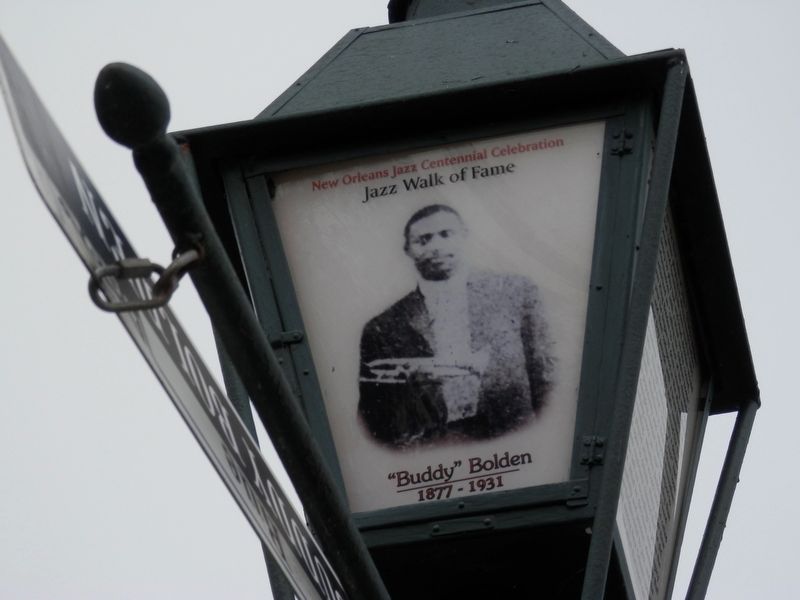
"Buddy" Bolden
1877-1931
| — | Jazz Walk of Fame | — |
Photographed by Cajun Scrambler, November 26, 2020
1. "Buddy" Bolden Marker
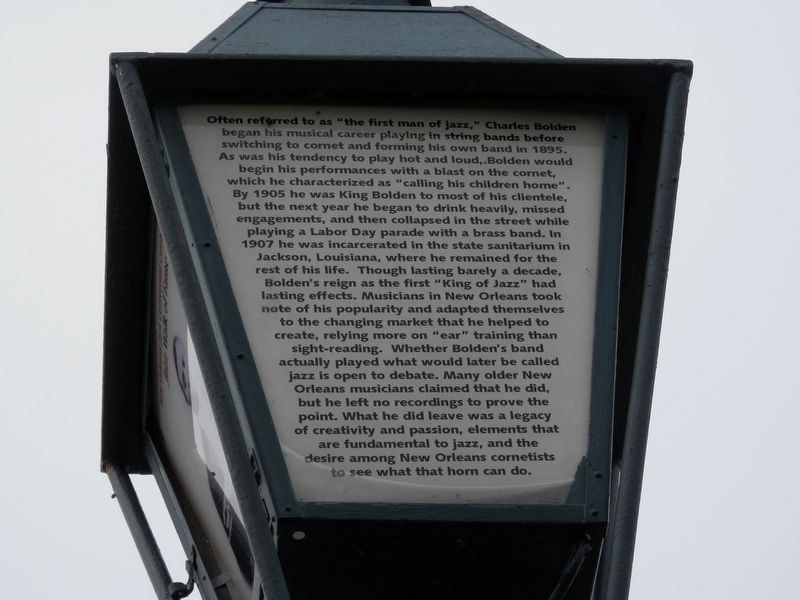
Often referred to as "the first man of jazz,” Charles Bolden began his musical career playing in string bands before switching to cornet and forming his own band in 1895. As was his tendency to play hot and loud, Bolden would begin his performances with a blast on the cornet, which he characterized as "calling his children home". By 1905 he was King Bolden to most of his clientele, but the next year he began to drink heavily, missed engagements, and then collapsed in the street while playing a Labor Day parade with a brass band. In 1907 he was incarcerated in the state sanitarium in Jackson, Louisiana, where he remained for the rest of his life. Though lasting barely a decade, Bolden's reign as the first "King of Jazz" had lasting effects. Musicians in New Orleans took note of his popularity and adapted themselves to the changing market that he helped to create, relying more on "ear” training than sight-reading. Whether Bolden's band actually played what would later be called jazz is open to debate. Many older New Orleans musicians claimed that he did, but he left no recordings to prove the point. What he did leave was
this page online
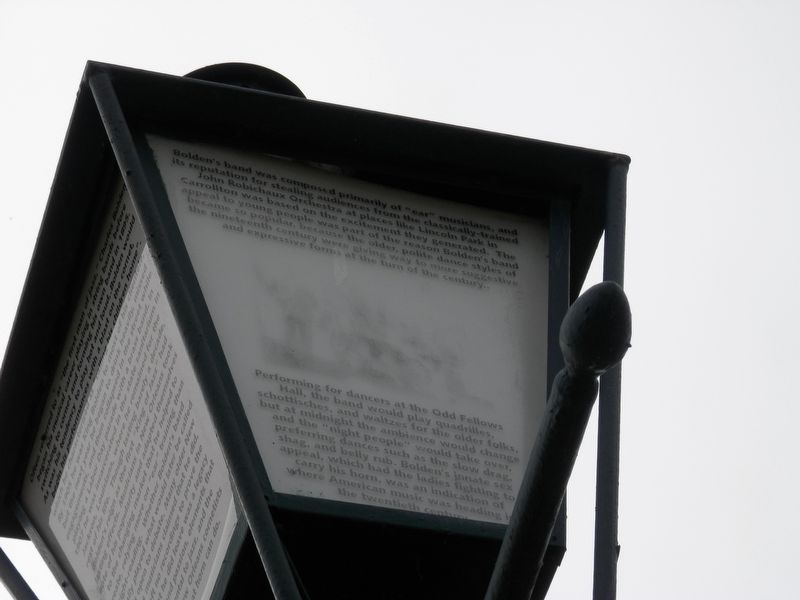
Bolden's band was composed primarily of "ear" musicians, and its reputation for stealing audiences from the classically-trained John Robichaux Orchestra at places like Lincoln Park in Carrollton was based on the excitement they generated. The appeal to young people was part of the reason Bolden's band became so popular, because the older, polite dance styles of the nineteenth century were giving way to more suggestive and expressive forms at the turn of the century.
Performing for dancers at the Odd Fellows Hall, the band would play quadrilles, schottisches, and waltzes for the older folks, but at midnight the ambience would change and the "night people" would take over, preferring dances such as the slow drag, shag and belly rub. Bolden's innate sex appeal, which had the ladies fighting to carry his horn, was an indication of where American music was heading in the twentieth century.
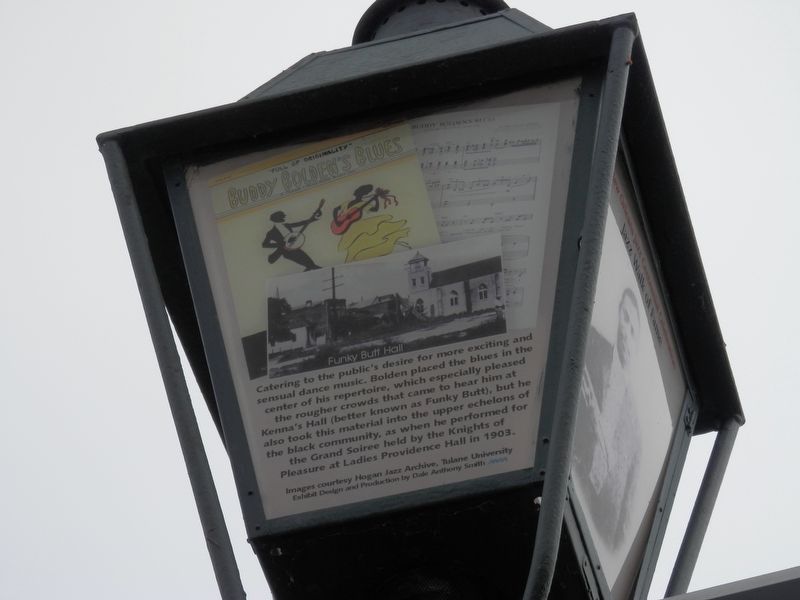
Catering to the public's desire for more exciting and sensual dance music. Bolden placed the blues
Photographed by Cajun Scrambler, November 26, 2020
2. "Buddy" Bolden Marker
Panel 2
Erected by New Orleans Jazz Centennial.
Topics. This historical marker is listed in these topic lists: Arts, Letters, Music • Entertainment.
Location. 29° 57.034′ N, 90° 3.323′ W. Marker is in New Orleans, Louisiana, in Orleans Parish. It is in Algiers. It can be reached from River Street near Powder Avenue. Touch for map. Marker is at or near this postal address: 434 Powder St, New Orleans LA 70114, United States of America. Touch for directions.

Regionally, this marker is in one of the River Parishes. It is also in the American South, specifically in the Deep South, on the Gulf Coast, and in the Great River Road Region. Globally, it is in North America, a Gulf of Mexico state, the Western Hemisphere, the Western World, and the Anglosphere.
Photographed by Cajun Scrambler, November 26, 2020
3. "Buddy" Bolden Marker
Panel 3
Other nearby markers. At least 8 other markers are within walking distance of this marker: The Boswell Sisters (within shouting distance of this marker); Sidney Bechet (within shouting distance of this marker); Danny Barker & Louise "Blue Lou" Barker (about 300 feet away, measured in a direct line); Henry "Red" Allen (about 500 feet away); Louis Armstrong (about 600 feet away); "Papa" Celestin (about 600 feet away); Historic Algiers (about 700 feet away); Louis D. Armstrong (about 700 feet away). Touch for a list and map of all markers in New Orleans.
More about this marker. Part of the Robert Nims Jazz Walk of Fame & the New Orleans Jazz Centennial Celebration. Markers are lamp post shades, located on the Mississippi River Trail, on top of Levee, at northern terminus of Delaronde Street.
Photographed by Cajun Scrambler, November 26, 2020
4. "Buddy" Bolden Marker
Panel 4
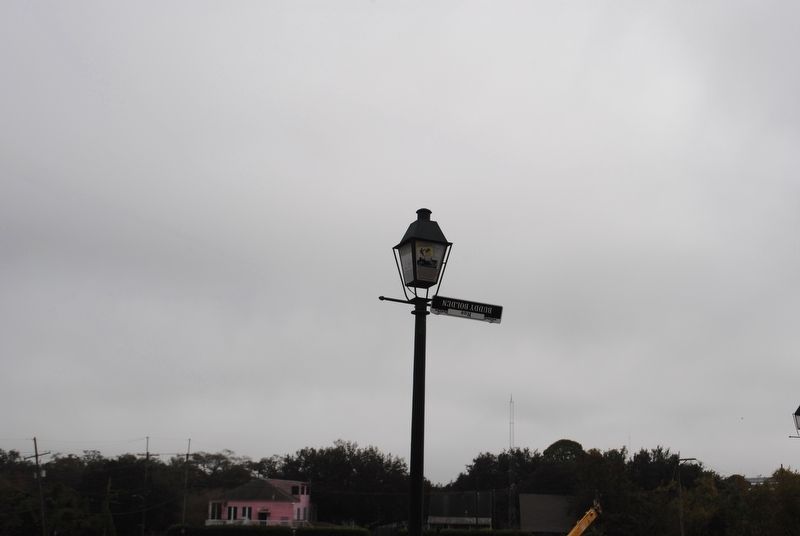
Photographed by Cajun Scrambler, November 26, 2020
5. "Buddy" Bolden Marker
Credits. This page was last revised on February 26, 2026. It was originally submitted on December 28, 2021, by Cajun Scrambler of Assumption, Louisiana. This page has been viewed 803 times since then and 65 times this year. Photos: 1, 2, 3, 4, 5. submitted on December 28, 2021, by Cajun Scrambler of Assumption, Louisiana.
