Iron Hill Park near Newark in New Castle County, Delaware — The American Northeast (Mid-Atlantic)
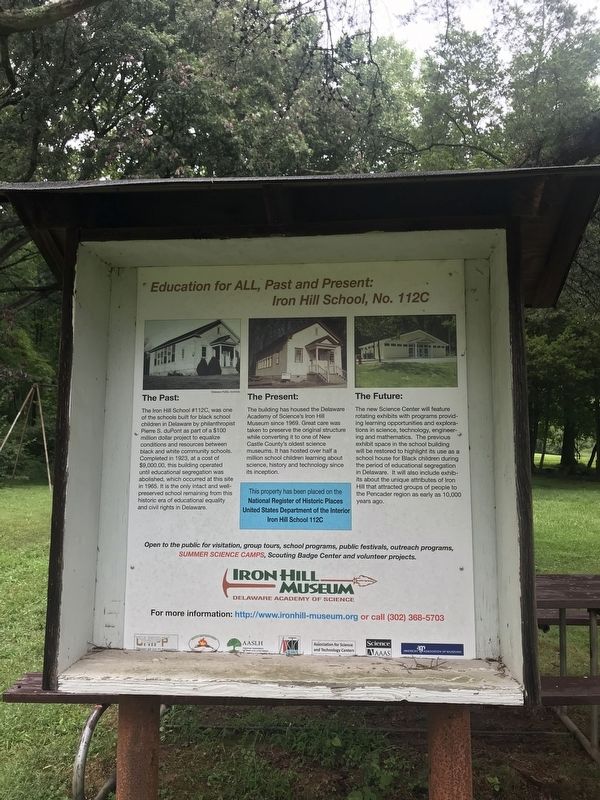
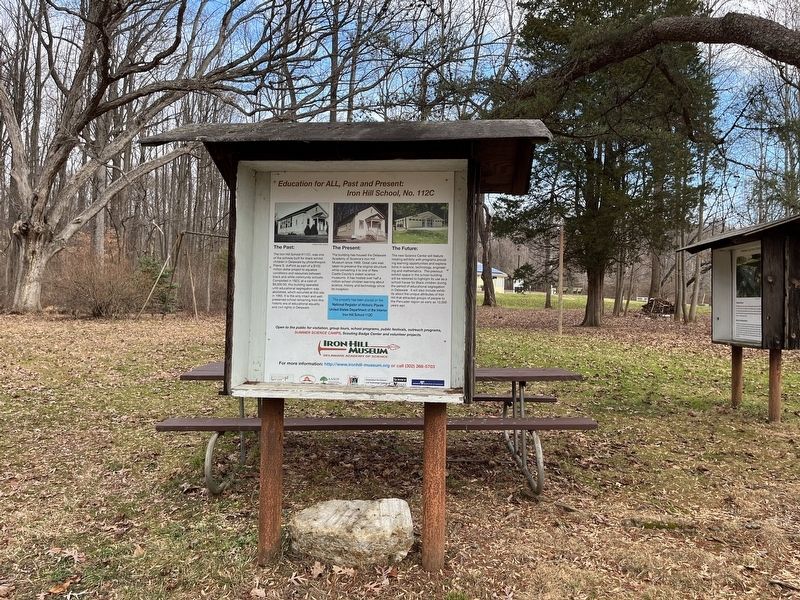
Education for ALL, Past and Present: Iron Hill School, No. 112C
⎯⎯⎯
Iron Hill School #112C
Photographed by Adam Margolis, September 9, 2021
1. Education for ALL, Past and Present: Iron Hill School, No. 112C side of the marker
The Iron Hill School #112C, was one of the schools built for black school children in Delaware by philanthropist Pierre S. duPont as part of a $100 million dollar project to equalize conditions and resources between black and white community schools. Completed in 1923, at a cost of $9,000.00, this building operated until educational segregation was abolished, which occurred at this site in 1965. It is the only intact and well-preserved school remaining from this historic era of educational equality and civil rights in Delaware.
The Present:
The building has housed the Delaware Academy of Science's Iron Hill Museum since 1969. Great care was taken to preserve the original structure while converting it to one of New Castle County's oldest science museums. It has hosted over half a million school children learning about science, history and technology since its inception.
The Future:
The new Science Center will feature rotating exhibits with programs providing learning opportunities and explorations in science, technology, engineering and
this page online
National Register of Historic Places
United States Department of the Interior
Iron Hill School 112C
Open to the public for visitation, group tours, school programs, public festivals, outreach programs, summer science camps, Scouting Badge Center and volunteer projects.
The Iron Hill Museum is dedicated to the study of human and natural history of the Iron Hill Area. The Museum is currently engaged in a project to restore the Iron Hill School #112C and document the experiences of African-American students who attended the school between 1923 and 1965.
In order to achieve this, the Museum has embarked on an oral history project to formally interview and record the
Photographed by Bill Pfingsten, April 24, 2016
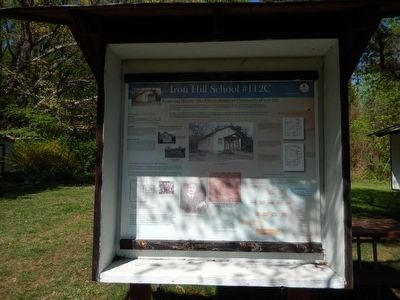
2. Iron Hill School #112-C side of the marker
Iron Hill Community
Beginnings: In 1873 William McConaughey purchased land on Iron Hill to set up an ore mine. He hired immigrants and African-Americans to work in the mines. These workers and their families continued to live on the south face of the hill after the ore ran out in 1891.
(James R. And James B. Owens "A history of the Iron Hill area Newark, DE.")
Families:
Close-knit and self-sufficient families interacted mainly among themselves and their immediate community. They rarely stayed from Iron Hill except to work or shop. Residents often spent their time keeping track of one another. For example, Mr. Robert Grinnage, a former Iron Hill student
Iron Hill School #112C Photo, Click for full size Correct or Update By William Pfingsten, July 29, 2008 2. Iron Hill School #112C School is now occupied as the Iron Hill Museum. It is located about 2 miles west on Old Baltimore Pike. said:
Photographed by Devry Becker Jones (CC0), December 30, 2023
3. Education for ALL, Past and Present: Iron Hill School, No. 112C side of the marker
Pastimes in Iron Hill:
Families enjoyed listening to the radio, attending dances and socials at the school, and playing games, some of these were hide-and-go-seek, hop-scotch, blind-man's bluff, crack-the-whip, king of the hill, jacks and cards. But baseball was probably the most popular game. "Baseball to me was a can and a stick off the tree. That type of thing. There is a word they use today - 'innovation'." said former student Mrs. Lena Satchell Dyer. She explained, "being a child in a small community like that molded me to be the type of person that I am now: To accept what I see, fix what I can fix - what I can't fix, accept it".
Colored Schools in Delaware
In the early 1900's Delawareans realized that the public schools for African-Americans were in bad condition and needed help. In 1919, Pierre Samuel duPont resigned as president of his family business and decided to use his own money to have these schools in the state rebuilt or renovated.
P.S. duPont established a two-million
Photographed by Adam Margolis, September 9, 2021
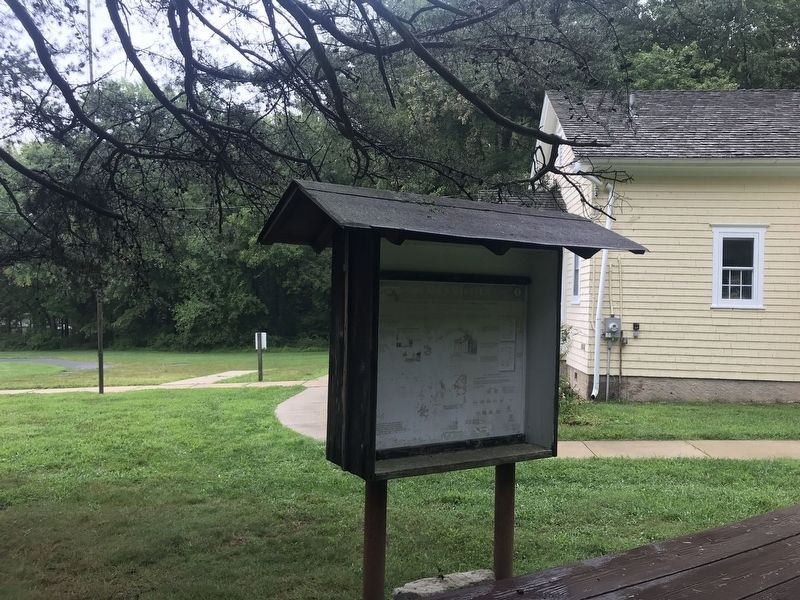
4. Iron Hill School, No. 112C side of the marker
One of these schools was Iron Hill Colored School 112C. It was built in 1923 and used as an elementary school for African-American children in the Iron Hill area. In 1965 the State legislated that all schools be desegregated. Students from Iron Hill grade 6 and above were bussed to Middletown or Howard High School in Wilmington. Some students went to the brand new McVey School in Newark.
Lessons at Iron Hill included arithmetic, cursive writing, spelling and Bible verses. Former student Mary Burke recalled how a typical day began: "We would pray, and then say the pledge, and then we got down to homework". The teacher would work with one grade at a time, beginning with 1st and working her way all the way up before starting over.
Many students spoke of a particular lunchtime tradition. Donald Lewis explained. "Some of the kids weren't fortunate enough to bring lunch so they would
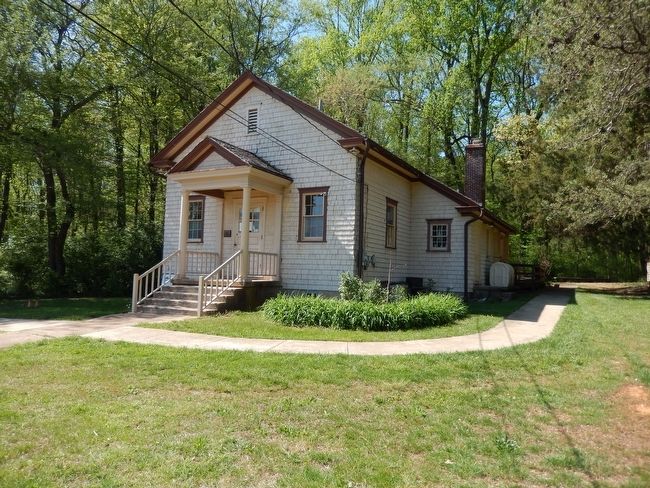
Photographed by Bill Pfingsten, April 24, 2016
5. Iron Hill School #112-C
On Field Day, Iron Hill students competed against other African-American schools in track, baseball and dodge ball. Robert Grinnage remembered these annual events: "Years ago they used to have parades and everything and the kids would be all out of step marching of course with a band. There was something to look forward to".
The Smith Family
Four generations of the Smith family have lived in the Iron Hill area. Of these four generations, Rev. Smith as well as three of his four children attended Iron Hill School.
The Smith Family owned a large parcel of land near the Iron Hill School. The land was purchased by Allen O. Smith in 1934 from descendants of John Thomas Lum, possibly a member of the Swedish Lum family which settled in the Delaware Valley during the 1700s. Much of the land was sold outside of the family during the 1960s. The last parcel of the Smith Family land is currently in the possession of Mary Burke, the last member of the family still living near Iron Hill.
Education for ALL, Past and Present: Iron Hill School, No. 112C / Iron Hill School #112C
Erected by Pencader Heritage Area Association.
Topics and series. This historical marker is listed in these topic lists: African Americans • Education • Landmarks. In addition, it is included in the National Register of Historic Places (NRHP) series list. A significant historical date for this entry is July 29, 1923.
Location. 39° 37.891′ N, 75° 45.487′ W. Marker is near Newark, Delaware, in New Castle County. It is in Iron Hill Park. It is on South Old Baltimore Pike near Robert L. Melson Lane. Touch for map. Marker is at or near this postal address: 1355 Old Baltimore Pike, Newark DE 19702, United States of America. Touch for directions.

Regionally, this marker is in Greater Wilmington and in Greater Philadelphia. It is also in the American Mid-Atlantic, on the Delmarva Peninsula, and on the Eastern Seaboard. Globally, it is in the North Atlantic Region, North America, the Western Hemisphere, the Western World, and the Anglosphere. Historically, it finds itself in what was once New Netherland and also one of the original Thirteen Colonies.
Other nearby markers. At least 8 other markers are within walking distance of this marker: Historic Roads of Newark, Delaware / Petrified Log from Central Delaware (a few steps from this marker); Iron Hill School #112-C (within shouting distance of this marker); Iron Mining on Iron and Chestnut Hills, A Timeline (within shouting distance of this marker); The Civil War 1861 - 1865 (within shouting distance of this marker); What is the mound behind this sign? (within shouting distance of this marker); The Iron Hill Community: Free Black Landowners (within shouting distance of this marker); Ninety Years Recording the Black Population of Pencader Hundred: The U.S. Census (within shouting distance of this marker); Site of the First Iron Hill School (about 300 feet away, measured in a direct line). Touch for a list and map of all markers in Newark.
Also see . . .
1. Iron Hill Museum & Science Center. The Iron Hill Museum is owned and operated by the Delaware Academy of Science, Inc., since 1968. (Submitted on January 5, 2022, by Maureen Zieber of Newark, Delaware.)
2. Iron Hill School No. 112C - National Register of Historic Places Nomination Form.
The reform and rebuilding of African-American schools in Delaware, funded by Pierre Samuel du Pont between 1919 and 1928, is represented by the Iron Hill School. Constructed in 1923, the Iron Hill School was used until school segregation was abolished, which occurred at Iron Hill in 1965. Many schools for white children were closed in the first half of this century and large, consolidated schools were built. During the 1920s, small, modest, but up-to-date facilities were built with du Pont funds for Delaware's African-American population, which was largely rural and sparsely settled. Single-teacher schools were promoted as nondisruptive to the African-American economic situation, by allowing children to go to school close to their homes, where they were relied upon to work and to supplement the family income.(Submitted on April 23, 2025, by Pete Skillman of Wilmington, Delaware.)
Credits. This page was last revised on April 23, 2025. It was originally submitted on April 28, 2016, by Bill Pfingsten of Bel Air, Maryland. This page has been viewed 782 times since then and 51 times this year. Last updated on January 4, 2022, by Maureen Zieber of Newark, Delaware. Photos: 1. submitted on January 16, 2023, by Adam Margolis of Mission Viejo, California. 2. submitted on April 28, 2016, by Bill Pfingsten of Bel Air, Maryland. 3. submitted on December 30, 2023, by Devry Becker Jones of Washington, District of Columbia. 4. submitted on January 16, 2023, by Adam Margolis of Mission Viejo, California. 5. submitted on April 28, 2016, by Bill Pfingsten of Bel Air, Maryland. • J. Makali Bruton was the editor who published this page.
