Bozeman in Gallatin County, Montana — The American West (Mountains)
Bozeman Carnegie Library
Photographed by Barry Swackhamer, July 25, 2021
1. Bozeman Carnegie Library Marker
Inscription.
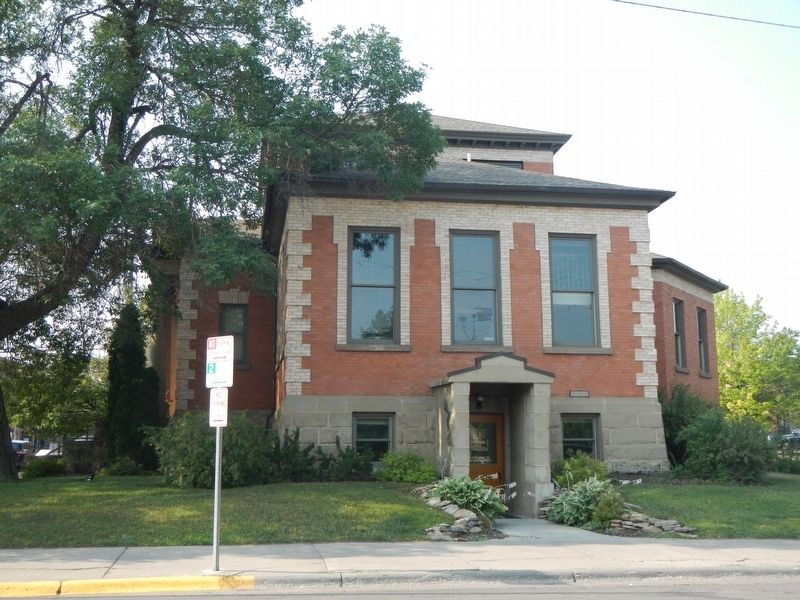
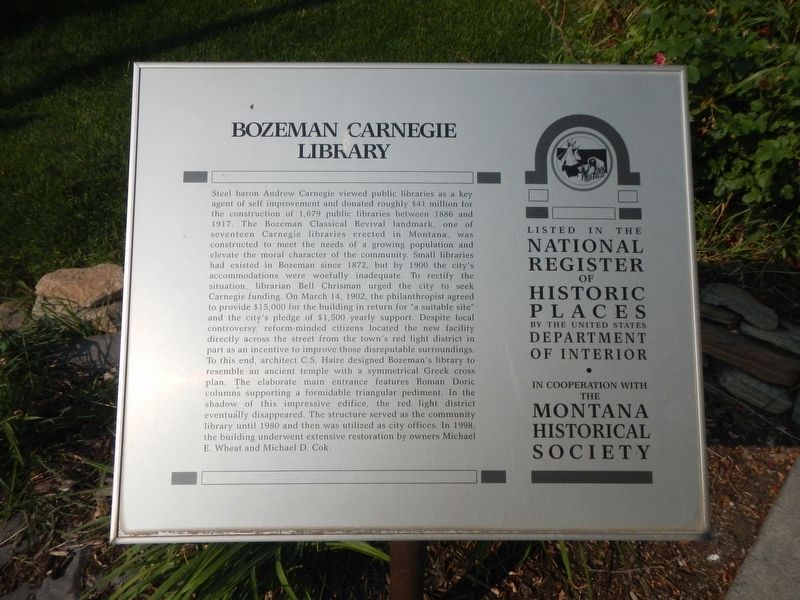
Bozeman Carnegie Library. . Steel baron Andrew Carnegie viewed public libraries as a key agent of self improvement and donated roughly $41 million for the construction of 1,679 public libraries between 1886 and 1917. The Bozeman Classical Revival landmark, one of seventeen Carnegie libraries erected in Montana, was constructed to meet the needs of a growing population and elevate the moral character of the community. Small libraries had existed in Bozeman since 1872, but by 1900 the citys accommodations were woefully inadequate. To rectify the situation, librarian Bell Chrisman urged the city to seek Carnegie funding. On March 14, 1902, the philanthropist agreed to provide $15,000 for the building in return for a suitable site and the citys pledge of $1,500 yearly support. Despite local controversy, reform-minded citizens located the new facility directly across the street from the towns red light district in part as an incentive to improve those disreputable surroundings. To this end, architect C. S. Haire designed Bozemans library to resemble an ancient temple with a symmetrical Greek cross plan. The elaborate main entrance features Roman Doric columns supporting a formidable triangular pediment. In the shadow of this impressive edifice, the red light district eventually disappeared. The structure served as the community library until 1980 and then was utilized as city offices. In 1998, the building underwent extensive restoration by owners Michael E. Wheat and Michael D. Cok.
Steel baron Andrew Carnegie viewed public libraries as a key agent of self improvement and donated roughly $41 million for the construction of 1,679 public libraries between 1886 and 1917. The Bozeman Classical Revival landmark, one of seventeen Carnegie libraries erected in Montana, was constructed to meet the needs of a growing population and elevate the moral character of the community. Small libraries had existed in Bozeman since 1872, but by 1900 the citys accommodations were woefully inadequate. To rectify the situation, librarian Bell Chrisman urged the city to seek Carnegie funding. On March 14, 1902, the philanthropist agreed to provide $15,000 for the building in return for a suitable site and the citys pledge of $1,500 yearly support. Despite local controversy, reform-minded citizens located the new facility directly across the street from the towns red light district in part as an incentive to improve those disreputable surroundings. To this end, architect C. S. Haire designed Bozemans library to resemble an ancient temple with a symmetrical Greek cross plan. The elaborate main entrance features Roman Doric columns supporting a formidable triangular pediment. In the shadow of this impressive edifice, the red light district eventually disappeared. The structure served as the community library until 1980 and then was utilized
Click or scan to see this page online
as city offices. In 1998, the building underwent extensive restoration by owners Michael E. Wheat and Michael D. Cok.
Location. 45° 40.811′ N, 111° 2.07′ W. Marker is in Bozeman, Montana, in Gallatin County. It is at the intersection of North Bozeman Avenue and East Mendenhall Street, on the left when traveling north on North Bozeman Avenue. Touch for map. Marker is at or near this postal address: 35 North Bozeman Avenue, Bozeman MT 59715, United States of America. Touch for directions.

Regionally, this marker is in Montana’s Yellowstone Country. It is also in the American Mountain West and in the Lewis & Clark Corridor. Globally, it is in North America, the Rocky Mountains, the Western Hemisphere, the Western World, and the Anglosphere. Historically, it finds itself in what was once Ruperts Land and also the Louisiana Purchase.
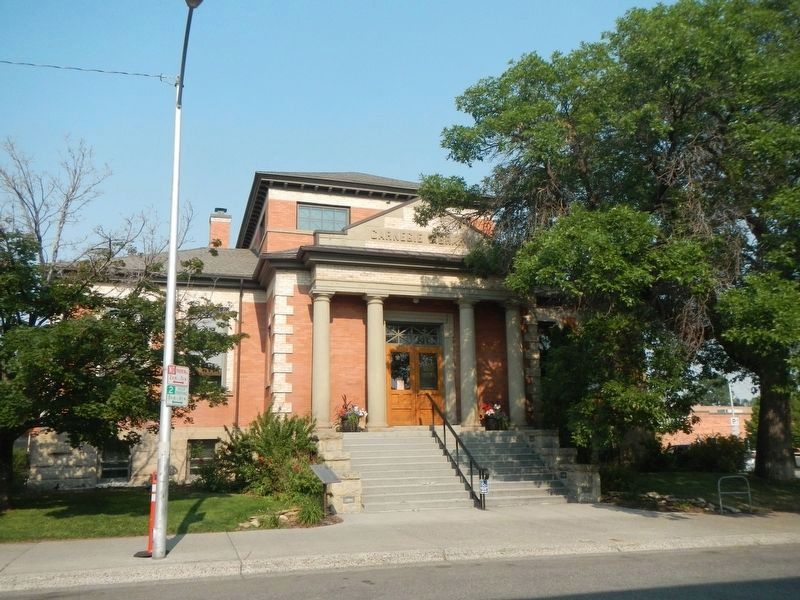
The marker is on a pedestal at the left side of the stairs.
Photographed by Barry Swackhamer, July 25, 2021
3. Bozeman Carnegie Library
Credits. This page was last revised on February 14, 2022. It was originally submitted on February 14, 2022, by Barry Swackhamer of Brentwood, California. This page has been viewed 238 times since then and 15 times this year. Photos:1, 2, 3. submitted on February 14, 2022, by Barry Swackhamer of Brentwood, California.