Fort Mason in San Francisco City and County, California — The American West (Pacific Coastal)
Barbary Coast Trail
Photographed by Craig Baker
1. Barbary Coast Trail Marker
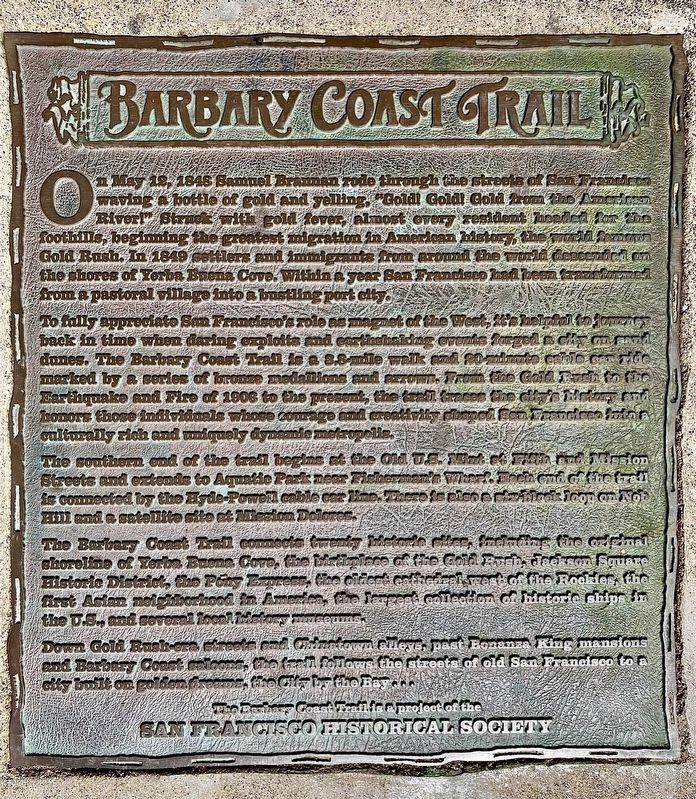
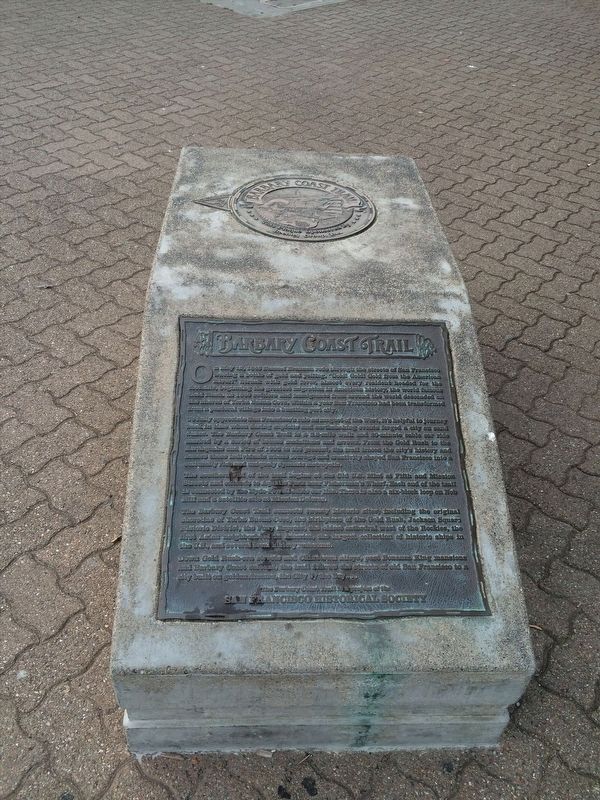
On May 12, 1848 Samuel Brannan rode through the streets of San Francisco waving a bottle of gold and yelling, “Gold! Gold! Gold from the American River!” Struck with gold fever, almost every resident headed for the foothills, beginning the greatest migration in American history, the world famous Gold Rush. In 1849 settlers and immigrants from around the world descended on the shores of Yerba Buena Cove. Within a year San Francisco had been transformed from a pastoral village into a bustling port city.
To fully appreciate San Francisco’s role as magnet of the West, it’s helpful to journey back in time when daring exploits and earthshaking events forged a city on sand dunes. The Barbary Coast Trail is a 3.8 mile walk and 20 minute cable car ride marked by a series of bronze medallions and arrows. From the Gold Rush to the Earthquake and Fire of 1906 to the present, the trail traces the city’s history and honors those individuals whose courage and creativity shaped San Francisco into a culturally rich and uniquely dynamic metropolis.
The southern end of the trail begins at the Old U.S. Mint at Fifth and Mission
this page online
The Barbary Coast Trail connects twenty historic sites, including the original shoreline of Yerba Buena Cove, the birthplace of the Gold Rush, Jackson Square Historic District, the Pony Express, the oldest cathedral west of the Rockies, the first Asian neighborhood in America, the largest collection of historic ships in the U.S., and several local museums.
Down Gold Rush-era streets and Chinatown alleys, past Bonanza King mansions and Barbary Coast saloons, the trail follows the streets of old San Francisco to a city built on golden dreams, the City by the Bay...
The Barbary Coast Trail is a project of the San Francisco Historical Society.
Erected by San Francisco Historical Society.
Topics. This historical marker is listed in these topic lists: Industry & Commerce • Settlements & Settlers. A significant historical date for this entry is May 12, 1848.
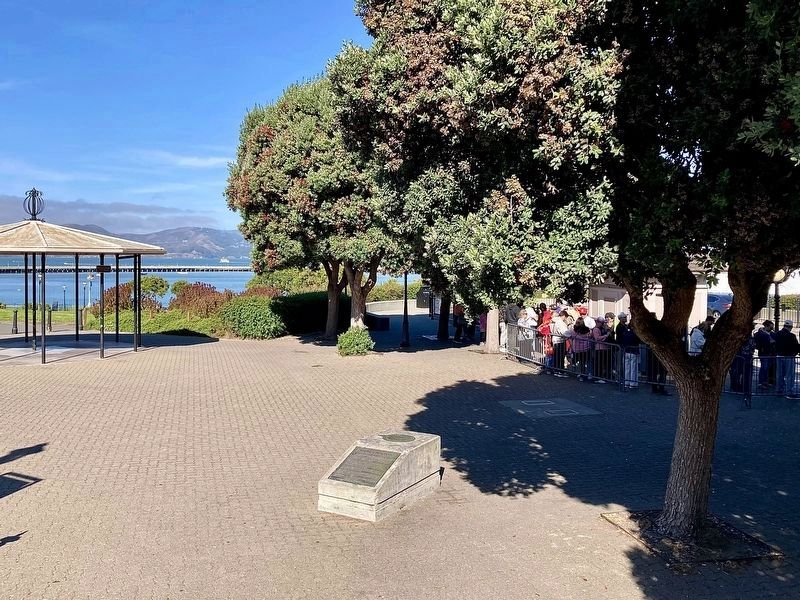
Location. 37° 48.408′ N, 122° 25.265′ W. Marker is in San Francisco,
Photographed by Craig Baker, October 22, 2024
2. Barbary Coast Trail Marker

Regionally, this marker is on California’s Coast Ranges. It is also on the American Pacific Coast. Globally, it is in North America, on the Ring of Fire, on the Pacific Rim, in the Western Hemisphere, in the Western World, and in the Anglosphere. Historically, it finds itself in what was once New Spain and also Mexico’s Alta California.
Other nearby markers. At least 8 other markers are within walking distance of this marker: San Francisco Cable Car System (a few steps from this marker); Friedel Klussman (within shouting distance of this marker); America’s First Irish Coffee (within shouting distance of this marker); The Buena Vista Cafe (within shouting distance of this marker); The South End Rowing Club (about 300 feet away, measured in a direct line); The Dolphin Swimming and Boating Club (about 300 feet away); Propellers from Klamath (about 300 feet
Photographed by Craig Baker
3. Barbary Coast Trail Marker
Photographed by Adam Margolis, May 30, 2016
4. Barbary Coast Trail Marker
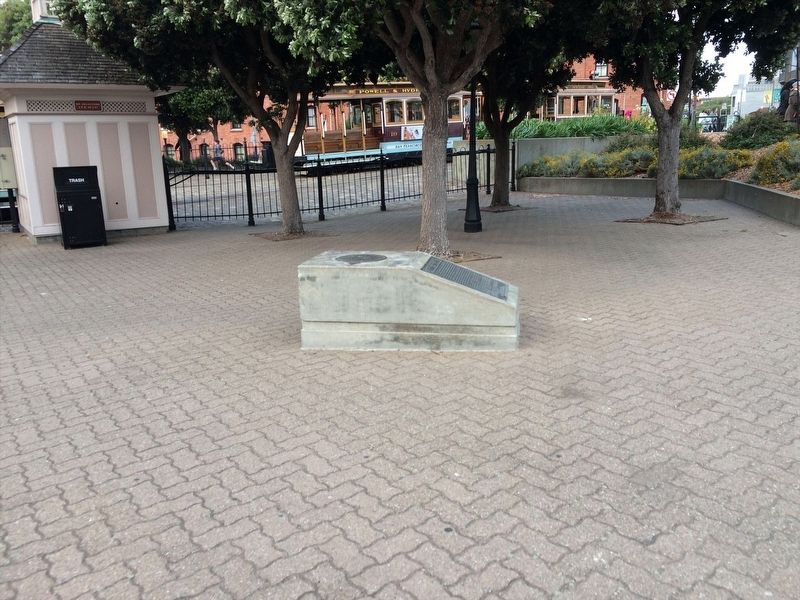
Photographed by Adam Margolis, May 30, 2016
5. Barbary Coast Trail Marker
Credits. This page was last revised on November 23, 2024. It was originally submitted on April 16, 2022, by Adam Margolis of Mission Viejo, California. This page has been viewed 748 times since then and 69 times this year. Photos: 1, 2, 3. submitted on October 27, 2024, by Craig Baker of Sylmar, California. 4, 5. submitted on April 16, 2022, by Adam Margolis of Mission Viejo, California. • Syd Whittle was the editor who published this page.
