Greenville in Greenville County, South Carolina — The American South (South Atlantic)
Woodside
Photographed by Tom Bosse, May 14, 2022
1. Woodside Marker
Inscription.
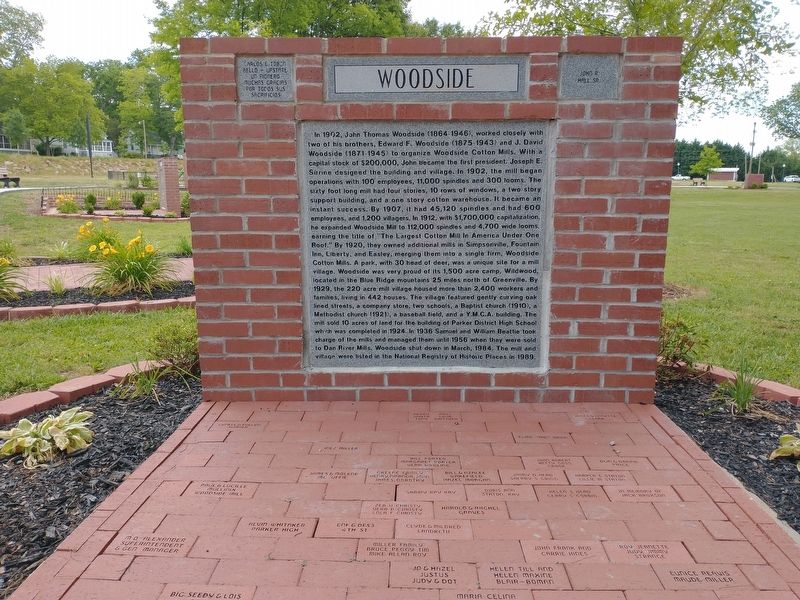
Woodside. . In 1902, John Thomas Woodside (1864-1946), worked closely with two of his brothers, Edward F. Woodside (1875-1943) and J. David Woodside (1871-1945) to organize Woodside Cotton Mills. With a capital stock of $200,000, John became the first president. Joseph E. Sirrine designed the building and village. In 1902, the mill began operations with 100 employees, 11,000 spindles and 300 looms. The sixty foot long mill had four stories, 10 rows of windows, a two-story support building, and a one story cotton warehouse. It became an instant success. By 1907, it had 45,120 spindles and had 600 employees, and 1,200 villagers. In 1912, with $1,700,000 capitalization, he expanded Woodside Mill to 112,000 spindles and 4,700 wide looms, earning the title of The Largest Cotton Mill in America Under One Roof. By 1920, they owned additional mills in Simpsonville, Fountain Inn, Liberty, and Easley, merging them into a single firm, Woodside Cotton Mills. A park, with 30 head of deer, was a unique site for a mill village. Woodside was very proud of its 1,500 acre camp, Wildwood, located in the Blue Ridge mountains 25 miles north of Greenville. By 1929, the 220 acre mill village housed more than 2,400 workers and families, living in 442 houses. The village featured gently curving oak lined streets, a company store, two schools, a Baptist church (1910), a Methodist church (1921), a baseball field, and a Y.M.C.A. building. The mill sold 10 acres of land for the building of Parker District High School which was completed in 1924. In 1936 Samuel and William Beattie took charge of the mills and managed them until 1956 when they were sold to Dan River Mills. Woodside shut down in March, 1984. The mill and village were listed in National Registry of Historic Places in 1989.
In 1902, John Thomas Woodside (1864-1946), worked closely with two of his brothers, Edward F. Woodside (1875-1943) and J. David Woodside (1871-1945) to organize Woodside Cotton Mills. With a capital stock of $200,000, John became the first president. Joseph E. Sirrine designed the building and village. In 1902, the mill began operations with 100 employees, 11,000 spindles and 300 looms. The sixty foot long mill had four stories, 10 rows of windows, a two-story support building, and a one story cotton warehouse. It became an instant success. By 1907, it had 45,120 spindles and had 600 employees, and 1,200 villagers. In 1912, with $1,700,000 capitalization, he expanded Woodside Mill to 112,000 spindles and 4,700 wide looms, earning the title of The Largest Cotton Mill in America Under One Roof. By 1920, they owned additional mills in Simpsonville, Fountain Inn, Liberty, and Easley, merging them into a single firm, Woodside Cotton Mills. A park, with 30 head of deer, was a unique site for a mill village. Woodside was very proud of its 1,500 acre camp, Wildwood, located in the Blue Ridge mountains 25 miles north of Greenville.
Click or scan to see this page online
By 1929, the 220 acre mill village housed more than 2,400 workers and families, living in 442 houses. The village featured gently curving oak lined streets, a company store, two schools, a Baptist church (1910), a Methodist church (1921), a baseball field, and a Y.M.C.A. building. The mill sold 10 acres of land for the building of Parker District High School which was completed in 1924. In 1936 Samuel and William Beattie took charge of the mills and managed them until 1956 when they were sold to Dan River Mills. Woodside shut down in March, 1984. The mill and village were listed in National Registry of Historic Places in 1989.
Topics and series. This historical marker is listed in this topic list: Industry & Commerce. In addition, it is included in the Greenville Textile Heritage series list. A significant historical year for this entry is 1902.
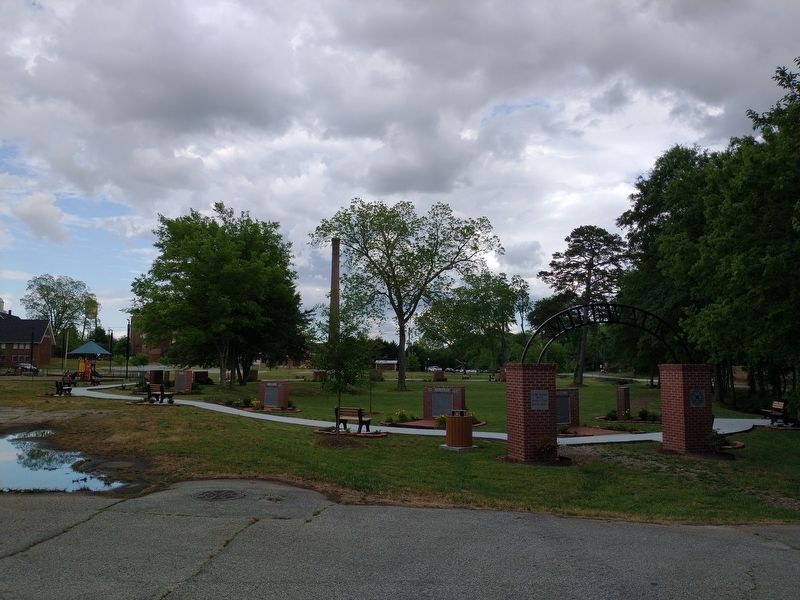
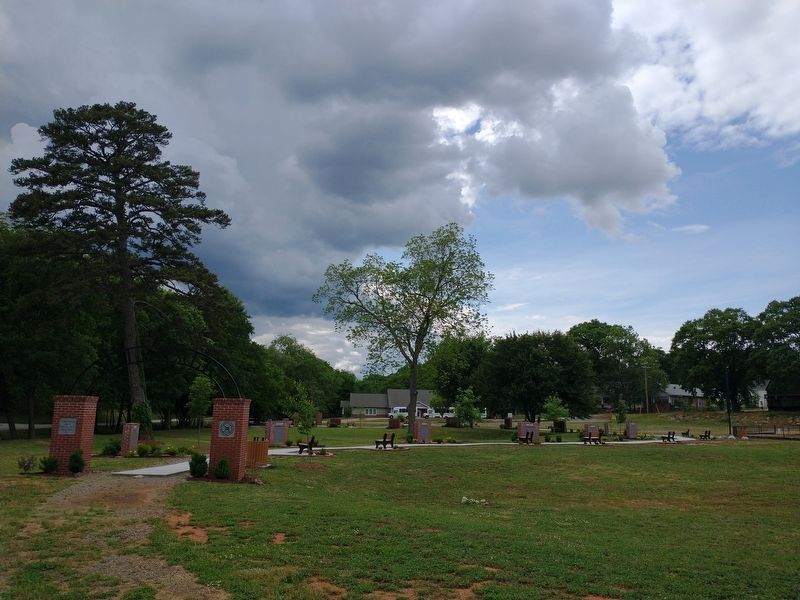
Location. 34° 52.025′ N, 82° 25.598′ W. Marker is in Greenville, South Carolina, in Greenville County. It is on Ravenel Street west of Smythe Street, on the right when traveling west. Marker located in Greenville Textile Heritage Park. Touch for map. Marker is in this post office area: Greenville
Photographed by Tom Bosse, May 14, 2022
2. Woodside Marker
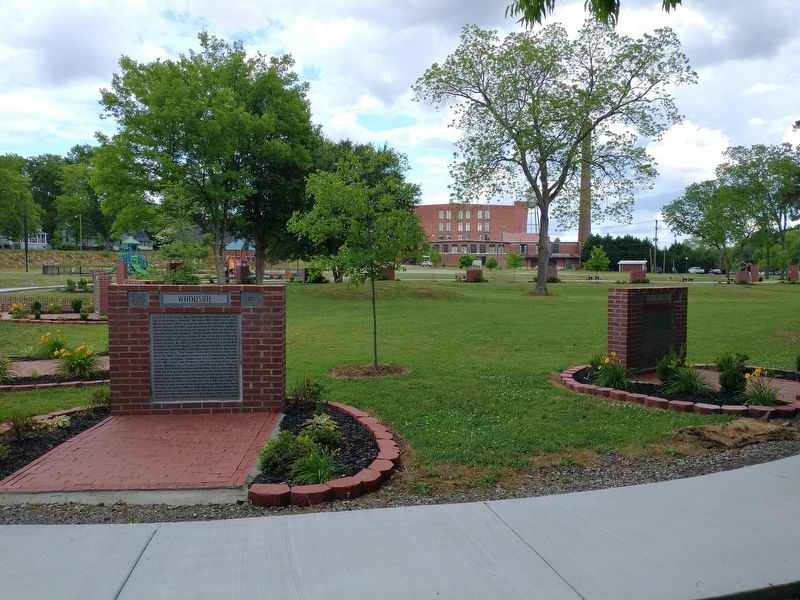
Marker located on left. Monaghan Mill can be seen in the background.

Regionally, this marker is in Upstate. It is also in the American South, specifically in the Deep South, in Appalachia, and specifically in Southern Appalachia. Globally, it is in North America, the Western Hemisphere, the Western World, and the Anglosphere. Historically, it finds itself in what was once the original Cherokee Nation, the territory of the Mississippian Culture, one of the original Thirteen Colonies, one of the Confederate States of America, and the Antebellum South.
Other nearby markers. At least 8 other markers are within walking distance of this marker: Union Bleachery (a few steps from this marker); Judson (within shouting distance of this marker); Dunean (within shouting distance of this marker); Camperdown (within shouting distance of this marker); Mills Mill (within shouting distance of this marker); Monaghan (within shouting distance of this marker); Brandon Mill (about 300 feet away, measured in a direct line); Piedmont (about 300 feet away). Touch for a list and map of all markers in Greenville.
Credits. This page was last revised on May 30, 2022. It was originally submitted on May 29, 2022, by Tom Bosse of Jefferson City, Tennessee. This page has been viewed 680 times since then and 33 times this year. Photos:1, 2, 3, 4, 5. submitted on May 29, 2022, by Tom Bosse of Jefferson City, Tennessee. • Bernard Fisher was the editor who published this page.