Gatlinburg in Sevier County, Tennessee — The American South (East South Central)
The Ephraim Bales Place
Great Smokey Mountains National Park
| — | National Park Service, U.S. Department of the Interior | — |

Photographed by Stanley and Terrie Howard, March 14, 2009
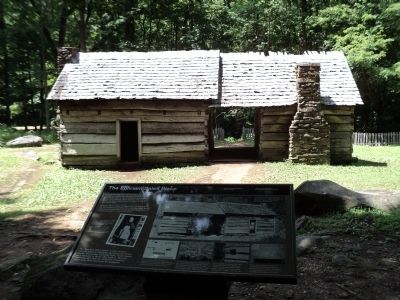
1. The Ephraim Bales Place Marker
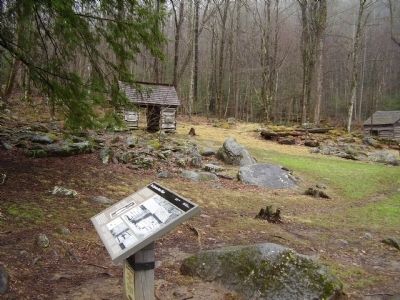
It would be difficult to find a better place to imagine mountain life than this. Picture yourself growing up here as one of Ephraim and Minerva Bales' nine children. Look around. This was your world. Imagine yourself and 10 others living in this small cabin.
Ephraim Bales owned 72 acres here. He farmed 30; the rest remained wooded. This was like many farms along the Roaring Fork, where families scratched a hard living from a very rocky land.
The Ephraim Bales house is one of more than 80 historic buildings preserved in Great Smoky Mountains National Park. Each stands as a memory to those who built it. Historic buildings like this are national treasures. Once lost, they can never be regained.
[Captions:]
Minerva "Nervy" Bales, circa 1930. Ephraim had died around 1926. The Bales family lived here from about 1890 to about 1930.
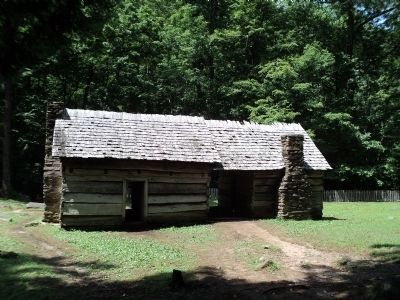
Notice the boards on the wall on the right side of the photo. As families were able, they covered their homes with siding and often built frame additions.
The Bales home around 1925. The photo was taken from the other side of the house, which historically, was the front. You are facing the back.
The two halves were probably built at different times around 1890-1900. The larger half was the living area; the smaller, the kitchen.
The structures on the site today are original, but not all of the original buildings survived. At one time there was a wood shed, and possibly other structures.
The Bales Place, circa 1930, looking back this way from the hill beyond the house. The old road passed between the barn and the house. Notice the openness of the land, which Ephraim Bales once farmed.
As you explore the house, try to find this "granny hole," the cabin's only window. Doors and windows were small—and few—to conserve heat and minimize cutting structural logs.
Please do not carve on, write on, or otherwise deface or damage any historic structure. Report vandalism to a park ranger or at a visitor center. Penalties for violators are severe.
Erected by National
this page online
Topics. This historical marker is listed in this topic list: Settlements & Settlers. A significant historical year for this entry is 1930.
Location. 35° 42.441′ N, 83° 28.289′ W. Marker is in Gatlinburg, Tennessee, in Sevier County. It can be reached from Cherokee Orchard Road. The Great Smoky Mountains Parkway Highway 73 down town Gatlinburg. Turn onto Airport Road. Airport Road becomes Cherokee Orchard Road. Touch for map. Marker is in this post office area: Gatlinburg TN 37738, United States of America. Touch for directions.

Regionally, this marker is in East Tennessee and in the Great Smoky Mountains. It is also in the American South, specifically in the Upper South, in Appalachia, and specifically in Southern Appalachia. Globally, it is in North America, the Western Hemisphere, the Western World, and the Anglosphere. Historically, it finds itself in what was once the original Cherokee Nation, the territory of the Mississippian Culture, one of the Confederate States of America, the State of Franklin, and the Antebellum South.
Other nearby markers. At least 8 other markers
Photographed by Bill Coughlin, August 5, 2012
2. The Ephraim Bales Place Marker
Photographed by Stanley and Terrie Howard, March 14, 2009
3. The Ephraim Bales Place Marker
Photographed by Bill Coughlin, August 5, 2012
4. Ephraim Bales Main House

Photographed by Stanley and Terrie Howard, March 14, 2009
5. The Ephraim Bales Place
The Bales home around 1935. The photo was taken from the other side of the house, which historically was the front. You are facing the back.
The two halves were probably built at different times around 1800-1900. The larger half was the living area the smaller, the kitchen.
The two halves were probably built at different times around 1800-1900. The larger half was the living area the smaller, the kitchen.
Photographed by Stanley and Terrie Howard, March 14, 2009
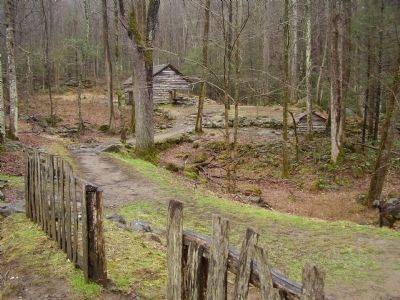
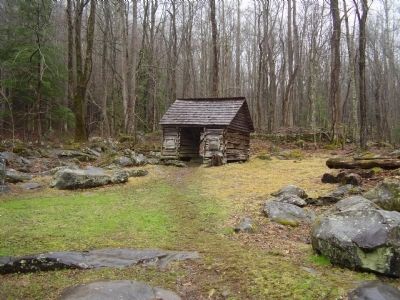
6. The Ephraim Bales Place
Looking from the house to the barn. You can see the old road bed in front of the fence.
Photographed by Stanley and Terrie Howard, March 14, 2009
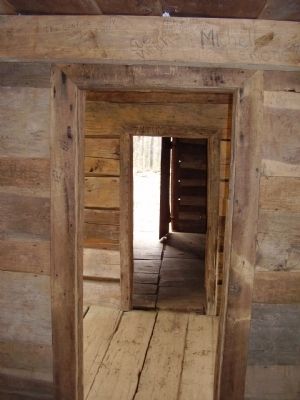
7. The Ephraim Bales Place
This door is maybe 4' foot high.
Photographed by Stanley and Terrie Howard, March 14, 2009
8. Corn Crib
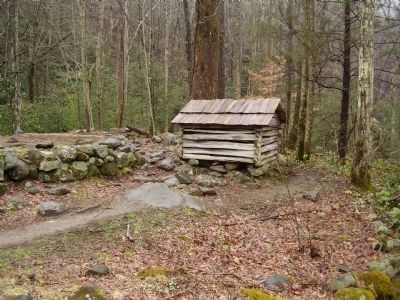
Photographed by Stanley and Terrie Howard, March 14, 2009
9. Hog Pen
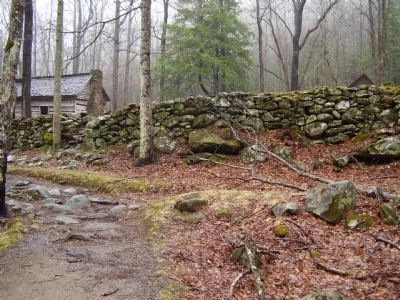
Photographed by Stanley and Terrie Howard, March 14, 2009
10. View From the Barn
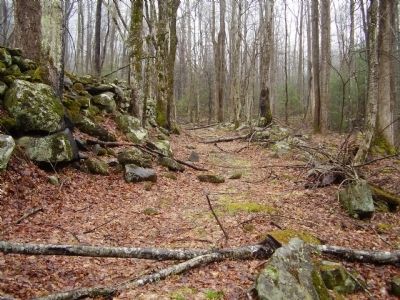
Photographed by Stanley and Terrie Howard, March 14, 2009
11. Old Road Bed
Credits. This page was last revised on February 15, 2026. It was originally submitted on July 1, 2009, by Stanley and Terrie Howard of Greer, South Carolina. This page has been viewed 8,463 times since then and 488 times this year. Photos: 1. submitted on July 1, 2009, by Stanley and Terrie Howard of Greer, South Carolina. 2. submitted on August 15, 2012, by Bill Coughlin of Woodland Park, New Jersey. 3. submitted on July 1, 2009, by Stanley and Terrie Howard of Greer, South Carolina. 4. submitted on August 15, 2012, by Bill Coughlin of Woodland Park, New Jersey. 5, 6, 7, 8, 9, 10, 11. submitted on July 1, 2009, by Stanley and Terrie Howard of Greer, South Carolina. • Syd Whittle was the editor who published this page.
