
Odéon in Paris in Département de Paris, Île-de-France, France — Western Europe
John Paul Jones
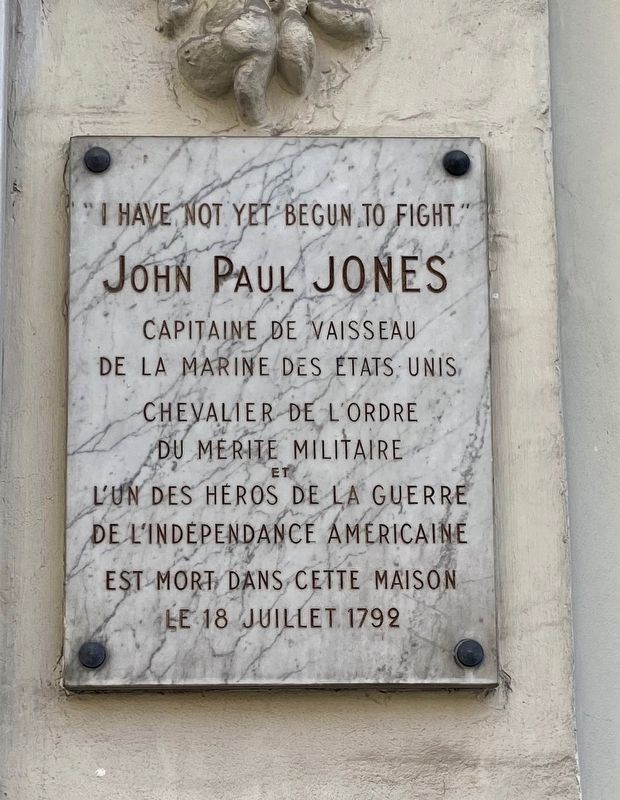
Photographed by Andrew Ruppenstein, July 27, 2022
1. John Paul Jones Marker

John Paul Jones
Capitaine de vaisseau
de la marine des Etats Unis,
Chevalier de l'Ordre
du Merite Militaire
et
l'un des heros de la Guerre
de l'Indépendance Americaine
est mort dans cette maison
le 18 juillet 1792
Ship Captain of the U.S. Navy,
Knight of the Order of Military Merit
and one of the heros of the American War of Independence,
died in this building on the 18th of July, 1792.
Topics. This historical marker is listed in this topic list: War, US Revolutionary. A significant historical date for this entry is July 18, 1792.
Location. 48° 51.02′ N, 2° 20.242′ E. Marker is in Paris, Île-de-France, in Département de Paris. It is in Odéon. It is on Rue de Tournon, on the right when traveling north. Touch for map. Marker is at or near this postal address: 19 Rue de Tournon, Paris, Île-de-France 75006, France. Touch for directions.

Regionally, it is in the North Atlantic Region, Europe, the European Union, Atlantic Europe, the Schengen Area, Western Europe, a coastal Mediterranean country, and the Western World. Historically, it finds itself
this page online
Other nearby markers. At least 8 other markers are within walking distance of this marker: Gabriel Marcel (a few steps from this marker); Casanova (within shouting distance of this marker); Gabriel Pierné (within shouting distance of this marker); Clément Marot (within shouting distance of this marker); Le Café Voltaire (about 120 meters away, measured in a direct line); Ulysses (about 120 meters away); Thomas Paine (about 120 meters away); André Ady (about 150 meters away). Touch for a list and map of all markers in Paris.
Also see . . . John Paul Jones (Wikipedia).
Excerpt: John Paul Jones (born John Paul; July 6, 1747 – July 18, 1792) was a Scottish-American naval captain who was the United States' first well-known naval commander in the American Revolutionary War. He made many friends among U.S political elites (including John Hancock and Benjamin Franklin) as well as enemies (who accused him of piracy), and his actions in British waters during the Revolution earned him an international reputation which persists to this day. As such, he is sometimes referred(Submitted on August 20, 2022.)to as the "Father of the American Navy" (a sobriquet he shares with John Barry and John Adams).Photographed by Andrew Ruppenstein, July 27, 20222. John Paul Jones Marker - wide view
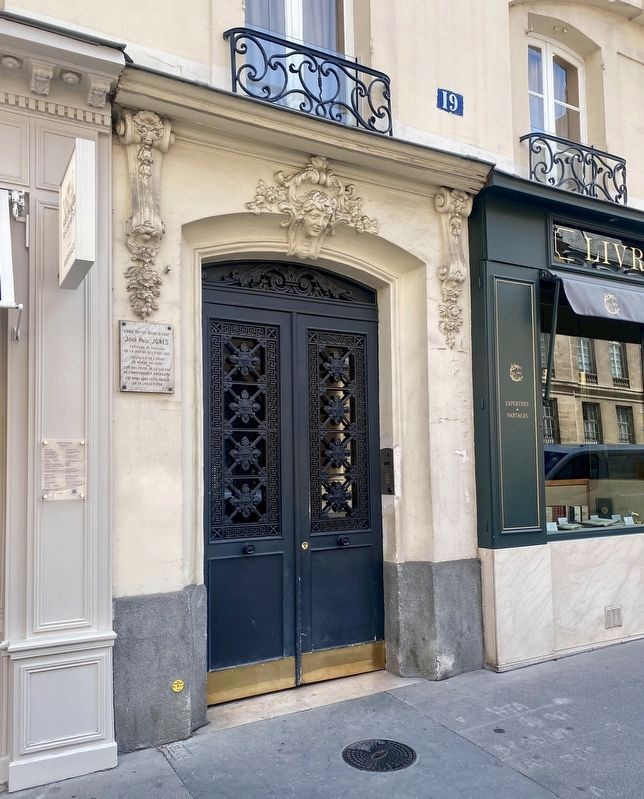
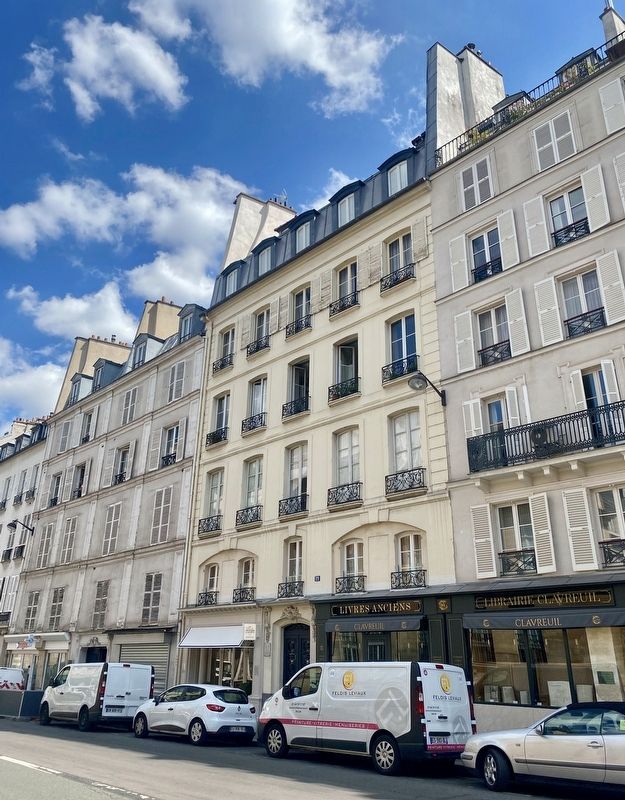
Photographed by Andrew Ruppenstein, July 27, 2022
3. John Paul Jones Marker - wider view
Credits. This page was last revised on October 31, 2026. It was originally submitted on August 20, 2022, by Andrew Ruppenstein of Lamorinda, California. This page has been viewed 237 times since then and 47 times this year. Photos: 1, 2, 3. submitted on August 20, 2022, by Andrew Ruppenstein of Lamorinda, California.