Guelph in Wellington County, Ontario — Central Canada (North America)
The Home of the First Mayor of Guelph
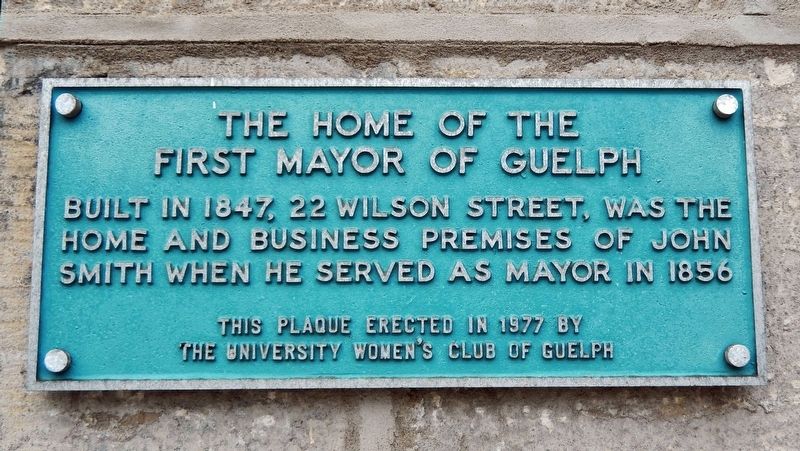
Photographed by Cosmos Mariner, May 26, 2022
1. The Home of the First Mayor of Guelph Marker
Erected 1977 by The University Women's Club of Guelph.
Topics. This historical marker is listed in this topic list: Notable Buildings. A significant historical year for this entry is 1847.
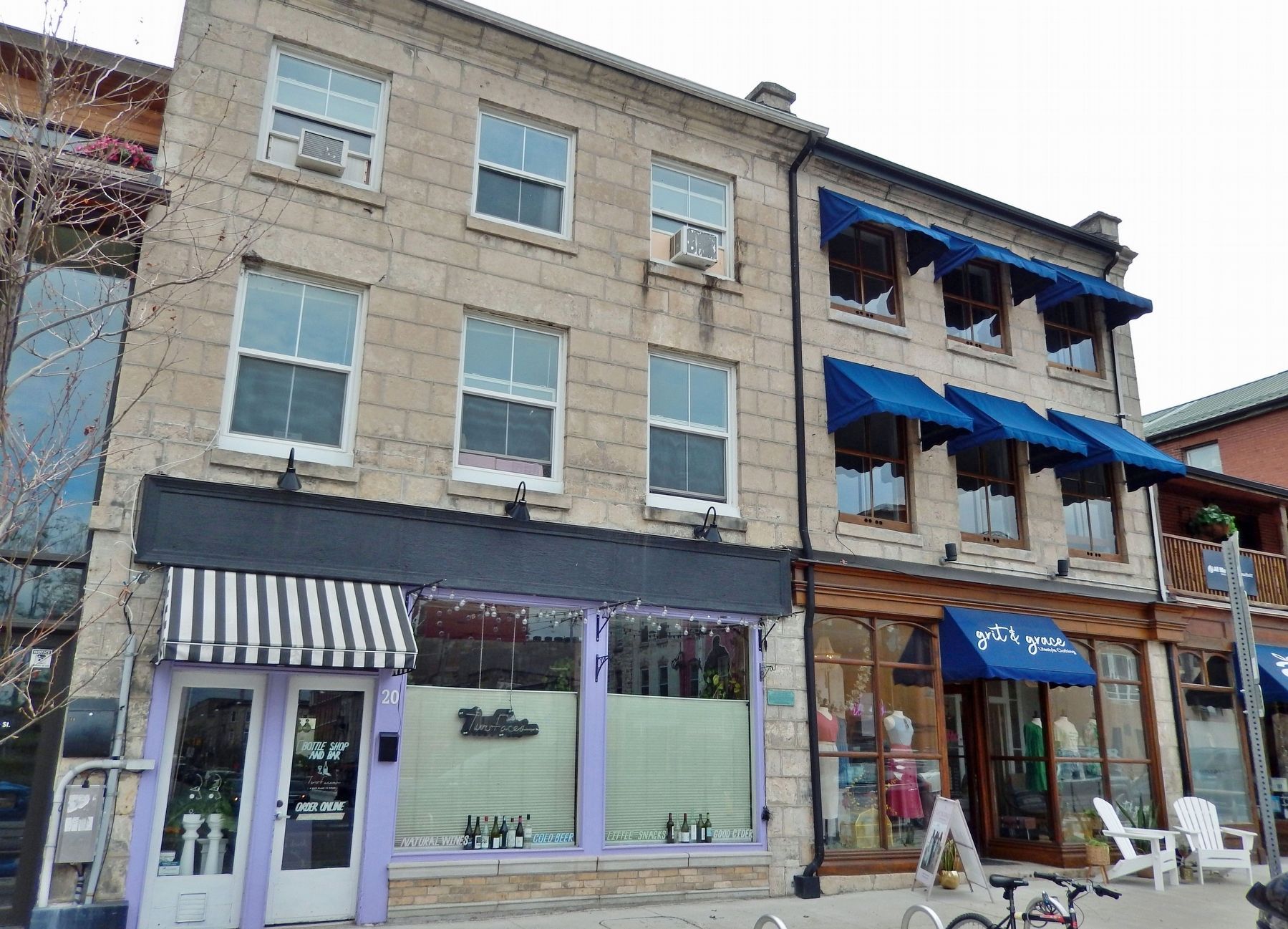
Location. 43° 32.605′ N, 80° 14.968′ W. Marker is in Guelph, Ontario, in Wellington County. It can be reached from the intersection of Wilson Street and Carden Street, on the left when traveling north. Marker is mounted at eye-level directly on the subject building. Touch for map. Marker is at or near this postal address: 22 Wilson Street, Guelph ON N1H 4G5, Canada. Touch for directions.

Regionally, this marker is in the Huron-Perth-Waterloo-Wellington Area and in Southwestern Ontario. It is also in Central Canada. Globally, it is in North America, the Western Hemisphere, the Western World, and the Anglosphere. Historically, it finds itself in what was once a British colony, the Viceroyalty of New France, the Haudenosaunee (Iroquois) Confederacy, and Rupert’s Land.
Other nearby markers. At least 8 other
this page online
Also see . . . Guelph.
Guelph was incorporated as a town in 1855 and the first mayor elected was John Smith. Despite optimism, the population growth was very slow until the Grand Trunk Railway reached it from Toronto, en route to Sarnia, in 1856; the town was also served soon thereafter by the Great Western Railway branch from Harrisburg. In 1856, the village became a town. The first city hall, now called the Old City Hall (Guelph), was built in 1856 of Guelph stone; the building contained a market(Submitted on October 29, 2022, by Cosmos Mariner of Cape Canaveral, Florida.)house, offices and an assembly hall.Photographed by Cosmos Mariner, May 26, 20222. The Home of the First Mayor of Guelph(marker is at eye-level, near the center, between the windows)
Credits. This page was last revised on October 29, 2022. It was originally submitted on October 27, 2022, by Cosmos Mariner of Cape Canaveral, Florida. This page has been viewed 325 times since then and 70 times this year. Photos: 1, 2. submitted on October 29, 2022, by Cosmos Mariner of Cape Canaveral, Florida.
