Poplar in Philadelphia in Philadelphia County, Pennsylvania — The American Northeast (Mid-Atlantic)
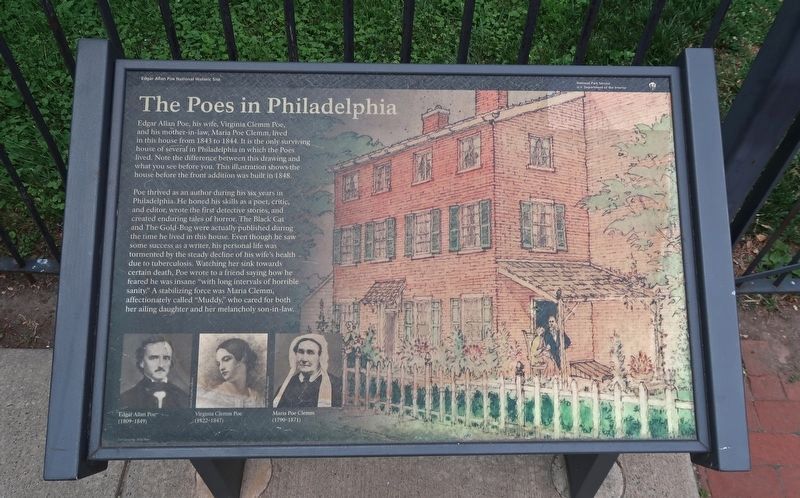
The Poes in Philadelphia
Courtesy of Thomas P. Martin, July 28, 2021
1. The Poes in Philadelphia Marker
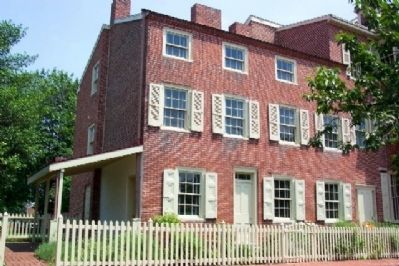
Poe thrived as an author during his six years in Philadelphia. He honed his skills as a poet, critic, and editor, wrote the first detective stories, and created enduring tales of horror. The Black Cat and The Gold-Bug were actually published during the time he lived in this house. Even though he saw some success as a writer, his personal life was tormented by the steady decline of his wife's health due to tuberculosis. Watching her sink towards certain death, Poe wrote to a friend saying how he feared he was insane “with long intervals of horrible sanity.” A stabilizing force was Maria Clemm, affectionately called “Muddy,” who cared for both her ailing daughter and her melancholy son-in-law.
Erected by National Park Service, U.S. Department
this page online
Topics. This historical marker is listed in these topic lists: Arts, Letters, Music • Entertainment. A significant historical year for this entry is 1843.
Location. 39° 57.716′ N, 75° 8.989′ W. Marker is in Philadelphia, Pennsylvania, in Philadelphia County. It is in Poplar. It is on North 7th Street, on the left when traveling north. Marker is at the Edgar Allan Poe National Historic Site, 100 feet north of Spring Garden Street. Touch for map. Marker is at or near this postal address: 530 N 7th St, Philadelphia PA 19123, United States of America. Touch for directions.

Regionally, this marker is in Southeast Pennsylvania. It is also in the American Northeast and in the Mid-Atlantic. Globally, it is in North America, the Western Hemisphere, the Western World, and the Anglosphere. Historically, it finds itself in what was once the Haudenosaunee (Iroquois) Confederacy, New Netherland, and one of the original Thirteen Colonies.
Other nearby markers. At least 8 other markers are within walking distance of this marker: Edgar Allen Poe National Historic Site (a few steps from this marker); The German Society of Pennsylvania
Photographed by William Fischer, Jr., July 1, 2009
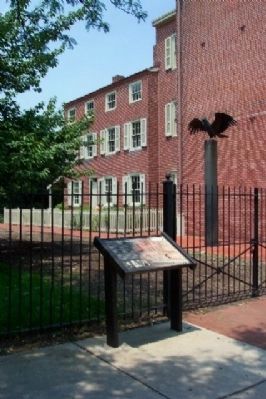
2. Poe House and Marker
Note the Raven sculpture to right.
Courtesy of Thomas P. Martin, July 28, 2021
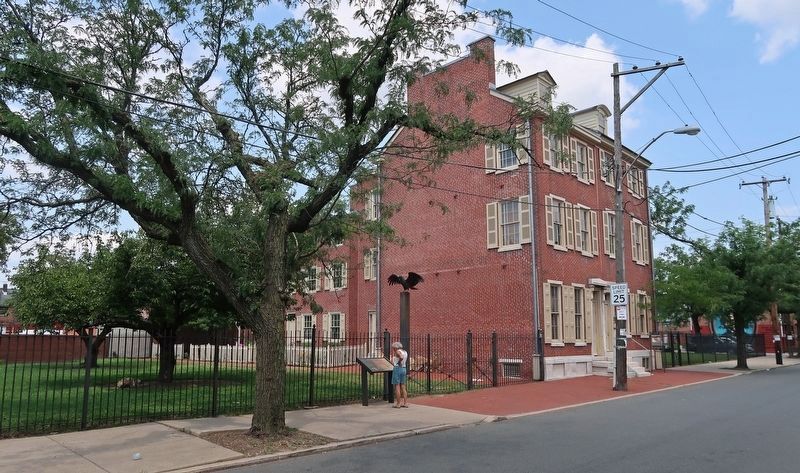
3. The Poes in Philadelphia Marker
Photographed by William Fischer, Jr., July 1, 2009
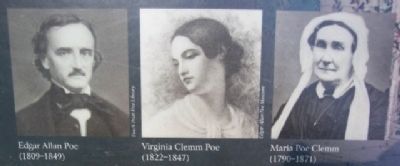
4. Poe Marker Detail
Photographed by William Fischer, Jr., July 1, 2009
5. Poe House
Photographed by Allen C. Browne, September 5, 2015
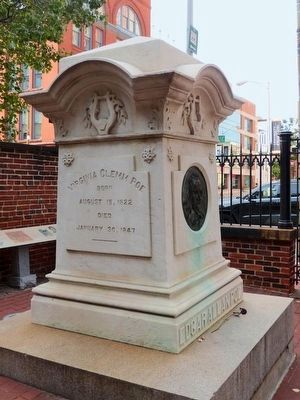
6. Poe's Grave - Westminster Burying Ground, Baltimore
The Poe's are buried together in this tomb in Westminster Burying Ground in Baltimore, Maryland.
Photographed by Allen C. Browne, September 5, 2015
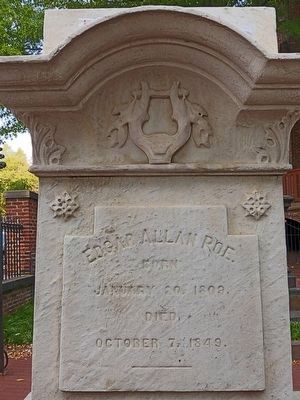
7. Edgar Allan Poe
January 20, 1809
Died
October 7, 1849
Photographed by Allen C. Browne, September 5, 2015
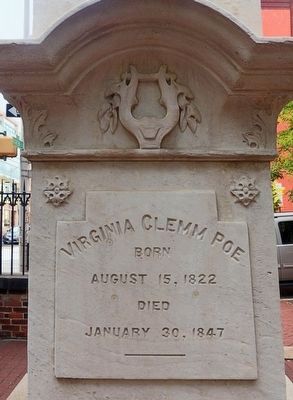
8. Virginia Clemm Poe
August 15, 1822
Died
January 30, 1847
Photographed by Allen C. Browne, September 5, 2015
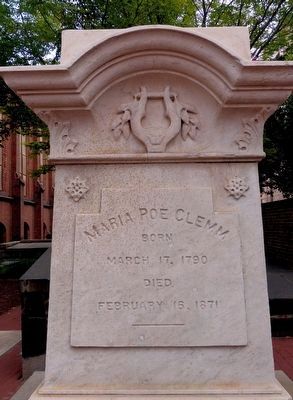
9. Maria Poe Clemm
March 17, 1790
Died
February 16, 1871
Photographed by Allen C. Browne, February 16, 2015
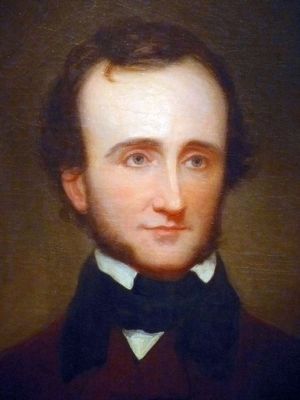
10. Edgar Allan Poe
This 1845 portrait of Edgar Allan Poe by Samuel Stillman Osgood hangs in the National Portrait Gallery in Washington, DC.
“Edgar Allan Poe is popularly known for his poem ‘The Raven’ (1844), and like the raven itself, Poe was a dark presence amid the optimism of early American culture. Not for him was the glorification of the individual or the celebration of nature as life-giving. Poe peeled back the underside of America to sketch a world in which nothing, especially human motivation, was transparent, predictable, or even knowable. In their dark, hallucinatory imagery, Poe's writings profoundly influenced such European poets as Baudelaire and Rimbaud. In America, his voice is still singular for the strength with which it spoke against the spirit of the Romantic age in which he lived. Poe's great subject was death, and he seemed to court it in his life as well as art, dying early after proving himself unable to function in the society he dissected so remorselessly.” — National Portrait Gallery
“Edgar Allan Poe is popularly known for his poem ‘The Raven’ (1844), and like the raven itself, Poe was a dark presence amid the optimism of early American culture. Not for him was the glorification of the individual or the celebration of nature as life-giving. Poe peeled back the underside of America to sketch a world in which nothing, especially human motivation, was transparent, predictable, or even knowable. In their dark, hallucinatory imagery, Poe's writings profoundly influenced such European poets as Baudelaire and Rimbaud. In America, his voice is still singular for the strength with which it spoke against the spirit of the Romantic age in which he lived. Poe's great subject was death, and he seemed to court it in his life as well as art, dying early after proving himself unable to function in the society he dissected so remorselessly.” — National Portrait Gallery
Credits. This page was last revised on February 2, 2023. It was originally submitted on August 10, 2009, by William Fischer, Jr. of Reynoldsburg, Ohio. This page has been viewed 1,652 times since then and 61 times this year. Photos: 1. submitted on March 25, 2022, by Duane and Tracy Marsteller of Murfreesboro, Tennessee. 2. submitted on August 10, 2009, by William Fischer, Jr. of Reynoldsburg, Ohio. 3. submitted on March 25, 2022, by Duane and Tracy Marsteller of Murfreesboro, Tennessee. 4, 5. submitted on August 10, 2009, by William Fischer, Jr. of Reynoldsburg, Ohio. 6, 7, 8, 9, 10. submitted on November 5, 2015, by Allen C. Browne of Silver Spring, Maryland. • Kevin W. was the editor who published this page.
