Fourth Ward in Houston in Harris County, Texas — The American South (West South Central)
Gregory School
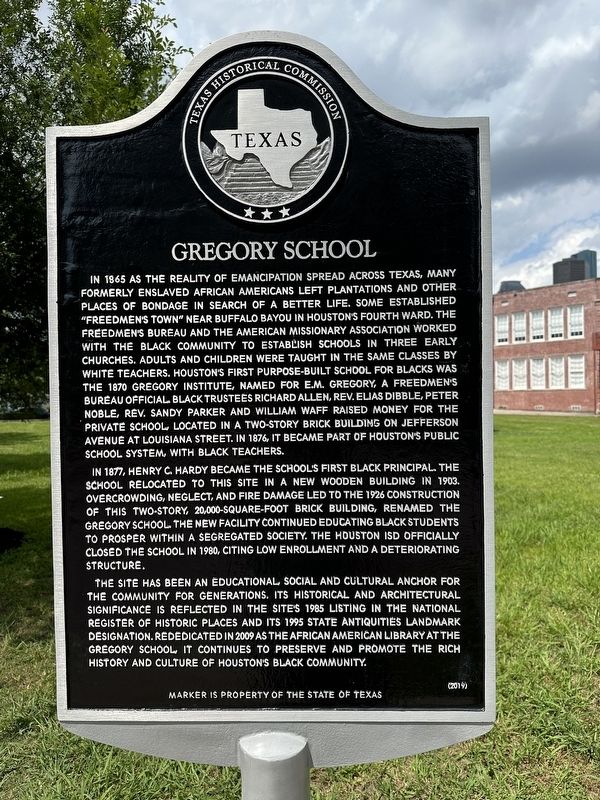
Photographed by Brian Anderson, June 10, 2023
1. Gregory School Marker
In 1865 as the reality of emancipation spread across Texas, many formerly enslaved African Americans left plantations and other places of bondage in search of a better life. Some established "Freedmen's Town" near Buffalo Bayou in Houston's Fourth Ward. The Freedmen's Bureau and the American Missionary Association worked with the black community to establish schools in three early churches. Adults and children were taught in the same classes by white teachers. Houston's first purpose-built school for blacks was the 1870 Gregory Institute, named for E.M. Gregory, a Freedmen's Bureau official. Black trustees Richard Allen, Rev. Elias Dibble, Peter Noble, Rev. Sandy Parker and William Waff raised money for the private school, located in a two-story brick building on Jefferson Avenue at Louisiana Street. In 1876, it became part of Houston's public school system, with black teachers.
In 1877, Henry C. Hardy became the school's first black principal. The school relocated to this site in a new wooden building in 1903. Overcrowding, neglect, and fire damage led to the 1926 construction of this two-story, 20,000-square-foot
this page online
The site has been an educational, social and cultural anchor for the community for generations. Its historical and architectural significance is reflected in the site's 1985 listing in the National Register of Historic Places and its 1995 State Antiquities Landmark designation. Rededicated in 2009 as the African American library at the Gregory School, it continues to preserve and promote the rich history and culture of Houston's black community.
Erected 2019 by Texas Historical Commission. (Marker Number 22545.)
Topics. This historical marker is listed in these topic lists: African Americans • Education. A significant historical year for this entry is 1870.
Location. 29° 45.239′ N, 95° 22.875′ W. Marker is in Houston, Texas, in Harris County. It is in the Fourth Ward. It is at the intersection of Wilson Street and Victor Street, on the right when traveling north on Wilson Street. Touch for map.
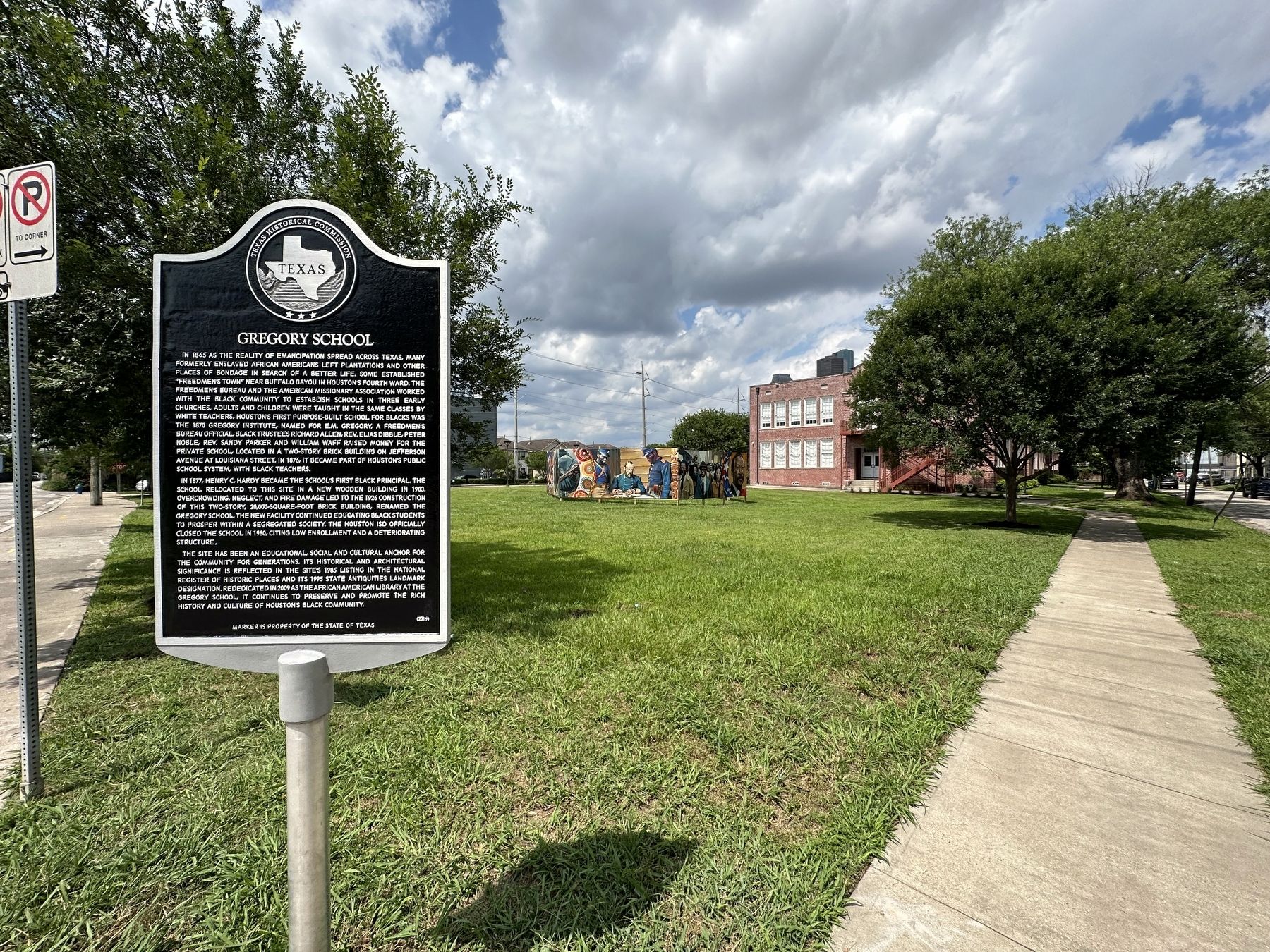
Photographed by Brian Anderson, June 10, 2023
2. Gregory School Marker

Regionally, this marker is in the American South and on the Gulf Coast. Globally, it is in North America, a Gulf of Mexico state, the Western Hemisphere, the Western World, and the Anglosphere. Historically, it finds itself in what was once New Spain, the Republic of Texas, one of the Confederate States of America, and the Antebellum South.
Other nearby markers. At least 8 other markers are within walking distance of this marker: Macedonia Missionary Baptist Church (about 400 feet away, measured in a direct line); The Reverend Ned P. Pullum (about 600 feet away); Rutherford B.H. Yates, Sr., House (about 700 feet away); J. Vance Lewis (about 700 feet away); New Zion Temple Church - Worldwide Fellowship, Inc. (about 700 feet away); St. James United Methodist Church (about 700 feet away); Mt. Carmel Missionary Baptist Church (approx. 0.2 miles away); Henry Livingston Thompson (approx. ¼ mile away). Touch for a list and map of all markers in Houston.
Also see . . . Gregory Institute - The Handbook of Texas Online.
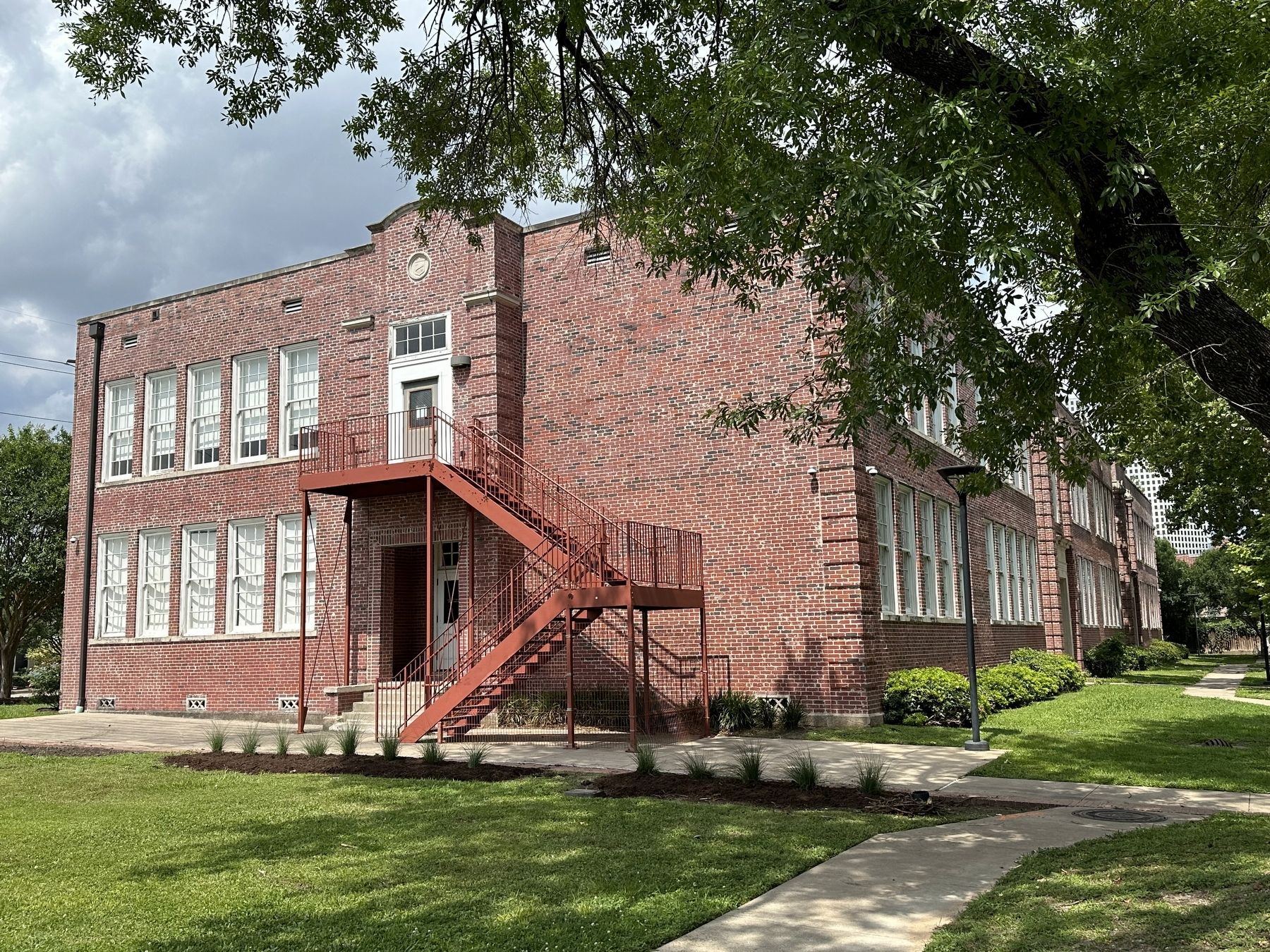
Photographed by Brian Anderson, June 10, 2013
3. Gregory School
Credits. This page was last revised on August 13, 2025. It was originally submitted on June 12, 2023, by Brian Anderson of New Albany, Ohio. This page has been viewed 952 times since then and 81 times this year. Photos: 1, 2, 3. submitted on June 12, 2023, by Brian Anderson of New Albany, Ohio.
