
Wilmington in New Hanover County, North Carolina — The American South (South Atlantic)
St. Stephen A.M.E. Church
1880-1886
Photographed by Cosmos Mariner, May 15, 2023
1. St. Stephen A.M.E. Church Marker
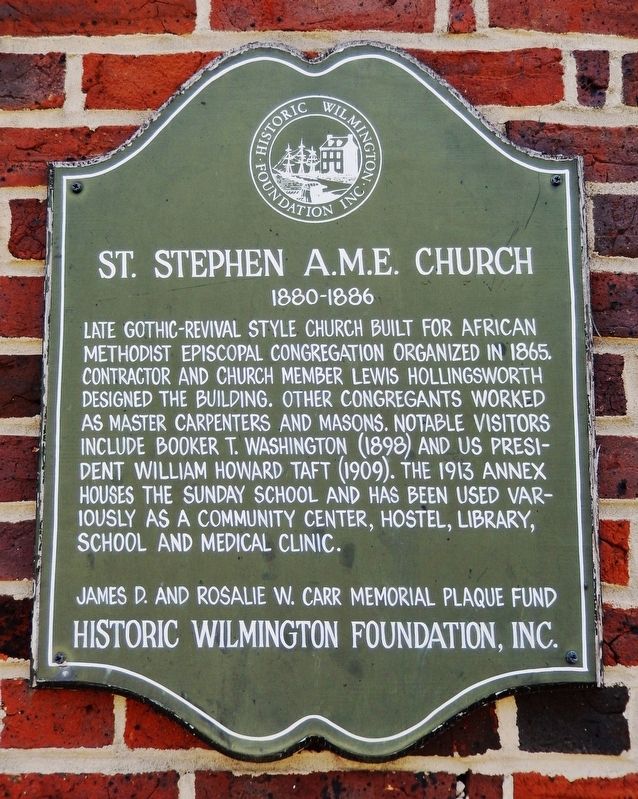
Late Gothic-revival style church built for African Methodist Episcopal congregation organized in 1865. Contractor and church member Lewis Hollingsworth designed the building. Other congregants worked as master carpenters and masons. Notable visitors include Booker T. Washington (1898) and US President William Howard Taft (1909). The 1913 Annex houses the Sunday School and has been used variously as a community center, hostel, library, school and medical clinic.
Historic Wilmington Foundation, Inc.
Erected by Historic Wilmington Foundation, Inc.
Topics and series. This historical marker is listed in these topic lists: African Americans • Architecture • Education • Religion & Religious Structures. In addition, it is included in the Former U.S. Presidents: #27 William Howard Taft, and the North Carolina, Historic Wilmington Foundation series lists. A significant historical year for this entry is 1865.
Location. 34° 14.5′ N, 77° 56.629′ W. Marker is in Wilmington, North Carolina, in New Hanover County. It is on North 5th Avenue just north of Red Cross Street,
this page online

Regionally, this marker is in North Carolina’s Coastal Plain and on the Cape Fear Coast. It is also in the American South, specifically in the Upper South, in the Tidewater, and on the Eastern Seaboard. Globally, it is in the North Atlantic Region, North America, the Western Hemisphere, the Western World, and the Anglosphere. Historically, it finds itself in what was once the territory of the Mississippian Culture, one of the original Thirteen Colonies, one of the Confederate States of America, and the Antebellum South.
Other nearby markers. At least 8 other markers are within walking distance of this marker: McGhee House (about 500 feet away, measured in a direct line); Toon Cottage (about 500 feet away); St. Andrew's Presbyterian Church (about 500 feet away); Consolidated Market and Fire Engine House No. 3
Photographed by Cosmos Mariner, May 15, 2023
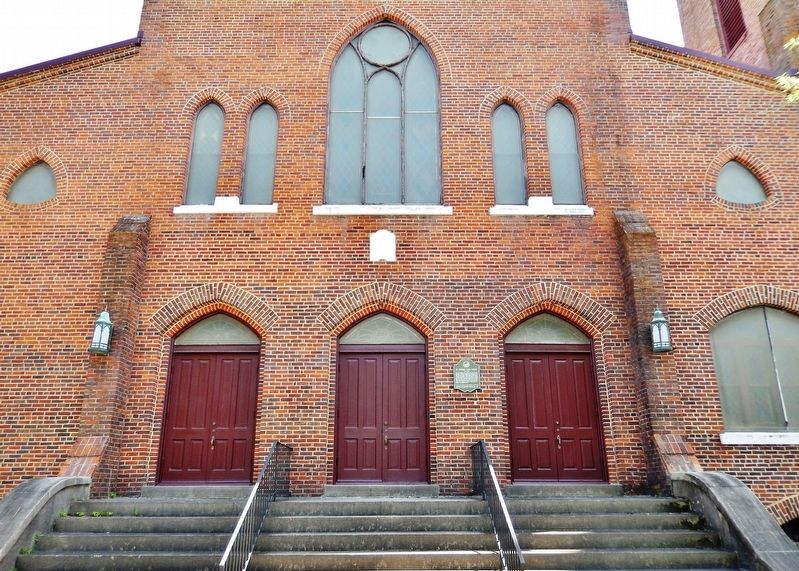
2. St. Stephen A.M.E. Church (west/front facade)
Related markers. Click here for a list of markers that are related to this marker. St. Stephen A.M.E. Church
Also see . . .
1. An Abbreviated History of St. Stephen African Methodist Episcopal Church.
Although 1865 was the year in which African Methodism took root in Wilmington, the roots of Methodism began in 1798 when a Wesleyan missionary named William Meredith traveled up the coast preaching. His preaching sparked a divine flame amongst slaves and white citizens became suspicious of him, ultimately jailing him. So Meredith preached from the jail window until released. Upon his release, he continued his mission work and established the Front Street Methodist Church with the aid of blacks who gave their “penny collections” to help him acquire property for the church.(Submitted on June 19, 2023, by Cosmos Mariner of Cape Canaveral, Florida.)
2. Honoring black history in Wilmington: St. Stephen AME Church.
Photographed by Cosmos Mariner, May 15, 2023
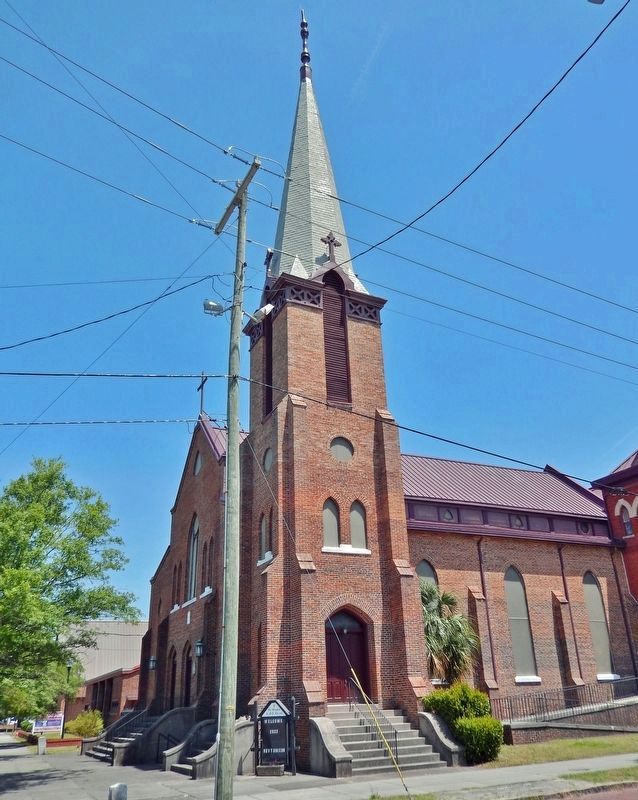
3. St. Stephen A.M.E. Church
(southwest elevation)
(southwest elevation)
St. Stephen was founded in 1865. Originally, St. Stephen was part of what was then Front St. Methodist Church. After the end of the Civil War, African American members of the Front St. Methodist Church wanted to have the black Chaplain of the Union Army preach a sermon, but they were denied by white members of the church. As a result, they were withdrawn from that congregation and they established St. Stephen. The church itself was built by former slaves and free black artisans.(Submitted on June 19, 2023, by Cosmos Mariner of Cape Canaveral, Florida.)
3. St. Stephen African Methodist Episcopal (AME) Church.
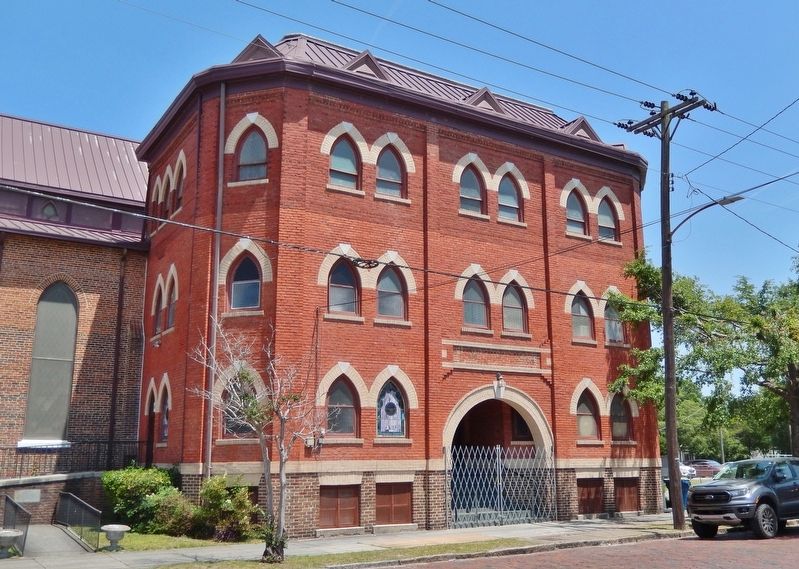
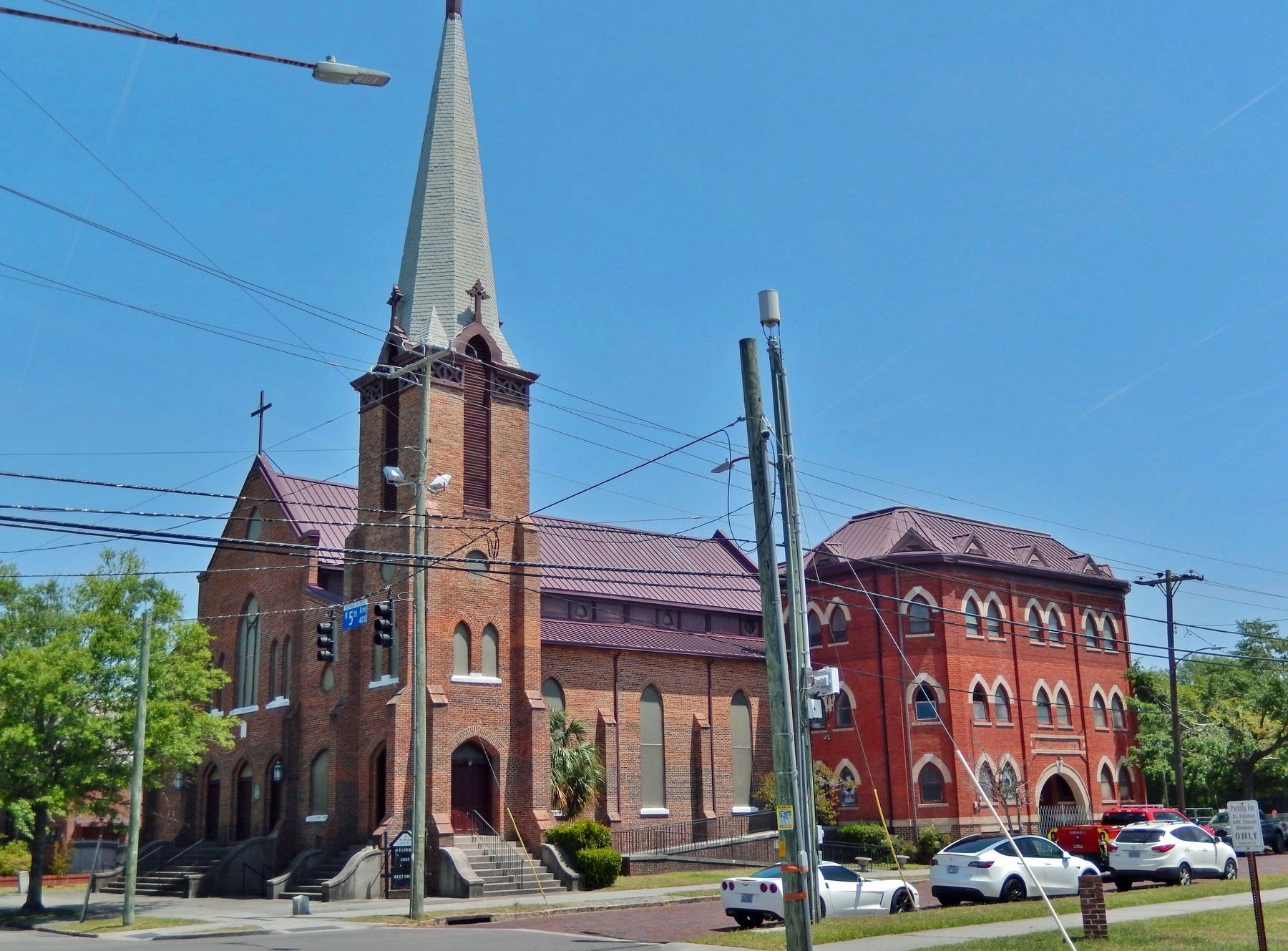
A large annex addition, built in 1913, provided the local Black community with a combined school, small clinic, hostel, and public bath. The L-shaped annex is attached to the east end of the main church, with the short end of the L wrapping around the south (street) facade. The three-and-a-half-story red brick annex is also designed in the Gothic Revival style, with light-colored brick highlighting the tops of the arched windows, doorways, and forming a stringcourse above the raised basement.(Submitted on June 19, 2023, by Cosmos Mariner of Cape Canaveral, Florida.)
Photographed by Cosmos Mariner, May 15, 2023
4. St. Stephen A.M.E. Church: 1913 School & Clinic Annex
Photographed by Cosmos Mariner, May 15, 2023
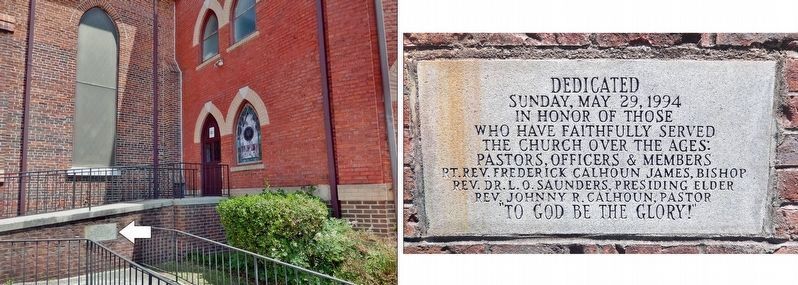
5. May 29, 1994 Dedication
(near southeast corner • between church and annex)
(near southeast corner • between church and annex)
Sunday, May 29, 1994
in honor of those
who have faithfully served
the Church over the ages:
Pastors, Officers & Members
Rt. Rev. Frederick Calhoun James, Bishop
Rev. Dr. L. O. Saunders, Presiding Elder
Rev. Johnny R. Calhoun, Paster
”To God Be The Glory!”
Photographed by Cosmos Mariner, May 15, 2023
6. St. Stephen A.M.E. Church & Annex (southwest elevation)
Credits. This page was last revised on June 19, 2023. It was originally submitted on June 18, 2023, by Cosmos Mariner of Cape Canaveral, Florida. This page has been viewed 667 times since then and 60 times this year. Photos: 1, 2, 3, 4, 5, 6. submitted on June 19, 2023, by Cosmos Mariner of Cape Canaveral, Florida.
