Lowell in Lake County, Indiana — The American Midwest (Great Lakes)
Halsted House
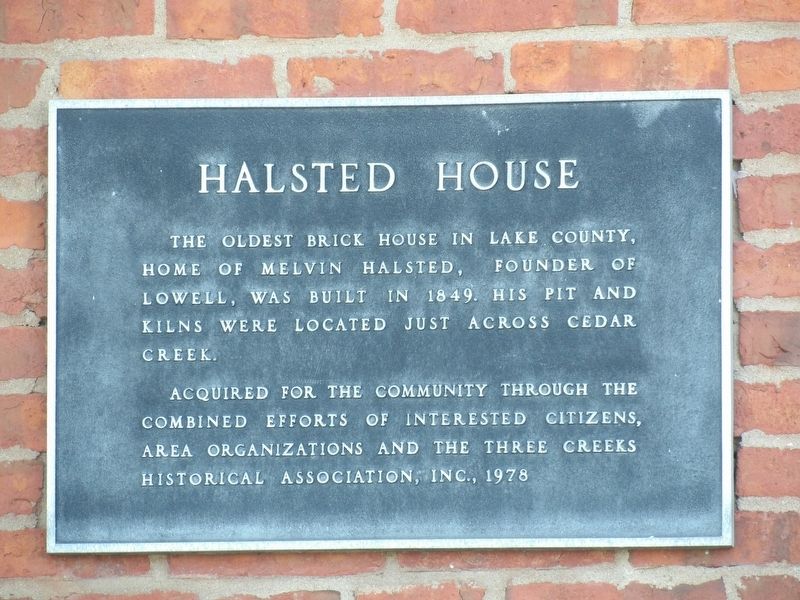
Photographed by Duane and Tracy Marsteller, July 9, 2023
1. Halsted House Marker
Acquired for the community through the combined efforts of interested citizens, area organizations and the Three Creeks Historical Association, Inc., 1978.
Topics and series. This historical marker is listed in these topic lists: Architecture • Industry & Commerce • Settlements & Settlers. In addition, it is included in the National Register of Historic Places (NRHP) series list. A significant historical year for this entry is 1849.
Location. 41° 17.601′ N, 87° 25.344′ W. Marker is in Lowell, Indiana, in Lake County. It is at the intersection of East Main Street and Halsted Street, on the left when traveling east on East Main Street. Touch for map. Marker is at or near this postal address: 201 E Main St, Lowell IN 46356, United States of America. Touch for directions.

Regionally, this marker is in Northwest Indiana and in the Calumet Region. It is also in the American Midwest and in the Corn Belt. Globally, it is in North America, on the Great
this page online
Other nearby markers. At least 8 other markers are within 3 miles of this marker, measured as the crow flies: Lowell National Bank (approx. 0.2 miles away); Main Street School (approx. 0.2 miles away); Three Creeks Monument (approx. ¼ mile away); J. Claude Rumsey House (approx. 0.3 miles away); Schoolhouse (approx. 2.3 miles away); Log House (approx. 2.4 miles away); House (approx. 2.4 miles away); Hired Hands House (approx. 2.4 miles away). Touch for a list and map of all markers in Lowell.
Regarding Halsted House. Excerpts from the National Register of Historic Places nomination for the house:
Born in 1821, [Melvin A.] Halsted came from a well-to-do family in New York. In 1837 he moved to Dayton, Ohio, married, and moved to a farm in Lake County, Indiana in 1845. In 1848 the Halsteds settled on land which later became the Town of Lowell.
In 1848, Halsted in partnership with O. E. Haskins purchased a site for a saw millwhich they opened in 1849. Halsted and his workmen lived in cabins around the mill. At this time he found a deposit of lake and boulder clay which was excellent for brick making. He fired 400,000 bricks which he used in constructing his house in 1850. The discovery of clay deposits led to the development of the brick industry in Lake and Porter counties.…Photographed by Duane and Tracy Marsteller, July 9, 20232. Halsted House MarkerThe house is now a museum.
Soon after completing his brick house, Halsted left to join in the California Gold Rush. His efforts were productive, and he made a number of trips to California. With his newfound capital, he erected a flour mill in 1852. The next year he platted the Town of Lowell. Giving away lots to attract mill workers and mechanics, he named the settlement after Lowell, Massachusetts, which had become famous as an ideal mill community.
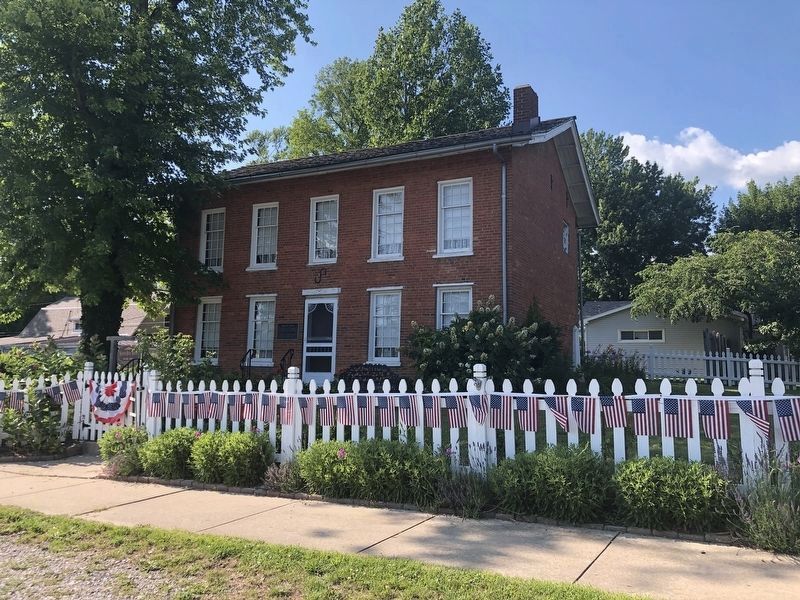
Also see . . . Melvin A. Halsted House (PDF). National Register nomination for the property, which was listed in 1978. (National Archives) (Submitted on August 19, 2023, by Duane and Tracy Marsteller of Murfreesboro, Tennessee.)
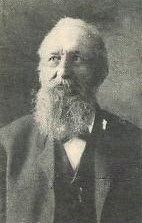
from Souvenir Album of Lake County, Indiana (King & Woodcock) via Internet Archive (Public Domain), circa 1906
3. Melvin Amos Halsted (1821-1915)
He died at his son's Kansas home just five days short of his 94th birthday.

Photographed by Mark Parker, July 6, 2022
4. Halsted House Museum sign
Credits. This page was last revised on August 17, 2026. It was originally submitted on August 19, 2023, by Duane and Tracy Marsteller of Murfreesboro, Tennessee. This page has been viewed 287 times since then and 53 times this year. Photos: 1, 2, 3. submitted on August 19, 2023, by Duane and Tracy Marsteller of Murfreesboro, Tennessee. 4. submitted on August 7, 2026, by Mark Parker of Hickory, North Carolina.
