Natchez in Natchitoches Parish, Louisiana — The American South (West South Central)
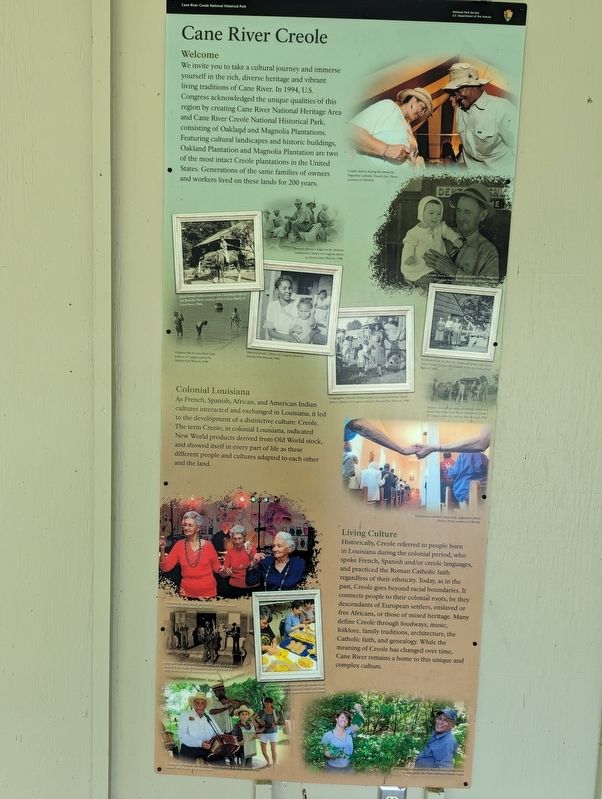
Cane River Creole
Photographed by Cajun Scrambler, July 2, 2023
1. Cane River Creole Marker
Welcome
We invite you to take a cultural journey and immerse yourself in the rich, diverse heritage and vibrant living traditions of Cane River. In 1994, U.S. Congress acknowledged the unique qualities of this region by creating Cane River National Heritage Area and Cane River Creole National Historical Park, consisting of Oakland and Magnolia Plantations. Featuring cultural landscapes and historic buildings, Oakland Plantation and Magnolia Plantation are two of the most intact Creole plantations in the United States Generations of the same families of owners and workers lived on these lands for 200 years.
Colonial Louisiana
As French, Spanish, African, and American Indian cultures interacted and exchanged in Louisiana, it led to the development of a distinctive culture: Creole. The term Creole, in colonial Louisiana, indicated New World products derived from Old World stock, and showed itself in every part of life as these different people and cultures adapted to each other and the land.
Living Culture
Historically, Creole referred to people born in Louisiana during the colonial period, who spoke French,
this page online
Erected by National Park Service.
Topics. This historical marker is listed in this topic list: Settlements & Settlers.
Location. 31° 39.938′ N, 93° 0.216′ W. Marker is in Natchez, Louisiana, in Natchitoches Parish. It is on Louisiana 494 (State Highway 494) half a mile north of State Highway 119. Touch for map. Marker is at or near this postal address: 4285 LA-494, Natchez LA 71456, United States of America. Touch for directions.

Regionally, this marker is in Central Louisiana. It is also in the American South, specifically in the
Photographed by Cajun Scrambler, July 2, 2023
2. Cane River Creole Marker
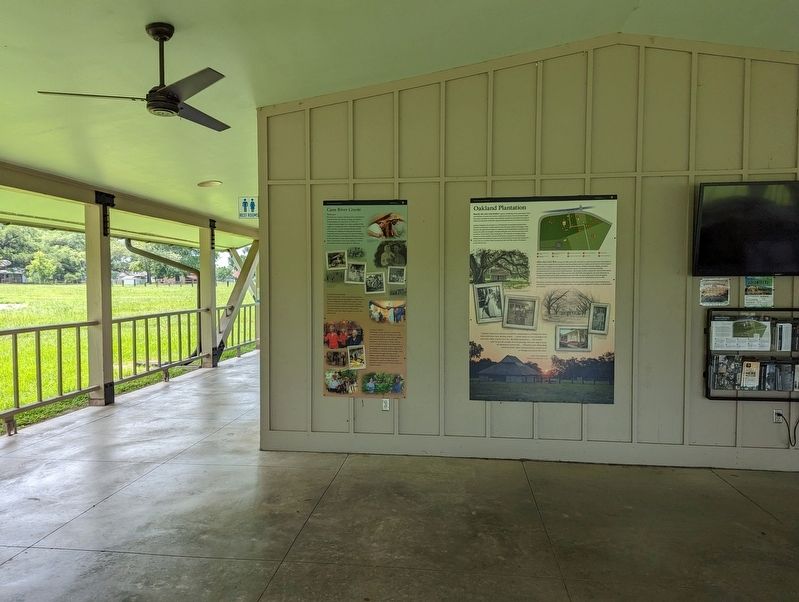
Other nearby markers. At least 8 other markers are within walking distance of this marker: Oakland Plantation (here, next to this marker); Magnolia Plantation (here, next to this marker); Hollywood Comes to Oakland Plantation (a few steps from this marker); A French Connection (about 300 feet away, measured in a direct line); Meet "Natchez" the Oakland Mule (about 300 feet away); Maker of Most Things Wood (about 300 feet away); Oakland Grist Mill (about 300 feet away); Creole Architecture (about 300 feet away). Touch for a list and map of all markers in Natchez.
Credits. This page was last revised on September 4, 2023. It was originally submitted on September 4, 2023, by Cajun Scrambler of Assumption, Louisiana. This page has been viewed 246 times since then and 29 times this year. Photos: 1, 2. submitted on September 4, 2023, by Cajun Scrambler of Assumption, Louisiana.
