College Heights in Durham in Durham County, North Carolina — The American South (South Atlantic)
College Heights Historic District
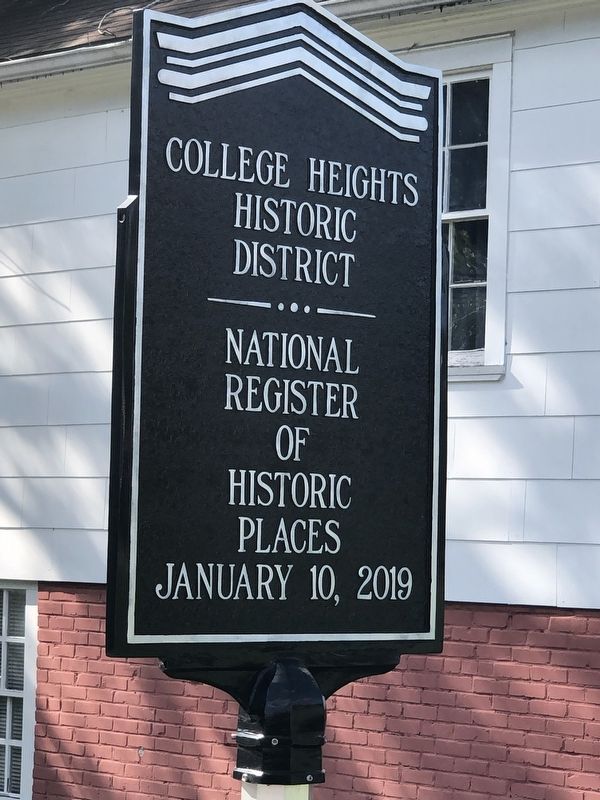
Photographed by Duane and Tracy Marsteller, August 31, 2023
1. College Heights Historic District Marker
Register
of
Historic
Places
January 10, 2019
Erected 2019.
Topics and series. This historical marker is listed in these topic lists: African Americans • Architecture • Education. In addition, it is included in the National Register of Historic Places (NRHP) series list. A significant historical date for this entry is January 10, 2019.
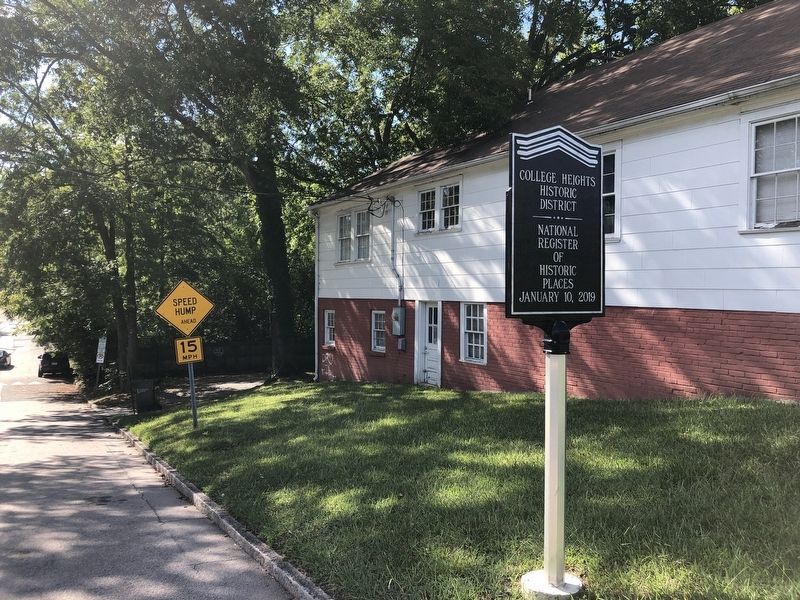
Location. 35° 58.342′ N, 78° 54.069′ W. Marker is in Durham, North Carolina, in Durham County. It is in College Heights. It is at the intersection of Nelson Street and Fayetteville Street (North Carolina Road 1118), on the right when traveling west on Nelson Street. Touch for map. Marker is at or near this postal address: 2116 Fayetteville St, Durham NC 27707, United States of America. Touch for directions.

Regionally, this marker is in the Piedmont and in the Research Triangle. It is also in the American South and specifically in the Upper South. Globally, it is in North America, the Western Hemisphere, the Western World, and the Anglosphere. Historically, it finds itself in what was once the territory of the Mississippian Culture, one of the original Thirteen
this page online
Other nearby markers. At least 8 other markers are within walking distance of this marker: Beulah C. Bowens Fuller (about 400 feet away, measured in a direct line); Centennial Chapel (approx. 0.2 miles away); a different marker also named College Heights Historic District (approx. 0.2 miles away); Shepard House (approx. 0.2 miles away); James Edward Shepard (approx. 0.2 miles away); Clyde R. Hoey Building (approx. ¼ mile away); Former Site of Hillside High School (approx. ¼ mile away); North Carolina Central University (approx. half a mile away). Touch for a list and map of all markers in Durham.
Regarding College Heights Historic District. Excerpt from the National Register nomination:
The neighborhood was distinguished by its proximity to African American educational institutions and its middle- to upper-class residents. New educational opportunities for African Americans in the early decades of the century, specifically the establishment of the National Religious Training School and Chautauqua (now known as North Carolina Central University) in1910 and the construction of Whitted Elementary School (later Hillside High School) in 1935, made College Heights, adjacent to both schools, one of the most popular neighborhoods for teachers, professors, and other school employees. This was especially true after 1925 when the former school, renamed North Carolina College for Negroes, became the nation’s first state-supported, four-year, Liberal Arts College for African Americans, increasing both enrollment and programs as well as employment opportunities. The development of College Heights can also be attributed to the growth and success of locally owned, African American companies like North Carolina Mutual Life Insurance Company, Mechanics and Farmers Bank, and others, with many of their upper-level employees residing in the neighborhood. These companies provided both professional opportunities and professional services for Durham’s African American residents, earning Durham the reputation of “Capital of the Black Middle Class” by 1925.Photographed by Duane and Tracy Marsteller, August 31, 20232. College Heights Historic District Marker
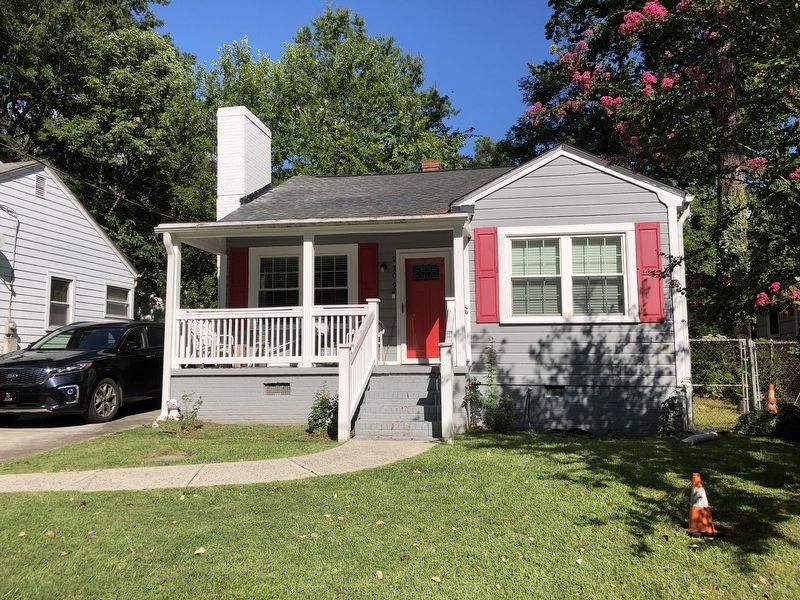
[The district] contains a significant collection of residential buildings in styles and forms that illustrate national trends during the period ofsignificance, which begins in 1925 when the first homes were constructed and ends c.1966, by which time the neighborhood had been largely built out. Architectural styles prominent in the College Heights Historic District include Colonial Revival, Craftsman, Minimal Traditional, Period Cottage, Ranch, Contemporary, and Moderne styles.Photographed by Duane and Tracy Marsteller, August 31, 20233. Hill House (c. 1944)This one-story Minimal Traditional-style house was typical of those built in the area during the 1940s. William H. and Ola Hill – a school principal and a school teacher, respectively –were the first known to live in the house, in 1947.
Also see . . . College Heights Historic District (PDF). National Register nomination for the district. (Office of Archives and History, N.C. Department of Natural and Cultural Resources) (Submitted on September 14, 2023, by Duane and Tracy Marsteller of Murfreesboro, Tennessee.)
Photographed by Duane and Tracy Marsteller, August 31, 2023
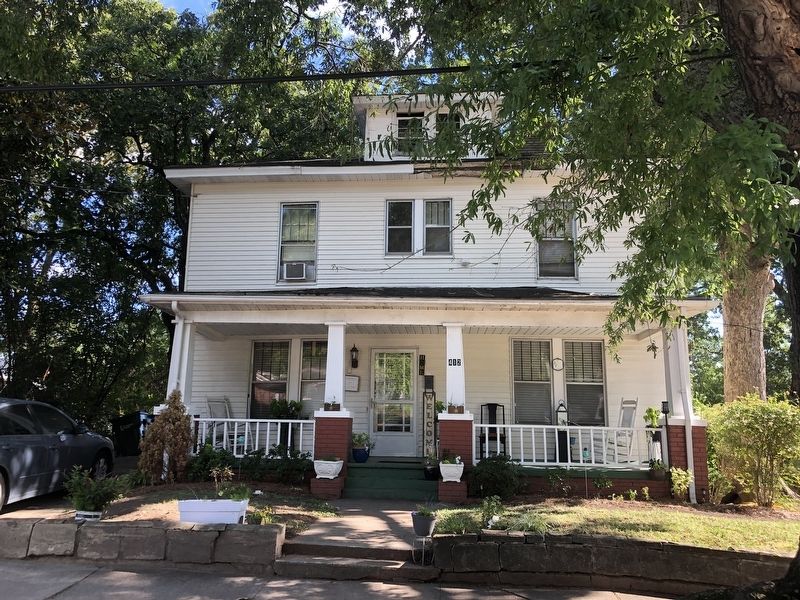
4. Reid House (c. 1925)
Garland R. Reid, a carpenter, lived in this house – one of the earliest built in the neighborhood – in 1930. It's also one of the few two-story houses in the district.
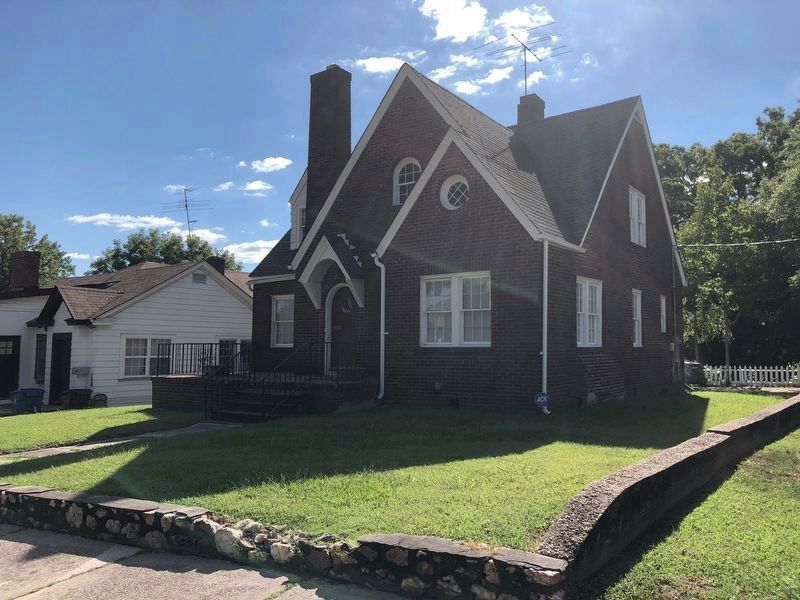
Photographed by Duane and Tracy Marsteller, August 31, 2023
5. Rowland House (c. 1945)
A 1½-story Period Cottage, its first residents were Fenton H. and Roxie Rowland. Fenton Rowland owned and operated a tailor shop with Willis Z. Mitchell on West Main Street.
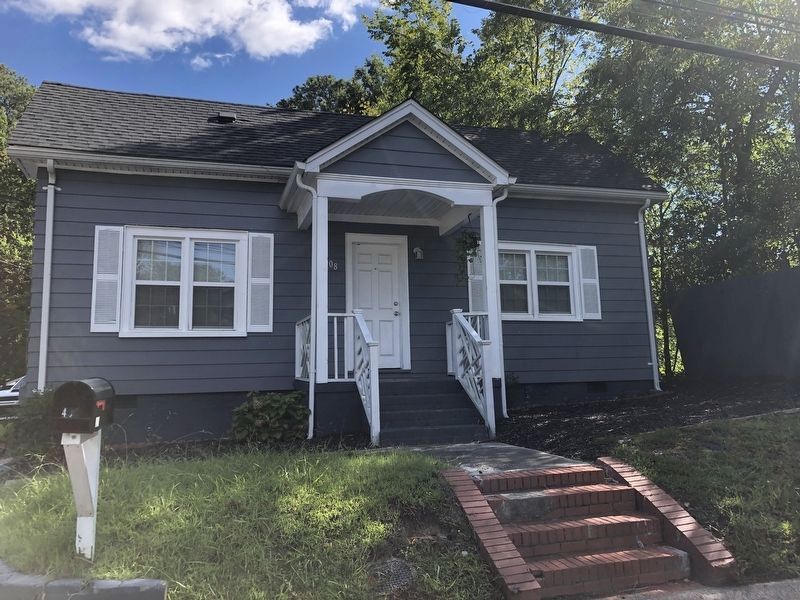
Photographed by Duane and Tracy Marsteller, August 31, 2023
6. Holloway House (c. 1930)
Lucius Holloway and his wife, Ethel, were the first to live in this one-story house on Nelson Street. He worked for Liggett & Myers Tobacco Co. Julia Spencer, a longtime secretary at North Carolina Central University, later lived there for more than 30 years.
Credits. This page was last revised on September 14, 2023. It was originally submitted on September 14, 2023, by Duane and Tracy Marsteller of Murfreesboro, Tennessee. This page has been viewed 241 times since then and 39 times this year. Photos: 1, 2, 3, 4, 5, 6. submitted on September 14, 2023, by Duane and Tracy Marsteller of Murfreesboro, Tennessee.
