Oberlin Village in Raleigh in Wake County, North Carolina — The American South (South Atlantic)
Latta University Site: 1892-1922
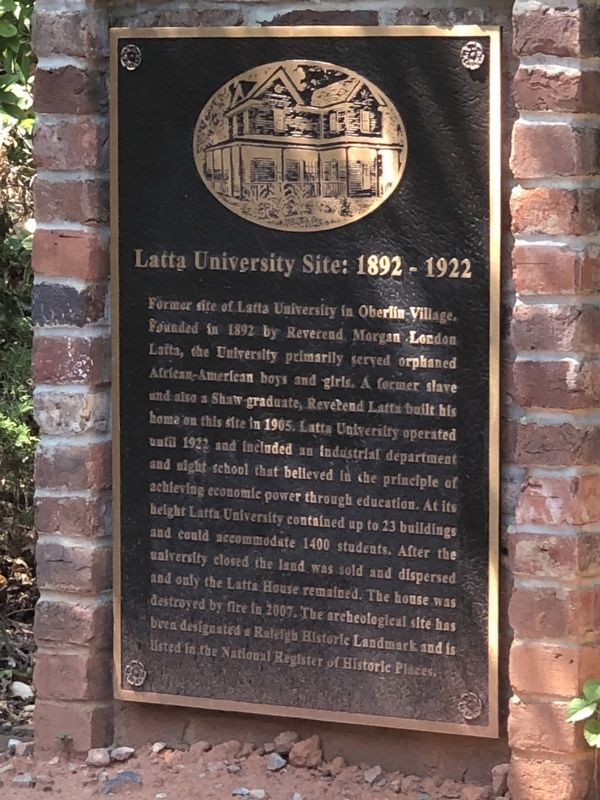
Photographed by Duane and Tracy Marsteller, September 1, 2023
1. Latta University Site: 1892-1922 Marker
Topics and series. This historical marker is listed in these topic lists: African Americans • Education. In addition, it is included in the National Register of Historic Places (NRHP) series list. A significant historical year for this entry is 1892.
Location. 35° 47.781′ N, 78° 39.746′ W. Marker is in Raleigh, North
this page online

Regionally, this marker is in North Carolina’s Piedmont and in the Research Triangle. It is also in the American South and specifically in the Upper South. Globally, it is in North America, the Western Hemisphere, the Western World, and the Anglosphere. Historically, it finds itself in what was once the territory of the Mississippian Culture, one of the original Thirteen Colonies, one of the Confederate States of America, and the Antebellum South.
Other nearby markers. At least 8 other markers are within walking distance of this marker: The Reverend Plummer T. Hall House (about 600 feet away, measured in a direct line); The Graves-Fields House (about 600 feet away); Oberlin Village (about 600 feet away); George Thomas Morris and Snoopy (about 700 feet away); Holt Family (approx. 0.2 miles away); Oberlin Cemetery (approx.
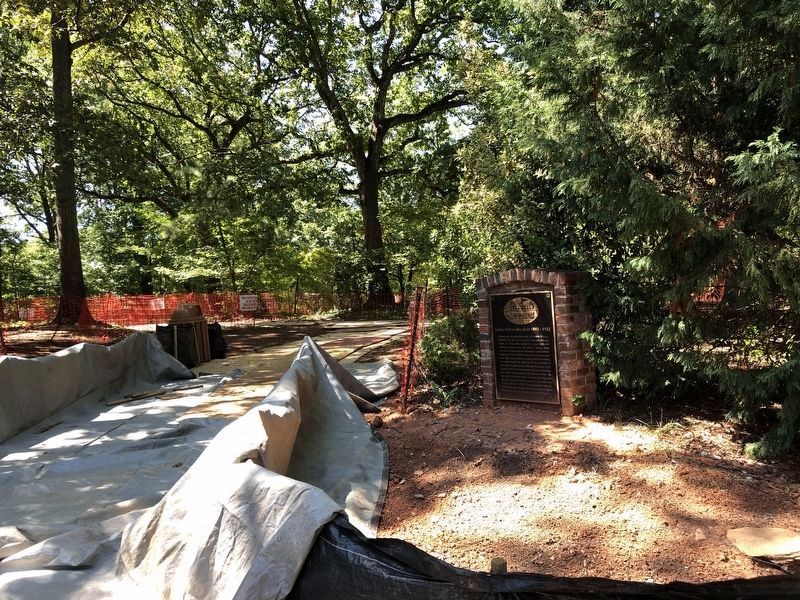
Photographed by Duane and Tracy Marsteller, September 1, 2023
2. Latta University Site: 1892-1922 Marker
The City of Raleigh plans to turn the site into a park.
Also see . . .
1. Lost university: How an entire college vanished near downtown Raleigh. An unassuming green park near the Village District holds the remains of a university that was built in 1892 by a man freed from slavery in Raleigh. Today, the park holds barely a remnant of the lost college campus. (Heather Leah, WRAL-TV, Aug. 27, 2020) (Submitted on September 23, 2023, by Duane and Tracy Marsteller of Murfreesboro, Tennessee.)
2. The History of My Life and Work. Scan of Rev. Latta's autobiography, which touches upon his years in slavery, his disdain for politics, his educational philosophy, and other topics. (Google Books) (Submitted on September 23, 2023, by Duane and Tracy Marsteller of Murfreesboro, Tennessee.)
3. Rev. M.L. Latta House (PDF). National Register nomination for the house, which was listed in 2002. (Prepared by Sherry Joines Wyatt; via N.C. Division of Natural and Cultural Resources) (Submitted on September 24, 2023, by Duane and Tracy Marsteller of Murfreesboro, Tennessee.)
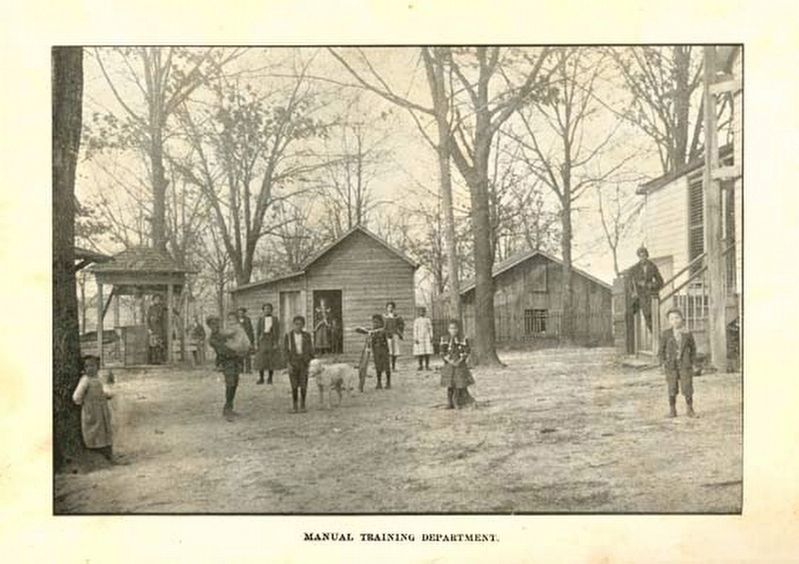
from The History of My Life and Work by Rev. M.L. Latta, via Google Books (Public Domain)
3. Latta University
The Manual Training Department, which taught wood and metal working in the belief that such hands-on training would improve student's academic performance. The movement eventually morphed into the modern vocational education system.
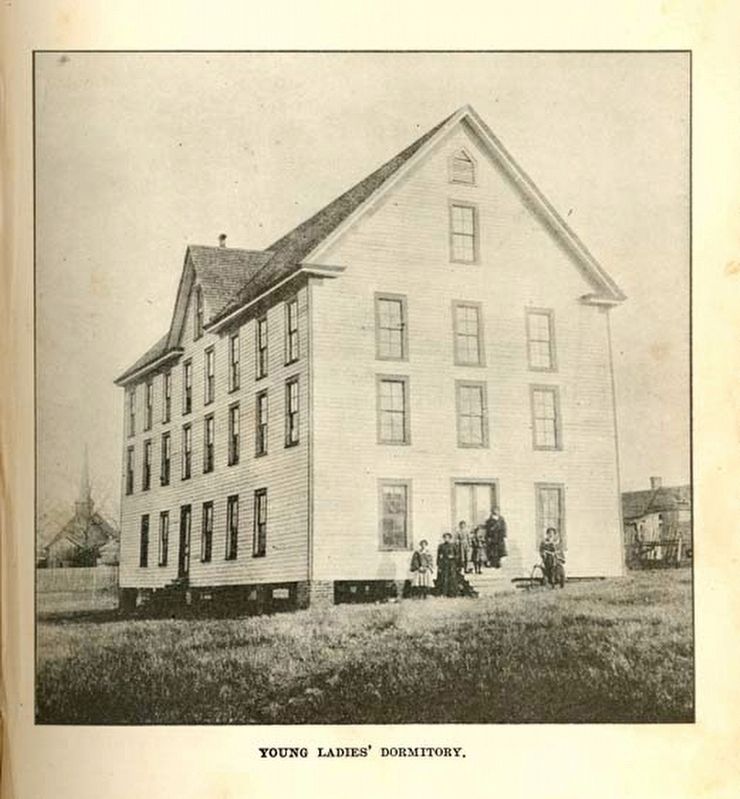
from The History of My Life and Work by Rev. M.L. Latta, via Google Books (Public Domain)
4. Latta University
The girls dormitory and a similar boys dormitory were the largest buildings on the Latta University campus.
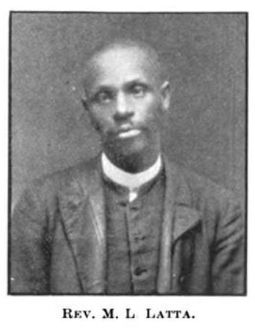
from The History of My Life and Work by Rev. M.L. Latta, via Google Books (Public Domain), circa 1903
5. Rev. Morgan London Latta (1853-?)
He was born into slavery on a Durham County plantation. He attended Shaw University after the Civil War and moved to Raleigh in 1890, where he worked as a schoolteacher before starting his namesake school. After it closed in the 1920s, Latta moved to Philadelphia where he died. Sources conflict on when he died, placing it between 1924 and 1945.
Credits. This page was last revised on September 24, 2023. It was originally submitted on September 23, 2023, by Duane and Tracy Marsteller of Murfreesboro, Tennessee. This page has been viewed 461 times since then and 35 times this year. Photos: 1, 2, 3, 4, 5. submitted on September 23, 2023, by Duane and Tracy Marsteller of Murfreesboro, Tennessee.
