
Vincennes in Knox County, Indiana — The American Midwest (Great Lakes)
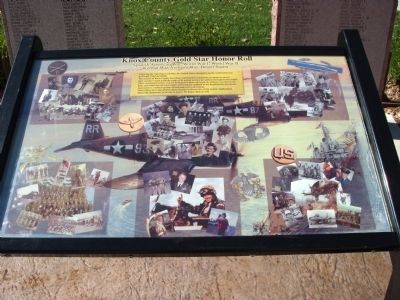
Knox County Gold Star Honor Roll
Spanish American War, World War I, World War II, Korean War, Vietnam War, Desert Storm
Photographed by Al Wolf, October 10, 2009
1. Full View - - Knox County (Indiana) Gold Star Honor Roll Marker
Following the American Civil War, the United States emergence on the world scene was profound, if not inevitable.
The citizens of Knox County have been summoned on numerous occasions to answer their country’s need to fill the ranks of its armed services in conflicts throughout the world. These monuments before you are dedicated to those who paid the ultimate sacrifice in the hope and belief that the basic rights and freedoms outlined in the fundamental documents depicted here would be preserved and enjoyed by all citizens.
Many others have also died in times of peace in the service to this nation. Soldiering is inherently dangerous, be at war or peace. We honor them as well.
World War I
this page online
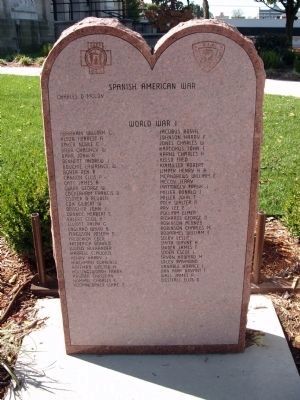
Royal Jacobus • Harry F. Johnson • Charles W. Jones • John E. Kardokus • Charles H. Karns • Fred Kelso • Robert Kixmiller • Henry H. A. Limper • William E. McAndrews • Jerry McCoy • Frank J. Mattingly • Donald J. Miller • John T. Miller • Walter R. Polk • Lee E. Pry • Elmer Pulliam • George O. Richards • Alonzo Robinson • Charles M. Robinson • William E. Rodarmel • Leslie Selby • Wayne H. Smith • James T. Snider • Escoe L. Soden • Howard M. Tryon • Raymond Utley • Horace L. Vanable • Bryant F. Van Kirk • James R. Wall • Ellis O. Westfall
Photographed by Al Wolf, October 10, 2009
2. Stone Memorial - - "Spanish American War" -&- "World War I"
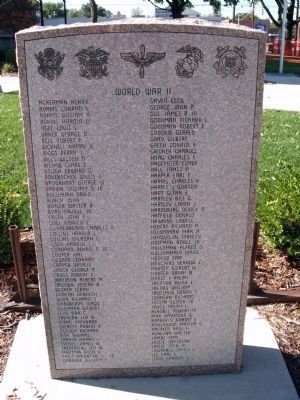
Cecil Gayer • John P. George • James R. Gill, Jr. • Richard L. Goodman • Robert E. Goodman • Gerald Goodrid • Gilbert Gray • Donald R. Green • Charles Gridner • Charles E. Haag • Elmer Hagemeier • James A. Hall • Earl F. Harper • Charles H. Harris • J. Gordon Harris • Glenn E. Hart • Bill G. Hartley • Loren J. Hartley • Dewey R. Hartsburg • Donald Hatfield • Lowell Hawkins • Richard A. Hebert • Max A. Helderman • Stanley Henderson • Noble Hoffman, Jr. • Alfred D. Holloman • David Holzkamper • Earl Hooper • Vernon E. Houchins • Gilbert W. Hunter • Ralph N. Hunter • Ralph J. Hurst
Photographed by Al Wolf, October 10, 2009
3. Stone Memorial - - "World War II" - ("A" - "L")
Photographed by Al Wolf, October 10, 2009
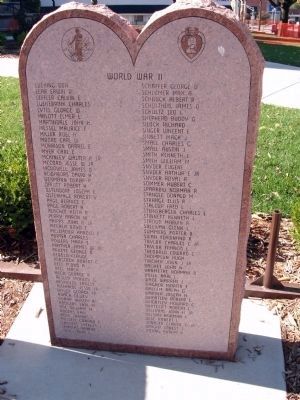
4. Stone Memorial - - "World War II" - ("L" - "Z")
George D. Schaffer • Max A. Schlomer • Albert R. Schnuck • James O. Schultheis • Leo L. Schultz • Buddy G. Shepherd • Richard Silock • Vincent E. Singer • Mack J. Sinnett • Charles C. Small • Austin J. Small • Kenneth L. Smith • William M. Smith • Eugene Snyder • Arthur E. Snyder, Jr. • Royal R. Snyder • Hubert C. Sommer • Norman R. Sparrow • Donald M. Stangle • Ellis R. Strange • Fred L. Stalcup • Charles E. Steinsberger • Kenneth L. Stinnett • Marvin R. Stroud • Glenn L. Sullivan • Porter B. Summers • Ferdinand R. Swan • Charles C. Taylor, Jr. • Francis L. Taylor • Edward C. Theobald • Hugh Thompson • John J. Tincher, Jr. • John N. Vachet • Norman D. VanMetre • Karl L. Volle • Warren J. Wade • Martin F. Wagner • Ralph G. Wallem • Joseph H. Warder • Robert E. Wheatley • Howard C. Wheatley • Robert L. Whitesitt • John H. Williams, Jr. • Norman E. Wilson • Robert L. Wise • Claude C. Winkler, Jr. • Ernest J. Wright • Robert V. Young
Photographed by Al Wolf, October 10, 2009
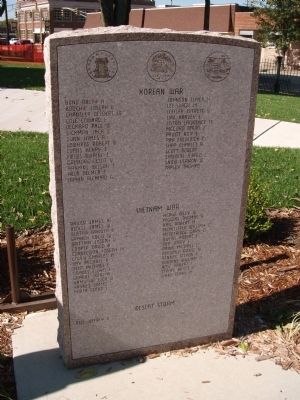
5. Stone Memorial - - "Korean War", "Vietnam War", and "Desert Storm"
Elmer H. Johnson • Virgil M. Lee • Everett W. Leffler • Harvey E. Like • Lawrence M. Liston • David J. McCord • Roy E. Pruitt • Frederick E. Pry • Charles R. Sapp • Robert Scott • Jerald L. Sheldon • Vernon W. Snow • Thomas Tapley
Vietnam War
Billy W. Hedge • Thomas A. Higgins • Robert M. Kail • William D. McAllister • Gary C. McFetridge • Robert F. Owens • Jerry E. Pry • Michael E. Rains • Royse W. Rehwald • Steven R. Renner • William D. Robbins • Robert J. Rose • Bruce E. Strate • Terry M. Ward
Desert Storm
Erected 2008.
Topics. This memorial is listed in this topic list: Military.
Location. 38° 40.609′ N,
Photographed by Al Wolf, October 10, 2009
6. Sphere

Regionally, this memorial is in Indiana’s Tri-State Region, in Southern Indiana, and in the Wabash Valley. It is also in the American Midwest and in the Corn Belt. Globally, it is in North America, the Western Hemisphere, the Western World, and the Anglosphere. Historically, it finds itself in what was once the Viceroyalty of New France, the territory of the Mississippian Culture, and the Northwest Territory.
Other nearby markers. At least 8 other markers are within walking distance of this marker: Knox County Veterans Memorial Park (here, next to this marker); Knox County Civil War Memorial (a few steps from this marker); Mary Clark (within shouting distance of this marker); The First Presbyterian Church In Indiana Territory
Photographed by Al Wolf, October 10, 2009
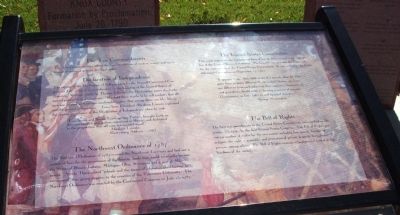
7. Documents of Freedom - Story Board
Additional commentary.
1. Documents of Freedom
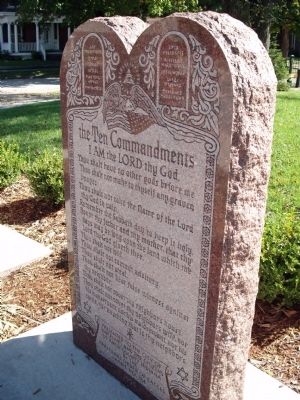
The marker stated, "These monuments before you are dedicated to those who paid the ultimate sacrifice in the hope and belief that the basic rights and freedoms outlined in the fundamental documents depicted here would be preserved and enjoyed by all citizens." While separate memorials also identify them, a separate panel lists and explains these "Documents of Freedom."(see below pictures)
The Ten Commandments
The Ten Commandments reflect the legal foundations of western society and are a historical source of present day legal codes.
Declaration of Independence
The signing of the Declaration of Independence by the Second Continental Congress on July 4, 1776 is considered to be the founding of the United States of America. Written mostly by Thomas Jefferson,
Photographed by Al Wolf, October 10, 2009
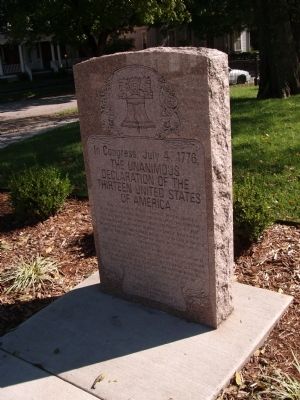
8. Declaration of Independence - Memorial Stone
“Four Score and Seven Years ago our Fathers brought forth on this continent, a new nation, conceived in liberty, and dedicated to the proposition that all men are created equal.”
Abraham Lincoln
Gettysburg Address - - 1863
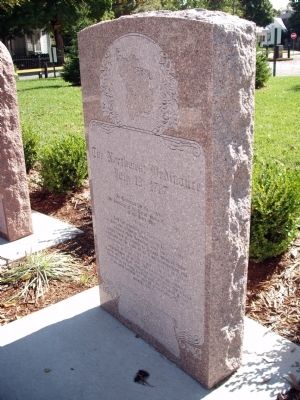
The Northwest Ordinance of 1787
The Northwest Ordinance of 1787 created the Northwest Territory and laid out a system of laws for the governance of the frontier lands that would eventually become the States of Illinois, Indiana, Michigan, Ohio, Wisconsin and part of Minnesota. Article Three stated “schools and the means of education shall forever be encouraged” thus giving impetus to the creation of the Vincennes University. The Northwest Ordinance was enacted by the Continental Congress on July 13, 1787.
The United States Constitution
This
Photographed by Al Wolf, October 10, 2009
9. Ten Commandments - - Memorial Stone
“It appears to me, then, little short of a miracle, that the Delegates from so many different States (which States, you know are different from each other) in their manners, circumstances, and prejudices, should unite in forming a system of national Government, so little liable to well founded objectives.”
Washington
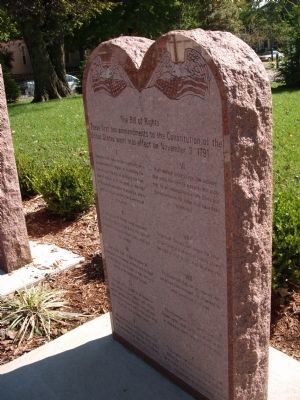
BILL of RIGHTS
The first ten amendments to the United States Constitution were ratified on December 15, 1791, by the first United States Congress. The Bill of Rights provides a number of rights for the new nation including free speech, freedom of religion, the right of assembly, and protection of private property through due process, among others. The Bill of Rights remains a fundamental symbol of the freedoms of the nation. Note To Editor only visible by Contributor and editor
— Submitted October 21, 2009, by Al Wolf of Veedersburg, Indiana.
Photographed by Al Wolf, October 10, 2009
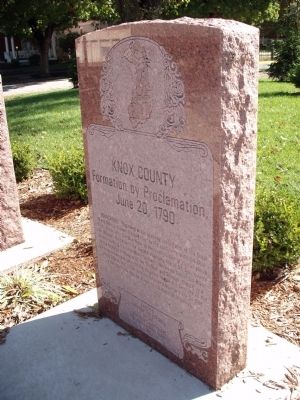
10. Knox County Formation Proclamation - - Memorial Stone
Photographed by Al Wolf, October 10, 2009
11. Bill of Rights - - Memorial Stone
Photographed by Al Wolf, October 10, 2009
12. Northwest Ordinance of 1787 - - Memorial Stone
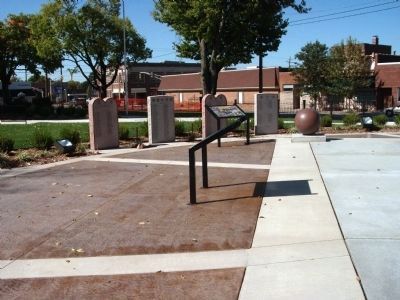
Photographed by Al Wolf, October 10, 2009
13. Long View - - All - Knox County (Indiana) Gold Star Honor Roll Marker
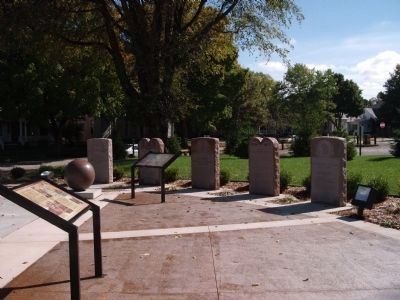
Photographed by Al Wolf, October 10, 2009
14. Full View - - Documents of Freedom - Section
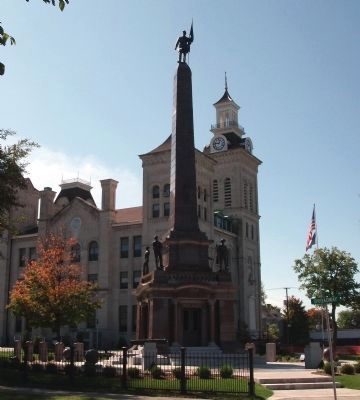
Photographed by Al Wolf, October 10, 2009
15. Civil War Memorial -and- Other Memorials
The "Knox County Gold Star Honor Roll" memorials can be seen in the extreme background to the right in the photo -and- the "Documents of Freedom" memorials are to the extreme left in the background.
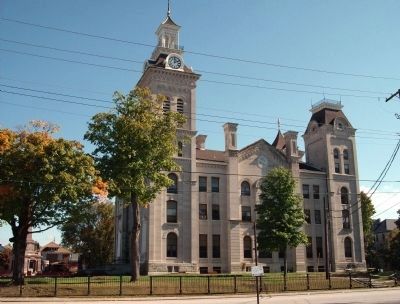
Photographed by Al Wolf, October 10, 2009
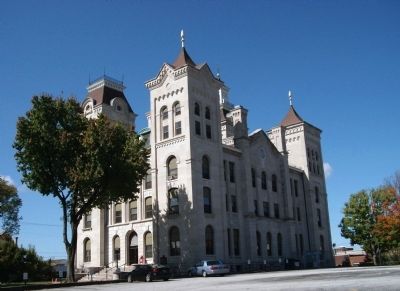
16. South/West Corner - - Knox County Courthouse
Photographed by Al Wolf, October 10, 2009
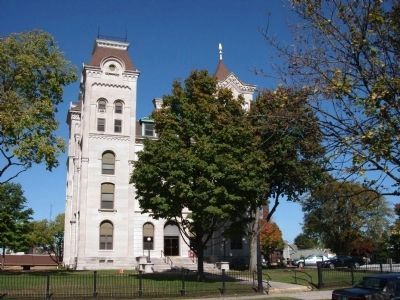
17. North East Corner - - Knox County Courthouse
Photographed by Al Wolf, October 10, 2009
18. East Side - - Knox County Courthouse
Credits. This page was last revised on February 11, 2026. It was originally submitted on October 21, 2009, by Al Wolf of Veedersburg, Indiana. This page has been viewed 6,005 times since then and 75 times this year. Last updated on October 2, 2023, by Carl Gordon Moore Jr. of North East, Maryland. Photos: 1, 2, 3, 4, 5, 6, 7, 8, 9, 10, 11, 12, 13, 14, 15, 16, 17, 18. submitted on October 21, 2009, by Al Wolf of Veedersburg, Indiana. • Devry Becker Jones was the editor who published this page.
