Nitro in Kanawha County, West Virginia — The American South (Appalachia)
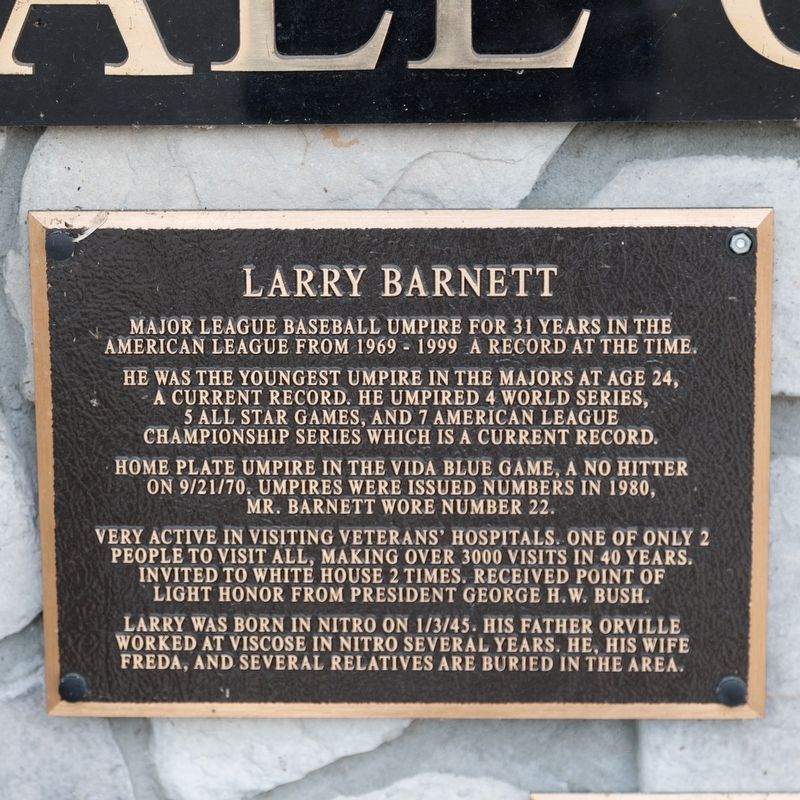
Larry Barnett
| — | Nitro Wall of Fame | — |
Photographed by J. J. Prats, October 8, 2023
1. Larry Barnett Marker
He was the youngest umpire in the majors at age 24, a current record. He umpired 4 World Series, 5 All Star Games, and 7 American League Championship Series, which is a current record. Home plate umpire in the Vida Blue game, a no hitter on 9/21/70. Umpires were issued numbers in 1980, Mr. Barnett wore number 22.
Very active in visiting Veterans’ Hospitals. one of only 2 people to visit all, making over 3000 visits in 40 years. Invited to White House 2 times. Received Point of Light honor from President George H. W. Bush.
Larry was born in Nitro on 1/3/45. His father Orville worked at Viscose in Nitro several years. he, his wife Freda, and several relatives are buried in the area.
Topics. This historical marker is listed in this topic list: Sports. A significant historical year for this entry is 1980.
Location. 38° 25.322′ N, 81° 50.47′ W. Marker is in Nitro, West Virginia, in Kanawha County. It is on 21st Street near 1st Avenue (West Virginia Route 25), on the right when traveling east. It is in Living
this page online

Regionally, this marker is in Greater Charleston Area. It is also in the American South, specifically in the Upper South, in Appalachia, and specifically in Southern Appalachia. Globally, it is in North America, the Western Hemisphere, the Western World, and the Anglosphere. Historically, it finds itself in what was once the territory of the Mississippian Culture.
Other nearby markers. At least 8 other markers are within walking distance of this marker: Lou Burdette (here, next to this marker); Kathy Mattea (here, next to this marker); Co. B 142nd Infantry 36th Division (within shouting distance of this marker); a different marker also named Co. B 142nd Infantry 36th Division (within shouting distance of this marker); a different marker also named Co. B 142nd Infantry 36th Division (within shouting distance of this marker); Nitro: WWI “Boom Town” (within shouting distance of this marker); Living Memorial Park (within shouting distance of this marker); Nitro War Memorial (within
Photographed by J. J. Prats, October 8, 2023
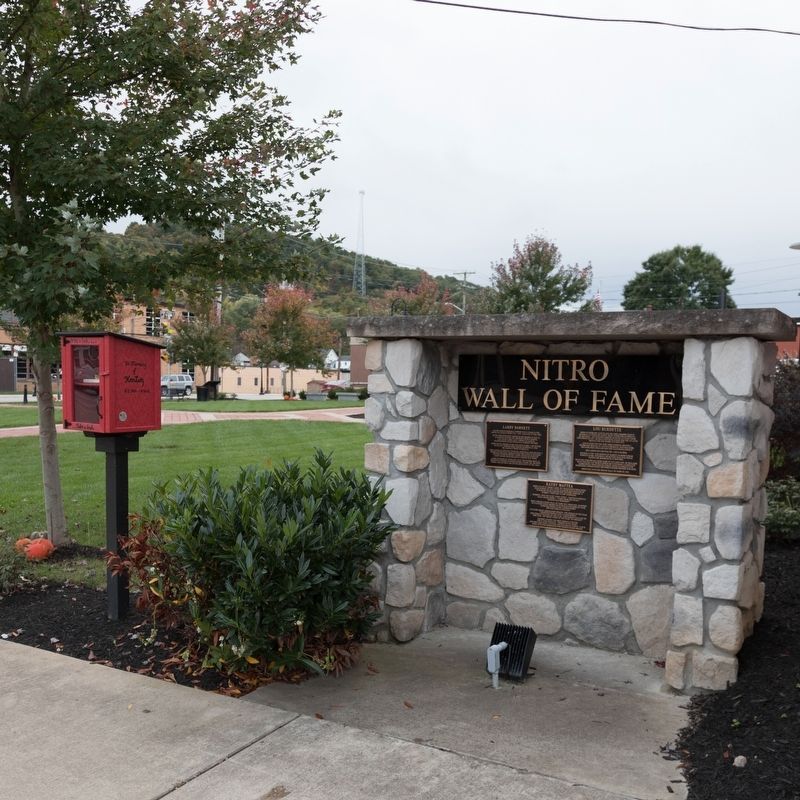
2. Nitro Wall of Fame
The wall features the Larry Barnett, Lou Burdette, and Kathy Mattea historical Markers.
Also see . . . Wikipedia Entry. Excerpt:
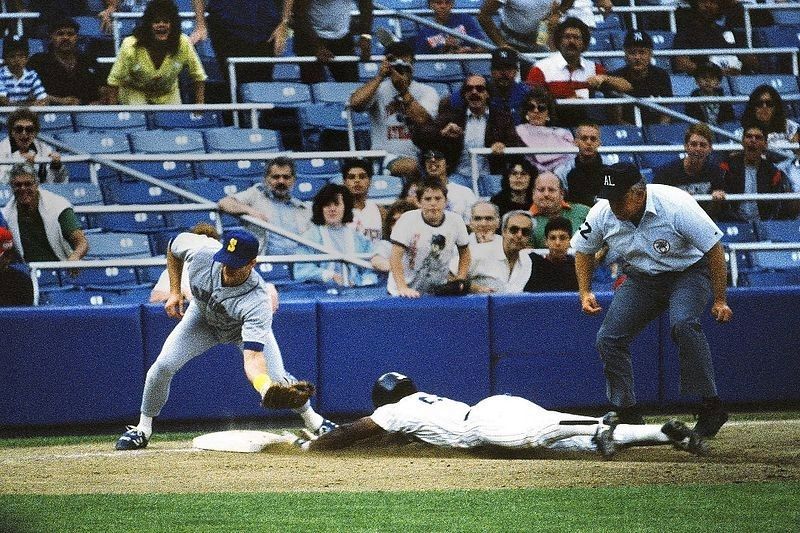
In the 10th inning of Game 3 of the 1975 World Series, in which Barnett was working behind home plate, Cincinnati Reds hitter Ed Armbrister laid down a sacrifice bunt, and then collided with Boston Red Sox catcher Carlton Fisk, who was trying to field the ball. Fisk committed a throwing error on the play after colliding with Armbrister, which led to the Reds’ winning run. Barnett declined to make an interference call on Armbrister, despite Boston’s pleas. Barnett’s failure to call an interference was criticized by NBC television broadcaster Curt Gowdy (a former Red Sox announcer), who was particularly harsh in his comments, reputedly leading NBC to drop Gowdy from its baseball coverage. Gowdy had reportedly been given the correct interpretation of the rule — that interference can be called only if a batter intentionally gets in the way of a fielder — by NBC Radio Producer Jay Scott (who was a Triple-A fill-in umpire at the time as well), but did not use it. Barnett later claimed he had received death(Submitted on October 12, 2023.)threats on account of Gowdy’s criticism.By Rdikeman (CC BY-SA 3.0) via Wikimedia Commons, August 19, 19883. Third Base Umpire Larry Barnett, rightRickey Henderson steals third base for the New York Yankees under the tag of Seattle Mariners Third baseman Jim Presley as third base umpire Larry Barnett observes during the first game of a doubleheader at Yankee Stadium on August 19, 1988.
Major League Baseball continues to this day to maintain that Barnett made the correct call. In fact, the Professional Baseball Umpires Corporation (the organization that oversees all minor league baseball umpires) instructs and teaches its umpires to make the same call as Barnett did should the same incident occur in a future game. Specifically, Major League Baseball has interpreted Rule 7.09(l) as saying “a catcher trying to field a batted ball that remains in the immediate vicinity of the plate cannot be protected because of the right of the batter-runner to begin his advance to first. Barring an intentional action on the part of either player, contact in this instance is incidental, and is not interference...” (Jaksa/Roder Umpires' Manual, 1997 Edition. Pg. 57).
Credits. This page was last revised on October 12, 2023. It was originally submitted on October 12, 2023, by J. J. Prats of Powell, Ohio. This page has been viewed 333 times since then and 44 times this year. Photos: 1, 2, 3. submitted on October 12, 2023, by J. J. Prats of Powell, Ohio.
