
Carleton Place in Lanark County, Ontario — Central Canada (North America)
Canadian Pacific Railway Station
Photographed by William Fischer, Jr., September 29, 2023
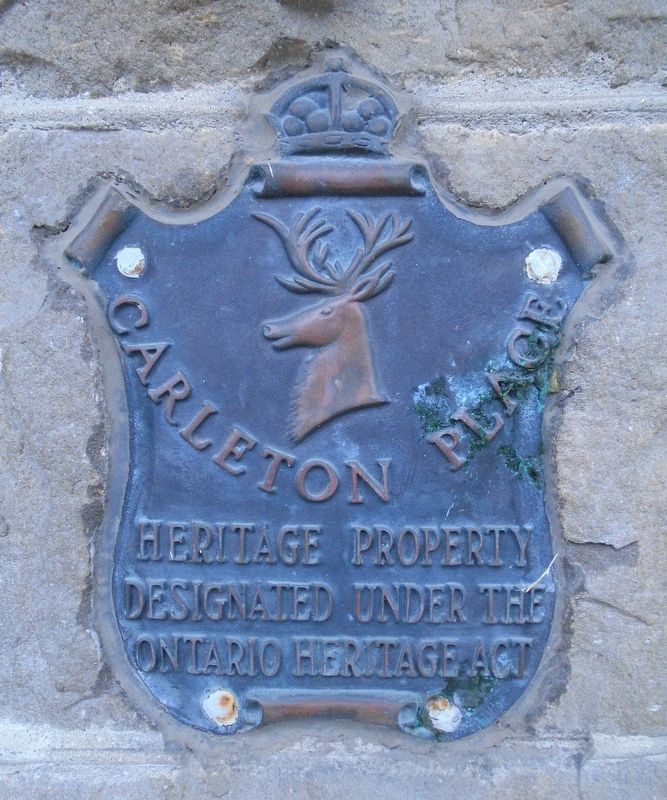
1. Canadian Pacific Railway Station Heritage Marker
Heritage Property
Designated under the
Ontario Heritage Act
Erected by Town of Carleton Place.
Topics. This historical marker is listed in this topic list: Notable Buildings.
Location. 45° 8.173′ N, 76° 8.082′ W. Marker is in Carleton Place, Ontario, in Lanark County. It is on Coleman Street just east of Franktown Road, on the left when traveling east. Touch for map. Marker is at or near this postal address: 132 Coleman Street, Carleton Place ON K7C 4M7, Canada. Touch for directions.

Regionally, this marker is in the Haliburton Highlands to Ottawa Valley and in Eastern Ontario. It is also in Central Canada. Globally, it is in North America, the Western Hemisphere, the Western World, and the Anglosphere. Historically, it finds itself in what was once a British colony, the Viceroyalty of New France, the Haudenosaunee (Iroquois) Confederacy, and Rupert’s Land.
Other nearby markers. At least 8 other markers are within walking distance of this
this page online
Regarding Canadian Pacific Railway Station.
The Heritage Character Statement, Canadian Pacific Railway Station, Carleton Place, Ontario, August 1991. Heritage Assessment Report RSR-041,1991.
HERITAGE VALUE
The CPR station in Carleton Place was designated a heritage railway station for its historical and architectural significance, and because it is important within its community.
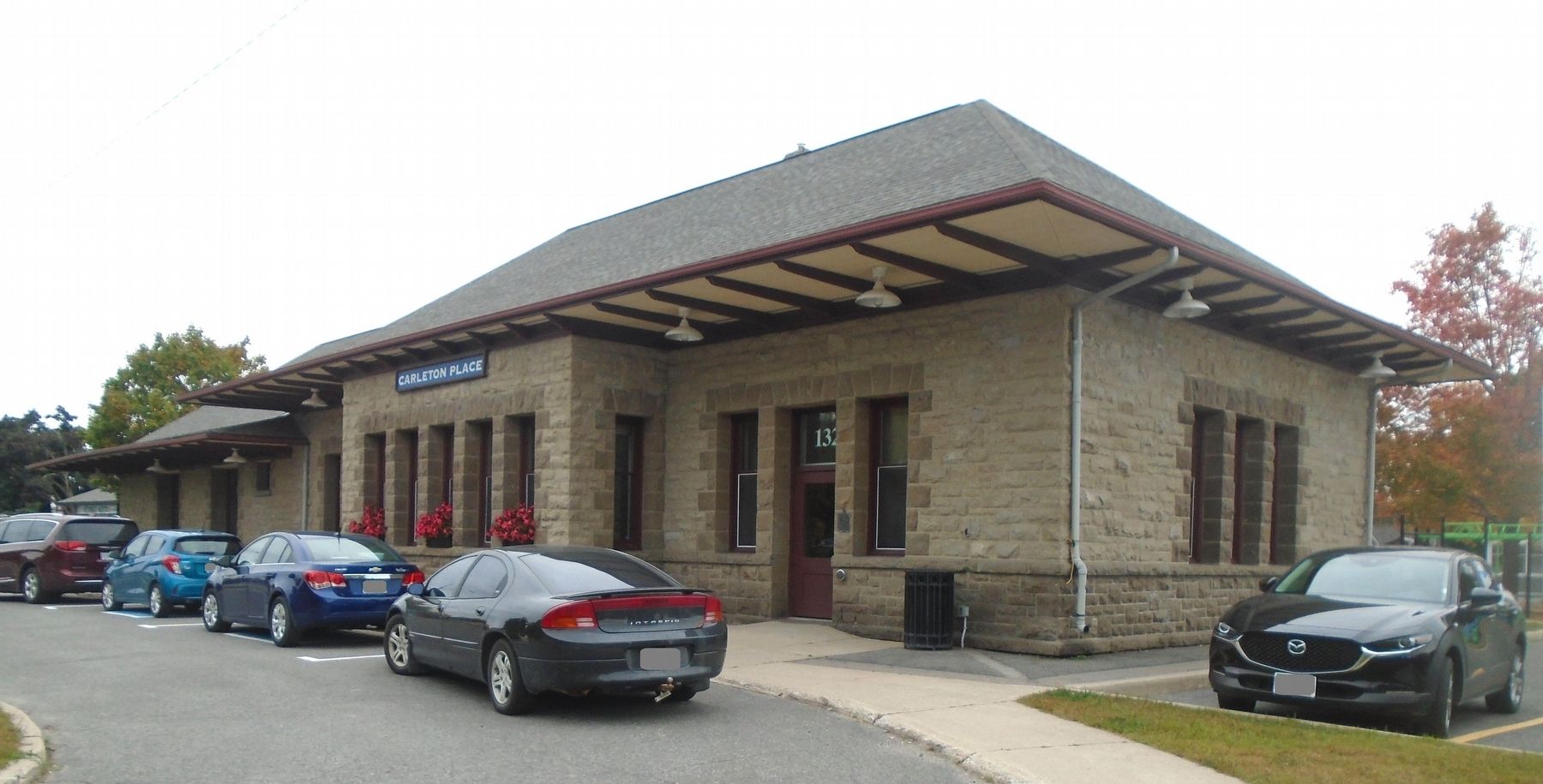
The former Canadian Pacific Railway (CPR) station in Carleton Place was constructed in 1921-22 to the designs of the CPR Chief
Photographed by William Fischer, Jr., September 29, 2023
2. Canadian Pacific Railway Station and Marker
The Carleton Place CPR station is a tangible symbol of CPR prosperity in the post World War I period. Its construction was partly a response to the invasion of CPR’s central eastern Ontario territory by the Canadian Northern Railway (CNoR), and partly the result of appointment of Carleton Place native son D'Alton Corry Coleman as CPR vice-president. Without question, the attractive new station appealed to local civic pride. The environment that developed around the station is still visible in the nearby roundhouse and railway shops, and in adjacent homes fashioned from earlier hotels, boarding houses, and tenement terraces associated with rail operations.
Architecturally, the station is one of the finer examples of the in-house work produced by the Chief Engineer's office in Montreal. Although
Photographed by William Fischer, Jr., September 29, 2023
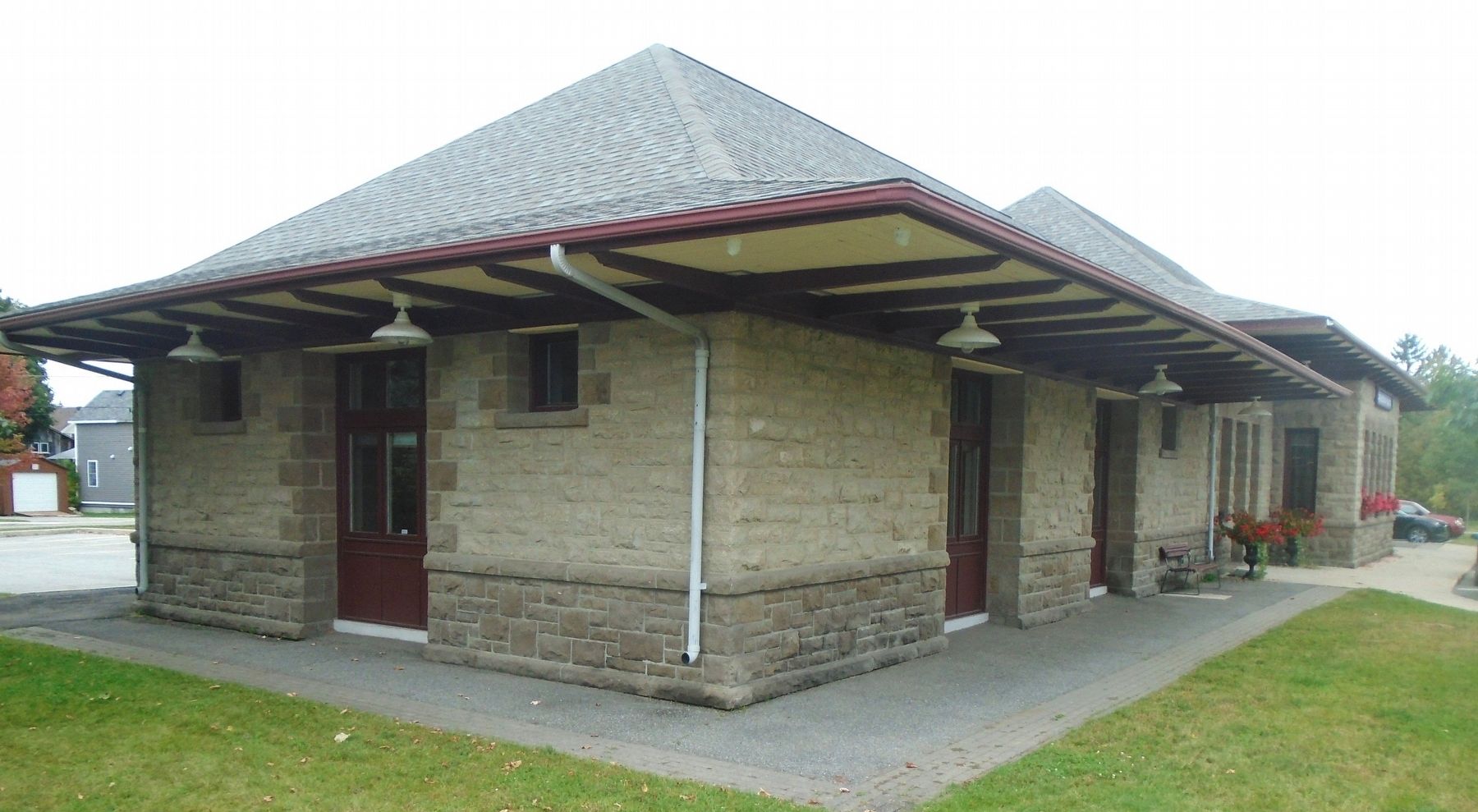
3. Canadian Pacific Railway Station
The heritage character of the former Canadian Pacific Railway station at Carleton Place is defined by the entire building exterior, by those portions of the interior that represent original layout and finishes in the lobby and ticket office area, and by its setting.
Additional commentary.
1. Passenger Trains that Stopped at This Station in 1925
December 1925 schedules list twelve passenger trains—six in each direction—including Canadian Pacific’s transcontinental train The Imperial Limited, stopping at Carlton Place every day to board and discharge passengers and their baggage.
Photographed by William Fischer, Jr., September 29, 2023
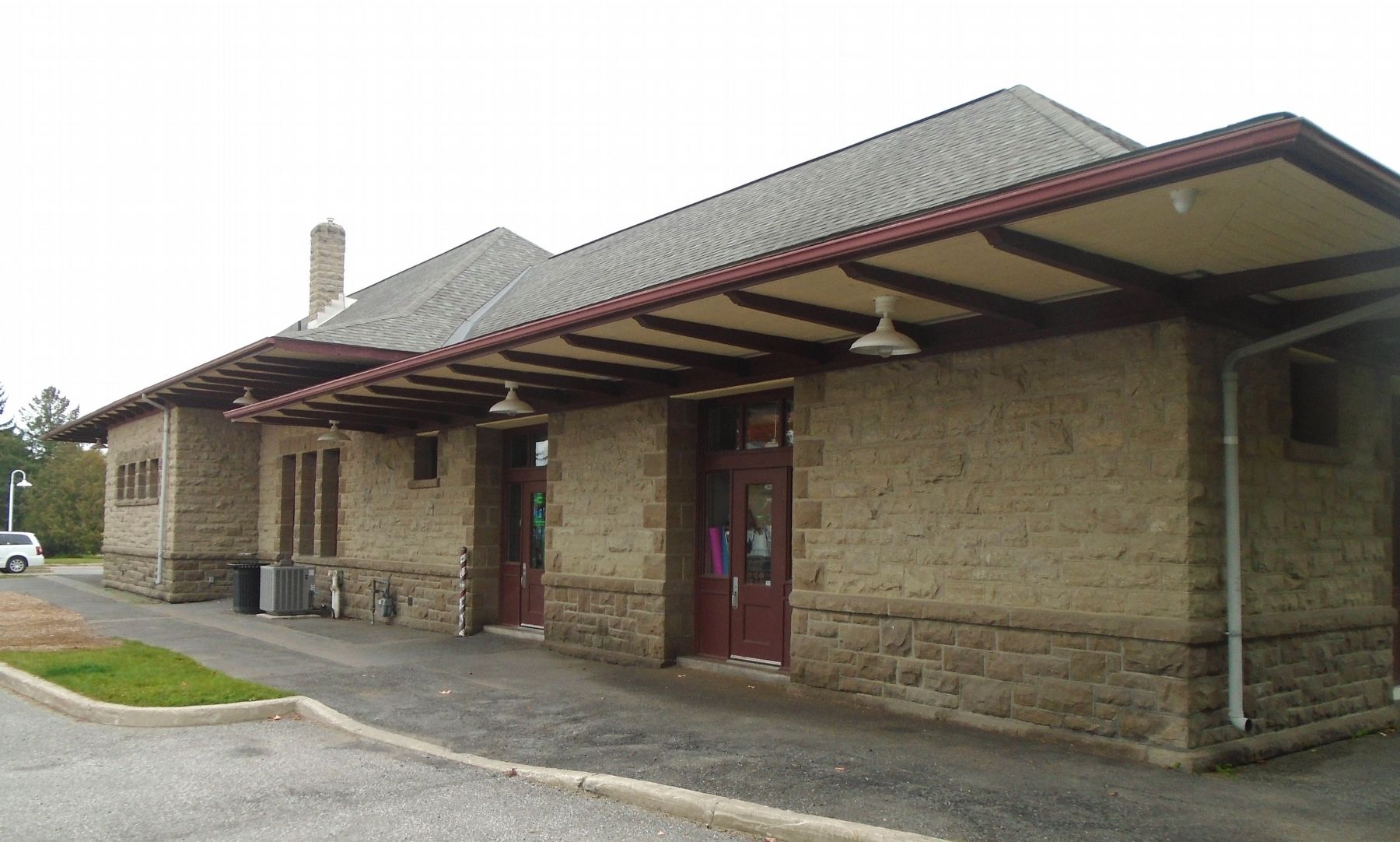
4. Canadian Pacific Railway Station
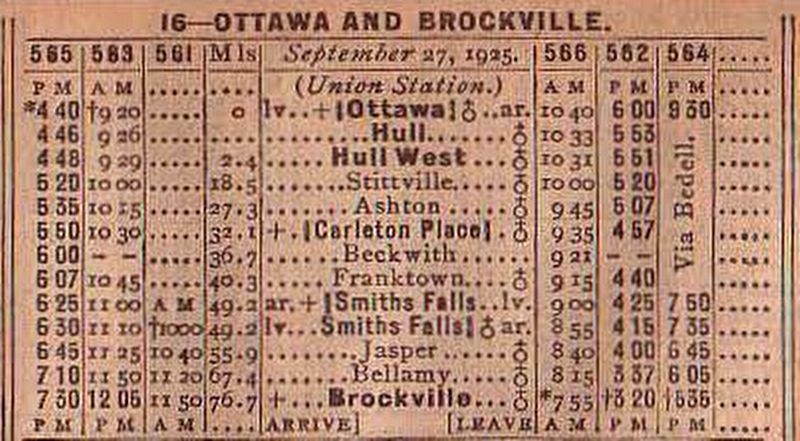
The four long distance trains that stopped here stopped way before dawn in the dark. The Eight trains that stopped at a reasonable hour traveled between Ottawa and Brockville, or Ottawa and Pembroke. For Ottawa you could leave at 9:35 AM, 10:20 AM, 4:57 PM, and 5:20 PM. For Brockville, at 10:30 AM or 5:50 PM. For Pembroke at 9:40 AM and 5:20 PM. Travel time to Ottawa was around an hour. An hour and 35 minutes got you to Brockville, and two and a half hours if you were going to Pembroke. Once you got to Ottawa, you had plenty of trains to choose from headed east to Montreal or west to Toronto.
CPR’s premier passenger train at that time, train No. 1, the westbound Imperial Limited, heading to Vancouver stopped here at 3:00 AM. It had originated in Montreal the previous day at 10:15 PM. It was one of CPR’s fastest trains, but it would still take
Photographed by William Fischer, Jr., September 29, 2023
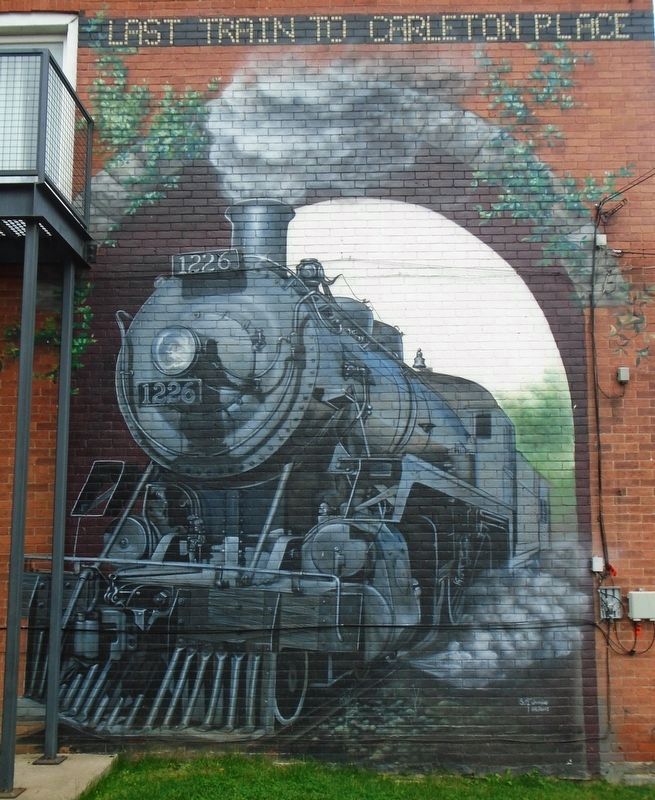
5. Last Train to Carleton Place Mural
In 1925 trains 1 and 2 were long trains, especially westbound, and were sometimes broken into multiple trains that followed each other, called “sections”. They consisted of “Colonist Cars” carrying immigrants to settle the Canadian west, first-class and tourist class coach cars, standard and tourist class sleeper cars, “compartment” cars with private rooms and a common observation parlor, a dining car that was added in Toronto in time for breakfast and continued all the way to Vancouver. The train staff rested in dormitory cars, and finally, one or more baggage car and the post office mail car would be located close to the engine. In Toronto, additional sleeping cars would be added, some that would be would be
The Official Guide of the Railways, December 1925
6. Canadian Pacific Schedule 16, Dec 1925
Between Ottawa and Brockville. On the left side, read down; on the right read up.
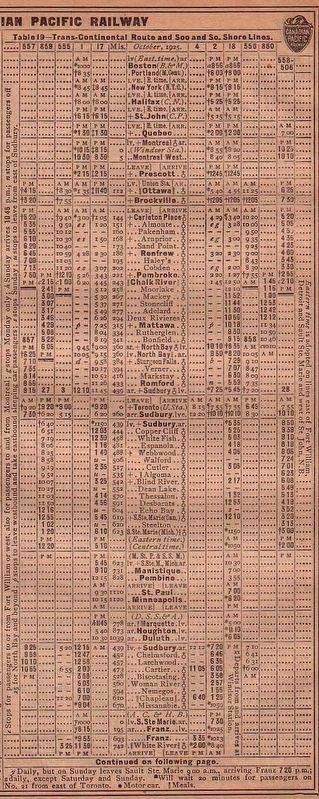
Trains No, 17 and 18, westbound and eastbound respectively, was another long distance passenger train that stopped before dawn here in Carleton Place. This unnamed passenger train stopped at 1:05 AM on its way to Minneapolis Minnesota, and at 3:40 AM on its return to Montreal. It crossed the border with the United States at Sault Ste. Marie Michigan and on its route caried a combination buffet and parlor car between Montreal and Ottawa, a café parlor car between Mattawa Michigan and Manistique, and a café car between Barron Wisconsin and Minneapolis. Some first class sleeping cars would be hauled between Montreal and Minneapolis, while others would be set out or picked up in Duluth, Ottawa, North Bay, and Timmins.
— Submitted June 23, 2024, by J. J. Prats of Powell, Ohio.
The Official Guide of the Railways, December 2025
7. Canadian Pacific Schedule 19, Dec 1925
Transcontinental Routes and SOO and South Shore Lines. Click on image to enlarge.
Credits. This page was last revised on June 24, 2024. It was originally submitted on October 14, 2023, by William Fischer, Jr. of Reynoldsburg, Ohio. This page has been viewed 549 times since then and 50 times this year. Photos: 1, 2, 3, 4, 5. submitted on October 14, 2023, by William Fischer, Jr. of Reynoldsburg, Ohio. 6, 7. submitted on June 23, 2024, by J. J. Prats of Powell, Ohio.
