Near Philadelphia in Neshoba County, Mississippi — The American South (East South Central)
Choctaw Indian Fair
| — | Mississippi Country Music Trail | — |
Photographed by Mark Hilton, October 24, 2023
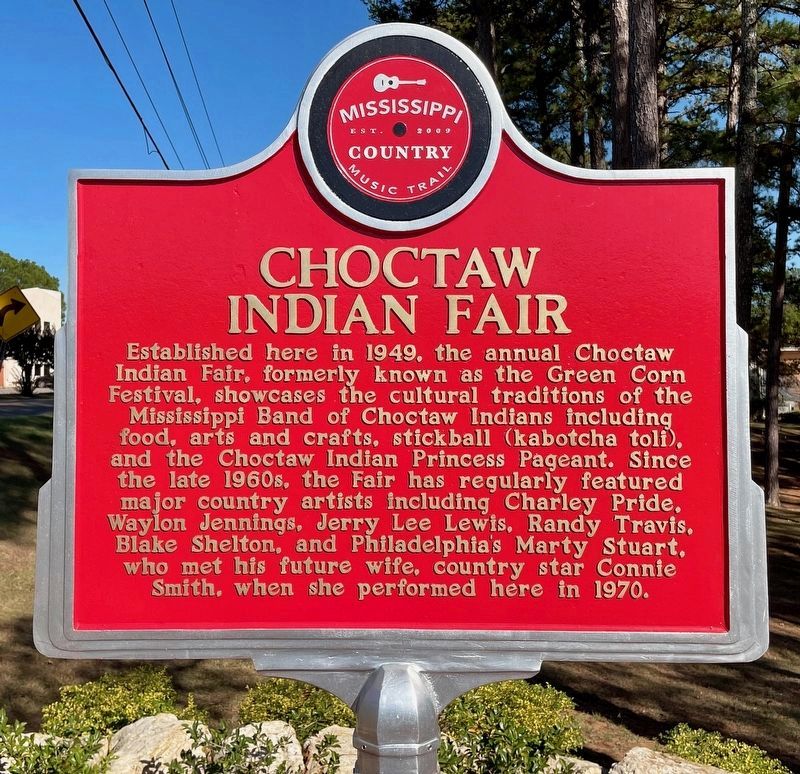
1. Choctaw Indian Fair Marker
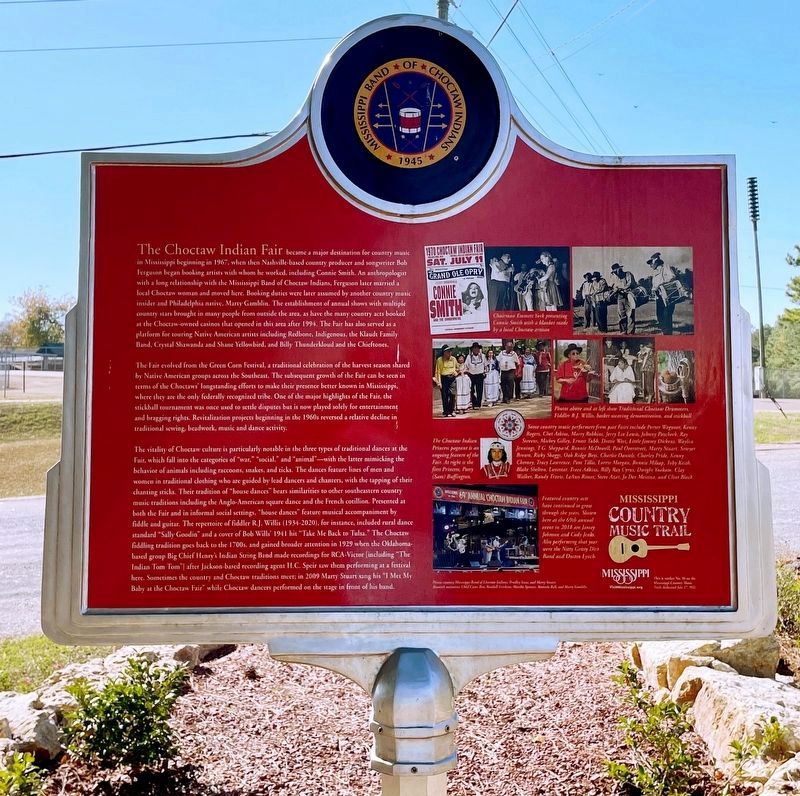
The Choctaw Indian Fair became a major destination for country music in Mississippi beginning in 1967, when then Nashville-based country producer and songwriter Bob Ferguson began booking artists with whom he worked, including Connie Smith. An anthropologist with a long relationship with the Mississippi Band of Choctaw Indians, Ferguson later married a local Choctaw woman and moved here. Booking duties were later assumed by another country music insider and Philadelphia native, Marty Gamblin. The establishment of annual shows with multiple country stars brought
this page online
The Fair evolved from the Green Corn Festival, a traditional celebration of the harvest season shared by Native American groups across the Southeast. The subsequent growth of the Fair can be seen in terms of the Choctaws' longstanding efforts to make their presence better known in Mississippi, where they are the only federally recognized tribe. One of the major highlights of the Fair, the stickball tournament was once used to settle disputes but is now played solely for entertainment and bragging rights. Revitalization projects beginning in the 1960s reversed a relative decline in traditional sewing, beadwork, music and dance activity.
The vitality of Choctaw culture is particularly notable in the three types of traditional dances at the Fair, which fall into the categories of "war,"
Photographed by Mark Hilton, October 24, 2023
2. Choctaw Indian Fair Marker (reverse)
Photographed by Mark Hilton, October 24, 2023
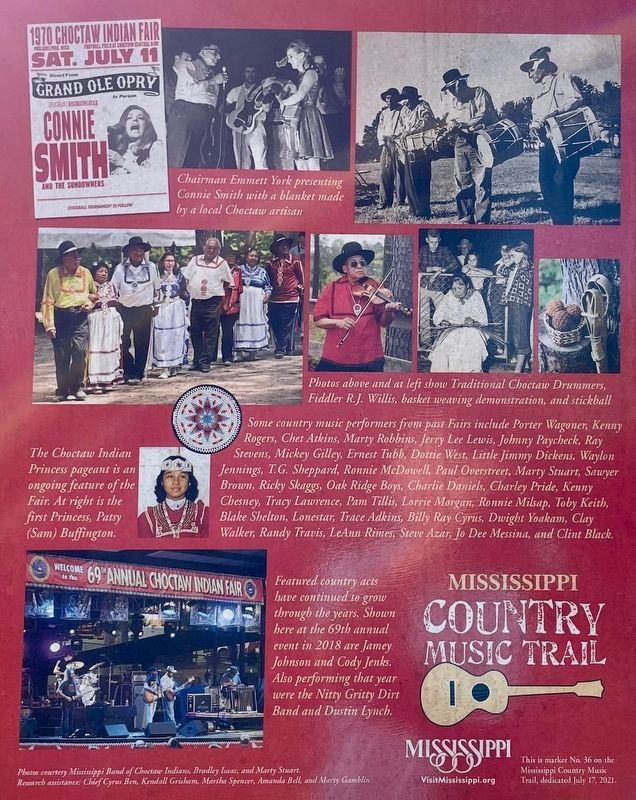
3. Choctaw Indian Fair Marker closeup of photos & captions.
Erected 2021 by the Mississippi Country Music Trail. (Marker Number 36.)
Topics and series. This historical marker is listed in this topic list: Arts, Letters, Music. In addition, it is included in the Mississippi Country Music Trail series list. A significant historical year for this entry is 1949.
Location. 32° 46.965′ N, 89° 13.422′ W. Marker is near Philadelphia, Mississippi, in Neshoba County. It is at the intersection of Recreation Road and Industrial Road, on the right when traveling north on Recreation Road. Located near the Mississippi Band of Choctaw Indians Tribal Headquarters. Touch for map. Marker is at or near this postal address: 101 Industrial Rd, Philadelphia MS 39350, United States of America. Touch for directions.

Regionally, this marker is in Central Mississippi. It is also in the American South and specifically in the Deep South. Globally, it is in North America, a Gulf of Mexico state, the Western Hemisphere, the Western World, and the Anglosphere. Historically, it finds itself in what was once the territory of the Mississippian
Photographed by Mark Hilton, October 24, 2023
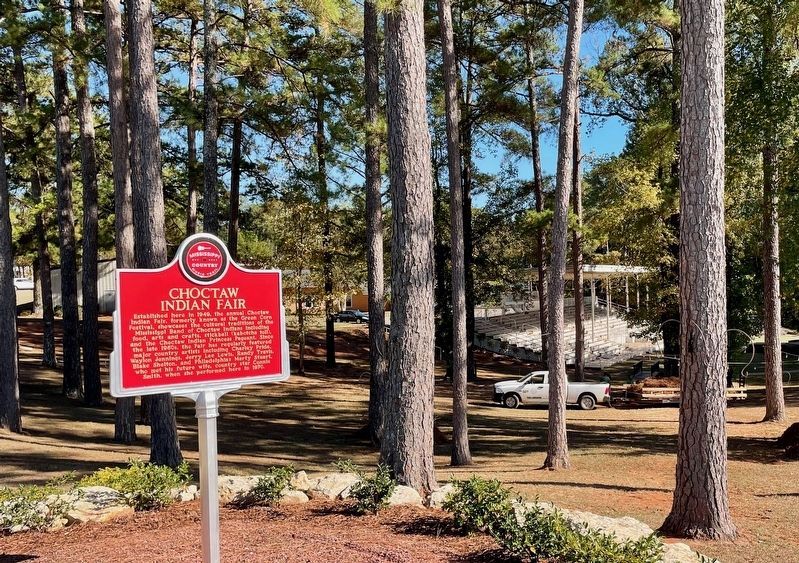
4. Choctaw Indian Fair Marker
Other nearby markers. At least 8 other markers are within 7 miles of this marker, measured as the crow flies: Bob Ferguson (about 400 feet away, measured in a direct line); Neshoba County Fair© (approx. 4.8 miles away); Neshoba County Fairgrounds (approx. 4.8 miles away); The Neshoba County Fair Pavilion (approx. 4.8 miles away); Neshoba County Fair (approx. 4.8 miles away); Booker T. Washington School (approx. 6.2 miles away); Otis Rush (approx. 6.3 miles away); Marty Gamblin (approx. 6.6 miles away). Touch for a list and map of all markers in Philadelphia.
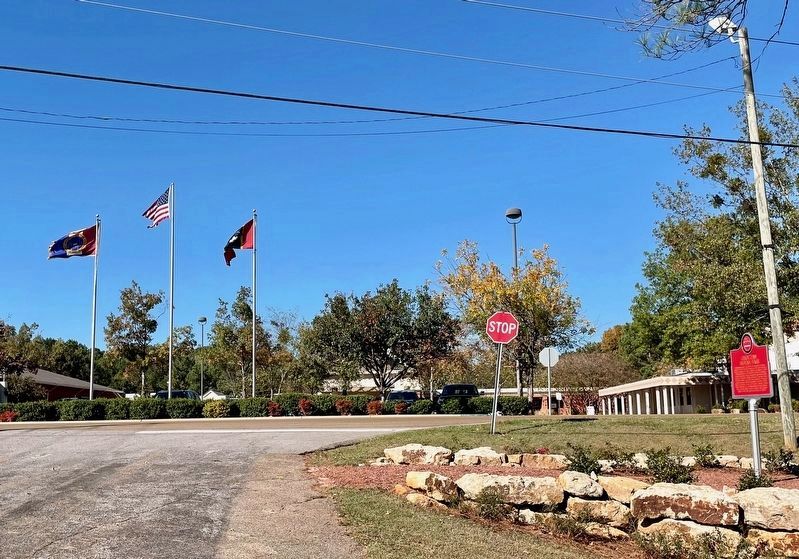
Photographed by Mark Hilton, October 24, 2023
5. Choctaw Indian Fair Marker near the Choctaw Indian Tribal Headquarters.
Credits. This page was last revised on October 24, 2023. It was originally submitted on October 24, 2023, by Mark Hilton of Montgomery, Alabama. This page has been viewed 843 times since then and 99 times this year. Photos: 1, 2, 3, 4, 5. submitted on October 24, 2023, by Mark Hilton of Montgomery, Alabama.
