Corktown in Hamilton, Ontario — Central Canada (North America)
Brock Stepped Here
Photographed by Tim Boyd, March 7, 2024
1. Brock Stepped Here Marker
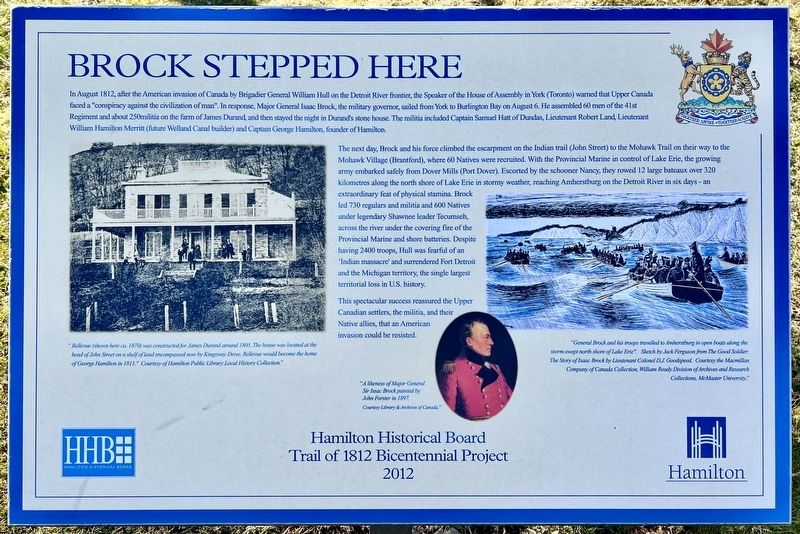
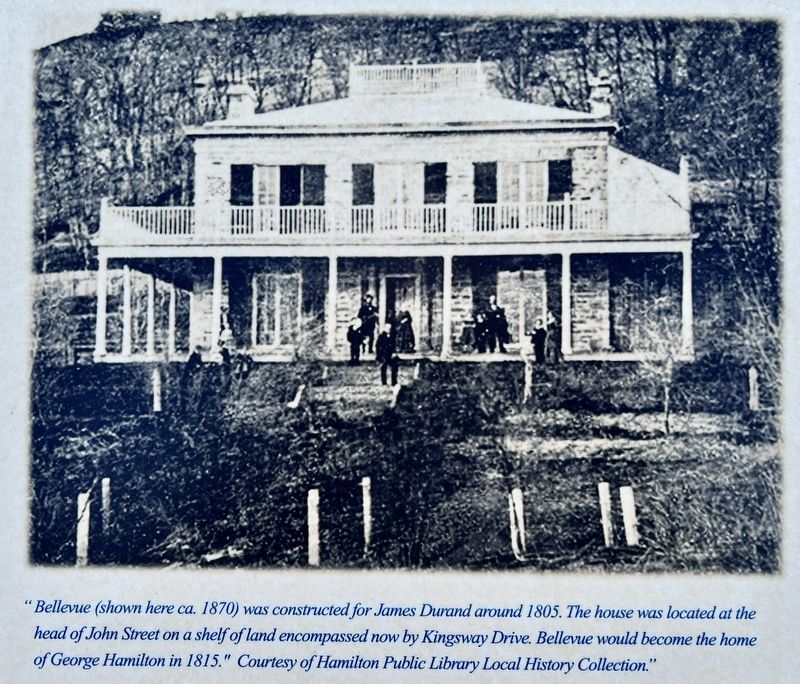
In August 1812, after the American invasion of Canada by Brigadier General William Hull on the Detroit River frontier, the Speaker of the House of Assembly in York (Toronto) warned that Upper Canada faced a "conspiracy against the civilization of man". In response, Major General Isaac Brock, the military governor, sailed from York to Burlington Bay on August 6. He assembled 60 men of the 41st Regiment and about 250 militia on the farm of James Durand, and then stayed the night in Durand's stone house. The militia included Captain Samuel Hatt of Dundas, Lieutenant Robert Land, Lieutenant William Hamilton Merritt (future Welland Canal builder) and Captain George Hamilton, founder of Hamilton.
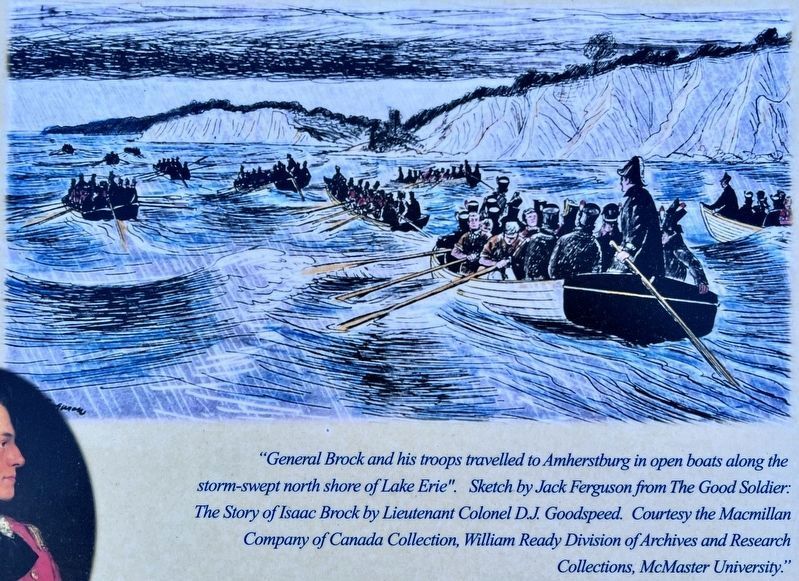
The next day, Brock and his force climbed the escarpment on the Indian trail (John Street) to the Mohawk Trail on their way to the Mohawk Village (Brantford), where 60 Natives were recruited. With the Provincial Marine in control of Lake Erie, the growing army embarked safely from Dover Mills (Port Dover). Escorted by the schooner Nancy, they rowed 12 large bateaux over 320 kilometres along the north shore of Lake Erie in stormy weather,
this page online
This spectacular success reassured the Upper Canadian settlers, the militia, and their Native allies, that an American invasion could be resisted.
Erected 2012 by Hamilton Historical Board.
Topics. This historical marker is listed in these topic lists: Patriots & Patriotism • War of 1812. A significant historical year for this entry is 1812.
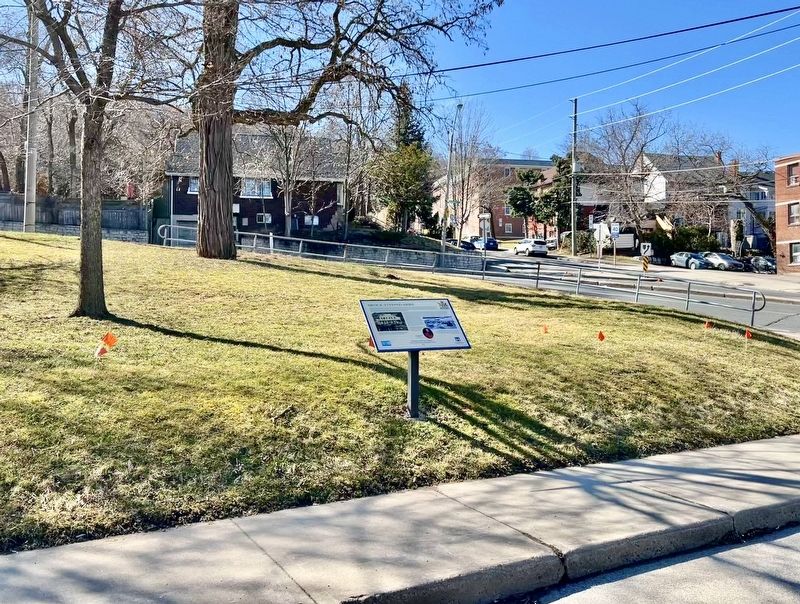
Location. 43° 14.861′ N, 79° 52.167′ W. Marker is in Hamilton, Ontario. It is in Corktown. It is at the intersection of John Street South and St. Joseph’s Drive, on the right when traveling north on John Street South. Touch for map. Marker is at or near this postal address: 319 John Street S, Hamilton ON L8N L8N, Canada. Touch for directions.

Regionally,
Photographed by Tim Boyd, March 7, 2024
2. Brock Stepped Here Marker
Other nearby markers. At least 8 other markers are within walking distance of this marker: Church of the Ascension (about 240 meters away, measured in a direct line); 250 James Street South (approx. 0.3 kilometers away); The Niagara Escarpment (approx. 0.4 kilometers away); Friend of the Greenbelt- The Honourable William Grenville Davis (approx. 0.4 kilometers away); Father Charles Garnier (approx. 0.4 kilometers away); 17 Augusta Street (approx. half a kilometer away); Sandyford Place (approx. 0.6 kilometers away); a different marker also named Sandyford Place (approx. 0.6 kilometers away). Touch for a list and map of all markers in Hamilton.
Also see . . . War of 1812 - Sir Isaac Brock: a Biography.
Photographed by Tim Boyd, March 7, 2023
3. Brock Stepped Here marker photo detail
Of the military leaders who emerged from the brief and bitter conflict known as the War of 1812, few have been able to carve a reputation for themselves as bold, imaginative and inspiring leaders. Isaac Brock, however, personified these qualities in a military career that spanned three decades.(Submitted on March 7, 2024, by Tim Boyd of Hamilton, Ontario.)
Photographed by Jack Ferguson
4. Brock Stepped Here marker detail
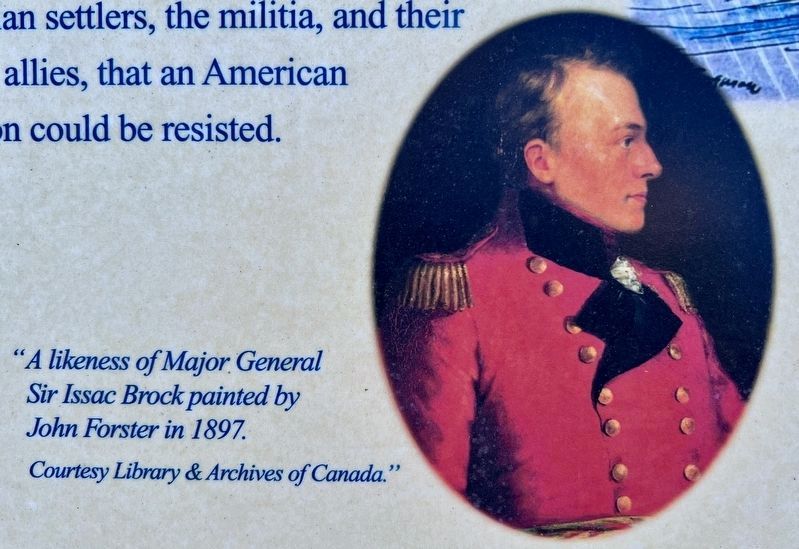
John Forster (courtesy of Library and Archives of Canada), 1897
5. Brock Stepped Here marker detail
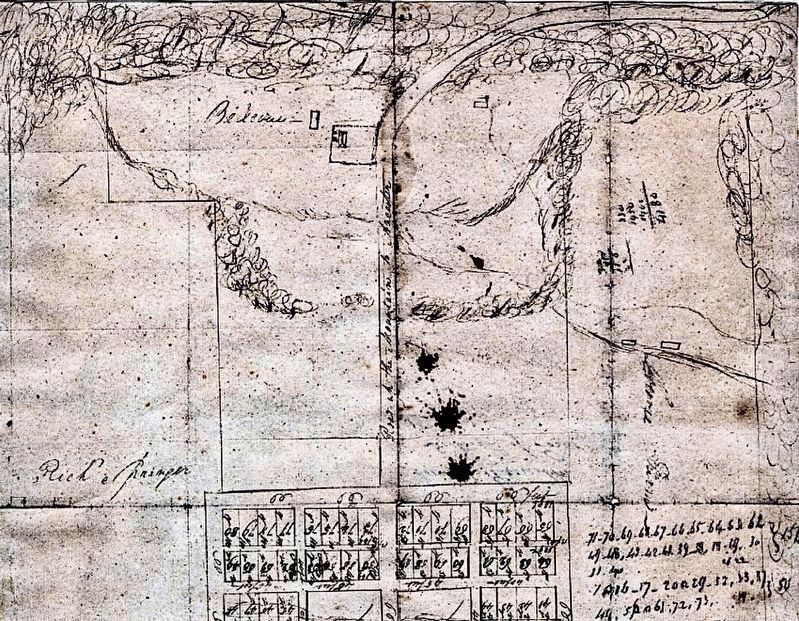
circa 1815
6. Part of the original Plan of Hamilton (1815 or 16)
Showing Bellevue (James Durand’s house) and the road up the escarpment Brock used to travel to the Mohawk Village.
Credits. This page was last revised on March 7, 2024. It was originally submitted on March 7, 2024, by Tim Boyd of Hamilton, Ontario. This page has been viewed 320 times since then and 41 times this year. Photos: 1, 2, 3, 4, 5, 6. submitted on March 7, 2024, by Tim Boyd of Hamilton, Ontario. • Andrew Ruppenstein was the editor who published this page.
