Ternes in Paris in Département de Paris, Île-de-France, France — Western Europe
Place des Ternes
| — | Histoire de Paris | — |
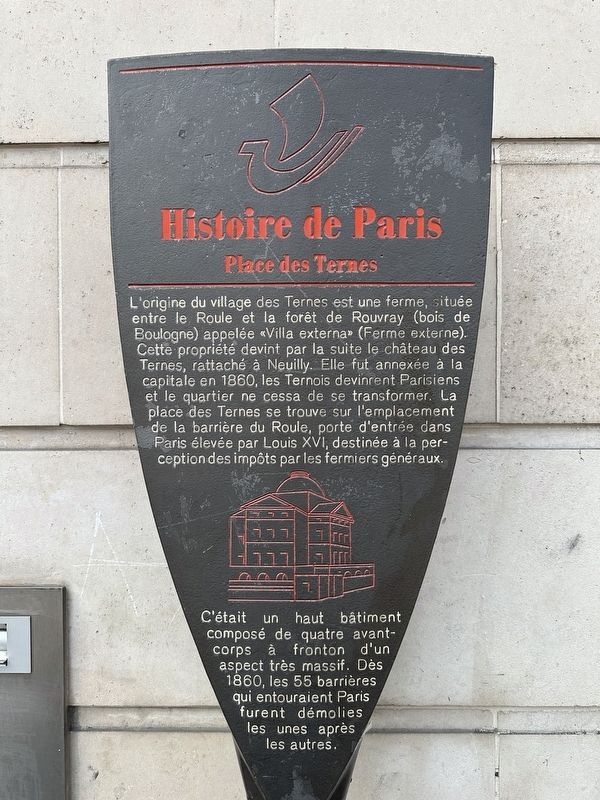
Photographed by Andrew Ruppenstein, March 25, 2024
1. Place des Ternes Marker

The origin of the village of Ternes was a farm, located between Roule and the Rouvray forest (Bois de Boulogne) called “Villa externa” (External farm). This property subsequently became the Château des Ternes, attached to Neuilly. It was annexed to the capital in 1860, the Ternois became Parisians and the district continued to transform. Place des Ternes is located on the site
this page online
Topics and series. This historical marker is listed in this topic list: Settlements & Settlers. In addition, it is included in the Histoire de Paris series list. A significant historical year for this entry is 1860.
Location. 48° 52.688′ N, 2° 17.847′ E. Marker is in Paris, Île-de-France, in Département de Paris. It is in Ternes. It is at the intersection of Place des Ternes and Avenue des Ternes on Place des Ternes. Touch for map. Marker is at or near this postal address: 1 Place des Ternes, Paris, Île-de-France 75017, France. Touch for directions.

Regionally, it is in the North Atlantic Region, Europe, the European Union, Atlantic Europe, the Schengen Area, Western Europe, a coastal Mediterranean country, and the Western World. Historically, it finds itself in what was once a French colony and also the Roman Empire.
Other nearby markers. At
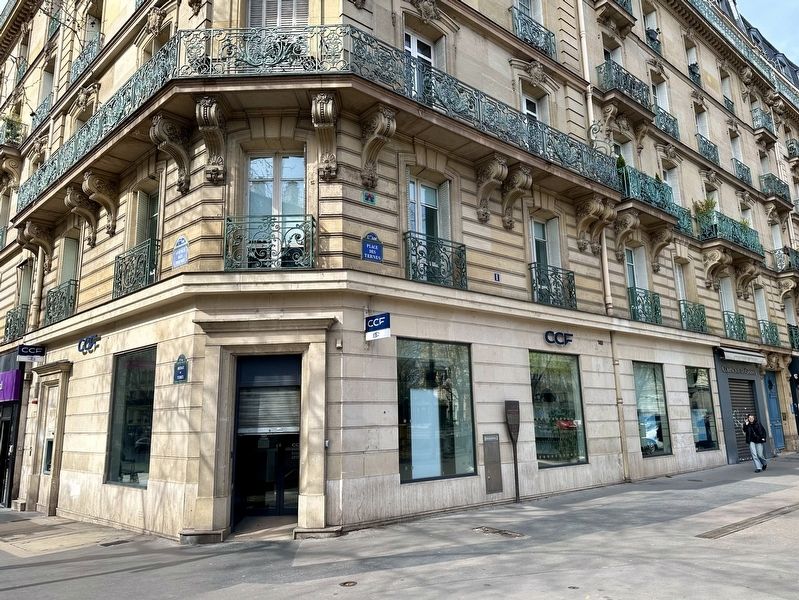
Photographed by Andrew Ruppenstein, March 25, 2024
2. Place des Ternes Marker - wide view
Also see . . . Place des Ternes (ParisBestlodge.com).
Excerpt: This small place is ritually inhabited by some merchants of flowers sheltered in green cottages, identical to those installed, in greater number, Place of the Madeleine. Located at the border of 8th and the 17th district, it is a point of obliged passage for which moves towards Etoile while coming from the north of Paris. The origin of its name comes from the Middle Age, a long time ago when the bishop(Submitted on April 8, 2024.)of Paris maintained towards the Faubourg du Roule a countryside farm of baptized Villa Externa, since it was apart from his Parisian district. Town Paris was reduced then to some central arrondissements central. This farm was transformed into castle by Pierre Habert, a manservant of Henri III. Externa became Estern then Ternes. The revolution allotted this hamlet of the Terns to the village neighbor of Neuilly…Photographed by Andrew Ruppenstein, March 25, 20243. Place des Ternes Marker - wider view
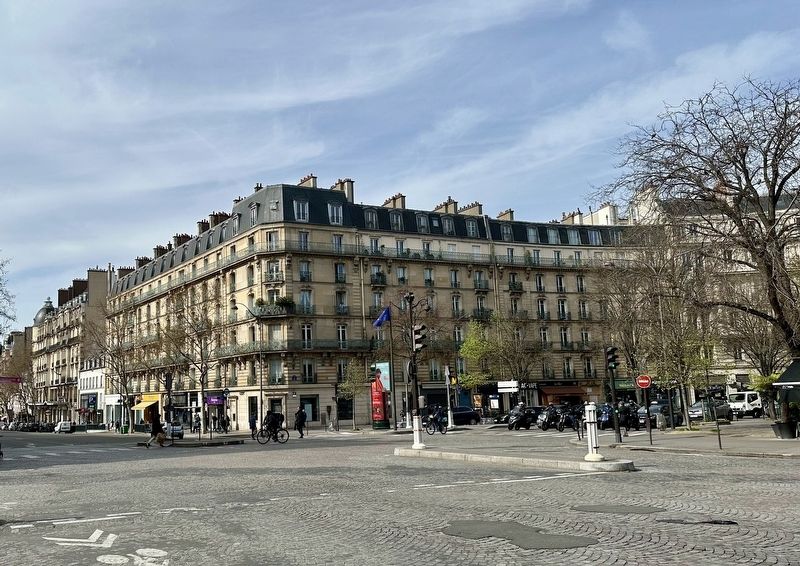
Additional keywords. panneau
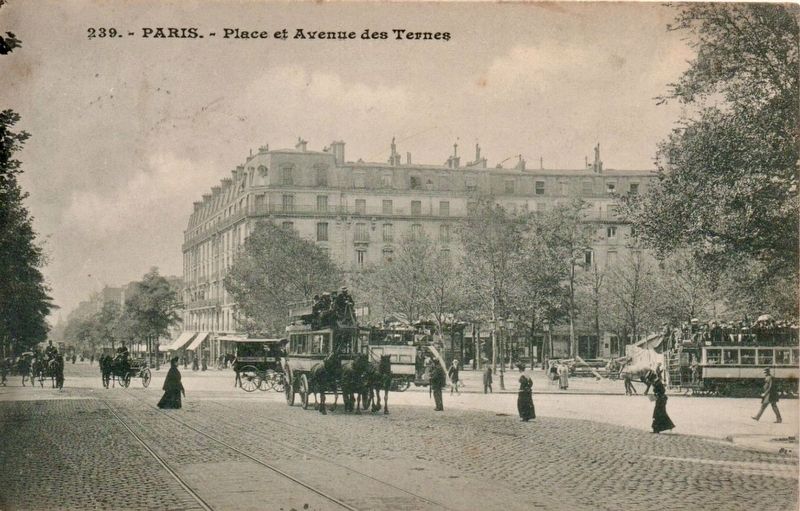
circa 1901
4. Place et Avenue des Ternes
This photo show roughly the same perspective as the preceding shot, i.e., looking west along the avenue.
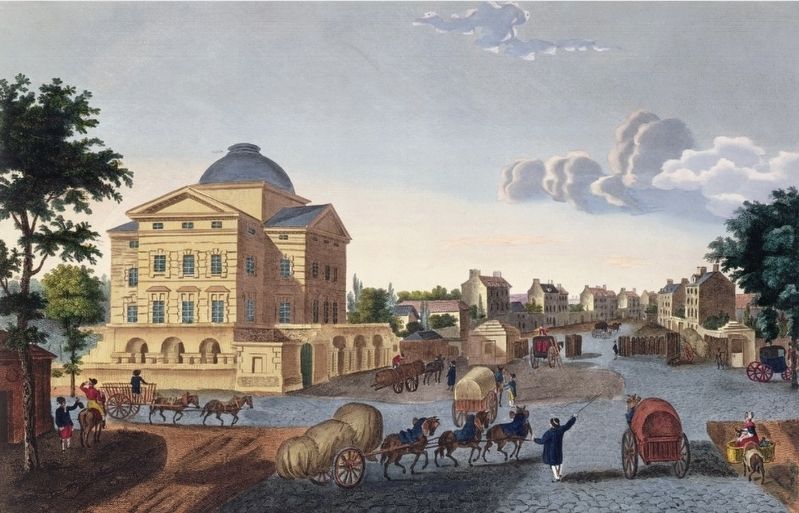
Photographed by Henri Courvoisier Voisin, circa 1815
5. Barriere du Roule (mentioned on marker)
Credits. This page was last revised on April 24, 2025. It was originally submitted on April 8, 2024, by Andrew Ruppenstein of Lamorinda, California. This page has been viewed 285 times since then and 61 times this year. Photos: 1, 2, 3, 4, 5. submitted on April 8, 2024, by Andrew Ruppenstein of Lamorinda, California.
