Cohoes in Albany County, New York — The American Northeast (Mid-Atlantic)
Cohoes Mastodon
Photographed by Howard C. Ohlhous, March 7, 2011
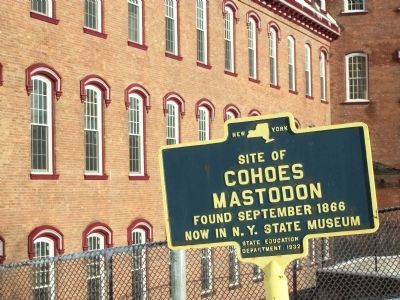
1. Cohoes Mastodon Marker
Cohoes
Mastodon
Found September 1866
Now in N. Y. State Museum
Erected 1932 by New York State Education Department.
Topics. This historical marker is listed in this topic list: Paleontology. A significant historical month for this entry is September 1866.
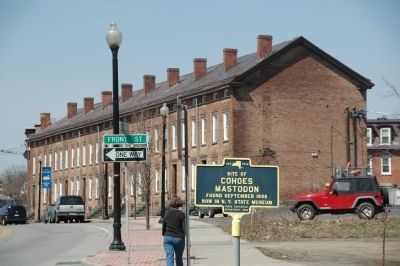
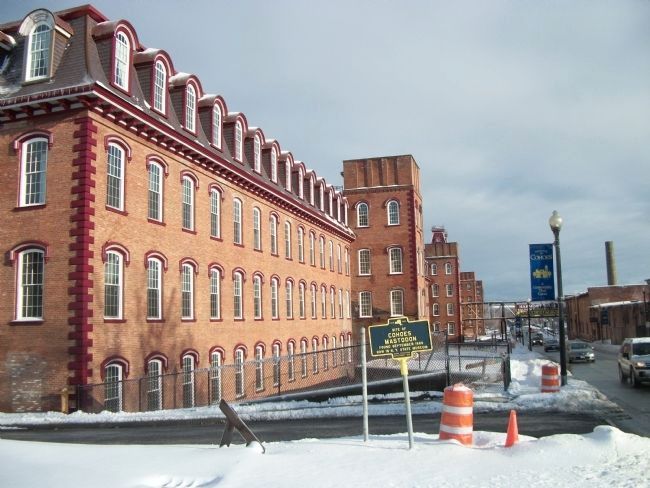
Location. 42° 46.976′ N, 73° 42.41′ W. Marker is in Cohoes, New York, in Albany County. It is on North Mohawk Street near Front Street, on the right when traveling north. Marker is at the north end of the large former mill building known as Harmony Mills. Touch for map. Marker is at or near this postal address: 100 North Mohawk St, Cohoes NY 12047, United States of America. Touch for directions.

Regionally, this marker is in Upstate New York, in the Capital District, and in the Albany Metropolitan Area. It is also in the American Northeast and in the Mid-Atlantic. Globally, it is in North America, the Western Hemisphere, the Western World, and the Anglosphere. Historically, it finds itself in what was once New Netherland and also one of the original Thirteen Colonies.
Other nearby markers. At least 8 other markers are within walking distance of this
this page online
Regarding Cohoes Mastodon. In excavating for the foundation of the north end of the Harmony Mill #3 building, the bones of a mastodon were found. Subsequently the mill became popularly known as the "Mastodon Mill." The skeleton of this mammoth was presented to the State of New York, and it still remains on display at the State Museum in Albany.
Also see . . . The Cohoes Mastodon. City of Cohoes website entry (Submitted on March 19, 2011, by Howard C. Ohlhous of Duanesburg, New York.)
Photographed by Howard C. Ohlhous, April 2, 2010
2. Cohoes Mastodon Marker - North Mohawk Street & Front Street
New York State Museum website entry:
Click for more information.
Click for more information.
Photographed by Howard C. Ohlhous, March 7, 2011
3. Cohoes Mastodon Marker - Harmony Mill in Background
Photographed by Howard C. Ohlhous, March 23, 2011
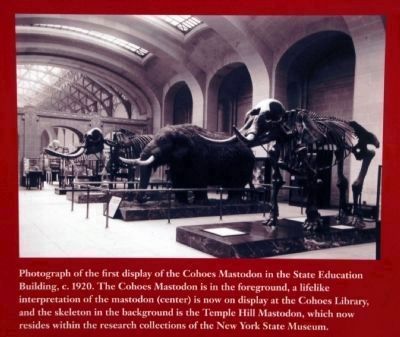
4. Cohoes Mastodon Circa 1920
The Cohoes Mastodon was on display in the New York State Education building for many, many years.
Photographed by Howard C. Ohlhous, March 23, 2011
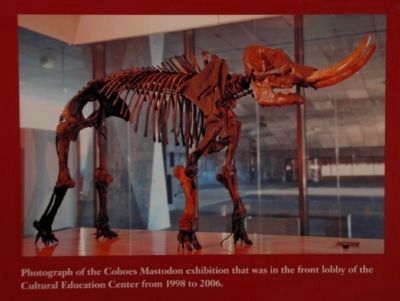
5. Cohoes Mastodon circa 2006
The Cohoes Mastodon was in front lobby of the Cultural Education Center from 1998 to 2006.
Photographed by Howard C. Ohlhous, March 23, 2011
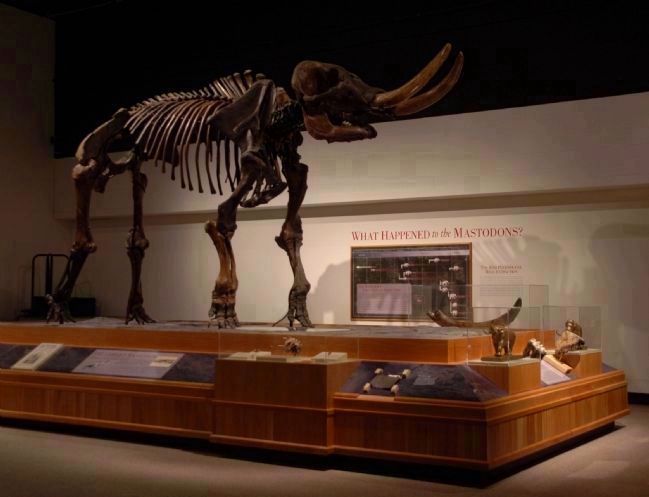
6. Cohoes Mastodon 2011
The bones of the Cohoes Mastodon are now on display inside the museum, at this location since about 2006.
Photographed by Howard C. Ohlhous, March 16, 2011
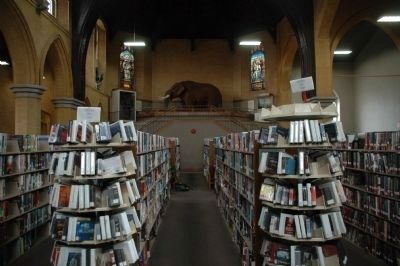
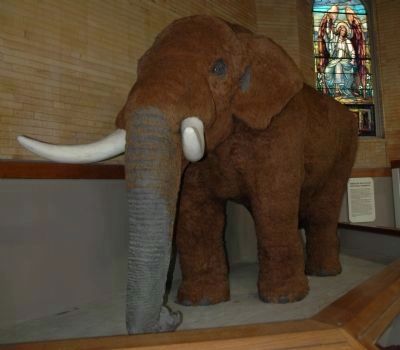
7. There is a Mastodon in the Cohoes Public Library
This is the first life-size restoration of an American mastodont (mammut Americanus) in the world. It was constructed at the New York State Museum in 1922 by Noah T. Clarke and Charles P. Heidenrich. For over half a century, millions of visitors saw this mastodont and the accompanying exhibits in the State Museum.
This restoration was based partly on the skeleton discovered September 1866 in a pot hole at the base of the Cohes Falls on the Mohawk River. Fifty feet of muck and peat covered the bones, which rested on a bed of clay and broken shale above a layer of water-worn pebbles and gravel.
Mastodons were relatively common in New York State near the end of the last Ice Age - 9,000 to 13,000 years ago. These "elehants with overcoats" browsed on twigs and branches of spruce, hemlock and pine. Undoubtedly extinction of the mastodon was aided by ancient man, who seeking food and hides, hunted these "cousins" of the modern elephant.
This restoration was based partly on the skeleton discovered September 1866 in a pot hole at the base of the Cohes Falls on the Mohawk River. Fifty feet of muck and peat covered the bones, which rested on a bed of clay and broken shale above a layer of water-worn pebbles and gravel.
Mastodons were relatively common in New York State near the end of the last Ice Age - 9,000 to 13,000 years ago. These "elehants with overcoats" browsed on twigs and branches of spruce, hemlock and pine. Undoubtedly extinction of the mastodon was aided by ancient man, who seeking food and hides, hunted these "cousins" of the modern elephant.
Photographed by Howard C. Ohlhous, March 16, 2011
8. Cohoes Mastodon - Cohoes Public Library
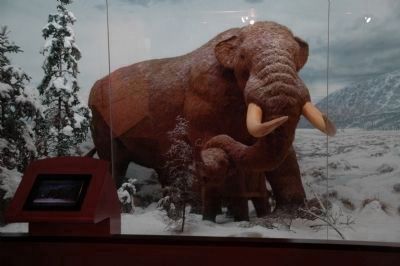
Photographed by Howard C. Ohlhous, March 23, 2011
9. Cohoes Mastodon in New York State Museum 2011
This winter scene diorama of a mother and baby mastodon is currently on display in the New York State Museum in Albany.
Credits. This page was last revised on December 8, 2022. It was originally submitted on March 12, 2011, by Howard C. Ohlhous of Duanesburg, New York. This page has been viewed 2,667 times since then and 134 times this year. Photos: 1, 2, 3. submitted on March 12, 2011, by Howard C. Ohlhous of Duanesburg, New York. 4, 5, 6. submitted on March 24, 2011, by Howard C. Ohlhous of Duanesburg, New York. 7, 8. submitted on March 19, 2011, by Howard C. Ohlhous of Duanesburg, New York. 9. submitted on March 24, 2011, by Howard C. Ohlhous of Duanesburg, New York. • Bill Pfingsten was the editor who published this page.
