Lancaster Township in Lancaster County, Pennsylvania — The American Northeast (Mid-Atlantic)
James Buchanan Home
Photographed by Bill Coughlin, April 12, 2012
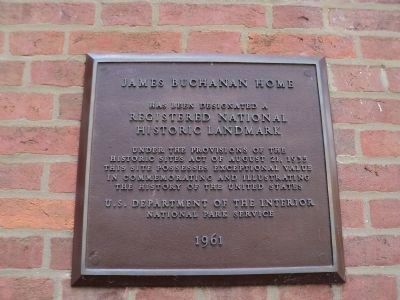
1. James Buchanan Home Marker
has been designated a
Registered National
Historic Landmark
Under the provisions of the
Historic Sites Act of August 21, 1935
this site possesses exceptional value
in commemorating and illustrating
the history of the United States.
U.S. Department of the Interior
National Park Service
1961
Erected 1961 by National Park Service.
Topics and series. This historical marker is listed in this topic list: Government & Politics. In addition, it is included in the Former U.S. Presidents: #15 James Buchanan, and the National Historic Landmarks series lists. A significant historical year for this entry is 1935.
Location. 40° 2.596′ N, 76° 19.848′ W. Marker is near Lancaster, Pennsylvania, in Lancaster County. It is in Lancaster Township. It is at the intersection of Marietta Avenue (Pennsylvania Route 23) and N President Avenue, on the right when traveling east on Marietta Avenue. Touch for map. Marker is at or near this postal address: 1120 Marietta Ave, Lancaster PA 17603, United States of America. Touch for directions.

Regionally, this marker is in South-Central Pennsylvania, specifically in Pennsylvania Dutch Country,
this page online
Other nearby markers. At least 8 other markers are within walking distance of this marker: The Outbuildings (a few steps from this marker); The Back (South Façade) of Wheatland (within shouting distance of this marker); Smokehouse / Icehouse (within shouting distance of this marker); The Front (North Façade) of Wheatland (within shouting distance of this marker); The Privy (within shouting distance of this marker); a different marker also named Privy (within shouting distance of this marker); The Frog Pond & West Meadow (about 300 feet away, measured in a direct line); Corn Milling Stones (about 300 feet away). Touch for a list and map of all markers in Lancaster.
Also see . . .
1. Wheatland (James Buchanan House). Wikipedia entry:
Links to National Register of Historic Places Nomination
Photographed by Bill Coughlin, April 12, 2012
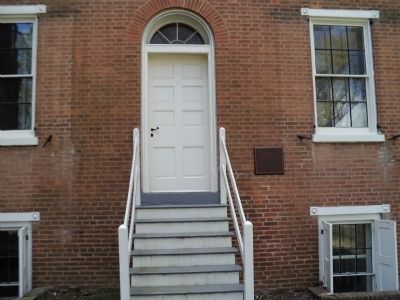
2. James Buchanan Home Marker
2. President James Buchanan’s Wheatland. Lancaster History website entry (Submitted on April 12, 2012, by Bill Coughlin of Woodland Park, New Jersey.)
Photographed by Bill Coughlin, April 12, 2012
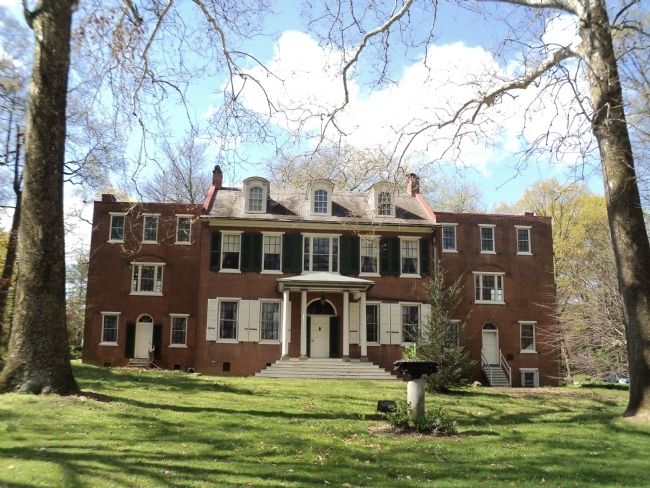
3. Wheatland - James Buchanan Home
The marker can be seen next to the door on the right.
Photographed by Bill Coughlin, April 12, 2012
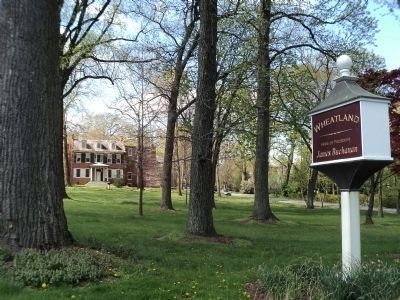
4. James Buchanan Home Marker
This sign near the street identifies Wheatland, the Home of President James Buchanan. Buchanan's home can be seen in the background.
Photographed by Bill Coughlin, April 12, 2012
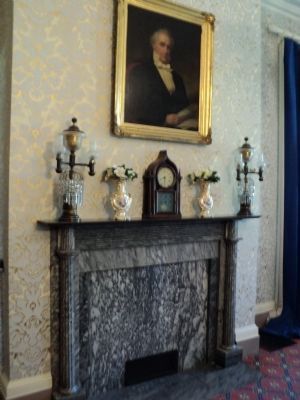
5. Parlor of James Buchanan's Home
President Buchanan's portrait can be seen above the fireplace in this photo.
Photographed by Bill Coughlin, April 12, 2012
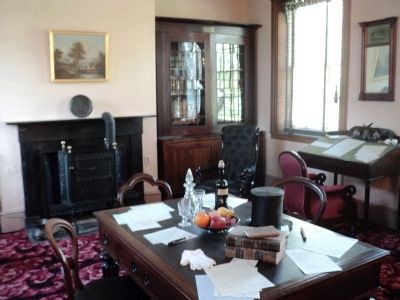
6. James Buchanan's Study
President Buchanan did much of his official work in this room. He met with many officials and heads of state here.
Photographed by Bill Coughlin, April 12, 2012
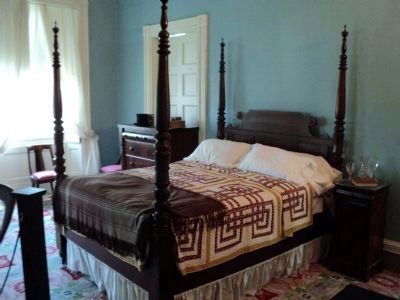
7. James Buchanan's Bedroom
James Buchanan died in this bedroom on on June 1, 1868. His wake, which took place at the house, was attended by 20,000 people.
Photographed by Allen C. Browne, February 16, 2015
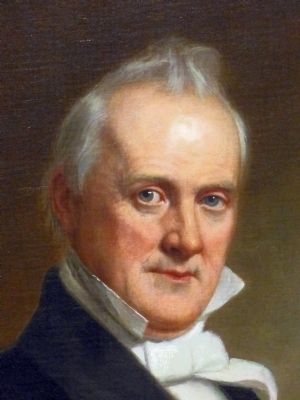
8. James Buchanan
This 1859 portrait of James Buchanan hangs in the National Portrait Gallery in Washington DC.
“James Buchanan entered the White House in 1857 hoping to quell the mounting sectional rancor over slavery. But the events of his administration often had the opposite effect. The Supreme Court's Dred Scott decision, which denied Congress's power to ban slavery in the western territories, unleashed an unprecedented wave of anger in the North. When Buchanan supported proslavery forces in the Kansas Territory, that anger rose to a fever pitch. In response, the south's militance in defending slavery waxed ever stronger, and by the end of Buchanan's term, the long-feared specter of war was turning into a reality.
With the outbreak of hostilities in the spring of 1861, Buchanan became the object of vilification in many quarters. Among the milder expressions of antiBuchanan feeling was the disposition of the version of this portrait that had been painted for the White House. When artist George Healy presented his bill for the picture, Congress refused to pay it, and many years passed before the White House acquired a portrait of Buchanan.” — National Portrait Gallery
“James Buchanan entered the White House in 1857 hoping to quell the mounting sectional rancor over slavery. But the events of his administration often had the opposite effect. The Supreme Court's Dred Scott decision, which denied Congress's power to ban slavery in the western territories, unleashed an unprecedented wave of anger in the North. When Buchanan supported proslavery forces in the Kansas Territory, that anger rose to a fever pitch. In response, the south's militance in defending slavery waxed ever stronger, and by the end of Buchanan's term, the long-feared specter of war was turning into a reality.
With the outbreak of hostilities in the spring of 1861, Buchanan became the object of vilification in many quarters. Among the milder expressions of antiBuchanan feeling was the disposition of the version of this portrait that had been painted for the White House. When artist George Healy presented his bill for the picture, Congress refused to pay it, and many years passed before the White House acquired a portrait of Buchanan.” — National Portrait Gallery
Credits. This page was last revised on June 1, 2024. It was originally submitted on April 12, 2012, by Bill Coughlin of Woodland Park, New Jersey. This page has been viewed 2,431 times since then and 280 times this year. Photos: 1, 2, 3. submitted on April 12, 2012, by Bill Coughlin of Woodland Park, New Jersey. 4. submitted on April 16, 2012, by Bill Coughlin of Woodland Park, New Jersey. 5, 6, 7. submitted on April 12, 2012, by Bill Coughlin of Woodland Park, New Jersey. 8. submitted on July 18, 2015, by Allen C. Browne of Silver Spring, Maryland.
