Hondo in Medina County, Texas — The American South (West South Central)
Stephen F. Austin Memorial Oak Tree
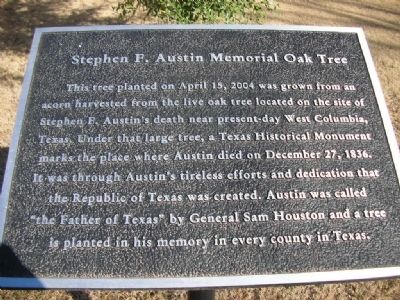
Photographed by Julie Szabo, February 6, 2008
1. Stephen F. Austin Memorial Oak Tree Marker
Topics and series. This historical marker is listed in these topic lists: Horticulture & Forestry • Settlements & Settlers. In addition, it is included in the Historic Trees series list. A significant historical month for this entry is April 1848.
Location. 29° 21.033′ N, 99° 8.482′ W. Marker is in Hondo, Texas, in Medina County. It is on 16th Street, on the left when traveling east. The marker is located on the Medina County Courthouse grounds. Touch for map. Marker is at or near this postal address: 1100 16th St, Hondo TX 78861, United States of America. Touch for directions.

Regionally, this marker is in the Hill Country
this page online
Other nearby markers. At least 8 other markers are within walking distance of this marker: Medina County Courthouse (a few steps from this marker); Old Medina County Jail (within shouting distance of this marker); Hondo Methodist Church (about 300 feet away, measured in a direct line); Hondo (about 400 feet away); Leinweber Building (about 600 feet away); Fohn-Bless Store (approx. 0.2 miles away); Medina County War Memorial (approx. 0.3 miles away); Saint John The Evangelist Catholic Church (approx. 0.4 miles away). Touch for a list and map of all markers in Hondo.
Related markers. Click here for a list of markers that are related to this marker.
Photographed by Allen C. Browne, August 9, 2015
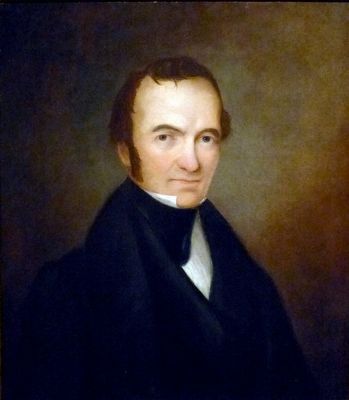
2. Stephen F. Austin
This undated portrait of Stephen F. Austin by an unknown artist hangs in the National Portrait Gallery in Washington, DC.
“In 1822, Stephen F. Austin led a group of AngloAmerican emigrants to settle a site in Texas on the Gulf of Mexico. He gained the cooperation and trust of the newly formed Mexican state, which saw Austin's colony as a way to settle and improve its lands. For ten years Austin led the colony and grew to believe that Mexico, not the United States, should control Texas. However, his hand was forced when the Mexican government, fearing the American colonists' independence, began to harass them. Austin was arrested in 1835 for allegedly plotting to annex Texas from Mexico. Released, he joined the subsequent revolt as commander of the army of Texas. After the declaration of the Republic of Texas (1836), Austin was defeated as its first president by Sam Houston, the war's military hero.” — National Portrait Gallery
“In 1822, Stephen F. Austin led a group of AngloAmerican emigrants to settle a site in Texas on the Gulf of Mexico. He gained the cooperation and trust of the newly formed Mexican state, which saw Austin's colony as a way to settle and improve its lands. For ten years Austin led the colony and grew to believe that Mexico, not the United States, should control Texas. However, his hand was forced when the Mexican government, fearing the American colonists' independence, began to harass them. Austin was arrested in 1835 for allegedly plotting to annex Texas from Mexico. Released, he joined the subsequent revolt as commander of the army of Texas. After the declaration of the Republic of Texas (1836), Austin was defeated as its first president by Sam Houston, the war's military hero.” — National Portrait Gallery
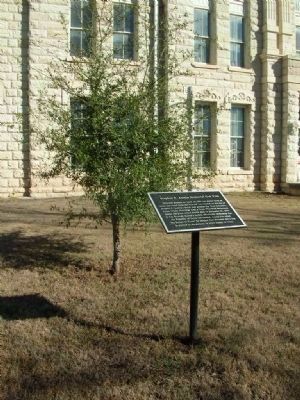
Photographed by Julie Szabo, February 6, 2008
3. Stephen F. Austin Memorial Oak Tree and Marker
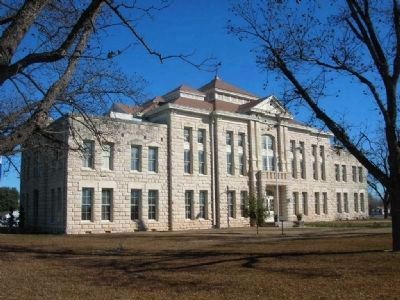
Photographed by Julie Szabo, February 6, 2008
4. The Medina County Courthouse, Stephen F. Austin Memorial Oak Tree, and Marker
Credits. This page was last revised on December 22, 2019. It was originally submitted on February 27, 2008, by Julie Szabo of Oldsmar, Florida. This page has been viewed 4,680 times since then and 61 times this year. Photos: 1. submitted on February 27, 2008, by Julie Szabo of Oldsmar, Florida. 2. submitted on October 17, 2015, by Allen C. Browne of Silver Spring, Maryland. 3, 4. submitted on February 27, 2008, by Julie Szabo of Oldsmar, Florida. • Kevin W. was the editor who published this page.
