Midtown - Downtown in Columbia in Richland County, South Carolina — The American South (South Atlantic)
The State House
Photographed by Mike Stroud, April 2008
1. The State House Marker
National Register of Historic Places:
South Carolina Statehouse *** (added 1970 - Building - #70000598) •
Also known as South Carolina State House,Grounds,and Artifacts •
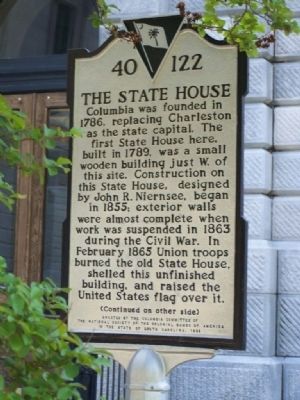
Columbia was founded in 1786, replacing Charleston as the state capital. The first State House here, built in 1789, was a small wooden building just W. of this site. Construction on this State House, designed by John R. Niernsee, began in 1855; exterior walls were almost complete when work was suspended in 1863 during the Civil War. In February 1865 Union troops burned the old State House, shelled this unfinished building, and raised the United States flag over it.
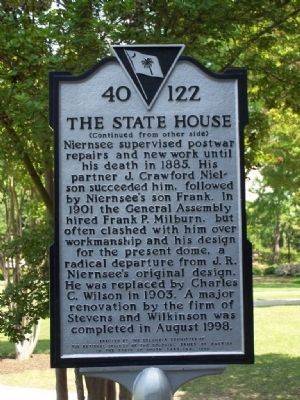
Niernsee supervised postwar repairs and new work until his death in 1885. His partner J. Crawford Nielson succeeded him, followed by Niernsee's son Frank. In 1901 the General Assembly hired Frank P. Milburn, but often clashed with him over workmanship and his design for the present dome, a radical departure from J.R. Niernsee's original design. He was replaced by Charles C. Wilson in 1903. A major renovation by the firm of Stevens and Wilkinson was completed in August 1998.
Erected 1999 by Columbia Committee Of The National Society Of The Colonial Dames In The State Of South Carolina. (Marker Number 40-122.)
Topics. This historical marker is
this page online
Location. 34° 0.037′ N, 81° 1.964′ W. Marker is in Columbia, South Carolina, in Richland County. It is in Midtown - Downtown. It can be reached from Gervais Street (U.S. 1 & 378) near Main Street. East side Public Entrance, Sumter Street. Touch for map. Marker is in this post office area: Columbia SC 29201, United States of America. Touch for directions.

Regionally, this marker is in the Midlands. It is also in the American South and specifically in the Deep South. Globally, it is in North America, the Western Hemisphere, the Western World, and the Anglosphere. Historically, it finds itself in what was once the territory of the Mississippian Culture, one of the original Thirteen Colonies, one of the Confederate States of America, and the Antebellum South.
Other nearby markers. At least 8 other markers are within walking distance of this marker: African-American History Monument (within shouting distance of this marker); George Washington (Statue) (within shouting distance
Photographed by Mike Stroud, 2008
2. The State House Marker, side 2
Regarding The State House. Major John R. Niernsee of Baltimore, Maryland,a structural engineer with the Baltimore and Ohio Railroad , was the second architect and the principal designer of the present State House. The first architect, Peter Hammarskold, was fired when his work proved unsuitable and major problems developed in the initial construction. At the time he was hired, Niernsee was doing similar work on the Smithsonian Building in Washington, D. C. Niernsee replaced Hammarskold and started over, dismantling the construction that had already been done which resulted in a loss of $72,267.00 to the state.
Also see . . . Wikipedia entry for the South Carolina State House. (Submitted on April 27, 2008, by Mike Stroud of Bluffton, South Carolina.)
Additional commentary.
1.
Photographed by Craig Doda, November 13, 2022
3. The State House Marker
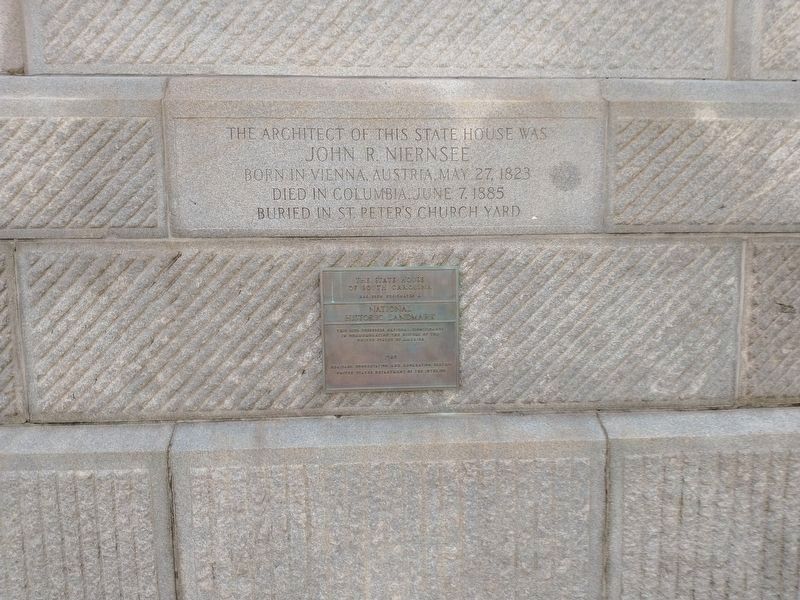
An example of Neo-Classical architecture, the South Carolina Statehouse is a three-story, domed edifice of granite, marble, brick and iron. Vienna-born architect John Niernsee began the structure in 1851, but the Civil War and post-war poverty slowed progress on the building. For unknown reasons, the building was spared in General W. T. Sherman’s 1865 burning of Columbia, though the structure did suffer damage from shelling and burning of the nearby old statehouse. Following the Civil War, between 1869 and 1874, the only state legislature in American history with an African American majority sat here. In 1876, the Democrats, lead by Wade Hampton conducted the “Red Shirt” campaign against Daniel H. Chamberlain and the Republicans. Both sides claimed victory and two speakers and two Houses began conducting deliberations in the same hall. On April 10, 1877, fulfilling part of the compromise that had allowed his inauguration, President Rutherford B. Hayes withdrew Federal troops. The following day Hampton and his supporters assumed full control of state government. From 1888 to 1891, Niernsee’s son, Frank McHenry Niernsee, served
Photographed by Craig Doda, November 13, 2022
4. The State House Marker
— Submitted May 10, 2010, by Mike Stroud of Bluffton, South Carolina.
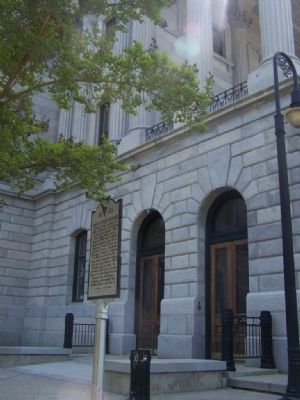
Photographed by Mike Stroud, 2008
5. Sumter Street , Public Entrance
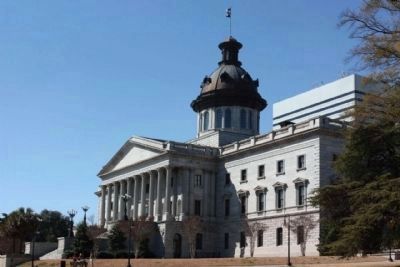
Photographed by Mike Stroud, February 28, 2010
6. The State House , south view
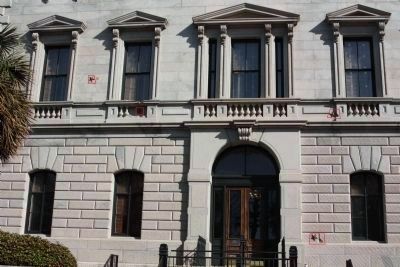
Photographed by Mike Stroud, January 16, 2011
7. The State House , west side
4 stars (boxed in red) indicate Union cannonball strikes
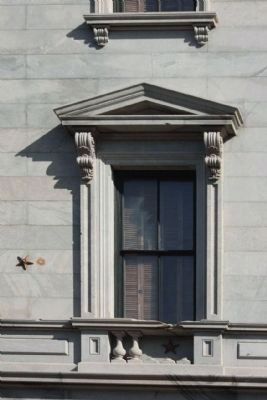
Photographed by Mike Stroud, January 16, 2011
8. The State House west wall window showing Union 2 cannonball strkes, indicated by "stars"
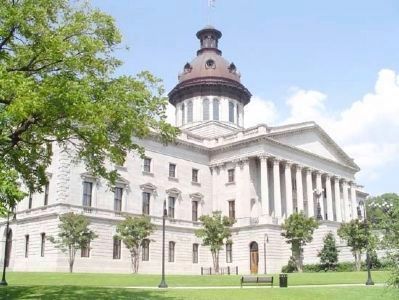
South Carolina Department of Archives and History, September 15, 2006
9. The State House South view
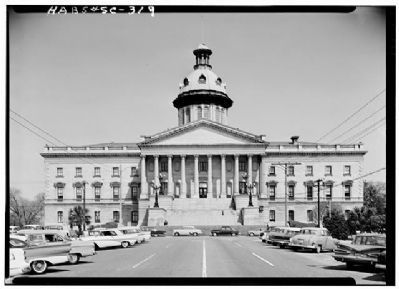
Historic American Buildings Survey, Jack E. Boucher, April 1960
10. The State House South Facade
Historic American Engineering Record,
HABS SC,40-COLUM,9-1
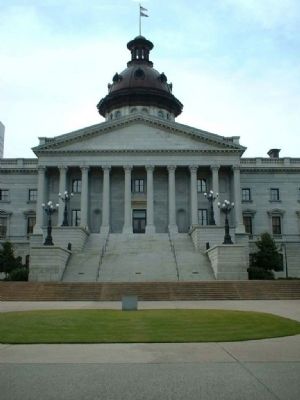
Photographed by Mike Stroud, September 2006
11. The State House , south view
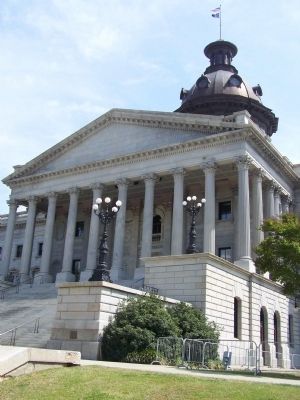
Photographed by Mike Stroud, 2008
12. The State House, with National Landmark plaque (at lower left)
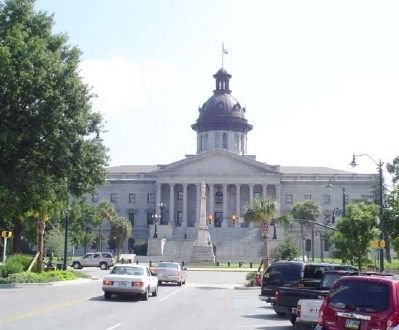
South Carolina Department of Archives and History, September 15, 2006
13. The State House north view
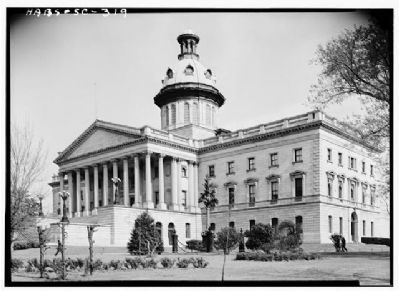
Historic American Buildings Survey, Jack E. Boucher, April 1960
14. The State House North Facade
Historic American Engineering Record,
HABS SC,40-COLUM,9-3
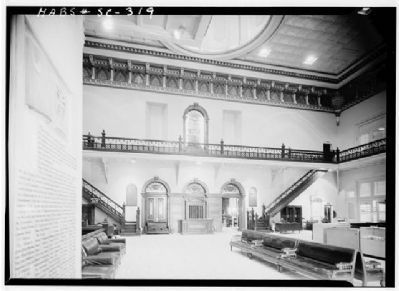
Historic American Buildings Survey, Jack E. Boucher, April 1960
15. The State House lobby, main floor
Historic American Engineering Record, HABS SC,40-COLUM,9-7
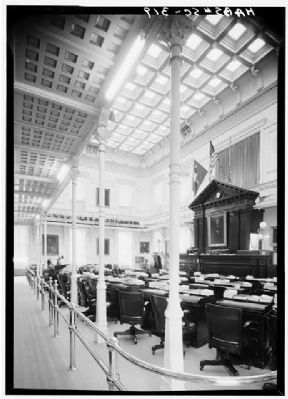
Historic American Buildings Survey, Jack E. Boucher, April 1960
16. The State House Senate chamber, main floor
Historic American Engineering Record
HABS SC,40-COLUM,9-8
Historic American Buildings Survey, Jack E. Boucher, April 1960
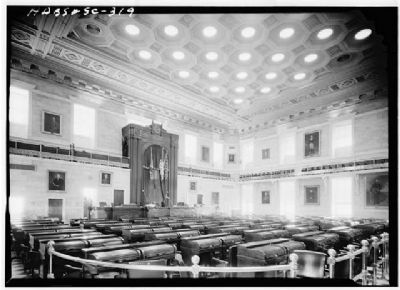
17. The State House House Chamber, main floor
Historic American Engineering Record,HABS SC,40-COLUM,9-9
Historic American Buildings Survey, Jack E. Boucher, April 1960
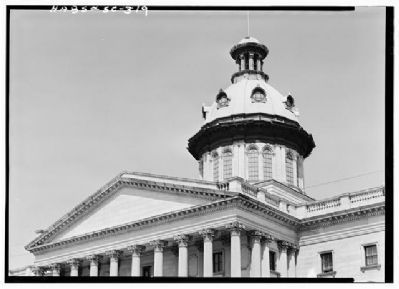
18. The State House - Lantern, Dome and Cupola
Historic American Engineering Record,
HABS SC,40-COLUM,9-5
Photographed by Mike Stroud, 2006
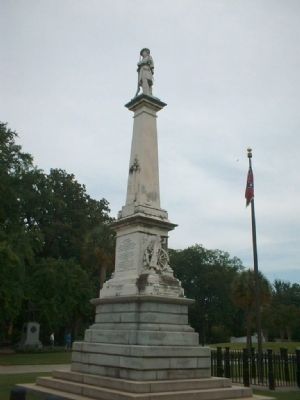
19. Confederate Monument, near Gervais Street Entrance
Photographed by Mike Stroud, 2011
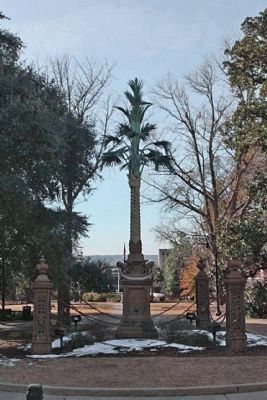
20. The State House ,Memorial to Palmetto Regiment, War with Mexico-1847
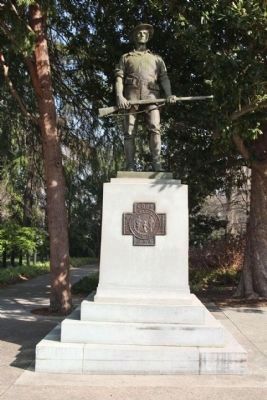
Photographed by Mike Stroud, 2011
21. The State House Spanish American War Memorial , north lawn
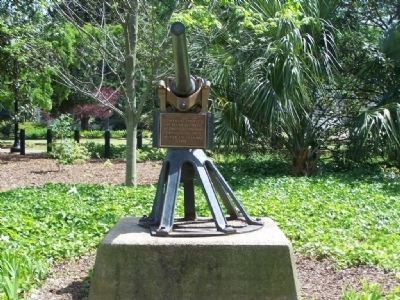
Photographed by Mike Stroud, 2008
22. Battleship Maine Memorial, on State House North Grounds
The gun's marker reads, "This gun came off the Battleship Maine The Sinking of the Maine resulted in the Spanish American War 1898"
This Mark III six-pounder gun, No. 207, was manufactured in 1894 and weighed 608 pounds. The USS Maine carried seven of these "rapid fire" weapons.
This Mark III six-pounder gun, No. 207, was manufactured in 1894 and weighed 608 pounds. The USS Maine carried seven of these "rapid fire" weapons.
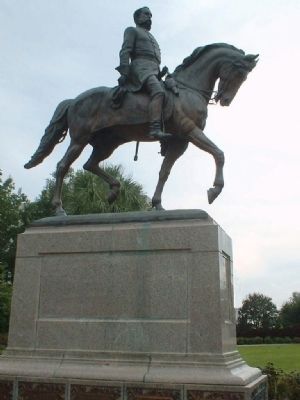
Photographed by Mike Stroud, 2006
23. Gen. Wade Hampton Monument on State House South Grounds
American Civil War soldier and politician; elected Governor and Senator from South Carolina and known as the "Savior of South Carolina" for his opposition to Reconstruction
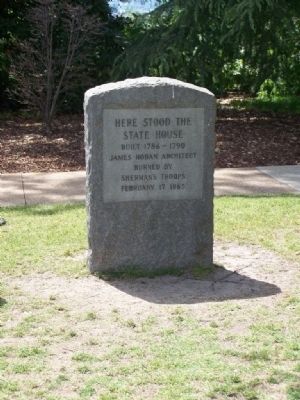
Photographed by Mike Stroud, 2008
24. Old State House Marker on Northwest grounds
Here Stood The State House
Built 1786-1790
James Hoban Architect
Burned By Sherman's Troops
February 17, 1865
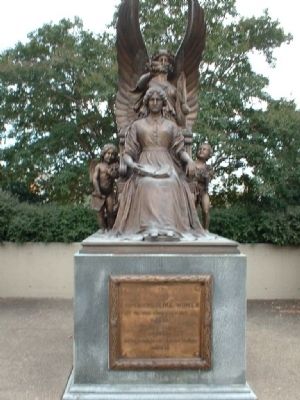
Photographed by Mike Stroud, 2006
25. Confederate Women Statue, On State House South Grounds
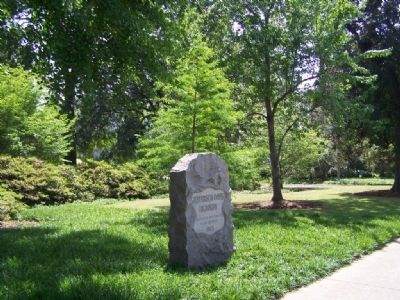
Photographed by Mike Stroud, 2008
26. Jefferson Davis Highway Marker on State House Grounds, along Gervais Street
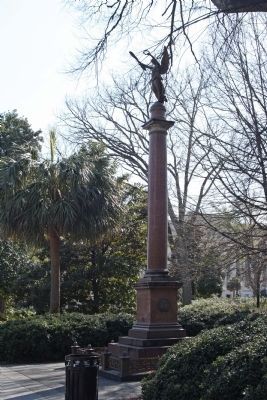
Photographed by Mike Stroud, February 21, 2010
27. The State House east grounds Monument to Memory of South Carolina Generals
* see nearby markers
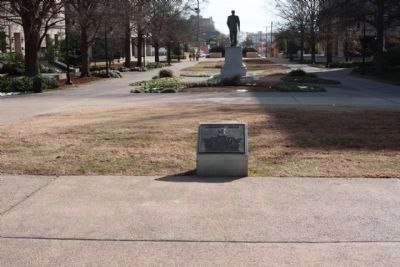
Photographed by Mike Stroud, 2011
28. The State House Richardson Square, South grounds
Named for General Richard Richardson.Member to First and Second Provincial Congresses; Ancestor to 6 governors of South Carolina
Strom Thurmond Monument seen in background
Strom Thurmond Monument seen in background
Photographed by Mike Stroud, 2011
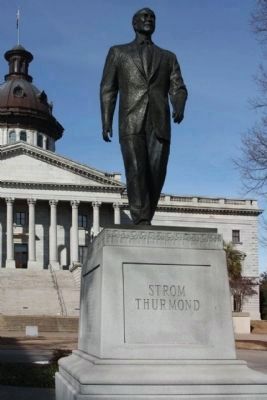
29. The State House , Strom Thurmond Monument on south lawn
* Governor of South Carolina (1947–1951)
* States' Rights Democratic presidential candidate (1948)
* Eight-term senator from South Carolina (December 1954 – April 1956 and November 1956 – January 2003)
* Democrat (1954 – April 1956 and November 1956 – September 1964)
* Republican (September 1964 – January 2003)
* President pro tempore (1981–1987; 1995 – January 3, 2001; January 20, 2001 – June 6, 2001)
* Set record for the longest one-man Congressional filibuster (1957)
* Set record for oldest serving member at 94 years (1997)
* Set the then-record for longest cumulative tenure in the Senate at 43 years (1997), increasing to 47 years, 6 months at his retirement in January 2003, surpassed by Robert Byrd in July 2006
* Became the only senator ever to serve at the age of 100
Photographed by Mike Stroud, 2011
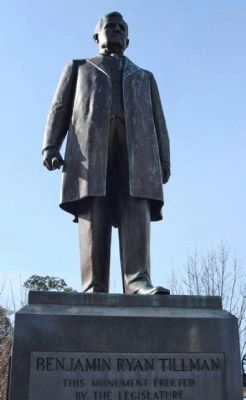
30. The State House, the controversial Benjamin RyanTillman Monument, on north lawn
(August 11, 1847 – July 3, 1918) was an American politician who served as the 84th Governor of South Carolina, from 1890 to 1894, and as a United States Senator, from 1895 until his death in office. Combative, vitriolic, and openly racist, Tillman's views were a matter of national controversy.
Tillman was a member of the Democratic Party. Tillman also served on the first Board of Trustees at Clemson University after assisting with its founding
(Wikipedia)
Photographed by Mike Stroud, 2011
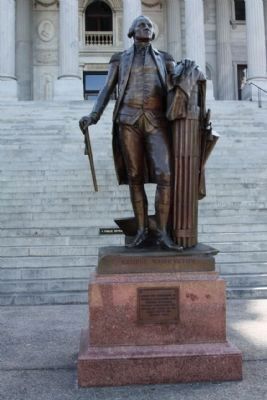
31. The State House George Washington Statue, north steps reads:
During the occupation of Columbia by Sherman's army
February 17-19, 1865, soldiers brickbatted this statue and broke off the lower part of the walking cane.
(pieces of brick used as a weapon or missle)
This is a replica of an original marble statue made by Houdon. In 1853 the Virginia legislature had W. J. Hubard Foundry cast six copies in bronze. South Carolina purchased this one in 1858 for $10,000. Originally installed inside the state house, the figure was moved in 1884 to a spot in the northeast corner of the state house grounds. In 1907 the figure was moved to its present location at base of steps on the north side of the state house.
Smithsonian Institution Research Information System(SIRIS) Inventory of American Sculpture #76006401
Photographed by Mike Stroud, 2011
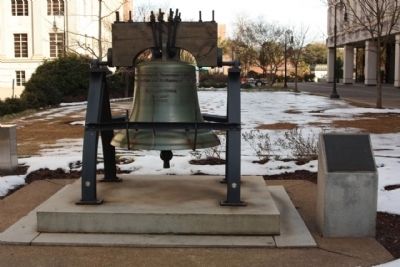
32. The State House's Liberty Bell
Liberty Bell Reproduction:
One of fifty-three cast in France in 1950
Given to The U.S. Government, used
as the inspirational symbol of the
US Savings Bonds Independence Drive
from May 15 to July 4, 1950 and
displayed in every part of this state.
Dimensions and tone are identical
with those of the original Liberty Bell
when it rang out our independence
in 1776.
One of fifty-three cast in France in 1950
Given to The U.S. Government, used
as the inspirational symbol of the
US Savings Bonds Independence Drive
from May 15 to July 4, 1950 and
displayed in every part of this state.
Dimensions and tone are identical
with those of the original Liberty Bell
when it rang out our independence
in 1776.
Photographed by Mike Stroud, 2011
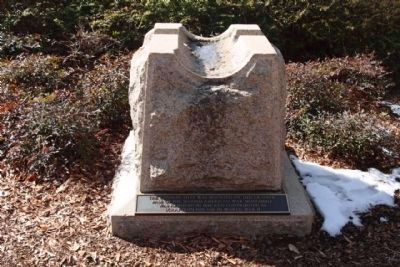
33. The State House , west lawn
The cannon that was mounted on this granite
base of the Spanish American War Monument
was removed in 1942 and contributed as
scrap-iron for use in World War II
Photographed by Mike Stroud, 2011
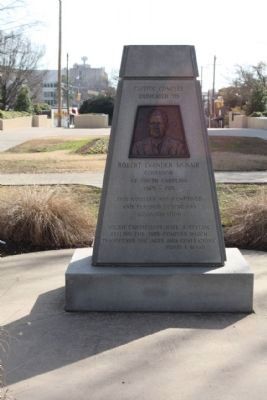
34. The State House , Capital Complex
Robert Evander McNair
Governor
of South Carolina 1965 - 1971
This complex was concieved
and planned during his
administration"
Photographed by Mike Stroud, 2011
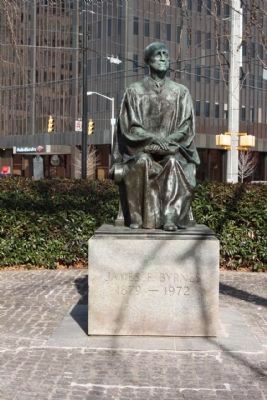
35. The State House , James Francis Byrnes , northeast grounds
(May 2, 1882 – April 9, 1972) was an American statesman from the state of South Carolina. During his career, Byrnes served as a member of the House of Representatives (1911–1925), as a Senator (1931–1941), as Justice of the Supreme Court (1941–1942), as Secretary of State (1945–1947), and as the 104th Governor of South Carolina (1951–1955). He therefore became one of very few politicians to be active in all three branches of the federal government while also being active in state government. He was also a confidant of President Franklin D. Roosevelt, and was one of the most powerful men in American domestic and foreign policy in the mid-1940s.
Photographed by Mike Stroud, 2011
36. The State House Police Memorial, Southwest grounds
Photographed by Mike Stroud, 2011
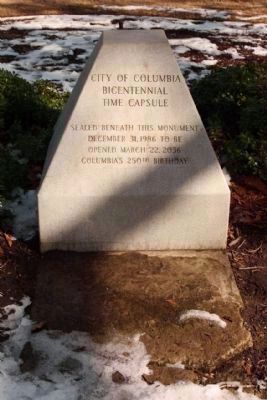
37. The State House East lawn Time Capsule
Bicentennial
Time Capsule
Sealed beneath this monument
December 31, 1986 to be
opened March 22, 2036
Columbia's 250th birthday
Photographed by Mike Stroud, 2011
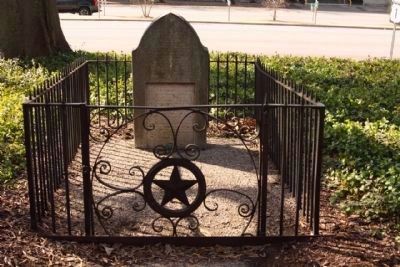
38. The State House " Capt. Swanson Lunsford ", West lawn
"Capt. Swanson Lunsford
a native of Virginia
And for many years a
resident of Columbia
died Aug. 7, 1799
Aged four and forty years
He was a member of Lee's Legion
in the eventful period of '76.
This humble tribute to his memory
has been erected by his only child
Mrs. M. L. & her husband,
Dr. Jno. Douglas of Chester, S.C."
Captain Lunsford was a merchant and community leader in Columbia. On a business trip to Charleston, he contracted yellow fever.
a native of Virginia
And for many years a
resident of Columbia
died Aug. 7, 1799
Aged four and forty years
He was a member of Lee's Legion
in the eventful period of '76.
This humble tribute to his memory
has been erected by his only child
Mrs. M. L. & her husband,
Dr. Jno. Douglas of Chester, S.C."
Captain Lunsford was a merchant and community leader in Columbia. On a business trip to Charleston, he contracted yellow fever.
Photographed by Mike Stroud, 2011
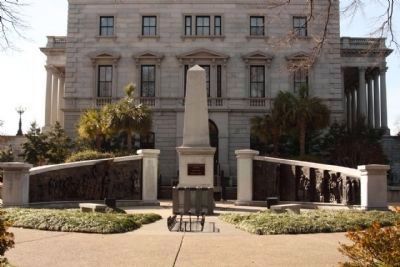
39. The State House , East grounds , The African-American Memorial
Photographed by Mike Stroud, February 28, 2010
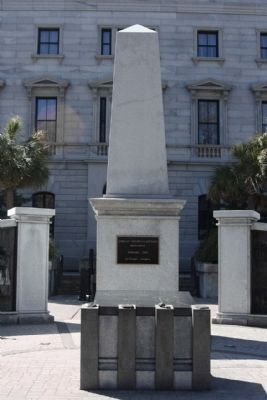
40. The State House , African American Memorial added in 2001 on eastside grounds
Credits. This page was last revised on January 24, 2026. It was originally submitted on April 27, 2008, by Mike Stroud of Bluffton, South Carolina. This page has been viewed 2,708 times since then and 103 times this year. Photos: 1, 2. submitted on April 27, 2008, by Mike Stroud of Bluffton, South Carolina. 3, 4. submitted on November 15, 2022, by Craig Doda of Napoleon, Ohio. 5. submitted on April 27, 2008, by Mike Stroud of Bluffton, South Carolina. 6. submitted on April 23, 2010, by Mike Stroud of Bluffton, South Carolina. 7, 8. submitted on January 21, 2011, by Mike Stroud of Bluffton, South Carolina. 9. submitted on May 10, 2010, by Mike Stroud of Bluffton, South Carolina. 10. submitted on May 9, 2010, by Mike Stroud of Bluffton, South Carolina. 11, 12. submitted on April 27, 2008, by Mike Stroud of Bluffton, South Carolina. 13. submitted on May 10, 2010, by Mike Stroud of Bluffton, South Carolina. 14, 15, 16, 17, 18. submitted on May 9, 2010, by Mike Stroud of Bluffton, South Carolina. 19. submitted on April 27, 2008, by Mike Stroud of Bluffton, South Carolina. 20, 21. submitted on January 21, 2011, by Mike Stroud of Bluffton, South Carolina. 22, 23, 24, 25, 26. submitted on April 27, 2008, by Mike Stroud of Bluffton, South Carolina. 27. submitted on May 9, 2010, by Mike Stroud of Bluffton, South Carolina. 28. submitted on February 26, 2011, by Mike Stroud of Bluffton, South Carolina. 29, 30. submitted on January 23, 2011, by Mike Stroud of Bluffton, South Carolina. 31, 32. submitted on January 25, 2011, by Mike Stroud of Bluffton, South Carolina. 33, 34. submitted on February 2, 2011, by Mike Stroud of Bluffton, South Carolina. 35, 36. submitted on February 3, 2011, by Mike Stroud of Bluffton, South Carolina. 37, 38. submitted on February 24, 2011, by Mike Stroud of Bluffton, South Carolina. 39. submitted on February 26, 2011, by Mike Stroud of Bluffton, South Carolina. 40. submitted on May 9, 2010, by Mike Stroud of Bluffton, South Carolina. • Kevin W. was the editor who published this page.
