East Aurora in Erie County, New York — The American Northeast (Mid-Atlantic)
Millard Fillmore House
Photographed by Anton Schwarzmueller, June 3, 2014
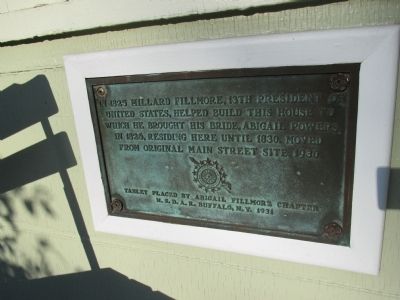
1. Millard Fillmore House Marker
In 1825, Millard Fillmore, 13th President of the United States, helped build this house to which he brought his bride, Abigail Powers, in 1826, residing here until 1830. Moved from original Main Street site 1930.
Tablet placed by Abigail Fillmore chapter N. S. D. A. R. Buffalo, NY 1931
Erected 1931 by N. S. D. A. R. Abigail Fillmore Chapter.
Topics and series. This historical marker is listed in this topic list: Government & Politics. In addition, it is included in the Daughters of the American Revolution (DAR), the Former U.S. Presidents: #13 Millard Fillmore, and the National Historic Landmarks series lists. A significant historical year for this entry is 1825.
Location. 42° 46.134′ N, 78° 37.339′ W. Marker is in East Aurora, New York, in Erie County. It can be reached from Shearer Avenue 0.1 miles north of Main Street (U.S. 20A), on the right when traveling north. Marker is affixed to the front of the house between a window and the porch floor. It is not particularly visible from the street. Signs for the house are at the intersection of Shearer Ave with Main St., US 20A and NY 16. Touch for map. Marker is at or
this page online

Regionally, this marker is in Upstate New York, specifically in Western New York, and in the Buffalo Metropolitan Area. It is also in the American Northeast and in the Mid-Atlantic. Globally, it is in North America, on the Great Lakes, in the Western Hemisphere, in the Western World, and in the Anglosphere. Historically, it finds itself in what was once the Viceroyalty of New France, the Haudenosaunee (Iroquois) Confederacy, New Netherland, and one of the original Thirteen Colonies.
Other nearby markers. At least 8 other markers are within walking distance of this marker: Baker Memorial United Methodist Church (about 400 feet away, measured in a direct line); The Middle Road (about 500 feet away); Elbert Hubbard / Michelangelo (approx. 0.2 miles away); The Roycroft Shops (approx. 0.2 miles away); Alice M. Hubbard (approx. ¼ mile away); Millard Fillmore (approx. 0.7 miles away); East Aurora Cemetery (approx. 0.7 miles away); Dedicated to Those Who Served (approx. ¾ mile away). Touch for a list and map of
Photographed by Anton Schwarzmueller, June 3, 2014
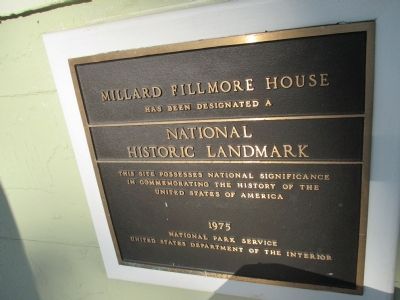
2. Millard Fillmore House National Historic Site Marker
Affixed to front of house.
Also see . . .
1. Millard Fillmore House. Wikipedia entry:
Links to National Register of Historic Places Nomination Form (Submitted on June 22, 2014, by Anton Schwarzmueller of Wilson, New York.)
2. Millard Fillmore Presidential Site. Aurora Historical Society website entry:
Owner/Operator of the house/museum. (Submitted on June 22, 2014, by Anton Schwarzmueller of Wilson, New York.)
Photographed by Anton Schwarzmueller, June 3, 2014
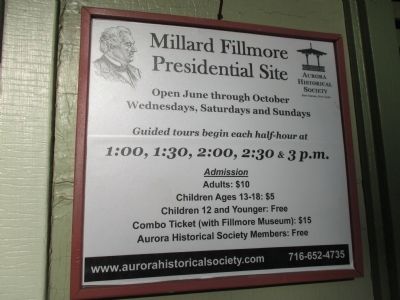
3. Millard Fillmore House Hours
Affixed to the front of the house.
Photographed by Anton Schwarzmueller, June 3, 2014
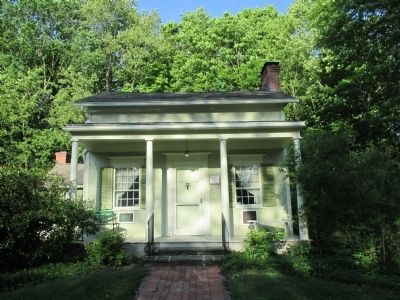
4. Millard Fillmore House and Marker
Marker is under the left front window. National Historic Landmark plaque is under the right window.

Photographed by Anton Schwarzmueller, June 3, 2014
5. Millard Fillmore House and Marker
Front and south sides.
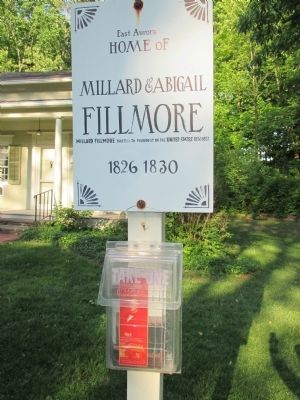
Photographed by Anton Schwarzmueller, June 3, 2014
6. Front Sign Post Millard Fillmore House
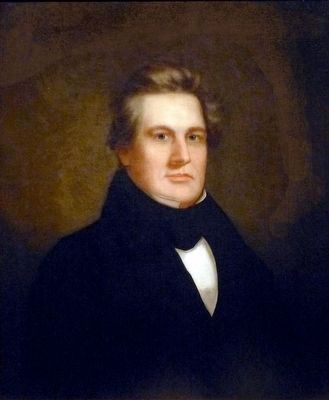
Photographed by Allen C. Browne, August 9, 2015
7. Millard Fillmore
This c. 1843 portrait of Millard Fillmore hangs in the National Portrait Gallery in Washington, DC.
“At the beginning of his administration, Millard Fillmore bestowed his presidential blessing on the Compromise of 1850 Senator Henry Clay's proposal to unite the North and the slave holding South. The ensuing harmony, however, was short-lived. Among the compromise's concessions to the South was the new Fugitive Slave Law, which facilitated the capture of runaway slaves, and Fillmore was determined to enforce it. As northern abolitionists sought to undermine enforcement, tempers on both sides of the issue flared again. The sectional bitterness made a future rupture over slavery all but certain.
Fillmore's portrait by an unidentified artist dates to about the time he retired from the House of Representatives in the early 1840s. In the years following, he devoted himself to reconciling the growing differences among fellow Whigs in his native New York State.” — National Portrait Gallery
“At the beginning of his administration, Millard Fillmore bestowed his presidential blessing on the Compromise of 1850 Senator Henry Clay's proposal to unite the North and the slave holding South. The ensuing harmony, however, was short-lived. Among the compromise's concessions to the South was the new Fugitive Slave Law, which facilitated the capture of runaway slaves, and Fillmore was determined to enforce it. As northern abolitionists sought to undermine enforcement, tempers on both sides of the issue flared again. The sectional bitterness made a future rupture over slavery all but certain.
Fillmore's portrait by an unidentified artist dates to about the time he retired from the House of Representatives in the early 1840s. In the years following, he devoted himself to reconciling the growing differences among fellow Whigs in his native New York State.” — National Portrait Gallery
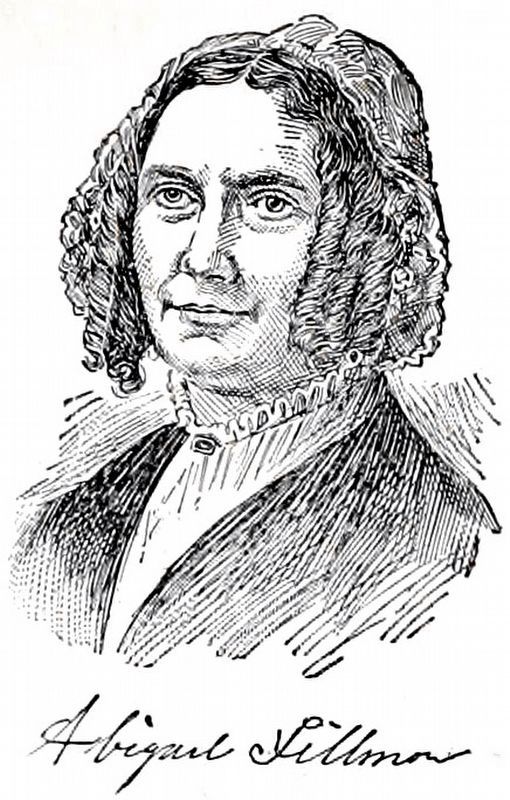
Photographed by Allen C. Browne
8. Abigail Fillmore
from The Biographical Dictionary of America, 1906, by Rossiter Johnson.
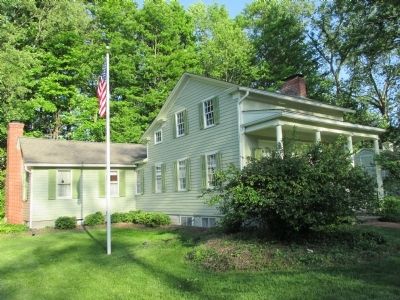
Photographed by Anton Schwarzmueller, June 3, 2014
9. Millard Fillmore House
Front and north sides.
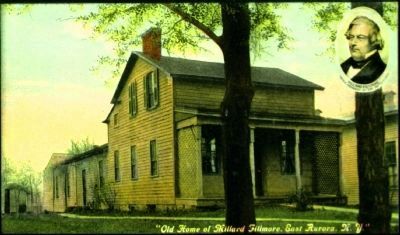
circa 1910
10. "Old Home of Millard Fillmore, East Aurora, N.Y."
Fillmore home at the original location. Note that the chimney was relocated to the other side of the house when the home was moved.
Photographed by Anton Schwarzmueller, June 3, 2014
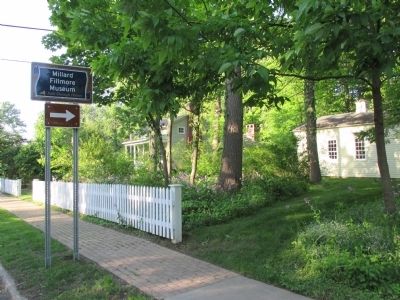
11. Millard Fillmore House
Sign on Shearer Avenue, house in background.
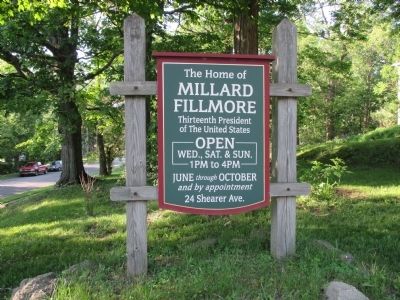
Photographed by Anton Schwarzmueller, June 3, 2014
12. Millard Fillmore House Sign
Sign on Main Street (US 20A, NY 16) at corner of Shearer Ave.
Credits. This page was last revised on March 2, 2025. It was originally submitted on June 22, 2014, by Anton Schwarzmueller of Wilson, New York. This page has been viewed 1,231 times since then and 73 times this year. Photos: 1, 2, 3, 4, 5, 6. submitted on June 22, 2014, by Anton Schwarzmueller of Wilson, New York. 7. submitted on August 30, 2015, by Allen C. Browne of Silver Spring, Maryland. 8. submitted on June 26, 2018, by Allen C. Browne of Silver Spring, Maryland. 9. submitted on June 22, 2014, by Anton Schwarzmueller of Wilson, New York. 10. submitted on January 4, 2015. 11, 12. submitted on June 22, 2014, by Anton Schwarzmueller of Wilson, New York. • Bill Pfingsten was the editor who published this page.
