West Branch in Cedar County, Iowa — The American Midwest (Upper Plains)
Birthplace of Herbert Hoover
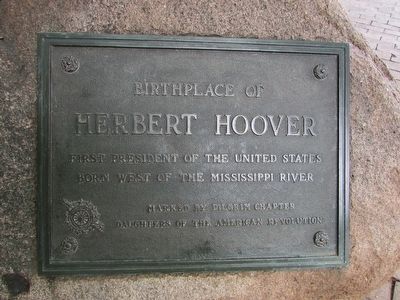
Photographed by Bill Coughlin, August 4, 2015
1. Birthplace of Herbert Hoover Marker
Erected by Daughters of the American Revolution - Pilgrim Chapter.
Topics and series. This historical marker is listed in this topic list: Government & Politics. In addition, it is included in the Daughters of the American Revolution (DAR), and the Former U.S. Presidents: #31 Herbert Hoover series lists.
Location. 41° 40.226′ N, 91° 20.771′ W. Marker is in West Branch, Iowa, in Cedar County. It is on S Downey Street, on the left when traveling north. Marker is located at the Herbert Hoover National Historic Site. Touch for map. Marker is in this post office area: West Branch IA 52358, United States of America. Touch for directions.

Regionally, this marker is in Eastern Iowa. It is also in the American Midwest and in the Corn Belt. Globally, it is in North America, the Western Hemisphere, the Western World, and the Anglosphere. Historically, it finds itself in what was once the territory of the Mississippian Culture and also the Louisiana Purchase.
Other nearby markers. At
this page online
Other markers no longer nearby. The Hannah Varney House (was within shouting distance of this marker but has been replaced with another marker now near it); The Dr. Leech House (was within shouting distance of this marker but has been replaced with another marker now near it); Herbert Hoover's Birthplace (was within shouting distance of this marker but has been replaced with another marker now near it); a different marker also named The C.E. Smith House (was within shouting distance of this
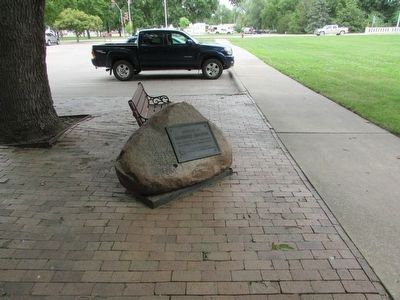
Photographed by Bill Coughlin, August 4, 2015
2. Birthplace of Herbert Hoover Marker
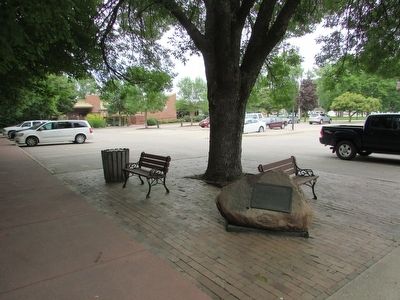
Photographed by Bill Coughlin, August 4, 2015
3. Marker at the Herbert Hoover National Historic Site
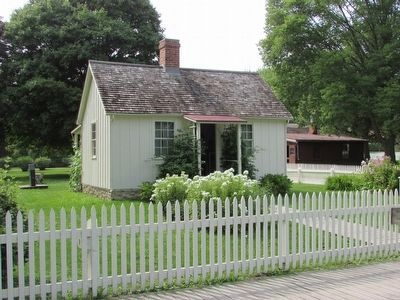
Photographed by Bill Coughlin, August 4, 2014
4. Birthplace of Herbert Hoover Marker
The 31st President of the United States was born in this house in West Branch, Iowa. It is located within sight of the marker.
Photographed by Allen C. Browne, August 9, 2015
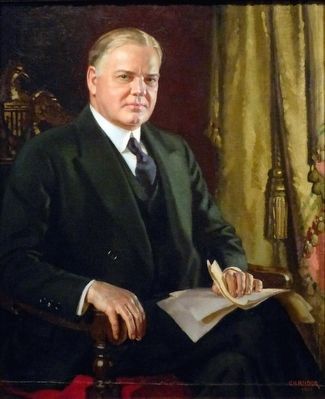
5. Herbert Hoover
This 1931 portrait of Herbert Hoover by Douglas Chandor
hangs in the National Portrait Gallery in Washington, DC.
“Herbert Hoover seemed to be the ultimate problemsolver. As a mining engineer, he had turned marginal operations into thriving enterprises. During World War I, his administration of European food relief was nothing short of brilliant. As secretary of commerce in the 19205, he transformed a once sleepy department into a purposeful information clearinghouse. But as the Great Depression took hold during the second year of his presidency, Hoover was hard pressed for a solution. Believing in the power of private initiative, he hesitated to involve the federal government in reviving business. When lengthening bread lines and escalating joblessness finally convinced him of the necessity of such steps, the measures proved inadequate. As a result, Hoover was defeated by a crushing margin in his 1932 reelection bid.
This portrait was intended for Time magazine's cover. But Hoover delayed his sittings, and by the time it was finished, the magazine was no longer interested. Hoover is thus the only president in Time's history never to appear on a cover while in office.” — National Portrait Gallery
“Herbert Hoover seemed to be the ultimate problemsolver. As a mining engineer, he had turned marginal operations into thriving enterprises. During World War I, his administration of European food relief was nothing short of brilliant. As secretary of commerce in the 19205, he transformed a once sleepy department into a purposeful information clearinghouse. But as the Great Depression took hold during the second year of his presidency, Hoover was hard pressed for a solution. Believing in the power of private initiative, he hesitated to involve the federal government in reviving business. When lengthening bread lines and escalating joblessness finally convinced him of the necessity of such steps, the measures proved inadequate. As a result, Hoover was defeated by a crushing margin in his 1932 reelection bid.
This portrait was intended for Time magazine's cover. But Hoover delayed his sittings, and by the time it was finished, the magazine was no longer interested. Hoover is thus the only president in Time's history never to appear on a cover while in office.” — National Portrait Gallery
Credits. This page was last revised on July 31, 2020. It was originally submitted on August 4, 2015, by Bill Coughlin of Woodland Park, New Jersey. This page has been viewed 857 times since then and 53 times this year. Photos: 1, 2, 3, 4. submitted on August 4, 2015, by Bill Coughlin of Woodland Park, New Jersey. 5. submitted on August 30, 2015, by Allen C. Browne of Silver Spring, Maryland.
