Barboursville in Orange County, Virginia — The American South (Mid-Atlantic)
Governor James Barbour
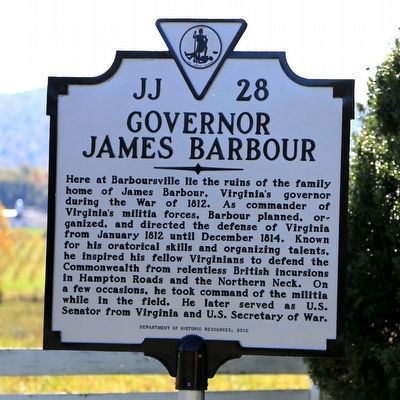
Photographed by J. J. Prats, October 15, 2015
1. Governor James Barbour Marker
Erected 2010 by Department of Historic Resources. (Marker Number JJ-28.)
Topics and series. This historical marker is listed in this topic list: War of 1812. In addition, it is included in the Virginia Department of Historic Resources (DHR) series list. A significant historical year for this entry is 1812.
Location. 38° 10.103′ N, 78° 16.745′ W. Marker is in Barboursville, Virginia, in Orange County. It is on Governor Barbour Street (Route 678) 0.1 miles east of Constitution Highway (Virginia Route 20), on the right when traveling
this page online

Regionally, this marker is in Northern Virginia and in the Piedmont. It is also in the American South and specifically in the Upper South. Globally, it is in North America, the Western Hemisphere, the Western World, and the Anglosphere. Historically, it finds itself in what was once the territory of the Mississippian Culture, one of the original Thirteen Colonies, one of the Confederate States of America, and the Antebellum South.
Other nearby markers. At least 8 other markers are within 5 miles of this marker, measured as the crow flies: A different marker also named Barboursville (approx. 0.2 miles away); Barboursville Ruins (approx. 0.4 miles away); James Barbour, 1775-1842 (approx. 0.4 miles away); Montebello (approx. 1.9 miles away); Madison-Barbour Rural Historic District (approx. 3.6 miles away); General Thomas Sumter (approx. 4½ miles away); The Maplewood Memorial Association (approx. 4.6 miles away); Maury’s School (approx. 4.6 miles away). Touch for a list and map of all markers
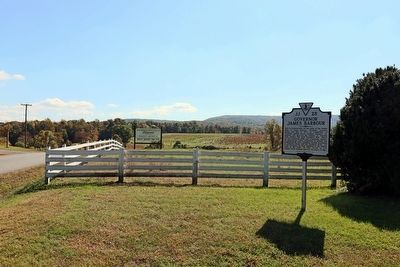
Photographed by J. J. Prats, October 15, 2015
2. Governor James Barbour Marker
Another marker is no longer nearby. Barboursville (was approx. 0.2 miles away but has been replaced with another marker now near it).
Also see . . . Wikipedia entry for James Barbour. “Barbour was in favor of the war, which he viewed as the only means by which to end British interference with the sovereignty of the U.S. As such, he began preparing the state for war. Barbour, whose father had trained the Orange militia, was aware of the inadequacies of Virginia’s militia. Accordingly, he sought appropriations for training and arming a stronger militia on February 11, 1812. Barbour urged the commanders of the militias from each county to prepare for defense of the country. He personally toured the tidewater region, which offered safe harbors for a British invasion. All of these acts earned Barbour the title of “the war governor.” On June 18, 1812, Congress declared war. So began the War of 1812. Perhaps because of his preparation for war, Barbour was reelected Governor in November 1812 without opposition. However, by 1813, Barbour was opposed by those who believed his strong policies
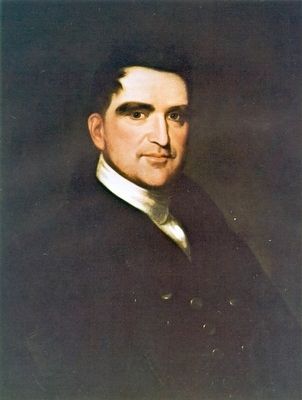
Oil on Canvas by Henry Ulke
3. James Barbour (1775–1842)
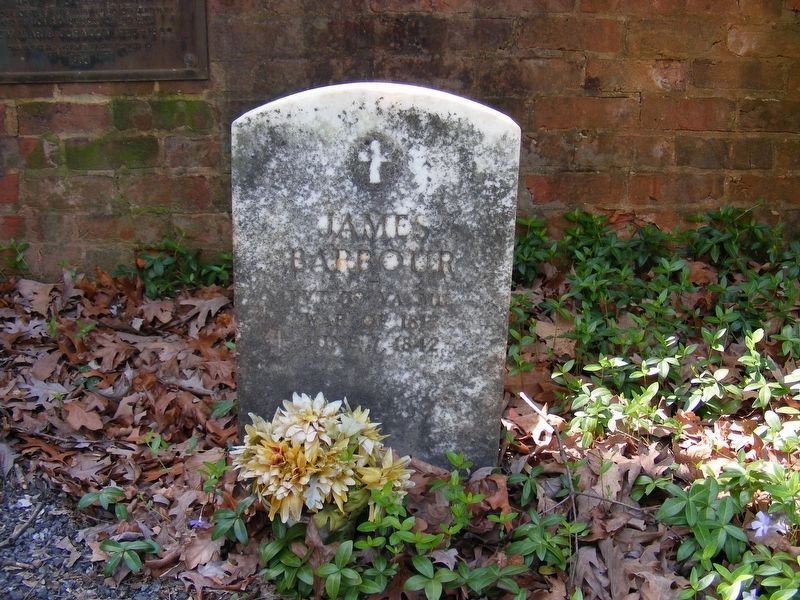
Photographed by Pete Payette, March 26, 2012
4. James Barbour Headstone
Photographed by Pete Payette, March 26, 2012
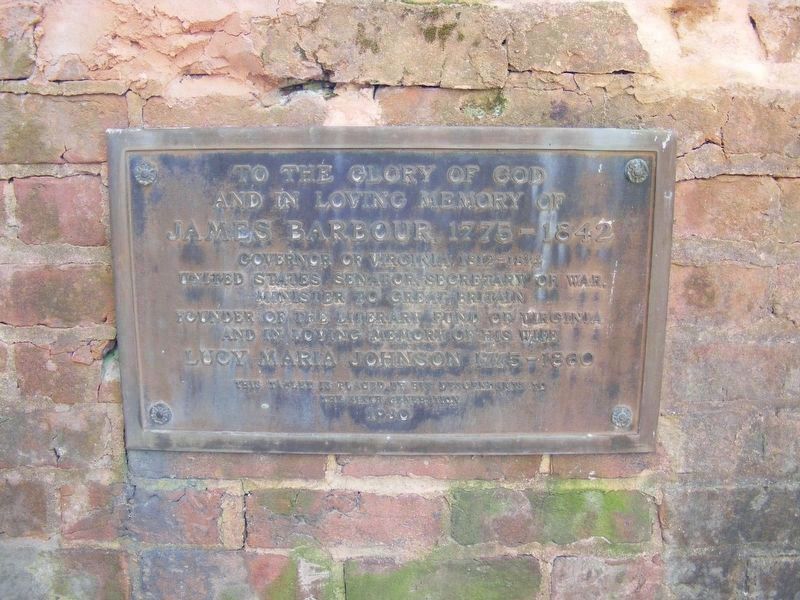
5. James Barbour Memorial Plaque
“To the glory of God and in loving memory of James Barbour, 1775-1842. Governor of Virginia 1812-1814, United States Senator, Secretary of War, Minister to Great Britain, founder of the Literary Fund of Virginia. And in loving memory of his wife, Lucy Maria Johnson 1775-1860. This tablet placed by his descendants to the sixth generation, 1930.”
Photographed by Pete Payette, March 26, 2012
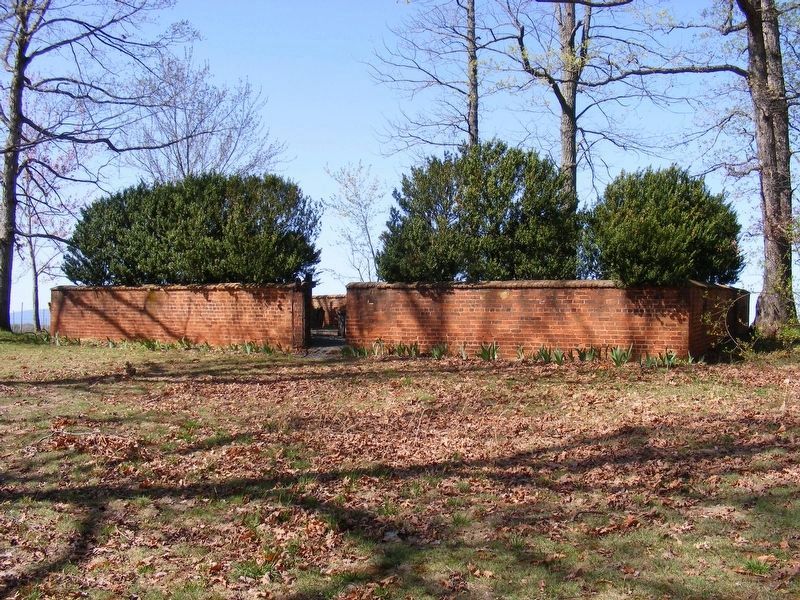
6. Barbour Family Cemetery Plot
Credits. This page was last revised on May 4, 2017. It was originally submitted on October 23, 2015, by J. J. Prats of Powell, Ohio. This page has been viewed 884 times since then and 49 times this year. Photos: 1, 2, 3. submitted on October 23, 2015, by J. J. Prats of Powell, Ohio. 4, 5, 6. submitted on May 2, 2017, by Pete Payette of Orange, Virginia.
