Troy in Rensselaer County, New York — The American Northeast (Mid-Atlantic)
Burden Iron Works
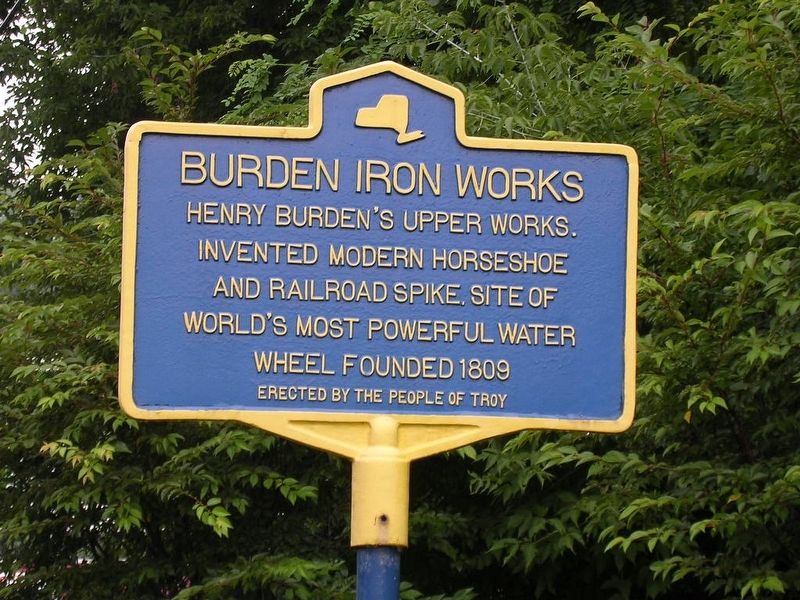
Photographed by Howard C. Ohlhous, July 28, 2006
1. Burden Iron Works Marker
Invented Modern Horseshoe
And Railroad Spike, Site Of
World's Most Powerful Water
Wheel Founded 1809
Erected by The People of Troy.
Topics. This historical marker is listed in this topic list: Industry & Commerce. A significant historical year for this entry is 1809.
Location. 42° 42.184′ N, 73° 41.786′ W. Marker is in Troy, New York, in Rensselaer County. It is on High Street (Route 378), on the right when traveling north. Touch for map. Marker is in this post office area: Troy NY 12180, United States of America. Touch for directions.

Regionally, this marker is in Upstate New York, in the Capital District, and in the Albany Metropolitan Area. It is also in the American Northeast and in the Mid-Atlantic. Globally, it is in North America, the Western Hemisphere, the Western World, and the Anglosphere. Historically, it finds itself in what was once New Netherland and also one of the original Thirteen Colonies.
Other nearby markers. At least 8 other markers are within walking distance of this marker: Mills on the Wynant's Kill (approx. 0.4 miles away); Troy Steel & Iron Co.
this page online
Also see . . .
1. Burden Iron Works, Upper (Water) Works, Burden Street & Wynants Kill, Troy, Ren. Library of Congress website entry (Submitted on July 6, 2016, by Howard C. Ohlhous of Duanesburg, New York.)
2. Burden Iron Works, Water Wheel, U.S. Route 4, Troy, Rensselaer County, NY Pho. Library of Congress website entry (Submitted on July 6, 2016, by Howard C. Ohlhous of Duanesburg, New York.)
3. Henry Burden. Find A Grave website entry (Submitted on July 6, 2016, by Howard C. Ohlhous of Duanesburg, New York.)
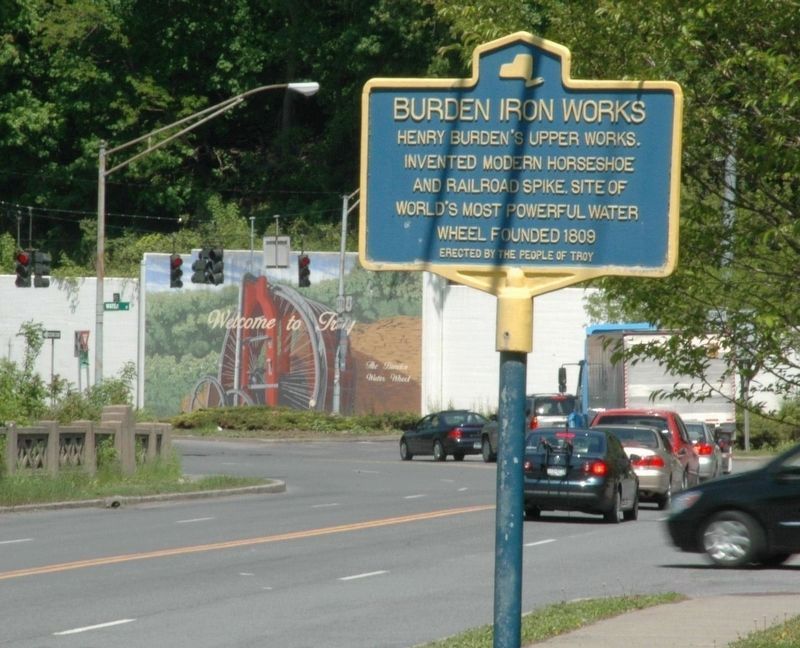
Photographed by Howard C. Ohlhous, May 5, 2010
2. Burden Iron Works Marker
At the intersection beyond the marker, where High St., Water St., Mill St., and Burden Ave all come together, there is a painting of the Burden Water Wheel on the retaining wall, along with a Welcome to Troy message.
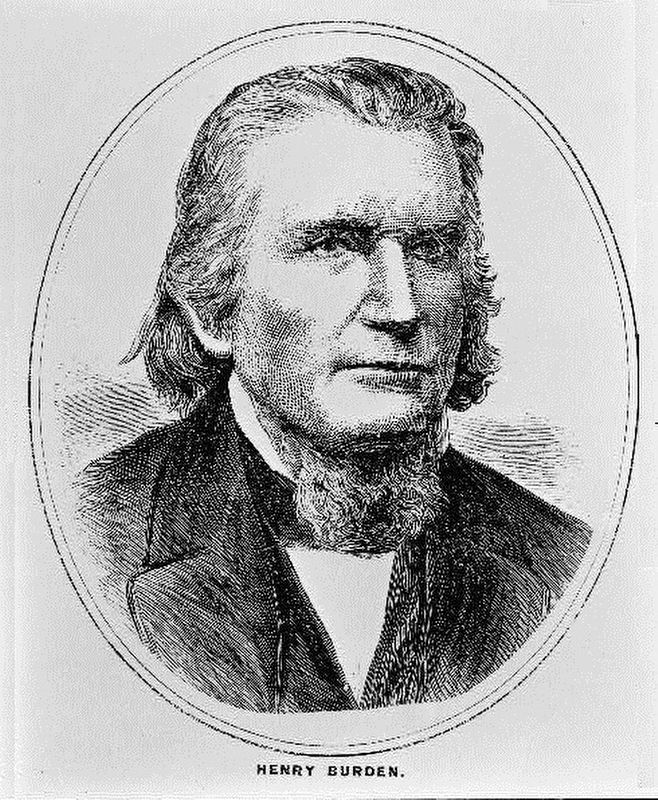
Library of Congress
3. Henry Burden (April 22, 1791 – January 19, 1871)
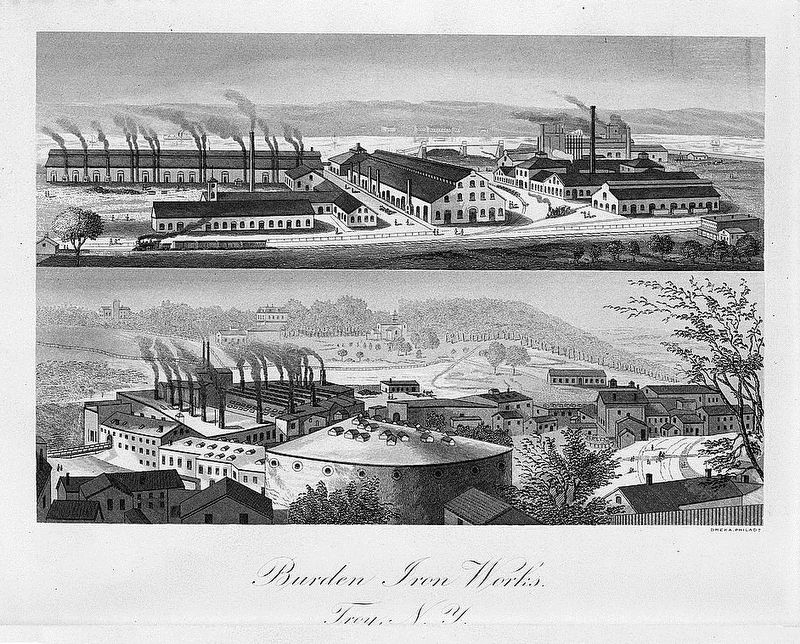
Library of Congress
4. Burden Iron Works, Troy, NY
Library of Congress
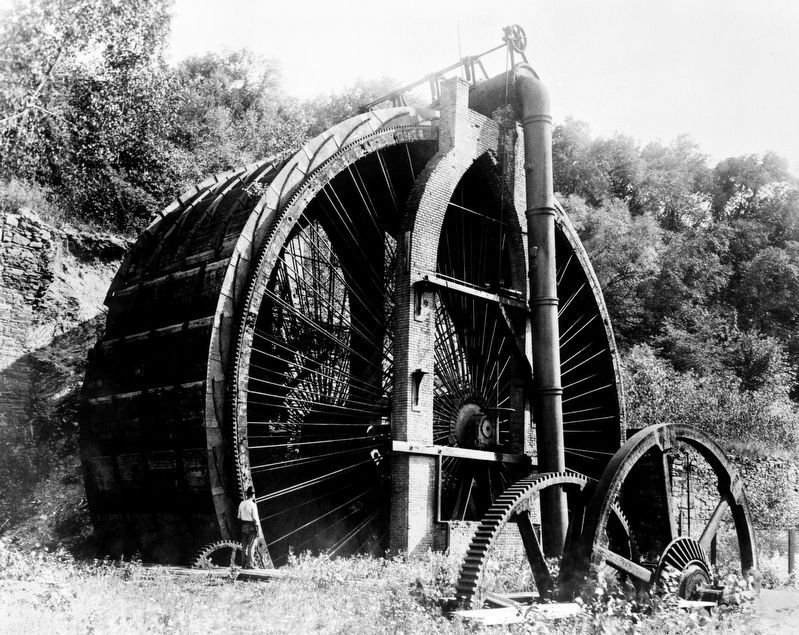
5. The Burden Water Wheel
The Burden Water Wheel, the “Niagara of Water Wheels” and the most powerful vertical water wheel in history, was designed and constructed by Burden in 1851. The wheel was sixty-two feet in diameter and twenty-two feet in breadth, and supplied by a small stream, the Wynantskill Creek. It was abandoned in the 1890s. Note the man in the photo, standing in front of the wheel for scale.
Photographed by Howard C. Ohlhous, May 2, 2007
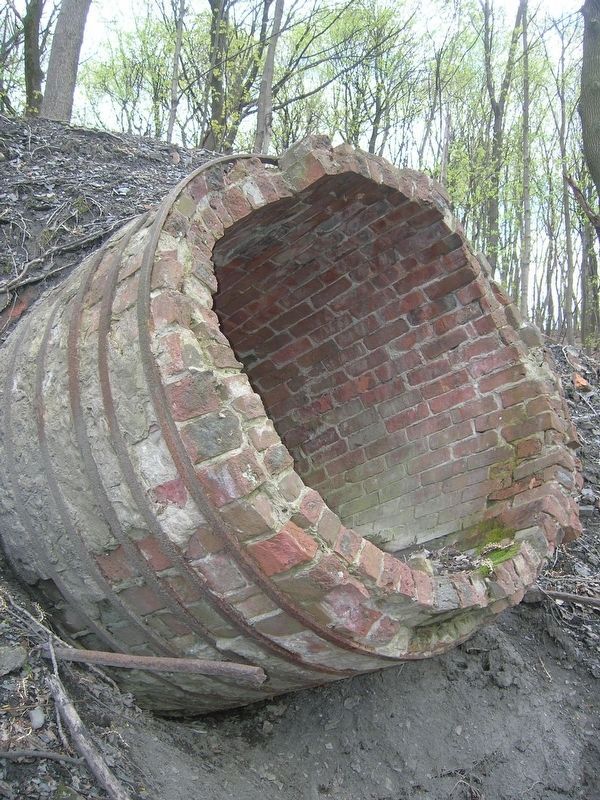
6. Burden Iron Works Site
A conduit of mortared brick with iron banding, for water at the end of the upper raceway on the site of the Burden Iron Works. The Burden Iron Works site was listed on the National Register of Historic Places as an archaeological site on November 10, 1977.
Photographed by Howard C. Ohlhous, February 4, 2010
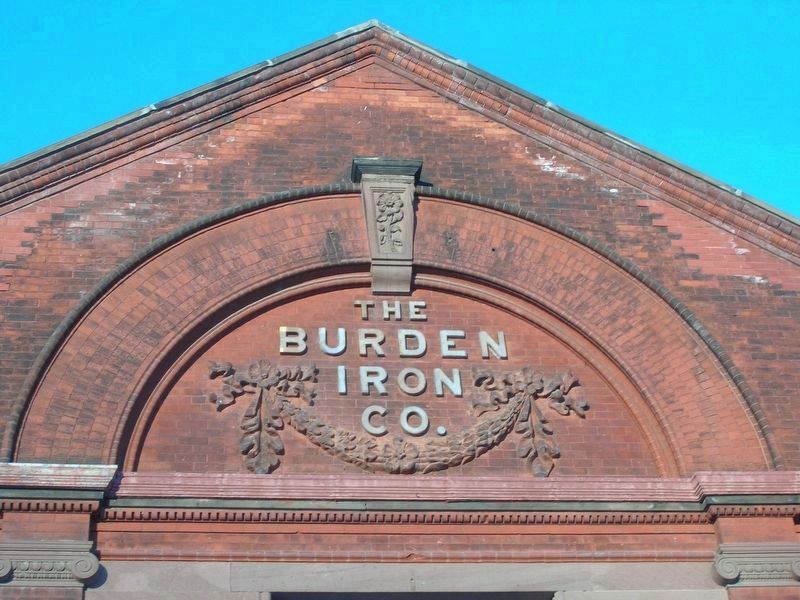
7. The Burden Iron Co.
The Burden Ironworks Office Building was listed on the National Register of Historic Places in 1972.
Photographed by Howard C. Ohlhous, January 14, 2009
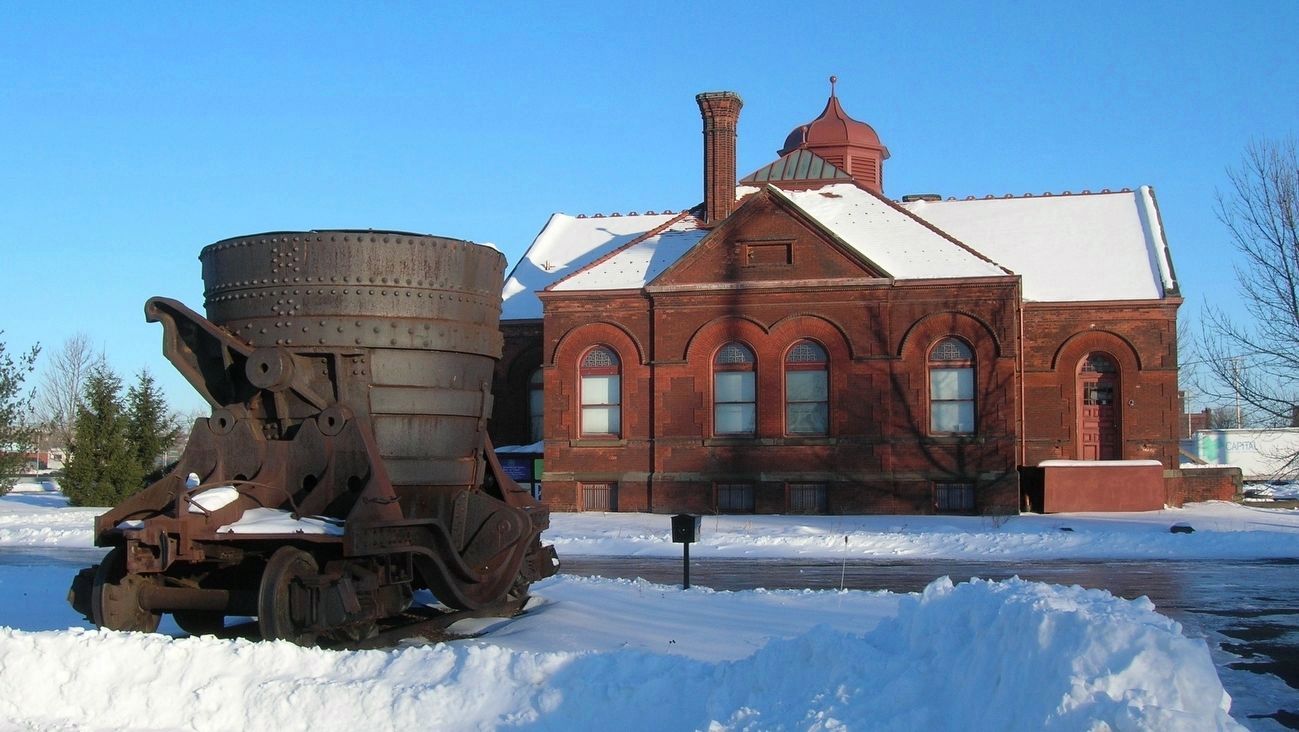
8. Burden Iron Works Office Building
The Burden Iron Works Museum, on Polk Street in Troy, is in a March 16, 1972 National Register listed building. Constructed between 1881 and 1882 in the Romanesque Revival style, the distinguished former office of the Burden Iron Works contains an extensive exhibit on Troy’s industrial history throughout the 19th century.
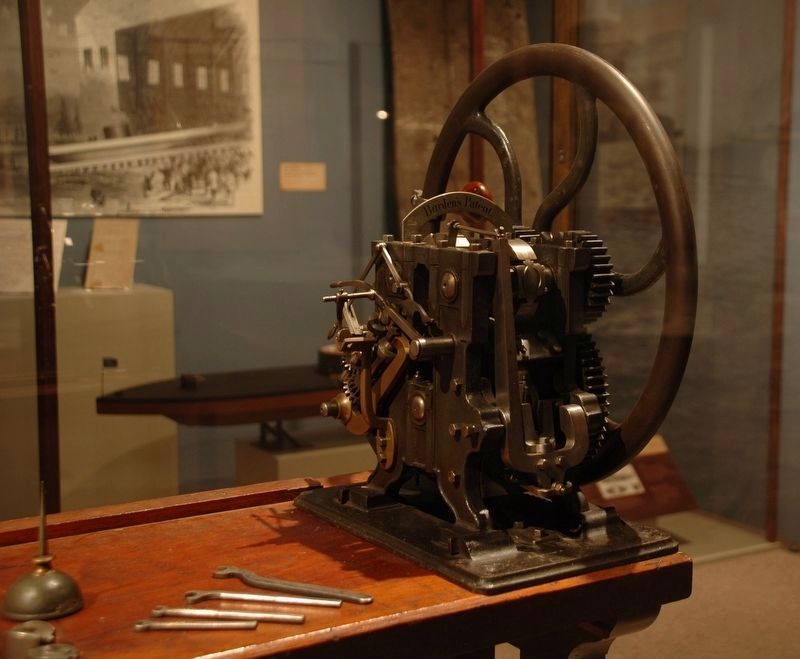
Photographed by Howard C. Ohlhous, January 27, 2013
9. Burden Horseshoe Machine Model
This model of Henry Burden's horseshoe machine once made miniature horseshoes. It was constructed for the United States Centennial Exposition in Philadelphia in 1876. Burden's full scale horseshoe machine was capable of producing sixty horseshoes per minute, or up to fifty million per year. The Burden Iron Works manufactured nearly all of the horseshoes used by the Union Army during the Civil War. The model is seen on display at the New York State Museum in Albany.
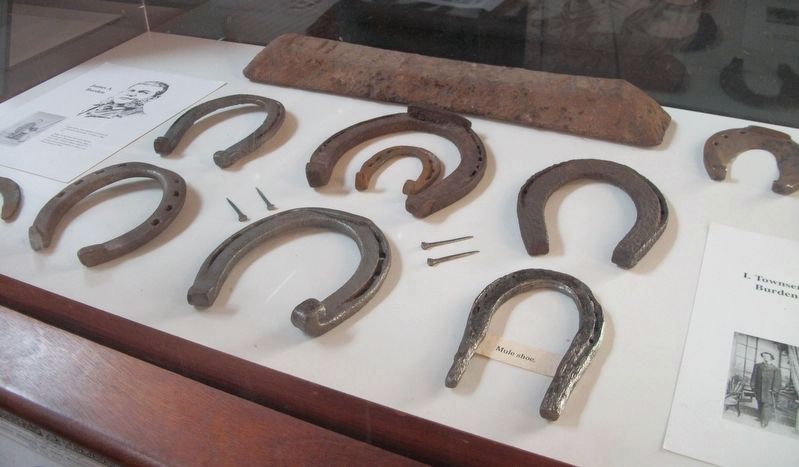
Photographed by Howard C. Ohlhous, August 2, 2011
10. Horse and Mule Shoes
A display of horse and mule shoes manufactured by the Burden Iron Works, seen on display at the The Burden Iron Works Museum in Troy.
Credits. This page was last revised on August 26, 2021. It was originally submitted on July 6, 2016, by Howard C. Ohlhous of Duanesburg, New York. This page has been viewed 2,206 times since then and 106 times this year. Photos: 1, 2, 3, 4, 5, 6, 7, 8. submitted on July 6, 2016, by Howard C. Ohlhous of Duanesburg, New York. 9, 10. submitted on July 9, 2016, by Howard C. Ohlhous of Duanesburg, New York. • Bill Pfingsten was the editor who published this page.
