Gershwin Family Residence
1925-1931
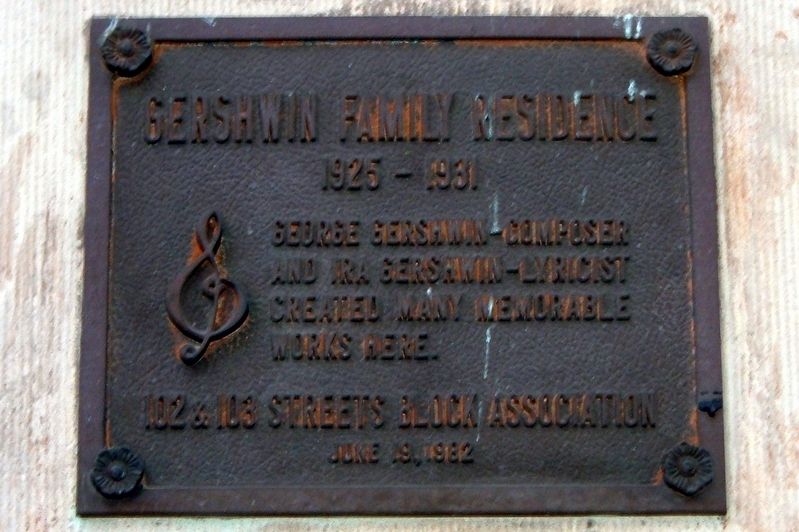
102 and 103 Streets Block Association
June 19, 1982
Erected 1982 by 102 and 103 Streets Block Association.
Topics. This historical marker is listed in these topic lists: Arts, Letters, Music • Entertainment.
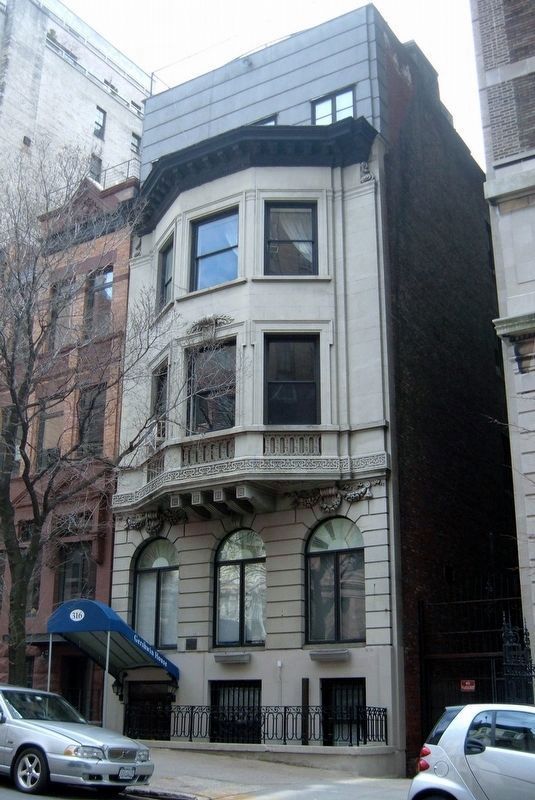
Location. 40° 48.007′ N, 73° 58.255′ W. Marker is in Manhattan, New York, in New York County. It is in Bloomingdale. It is on West 103rd Street when traveling west. Touch for map. Marker is at or near this postal address: 316 West 103rd Street, New York NY 10025, United States of America. Touch for directions.
Regionally, this marker is in New York City. It is also in the American Northeast, in the Mid-Atlantic, and on the Eastern Seaboard. Globally, it is in the North Atlantic Region, North America, the Western Hemisphere, the Western World, and the Anglosphere. Historically, it finds itself in what was once New Netherland and also one of the original Thirteen Colonies.
Other nearby markers. At least 8 other markers are within walking distance of this
this page online
Also see . . .
1. George & Ira Gershwin. (Submitted on August 29, 2016, by Bill Pfingsten of Bel Air, Maryland.)
2. The Gershwin House -- No. 316 West 103rd Street. "Daytonian in Manhattan" entry. (Submitted on April 10, 2020, by Larry Gertner of New York, New York.)
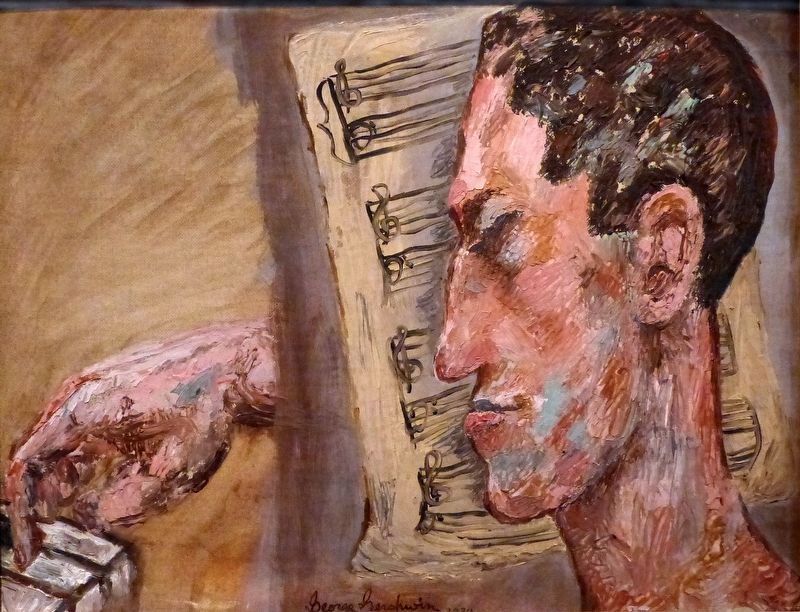
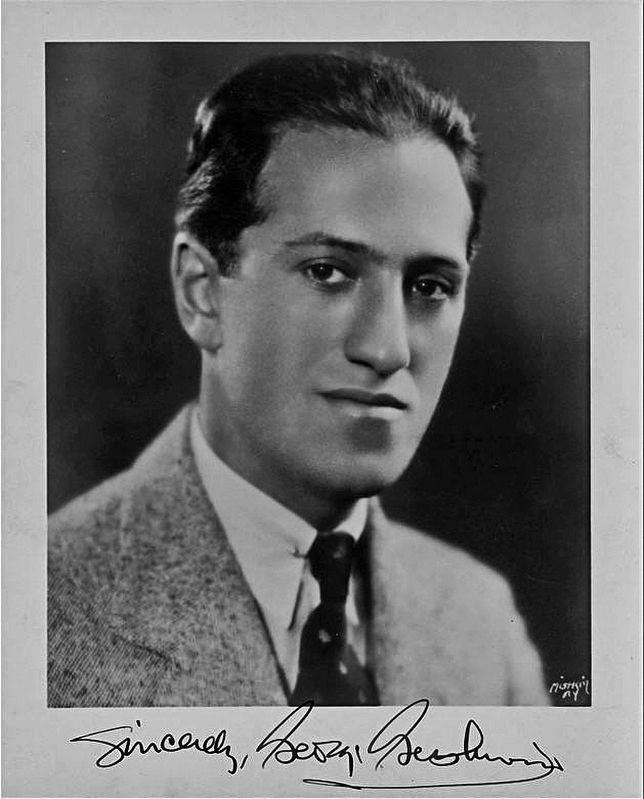
“In 1916 Jacob Gershvin, born of Russian Jewish immigrants, published, on Sophie Tucker's recommendation, 'When You Want 'Em, You Can't Get'Em When You've Got 'Em, You Don't Want 'Em,' earning him five dollars. From such inauspicious beginnings came George Gershwin, one of the great American composers of the twentieth century. Initially drawn to stage musicals, Gershwin had several Broadway hits in the 1920s, most notably Lady Be Good with his brother Ira. His style evolved from hits like 'Swanee' to sophisticated ballads like 'Someone to Watch Over Me' and 'The Man I Love.' Gershwin experimented with placing jazz in a symphonic form with Rhapsody in Blue, opening to mixed reviews but thrilling audiences since its debut in 1924. His 1928 An American in Paris remains a classic. Porgy and Bess (1935), 'an American folk opera,' broke new ground in musical and social terms. Gershwin's music remains immensely popular,a major fixture of the American songbook.” — National Portrait Gallery
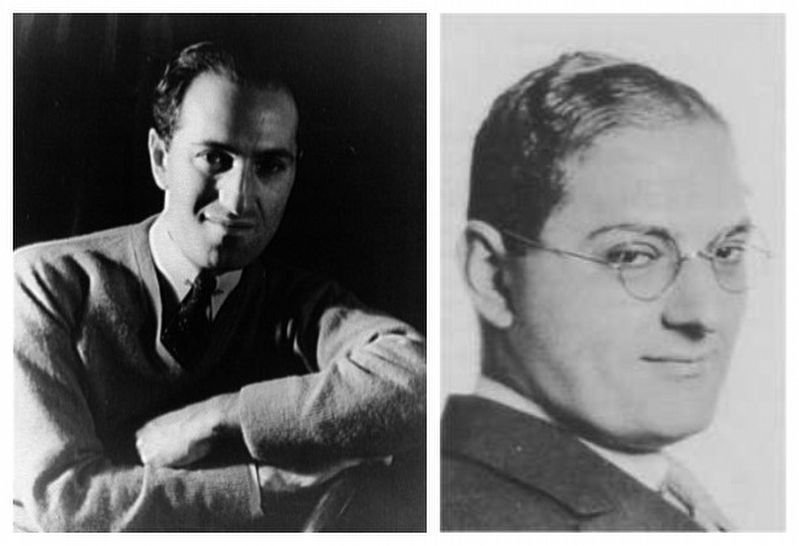
Credits. This page was last revised on January 31, 2023. It was originally submitted on August 28, 2016, by Larry Gertner of New York, New York. This page has been viewed 3,540 times since then and 159 times this year. It was the Marker of the Week February 12, 2017. Photos: 1, 2. submitted on August 28, 2016, by Larry Gertner of New York, New York. 3. submitted on February 12, 2017, by Allen C. Browne of Silver Spring, Maryland. 4. submitted on August 29, 2016, by Mark Hilton of Montgomery, Alabama. 5. submitted on February 11, 2017, by J. J. Prats of Powell, Ohio. • Bill Pfingsten was the editor who published this page.
