Abbeville in Abbeville County, South Carolina — The American South (South Atlantic)
Major Thomas Dry Howie
Commander, 2nd Battalion, 116th Infantry, 29th Division U.S. Army
| — | 1908–1944 | — |
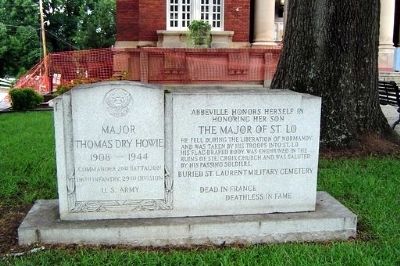
Photographed by Thomas Colones, March 6, 2004
1. Major Thomas Dry Howie Marker
honoring her son
The Major of St. Lo.
Buried in St. Lauren Military Cemetery
Dead in France • Deathless in Fame
Topics. This historical marker is listed in this topic list: War, World II.
Location. 34° 10.668′ N, 82° 22.728′ W. Marker is in Abbeville, South Carolina, in Abbeville County. It is on Court Square (Main Street) (Business Route 28), on the right when traveling north. Touch for map. Marker is in this post office area: Abbeville SC 29620, United States of America. Touch for directions.

Regionally, this marker is in Upstate. It is also in the American South and specifically in the Deep South. Globally, it is in North America, the Western Hemisphere, the Western World, and the Anglosphere. Historically, it finds itself in what was once the territory of the Mississippian Culture, one of the original Thirteen Colonies, one of
this page online
Other nearby markers. At least 10 other markers are within walking distance of this marker: The Law Offices of John C. Calhoun (within shouting distance of this marker); "Big Bob" (within shouting distance of this marker); Abbeville Square (within shouting distance of this marker); Abbeville County Confederate Monument (within shouting distance of this marker); The Bricks of Abbeville Town Square (within shouting distance of this marker); Abbeville County Courthouse (1908) (within shouting distance of this marker); The Lynching of Anthony Crawford / Racial Violence in South Carolina (within shouting distance of this marker); Abbeville Opera House (1908) (within shouting distance of this marker); Old Bank Building (ca. 1865) (within shouting distance of this marker); Humane Society Alliance Fountain (1912) (within shouting distance of this marker). Touch for a list and map of all markers in Abbeville.
Related markers. Click here for a list of markers that are related to this marker. Major Howie’s birthplace, and the place of his death.
Also see . . .
1. Thomas D. Howie.
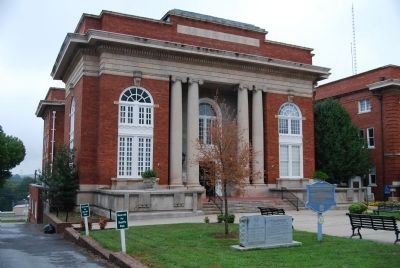
Photographed by Brian Scott, September 27, 2008
2. Major Thomas Dry Howie Marker
Abbeville County Courthouse stands in the background.
Thomas Dry Howie (April 12, 1908–July 17, 1944) was an American army officer, killed during the Battle of Normandy during World War II, while trying to capture the French town of Saint-Lô. (Submitted on September 27, 2008, by Brian Scott of Anderson, South Carolina.)
2. Thomas Dry Howie. South Carolina Encyclopedia website entry (Submitted on February 21, 2023, by Larry Gertner of New York, New York.)
3. Major of Saint Lo inducted into South Carolina Hall of Fame. The Citadel website entry:
Nearly 60 years after a German mortar blast ended his life, the man known as Major of Saint Lo was inducted into the South Carolina Hall of Fame. (Submitted on November 15, 2008, by Brian Scott of Anderson, South Carolina.)
Additional commentary.
1. Incident At Saint Lo
The following poem by war poet Joseph Auslander (1898-1965) appeared in Life Magazine, September 18, 1944.
Through St. Lo's gates...He told the lads he led
That they would be the first at St. Lo's fall --
But that was yesterday -- and he was dead:
Some sniper put a bullet
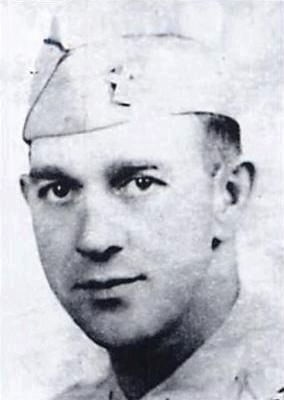
The Citadel and the South Carolina Corps of Cadets by William H. Buckley
3. Maj. Thomas D. Howie
1908–1944
1908–1944
And he slumped in a meadow near a wall
And there was nothing further to be said;
Nothing to say -- nothing to say at all.
Ride soldier in your dusty jeep,
Grander than Caesar's chariot! O ride
Into the town they took for you to keep,
Dead captain of their glory and their pride!
Ride through our hearts forever, through our tears
More splendid than the hero hedged with spears!
— Submitted August 30, 2008, by Brian Scott of Anderson, South Carolina.
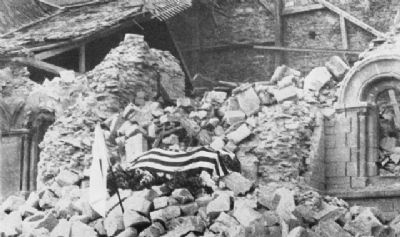
1944
4. Howie's Flag Drapped Coffin on the Rubble of St. Croix Church
Credits. This page was last revised on February 21, 2023. It was originally submitted on July 30, 2008, by Thomas Colones of Spartanburg, South Carolina. This page has been viewed 3,530 times since then and 47 times this year. Photos: 1. submitted on July 30, 2008, by Thomas Colones of Spartanburg, South Carolina. 2. submitted on September 27, 2008, by Brian Scott of Anderson, South Carolina. 3. submitted on November 14, 2009, by Brian Scott of Anderson, South Carolina. 4. submitted on November 15, 2008, by Brian Scott of Anderson, South Carolina. • J. J. Prats was the editor who published this page.
