Anderson in Anderson County, South Carolina — The American South (South Atlantic)
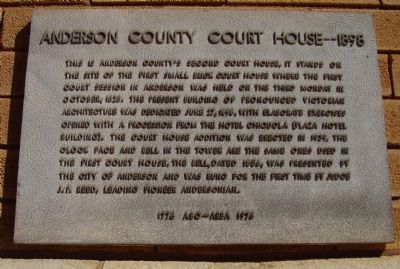
Anderson County Court House -- 1898
Photographed by Stanley and Terrie Howard, 2009
1. Anderson County Court House -- 1898 Marker
This is Anderson County's second court house. It stands on the site of the first small brick court house where the first court session in Anderson was held on the third Monday in October, 1820. The present building of pronounced Victorian architecture was dedicated June 27, 1898, with elaborate explosives opened with a procession from the Hotel Chiquola (Plaza Hotel Building). The Court House addition was erected in 1939. The clock face and bell in the tower are the same ones used in the first court house. The bell, dated 1856, was presented by the City of Anderson and was rung for the first time by Judge J.P. Reed, leading pioneer Andersonian.
Topics. This historical marker is listed in this topic list: Government & Politics. A significant historical date for this entry is June 27, 1957.
Location. 34° 30.191′ N, 82° 39.011′ W. Marker is in Anderson, South Carolina, in Anderson County. It is on Main Street. Marker is located on the front side of the old county court house. Touch for map. Marker is in this post office area: Anderson SC 29621, United States of America. Touch for directions.

Regionally,
this page online
Other nearby markers. At least 10 other markers are within walking distance of this marker: William Church Whitner (a few steps from this marker); Anderson County Confederate Monument (a few steps from this marker); Anderson County Law Enforcement Officers Memorial (a few steps from this marker); Anderson: "The Electric City" (a few steps from this marker); The Four Way Test (a few steps from this marker); Sullivan Hardware Co. -- 1875 (within shouting distance of this marker); Fant's Book Store -- 1851 (within shouting distance of this marker); Bank of Anderson Building - ca. 1891 (about 300 feet away, measured in a direct line); Blue Ridge Railroad Passenger Station -- c. 1913 (about 400
Photographed by Brian Scott, August 23, 2008
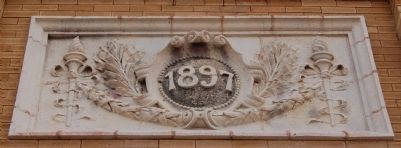
2. Anderson County Courthouse Decorative Stone -
About 1/2 Way Up theTower
About 1/2 Way Up theTower
Also see . . .
1. Anderson County, South Carolina. Anderson County South Carolina - Named for Revolutionary War leader Robert Anderson, you can find what you're looking for in Anderson County: a mild climate with four distinct seasons, a vast lake and a thriving economic and cultural community. (Submitted on August 24, 2008, by Brian Scott of Anderson, South Carolina.)
2. Anderson County, South Carolina. Anderson County is a county located in the U.S. state of South Carolina. (Submitted on August 24, 2008, by Brian Scott of Anderson, South Carolina.)
3. Wilkes County Courthouse (Washington, Georgia). After completing the Anderson Courthouse, Frank Milburn was hired by Wilkes County, Georgia to build theirs. The similarities between the two courthouses are striking. (Submitted on August 24, 2008, by Brian Scott of Anderson, South Carolina.)
4. Anderson Downtown Historic District. The Anderson Downtown Historic District is primarily significant as a well-preserved late nineteenth/early
Photographed by Stanley and Terrie Howard, 2009
3. Anderson County Court House -- 1898 Marker
Additional commentary.
1. Anderson County Court House 1828 - 1897
By an act of the South Carolina legislature signed on Dec. 20, 1826, Pendleton District was divided into two counties: Anderson and Pickens, named for the popular Revolutionary soldiers, Col. Robert Anderson and General Andrew Pickens, who had received military grants in the region at the time it was opened for settlement. In October 1828, these counties became circuit court districts. The new courthouse which had been contracted for Pendleton was abandoned and the money divided between Pickens and Anderson for their courthouses. Since the town of Pendleton fell within the limits of Anderson District, the records of Pendleton were delivered to the new county seat - the village of Anderson - in 1827.
The commissioners named to select a centrally located site for the new Anderson District courthouse were James Harrison, Robert B. Norris, Matthew Gambrell, John C. Griffin, and William Sherard. The story goes that, unable to choose between a site near
Photographed by Brian Scott, August 23, 2008
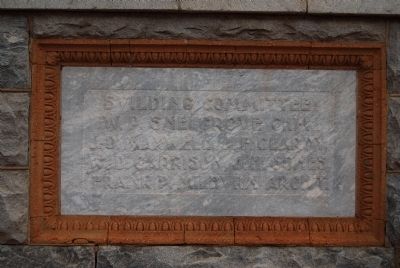
4. Anderson County Courthouse Building Committee
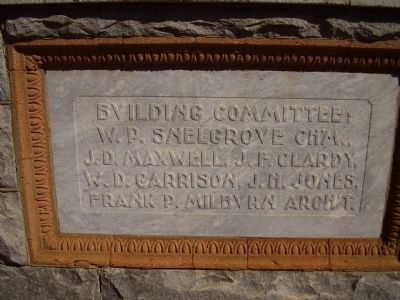
J.P. Snelgrove Chm.
J.D. Maxwell, J.F. Clardy
W.D. Garrison, J.H. Jones
Frank P. Milburn Archt.
The commissioners brought one hundred and thirty acres and planned the town of Anderson around a square for business with three blocks in each direction within. The four boundary streets, thinking this would give the new town plenty of room for growth. On the square a brick courthouse was erected by Robert Wilson, a brick mason of Greenville, as subcontractor from Benjamin Denham. The first county officers were J.T. Lewis, clerk of court; George Foster, sheriff; John Harris, ordinary; Joseph Shanklin, commissioner in equity; James Donthit, tax collector. The first court was held October 15, 1828, Judge John S. Richardson presiding." (Source: Anderson County Sketches, The Anderson County Tricentennial
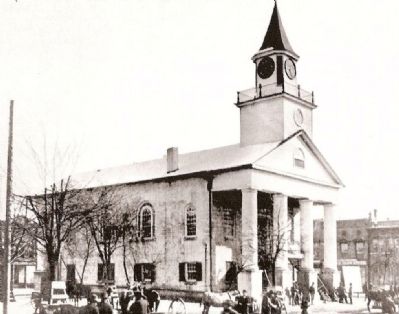
Photographed by South Carolina Postcards Volume IX: Anderson County, circa 1890
5. First Anderson County Court House
The brick courthouse, centered in the public square, was erected in 1826. The exterior of the brick structure was plastered in 1851 and in 1852 a portico with four large columns was added to each end along with a belfrey and bell to the western end at a cost of $2,500. A clock was placed in its steeple in 1877. The building was razed in 1897 and the second courthouse (the subject of this entry) was erected on the same site in 1898.
— Submitted August 24, 2008, by Brian Scott of Anderson, South Carolina.
2. Anderson County Court House 1898
In 1853, the first courthouse was remodeled at a cost of $2,500. 'Four large columns were erected on a portico at each end, giving it a decidedly Grecian air. There were two curving flights of ornamental iron stairs at both entrances from the ground to the second story, which was the courthouse. Doors beneath the stairs opened into the first floor which contained offices. The windows were large and arched. Then the crowning glory was added, a bell...'
A move for a new courthouse took form in 1883, when the county board of commissioners was authorized to sell the old building and lot at their discretion and to invest the proceeds in a suitable lot and building. Apparently the matter rested until 1896, when a one-mill property tax was authorized for a six-year period to finance a new building. In 1897 the matter was referred to the voters, and as a result, the old building was demolished and the present courthouse was erected on the same site.
Dedication ceremonies were held on June 27, 1898,
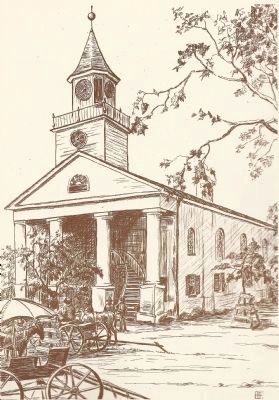
Photographed by Elizabeth Besler Fuller, Anderson County Sketches, 1969
6. Anderson County Court House
1828-1897
1828-1897
— Submitted January 9, 2009, by Brian Scott of Anderson, South Carolina.
3. Anderson County Courthouse
The third Anderson County Courthouse, this Eclectic style structure was constructed in 1898. Features of this three story building include curvilinear gables, decorative brick work, a central clock tower, arched windows with stone sills, a raised basement,
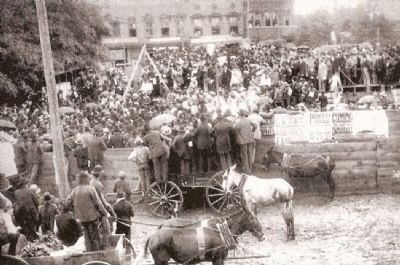
Photographed by South Carolina Postcards Volume IX: Anderson County, 1897
7. Laying of Courthouse Corner Stone
Since the same site was used for each courthouse, the previous one had to be razed and the site cleared before the next one could be erected. This 1897 view documents the ceremony assembled to observe the placing of the corner stone for the 1898 courthouse.
— Submitted August 1, 2009, by Brian Scott of Anderson, South Carolina.
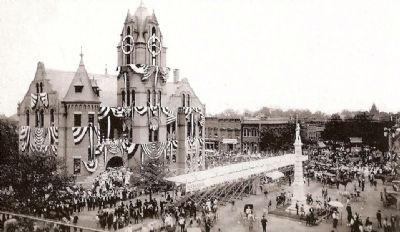
Photographed by South Carolina Postcards Volume IX: Anderson County, 1906
8. Anderson County Court House During "Gala Week"
The Gala Week event shown above was organized by city officials to attract new trade to Anderson. The architect of this new courthouse was Frank P. Milburn, who bought second-hand plans from Winston-Salem for $50. The building cost $26,000 and was dedicated on June 27, 1898.
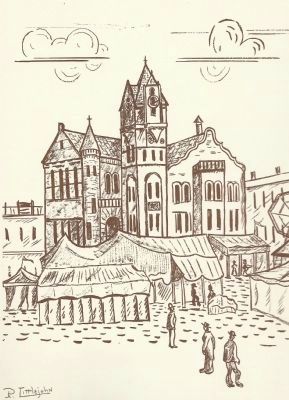
Photographed by Roy Littlejohn, Anderson County Sketches, 1969
9. Anderson County Court House
1898-1990
1898-1990
Sketch made from 1901 photograph of the Riddle Southern Carnival playing in the Square.
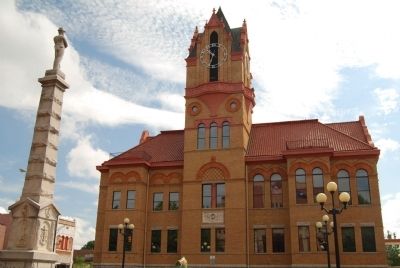
Photographed by Brian Scott, August 23, 2008
10. Second Anderson County Courthouse -
West (Front) Facade
West (Front) Facade
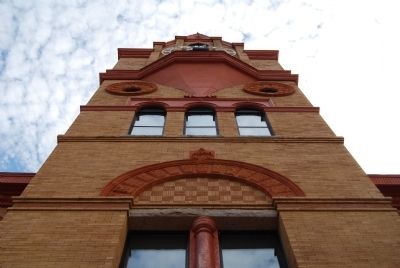
Photographed by Brian Scott, August 23, 2008
11. Second Anderson County Courthouse Tower
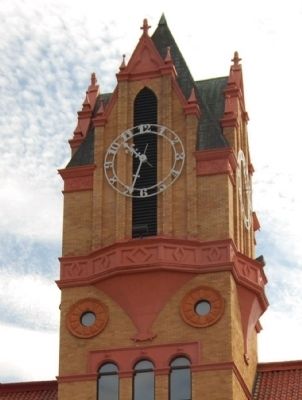
Photographed by Brian Scott, August 23, 2008
12. Second Anderson County Courthouse Tower
The tower has long been a symbol of Anderson County.
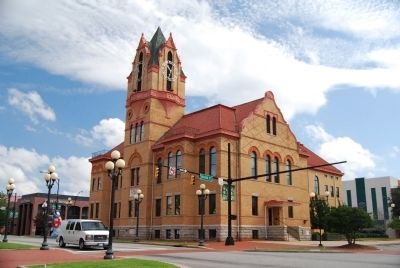
Photographed by Brian Scott, August 23, 2008
13. Second Anderson County Court House -
Southwest Elevation
Southwest Elevation
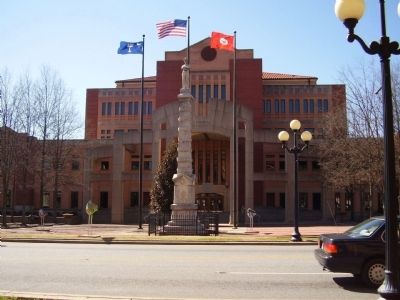
Photographed by Stanley and Terrie Howard, 2009
14. Third Anderson County Court House -
East (Front) Facade
East (Front) Facade
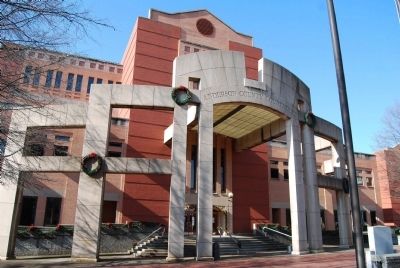
Photographed by Brian Scott, December 25, 2008
15. Third Anderson County Courthouse -
Built in the Late 1980s
Built in the Late 1980s
Anderson County's third courthouse was completed in the late 1980s. It faces the second courthouse, across Main Street. The Anderson County Confederate Monument stands between the two structures.
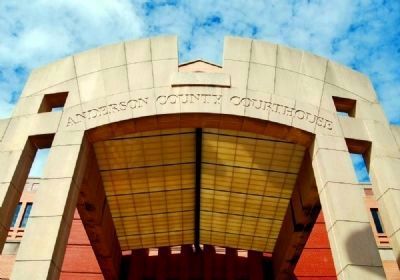
Photographed by Brian Scott, August 23, 2008
16. Third Anderson County Court House -
East (Front) Entrance
East (Front) Entrance
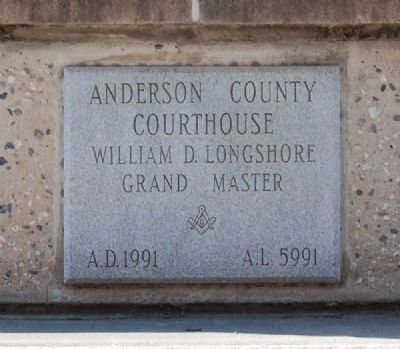
Photographed by Brian Scott, July 25, 2009
17. Anderson County Court House Cornerstone -
Located on Northwest Corner
Located on Northwest Corner
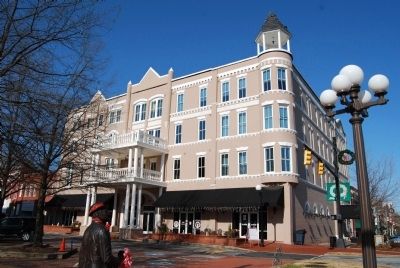
Photographed by Brian Scott, December 25, 2008
18. Hotel Chiquola -
Built in 1889, Restored 2007-2008
Built in 1889, Restored 2007-2008
Credits. This page was last revised on January 20, 2026. It was originally submitted on August 24, 2008, by Brian Scott of Anderson, South Carolina. This page has been viewed 6,346 times since then and 141 times this year. Photos: 1. submitted on March 6, 2009, by Stanley and Terrie Howard of Greer, South Carolina. 2. submitted on August 24, 2008, by Brian Scott of Anderson, South Carolina. 3. submitted on March 6, 2009, by Stanley and Terrie Howard of Greer, South Carolina. 4. submitted on August 24, 2008, by Brian Scott of Anderson, South Carolina. 5. submitted on June 15, 2009, by Brian Scott of Anderson, South Carolina. 6. submitted on January 30, 2012, by Brian Scott of Anderson, South Carolina. 7, 8. submitted on June 15, 2009, by Brian Scott of Anderson, South Carolina. 9. submitted on January 30, 2012, by Brian Scott of Anderson, South Carolina. 10, 11, 12, 13. submitted on August 24, 2008, by Brian Scott of Anderson, South Carolina. 14. submitted on March 6, 2009, by Stanley and Terrie Howard of Greer, South Carolina. 15. submitted on January 9, 2009, by Brian Scott of Anderson, South Carolina. 16. submitted on September 15, 2010, by Brian Scott of Anderson, South Carolina. 17. submitted on August 1, 2009, by Brian Scott of Anderson, South Carolina. 18. submitted on January 9, 2009, by Brian Scott of Anderson, South Carolina. • Kevin W. was the editor who published this page.
