Fort Payne in DeKalb County, Alabama — The American South (East South Central)
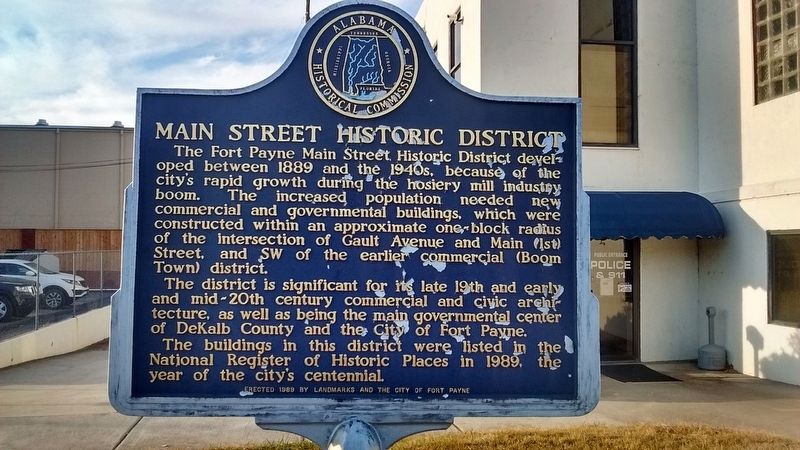
Main Street Historic District
Photographed by Tom Bosse, November 25, 2016
1. Main Street Historic District Marker
The district is significant for its late 19th and early and mid-20th century commercial and civic architecture, as well as being the main governmental center of DeKalb County and the city of Fort Payne.
The buildings in this district were listed in the National Register of Historic Places in 1989, the year of the city's centennial.
Erected 1989 by Landmarks and the City of Fort Payne.
Topics. This historical marker is listed in this topic list: Notable Places. A significant historical year for this entry is 1889.
Location. 34° 26.408′ N, 85° 43.414′ W. Marker is in Fort Payne, Alabama, in DeKalb County. It is at the intersection of Gault Avenue South (U.S. 11) and 2nd Street SW, on the left when traveling north
this page online

Regionally, this marker is in North Alabama. It is also in the American South, specifically in the Deep South, in Appalachia, and specifically in Southern Appalachia. Globally, it is in North America, a Gulf of Mexico state, the Western Hemisphere, the Western World, and the Anglosphere. Historically, it finds itself in what was once the original Cherokee Nation, the territory of the Mississippian Culture, one of the Confederate States of America, and the Antebellum South.
Other nearby markers. At least 8 other markers are within walking distance of this marker: Cherokee Indian Removal (about 600 feet away, measured in a direct line); Fort Payne Cabin Historic Site (about 800 feet away); Fort Payne Residential Historic District (approx. 0.2 miles away); Alabama (approx. 0.3 miles away); Whittler's Corner (approx. 0.3 miles away); Confederate Monument (approx. 0.4 miles away); Fort Payne Opera House (approx. 0.4 miles away); Sequoyah | Socks | Song | Scenery
Photographed by Tom Bosse, November 25, 2016
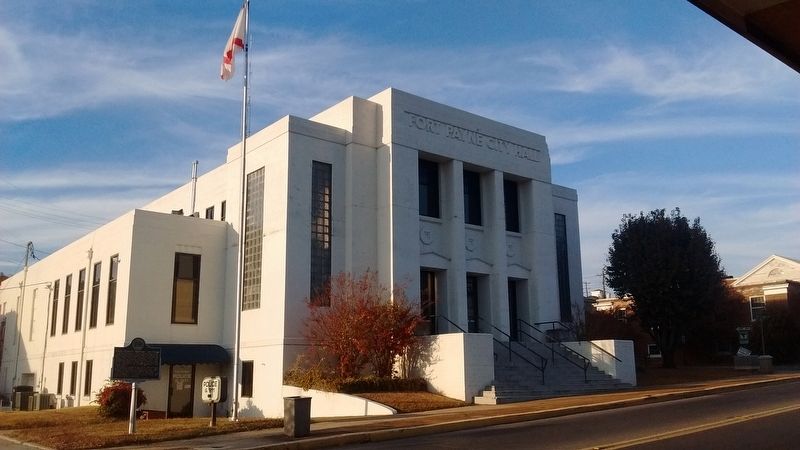
2. Main Street Historic District Marker
Other markers no longer nearby. Sequoyah (was approx. 0.3 miles away but has been confirmed missing); Wills Town Mission (was approx. 0.3 miles away but has been confirmed missing); Fort Payne’s Fort (was approx. 0.3 miles away but has been confirmed missing); Boom Town Historic District (was approx. 0.4 miles away but has been confirmed missing).
Photographed by Tom Bosse, November 25, 2016
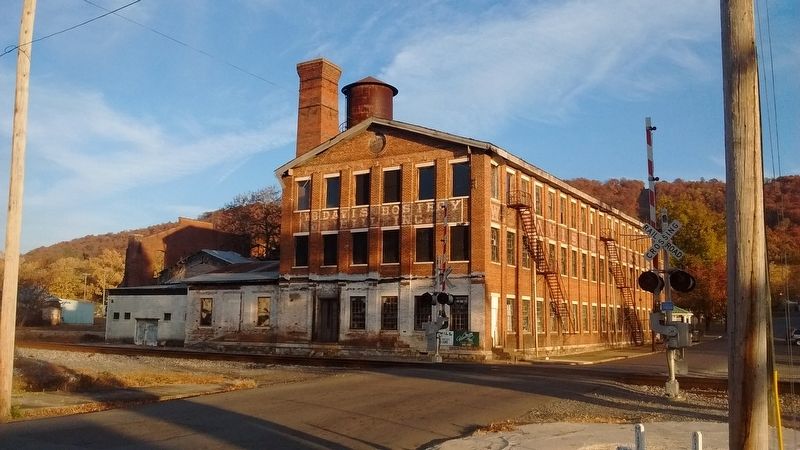
3. Hosiery Mill in Fort Payne, Alabama
Credits. This page was last revised on November 28, 2016. It was originally submitted on November 27, 2016, by Tom Bosse of Jefferson City, Tennessee. This page has been viewed 1,003 times since then and 58 times this year. Photos: 1, 2, 3. submitted on November 27, 2016, by Tom Bosse of Jefferson City, Tennessee. • Bernard Fisher was the editor who published this page.
