Near Calistoga in Sonoma County, California — The American West (Pacific Coastal)
Petrified Forest
Photographed by Barry Swackhamer, March 29, 2017
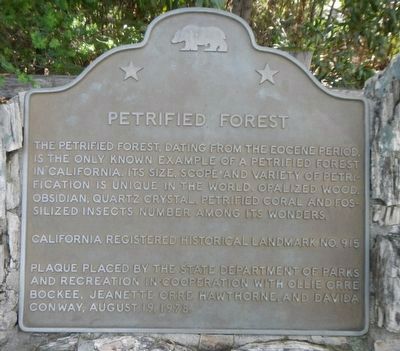
1. Petrified Forest Marker
Erected 1979 by California Department of Parks and Recreation in cooperation with Ollie Orre Bockee, Jeanette Orre Hawthorne, and David A Conway. (Marker Number 915.)
Topics and series. This historical marker is listed in this topic list: Paleontology. In addition, it is included in the California Historical Landmarks series list.
Location. 38° 33.342′ N, 122° 38.328′ W. Marker is near Calistoga, California, in Sonoma County. It can be reached from Petrified Forest Road near Porter Creek Road, on the left when traveling east. Touch for map. Marker is at or near this postal address: 4100 Petrified Forest Road, Calistoga CA 94515, United States of America. Touch for directions.

Regionally, this marker is in Wine Country, in the San Francisco Bay Area, in the North Coast, and
this page online
Other nearby markers. At least 8 other markers are within 4 miles of this marker, measured as the crow flies: A different marker also named Petrified Forest (within shouting distance of this marker); To Commemorate..."Petrified Charlie" (within shouting distance of this marker); Robert Louis Stevenson Tree (about 300 feet away, measured in a direct line); Pioneer Cemetery (approx. 3 miles away); Site of John York’s Cabin (approx. 3.4 miles away); Old Faithful Steam Well (approx. 3.4 miles away); 1947 Ford Truck: Workhorse of Yesteryear (approx. 3½ miles away); Old Faithful Geyser of California (approx. 3½ miles away). Touch for a list and map of all markers in Calistoga.
Also see . . . Petrified Forest. The petrified trees at this site remained buried for 3.4 million years until, in 1870, an intrepid Swedish homesteader by the name of Charles Evans (“Petrified Charley”), while raking his pasture, discovered the top of an old hollow log that was as hard as stone. His initial curiosity led a number of scientists to visit the property in order to learn more about these natural wonders in California.
Photographed by Barry Swackhamer, March 29, 2017
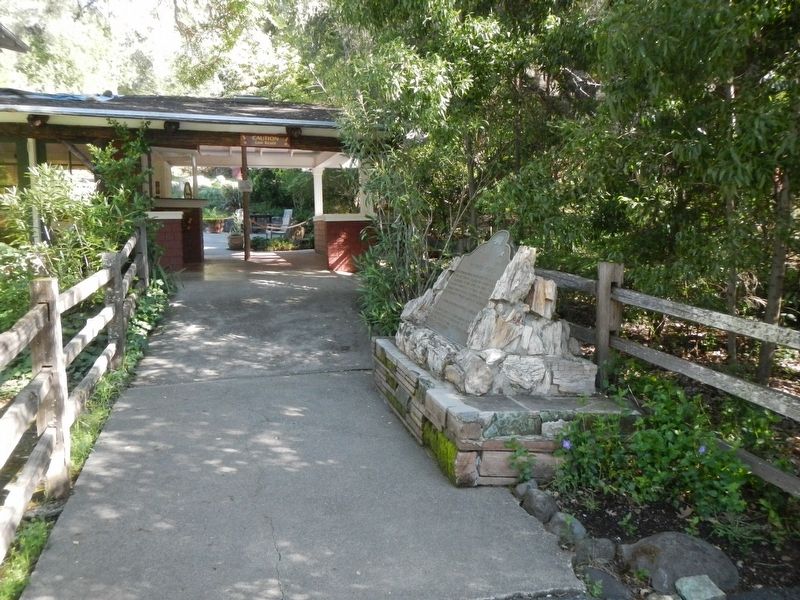
2. Petrified Forest Marker
Photographed by Barry Swackhamer, March 29, 2017
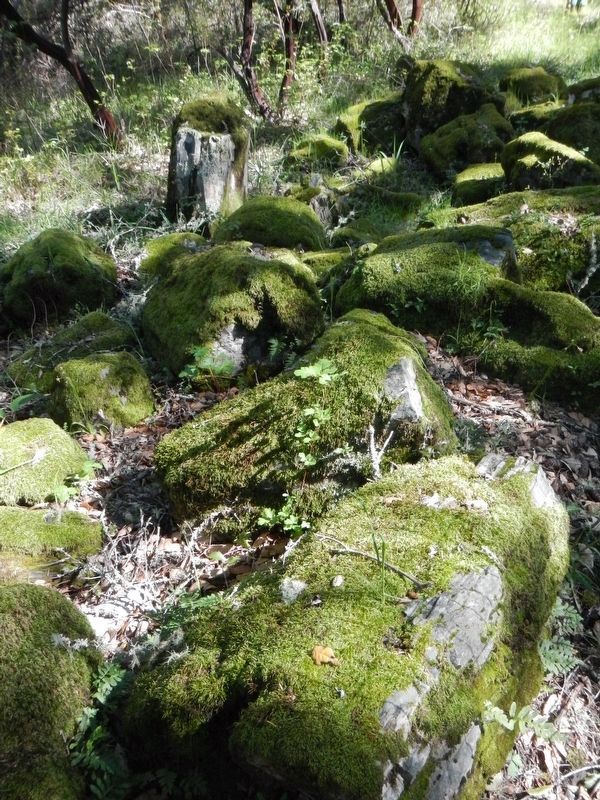
3. Petrified Wood Pile
The large chunks that make up this petrified wood pile are left in their natural state. Other exhibits are cleaned with a high powered water spray. This removes the moss and embedded lichens to more expose the color , quartz and detail in the trees.
Photographed by Barry Swackhamer, March 29, 2017
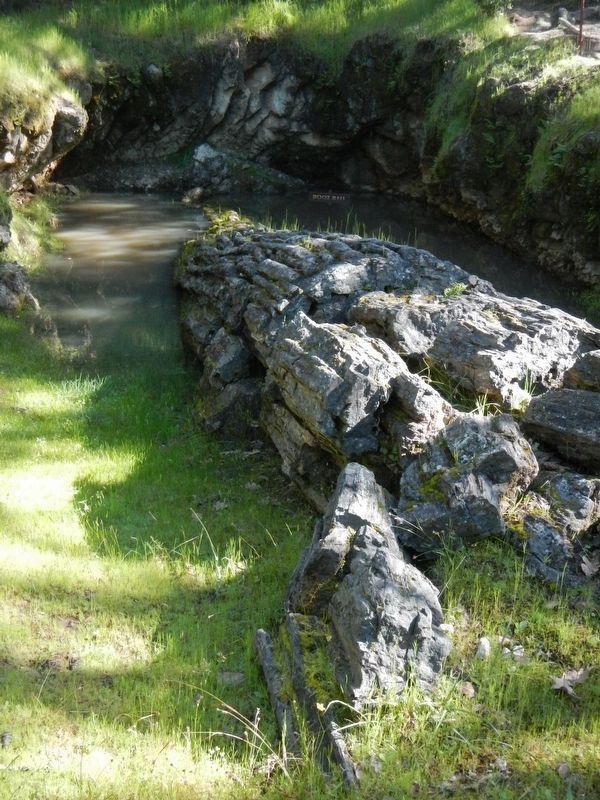
4. Petrified Tree
These coastal redwood fell like matchsticks in the direction of flow from a volcanic explosion. The source of the blast came from behind the present day Mt. St Helens, seven miles to the northeast. A blanket of volcanic ash covered these trees for several million years. The ground during this time became saturated with water containing dissolved silicon and oxygen or silica from the overlying ash. The molecules of silica replaced the molecules of the wood, turning wood to solid silica, quartz and stone.
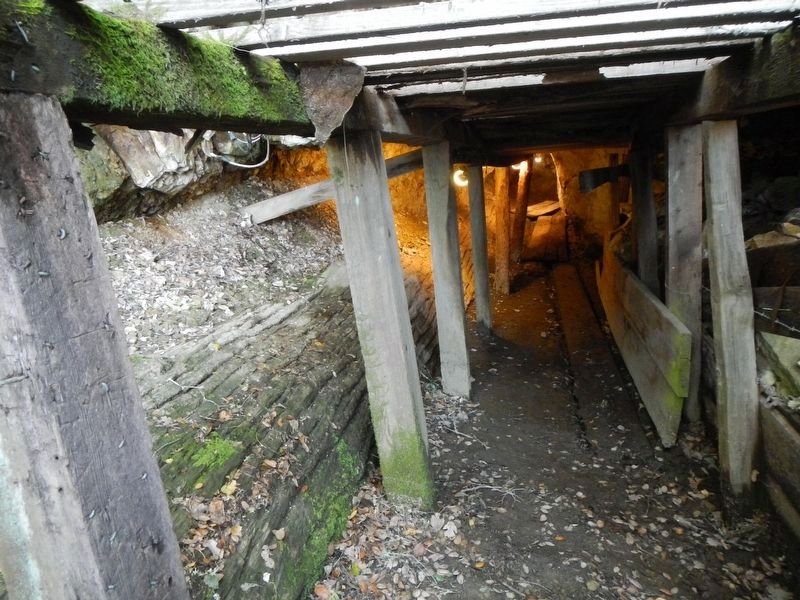
Photographed by Barry Swackhamer, March 29, 2017
5. Excavated, by Tunneling, Petrified Tree Trunk
Credits. This page was last revised on November 25, 2020. It was originally submitted on April 7, 2017, by Barry Swackhamer of Brentwood, California. This page has been viewed 793 times since then and 45 times this year. Photos: 1, 2, 3, 4, 5. submitted on April 7, 2017, by Barry Swackhamer of Brentwood, California.
