Great Falls in Fairfax County, Virginia — The American South (Mid-Atlantic)
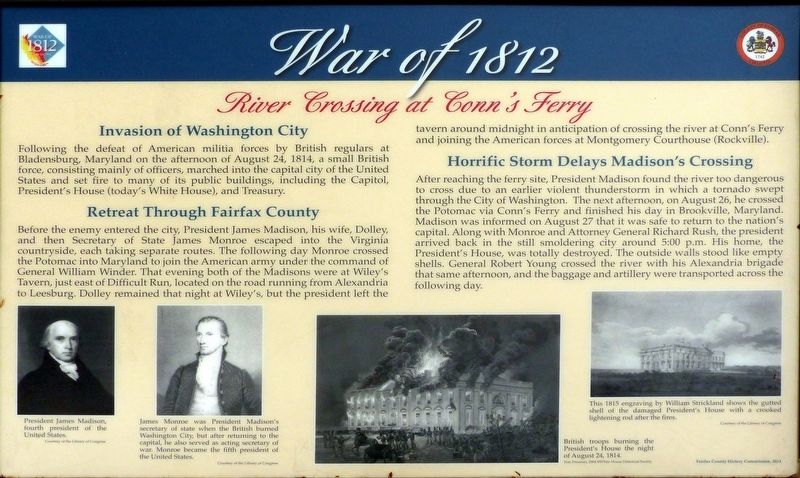
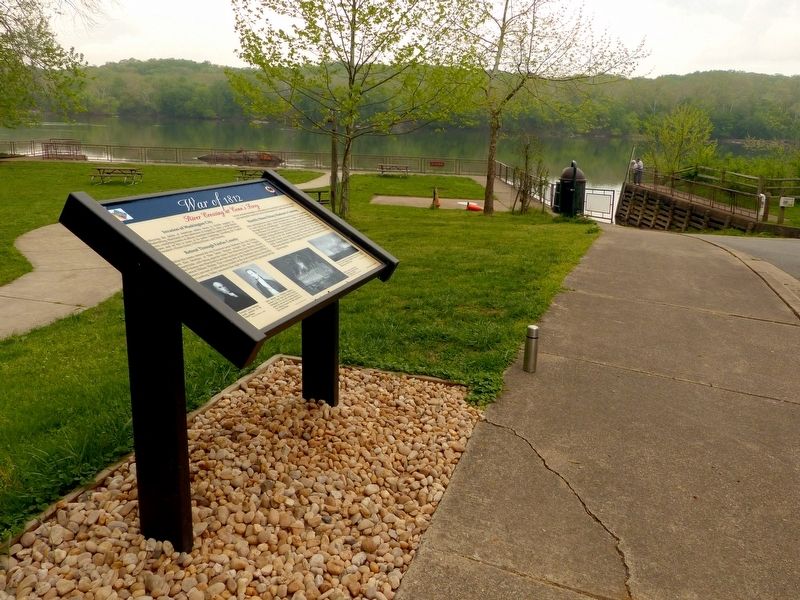
River Crossing at Conn's Ferry
War of 1812
Photographed by Allen C. Browne, April 21, 2017
1. River Crossing at Conn's Ferry Marker
Invasion of Washington City
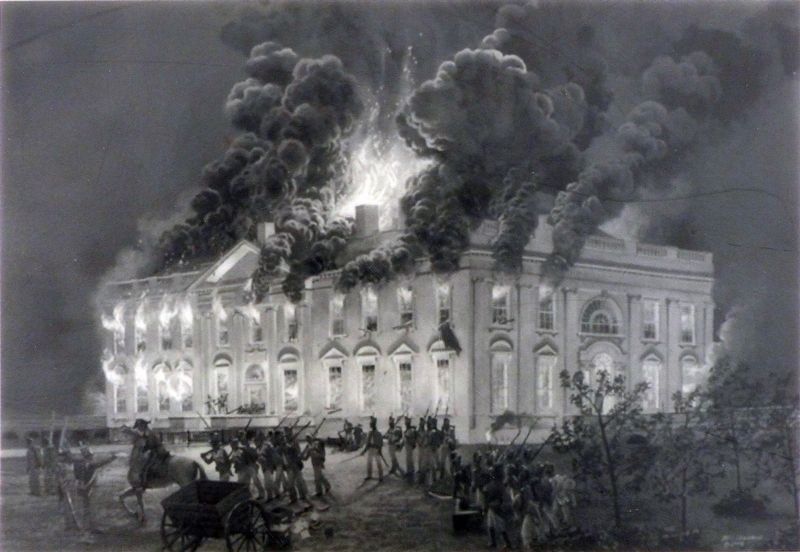
Following the defeat of American militia forces by British regulars at Bladensburg, Maryland on the afternoon of August 24, 1814, a small British force, consisting mainly of officers, marched into the capital city of the United States and set fire to many of its public buildings, including the Capitol, President's House (today's White House), and Treasury.
Retreat Through Fairfax County
Before the enemy entered the city, President James Madison, his wife, Dolley, and then Secretary of State James Monroe escaped into the Virginia countryside, each taking separate routes. The following day Monroe crossed the Potomac into Maryland to join the American army under the command of General William Winder. That evening both of the Madisons were at Wiley's Tavern, just east of Difficult Run, located on the road running from Alexandria to Leesburg. Dolley remained that night at Wiley's, but the president left the tavern around midnight in anticipation of crossing the river at Conn's Ferry and joining the American forces at Montgomery Courthouse (Rockville).
Horrific Storm Delays Madison's Crossing
this page online
Erected 2016 by the Fairfax County History Commission.
Topics and series. This historical marker is listed in this topic list: War of 1812. In addition, it is included in the Former U.S. Presidents: #04 James Madison, and the Former U.S. Presidents: #05 James Monroe series lists. A significant historical date for this entry is August 26, 1814.
Location. 39° 1.103′ N, 77° 14.746′ W.
Photographed by Allen C. Browne, April 21, 2017
2. River Crossing at Conn's Ferry Marker

Regionally, this marker is in the Washington Metropolitan Area and in Northern Virginia. It is also in the American South, specifically in the Upper South, in the Mid-Atlantic, and on the Eastern Seaboard. Globally, it is in the North Atlantic Region, North America, the Western Hemisphere, the Western World, and the Anglosphere. Historically, it finds itself in what was once the territory of the Mississippian Culture, one of the original Thirteen Colonies, one of the Confederate States of America, and the Antebellum South.
Other nearby markers. At least 8 other markers are within 2 miles of this marker, measured as the crow flies: Potomac Connections (here, next to this marker); American Indians of the Potomac River (within shouting distance of this marker); Welcome to Great Falls (approx. 1.2 miles
Photographed by Allen C. Browne, April 21, 2017
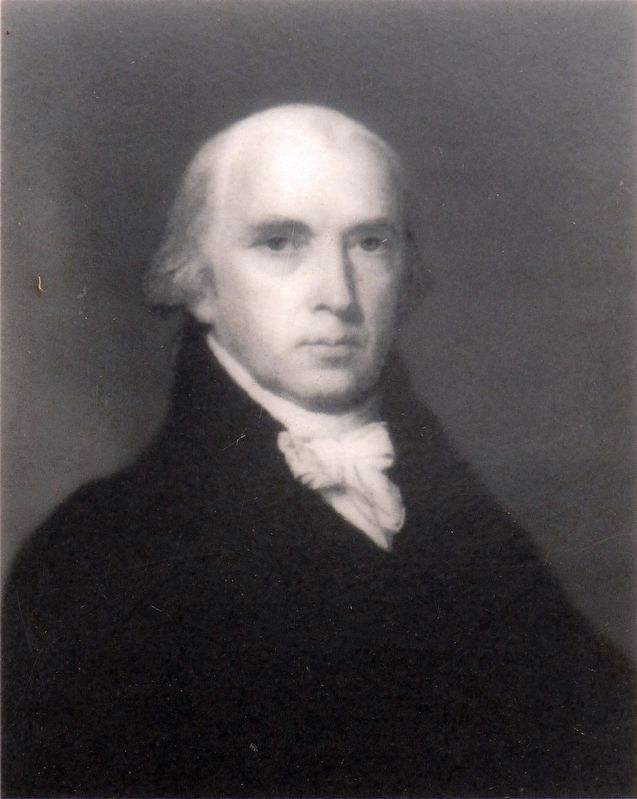
3. James Madison
President James Madison, fourth president of the United States.Close-up of image on marker
Other markers no longer nearby. A Lift Lock (was approx. 1.3 miles away in Maryland but has been confirmed missing); Boats Passing By (was approx. 1.3 miles away in Maryland but has been confirmed missing).
Also see . . . Conn's Ferry. Fairfax County, Virginia Late-18th to Early-19th Century by Debbie Robison January 3, 2010. (Submitted on April 22, 2017, by Allen C. Browne of Silver Spring, Maryland.)
Photographed by Allen C. Browne, April 21, 2017
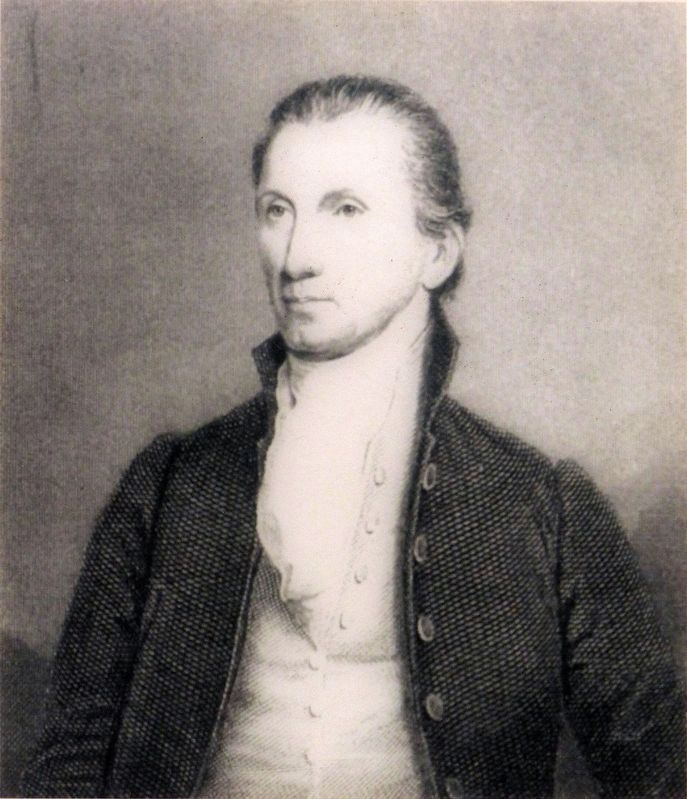
4. James Monroe
James Monroe was president Madison's secretary of state when the British burned Washington, City, but after returning to the capital, he also served as acting secretary of war. Monroe became the fifth president of the United States. Close-up of image on marker
Photographed by Allen C. Browne, April 21, 2017
5. Burning the President's House
British Troops burning the President's House the night of August 24, 1814.Close-up of Tom Freedman image on marker
Library of Congress
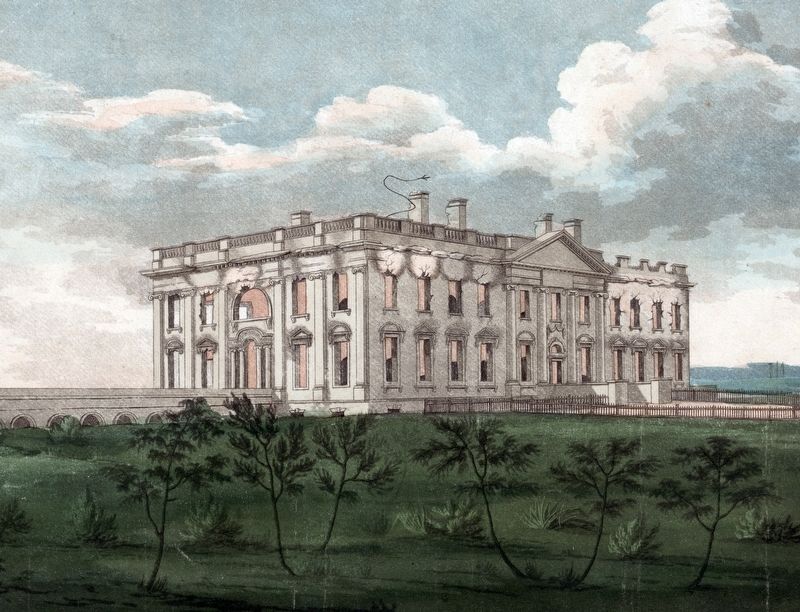
6. The Shell of the President's House
This 1815 engraving by William Strickland shows the gutted shell of the damaged President's House with a crooked lightning rod after the fires.
Credits. This page was last revised on July 7, 2021. It was originally submitted on April 22, 2017, by Allen C. Browne of Silver Spring, Maryland. This page has been viewed 1,521 times since then and 79 times this year. Photos: 1, 2, 3, 4, 5, 6. submitted on April 22, 2017, by Allen C. Browne of Silver Spring, Maryland. • Bernard Fisher was the editor who published this page.
